News Summary
- Renault has agreed to sell Alpine Racing SAS, the company responsible for its former F1 engine operation at Viry-Châtillon, to Belgium’s Dumarey Group.
- Approximately 150 employees will transfer to the new owner, subject to completion of the transaction, while the financial terms remain undisclosed.
- The deal does not involve the Alpine Formula 1 team, which remains under Renault ownership and has used Mercedes power units since 2026.
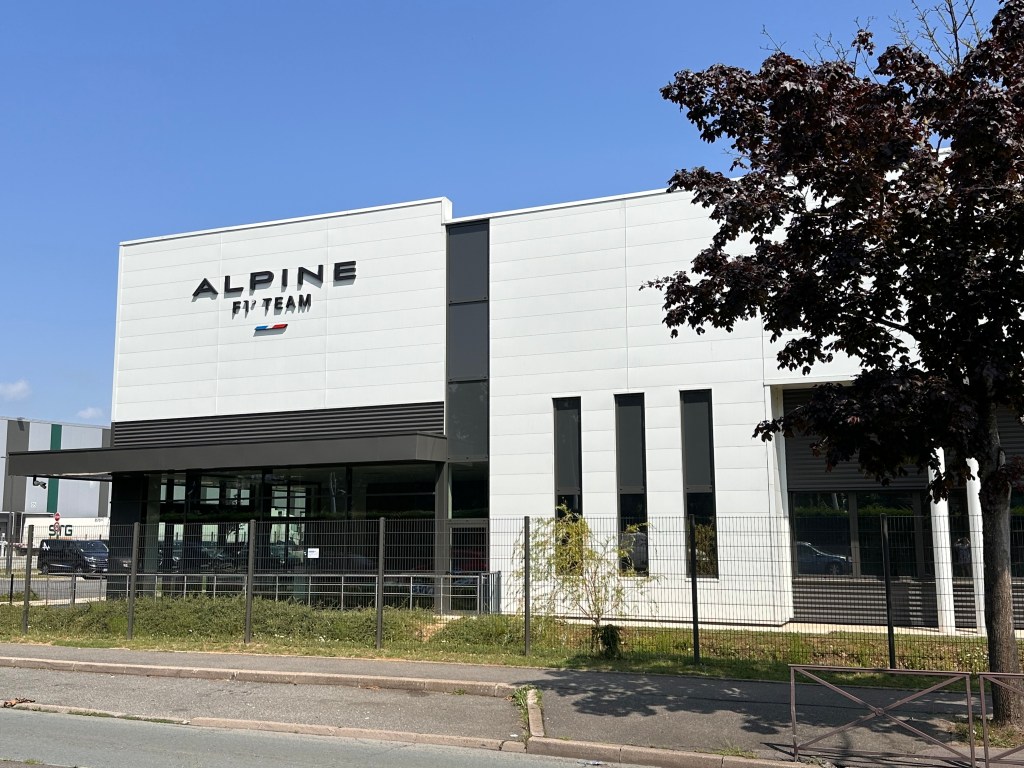
Renault Group announced on Thursday (October 22) that it has reached an agreement to sell Alpine Racing SAS, the company operating its historic Formula 1 engine facility at Viry-Châtillon, near Paris, to Belgian powertrain engineering specialist Dumarey Group. The transaction will preserve approximately 150 jobs and marks another important development in Renault’s withdrawal from manufacturing its own F1 engines.
The agreement comes two years after the French manufacturer announced that it would discontinue its works power-unit programme at the end of 2025. Renault subsequently transformed the Viry-Châtillon facility into an advanced engineering operation, while its Formula 1 team switched to Mercedes engines for the championship’s new technical era in 2026.
According to information released by the two companies and reported by Reuters, Alpine Racing SAS will operate under Dumarey’s ownership, management and brand once the transaction is completed. Financial details have not been disclosed.
The proposed acquisition was presented to employee representatives on Thursday and remains subject to the legally required consultation process and relevant regulatory approvals.

Dumarey to take over historic Renault F1 engine facility and preserve 150 jobs
Under the agreement, Dumarey intends to acquire the personnel and assets required to continue operating the Viry-Châtillon facility, incorporating its engineering expertise into the Belgian group’s existing activities.
Approximately 150 employees are expected to transfer to Dumarey, rather than lose their positions as a consequence of the sale. The transfer will take place once the acquisition has received the necessary approvals and been formally completed.
Founded by Belgian entrepreneur Guido Dumarey, the group specialises in powertrain development, advanced engineering, electrification and propulsion technologies.
The company intends to use Viry-Châtillon’s experience in high-performance engines, hybrid systems, simulation and testing to expand its engineering services, including potential opportunities in motorsport.
Dumarey said the acquisition could eventually allow the organisation to provide specialist power-unit services to racing teams. However, there is no confirmed programme to manufacture Formula 1 engines for a new customer, and the agreement should not be interpreted as the announcement of another F1 engine supplier.
Guido Dumarey, the group’s founder and chairman, expressed confidence that combining the facility’s engineering capabilities with the company’s existing operations would preserve valuable technical knowledge and create opportunities for growth.
The proposed transaction also builds on an established industrial relationship between Dumarey and Renault. The Belgian group previously entered into a strategic agreement with HORSE, a powertrain business with Renault involvement, covering the development of combustion-engine technologies.
Why did Renault abandon its Formula 1 engine programme?
Renault announced in September 2024 that it would end the development and production of its Formula 1 power units after the 2025 season, abandoning plans to introduce a new engine under the regulations that took effect in 2026.
The decision was driven by financial and strategic considerations. Renault concluded that purchasing engines from another manufacturer would be considerably less expensive than continuing to maintain an independent works operation.
At the time, the move generated considerable opposition among employees at Viry-Châtillon, who argued that Renault risked sacrificing decades of specialist knowledge and undermining an important part of France’s motorsport heritage.
Some employees staged demonstrations during the 2024 Italian Grand Prix, urging management to reconsider the decision and preserve the manufacturer’s engine programme.
Renault nevertheless proceeded with the restructuring, establishing a new direction for the facility while Alpine became a Mercedes customer.
The change ended a long period of independent Renault engine production in Formula 1, during which the manufacturer supplied several of the most successful teams in the championship’s history.
The subsequent decision to sell Alpine Racing SAS represents a further step beyond the original restructuring. Instead of remaining within Renault Group as an internal engineering operation, the former F1 engine business is expected to become part of a separate company specialising in powertrain technology.
Renault’s F1 engine legacy includes titles with Williams, Benetton and Red Bull
Viry-Châtillon holds a significant place in Formula 1 history. Renault entered the championship in 1977 and became one of its most successful engine manufacturers, helping establish turbocharging before achieving major success with naturally aspirated and hybrid power units.
The manufacturer’s engines powered championship-winning Williams cars during the 1990s, including the teams led by Nigel Mansell, Alain Prost, Damon Hill and Jacques Villeneuve.
Renault also supplied Benetton during Michael Schumacher’s second championship-winning season in 1995 before returning to the top as a complete works team.
Fernando Alonso won consecutive Drivers’ Championships with Renault in 2005 and 2006, with the manufacturer securing the Constructors’ Championship in both seasons.
Another dominant period followed through the partnership with Red Bull Racing. Renault engines powered Sebastian Vettel to four consecutive Drivers’ Championships between 2010 and 2013, with Red Bull winning the Constructors’ title in each of those seasons.
Across its different programmes, Renault-powered cars won 12 Formula 1 Constructors’ Championships.
The Viry-Châtillon facility was central to much of that success, developing power units and associated technologies across several generations of Formula 1 machinery.
Its acquisition by Dumarey would transfer an important part of that technical heritage to a company seeking to expand its motorsport engineering activities.
Is Renault selling the Alpine Formula 1 team?
No. The agreement concerns Alpine Racing SAS, the former engine development organisation at Viry-Châtillon, not the Alpine F1 racing team.
The distinction is significant because Renault maintains separate operations for its power-unit activities in France and its Formula 1 chassis programme in the United Kingdom.
The Alpine F1 team is based in Enstone, where its chassis, aerodynamic development and racing operations are managed. That organisation is not part of the Dumarey transaction.
Renault remains committed to competing in Formula 1 through Alpine, which has used Mercedes power units since the beginning of the 2026 season.
The sale also comes during a broader period of change in Formula 1’s engine strategy, with the FIA discussing the possible introduction of simpler V8 power units from 2030. Those proposed regulations have not yet received final approval.
For Dumarey, the immediate objective is to integrate Viry-Châtillon’s workforce, facilities and engineering capabilities into its wider business. The precise future role of the site in international motorsport will depend on the programmes and customers secured after the acquisition is completed.