News Summary
- Track temperatures could exceed 55°C during Friday practice and Saturday qualifying, with air temperatures reaching approximately 29°C.
- Sunday’s United States Grand Prix carries a 20% chance of rain, while track temperatures could approach 50°C.
- Wind gusts could reach 40 km/h on race day, adding another potential challenge for teams managing tyres, aerodynamic balance and cooling.
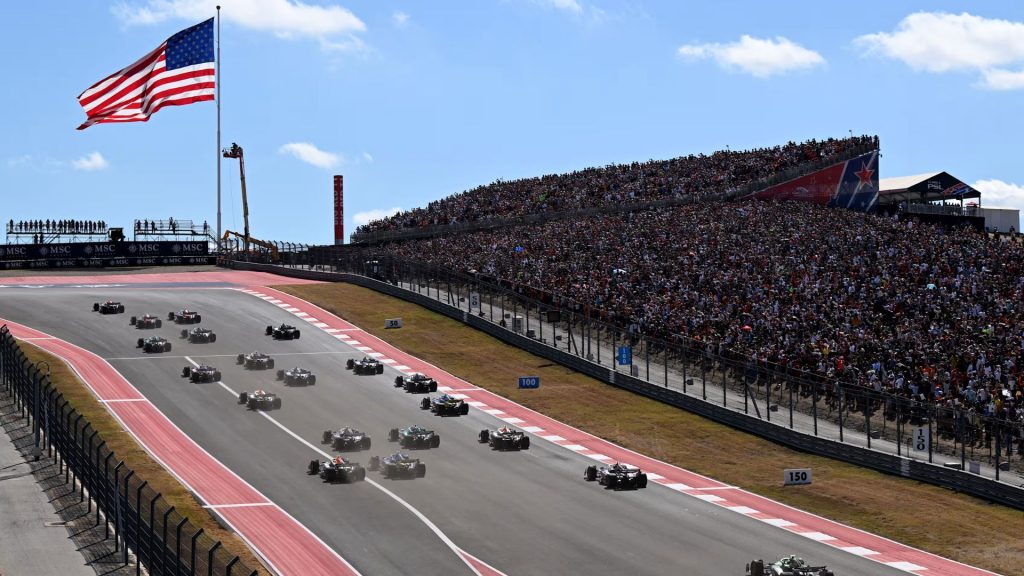
Track temperatures at Circuit of The Americas could exceed 55°C during the opening two days of the 2026 United States Grand Prix, according to Formula 1’s official weather forecast published on Wednesday, October 21. The hot conditions are expected to continue through Saturday qualifying, before increased cloud cover and stronger winds introduce a small possibility of rain for Sunday’s race.
The forecast predicts air temperatures approaching 30°C on Friday and Saturday, with no rain expected during practice or qualifying. Sunday’s Grand Prix should be slightly cooler, although the asphalt could still reach approximately 50°C, while a weather system developing across the central United States creates a 20% chance of precipitation.
The conditions could influence tyre management, braking temperatures and car setup during a weekend when McLaren is introducing changes to its floor and braking system and Ferrari is preparing to evaluate its final major aerodynamic package of 2026.
United States GP weather forecast: Friday to Sunday
Formula 1’s official forecast indicates predominantly warm and dry conditions throughout the Austin weekend, with Sunday presenting the greatest uncertainty.
| Day | Maximum air temperature | Track temperature | Rain probability | Wind gusts |
|---|---|---|---|---|
| Friday, October 23 | 29°C | Above 55°C possible | 0% | Up to 30 km/h |
| Saturday, October 24 | 29°C | Above 55°C possible | 0% | Up to 35 km/h |
| Sunday, October 25 | 28°C | Near 50°C | 20% | Up to 40 km/h |
Forecast published by Formula 1 on October 21. Conditions may change before or during the event.
Friday is expected to begin with air temperatures around 16°C before warming throughout the day. Moderate south to southeasterly winds should accompany both free-practice sessions, with no precipitation currently anticipated.
Saturday will follow a similar pattern, although cloud cover is expected to increase during the afternoon. The forecast indicates that sufficient sunshine could again push the track temperature above 55°C, making qualifying one of the hottest sessions of the weekend.
Sunday brings a slightly different outlook. Air temperatures are expected to range from approximately 19°C to 28°C, while stronger southerly winds could accompany an approaching weather system.
The possibility of rain remains relatively low, and the current forecast does not indicate that the Grand Prix is likely to take place in wet conditions.
Why 55°C track temperatures matter for F1 tyres
One of the most important technical consequences of the forecast concerns tyre management.
Circuit of The Americas combines long, high-speed corners with heavy braking zones and slower sections that place different demands on the tyres.
When the asphalt becomes extremely hot, maintaining tyre performance across a qualifying lap or race stint can become more difficult.
The surface temperature affects the way tyres absorb and release heat, while repeated cornering loads can increase their internal temperatures.
If a tyre exceeds its preferred operating range, drivers may experience reduced grip, greater sliding and accelerated degradation.
However, the relationship between track temperature and performance is not identical for every compound.
Teams must consider tyre construction, rubber characteristics, vehicle setup, fuel load and driving style before determining the best approach.
A track temperature above 55°C does not automatically mean that every team will suffer overheating. Some cars may manage the conditions more effectively than others, depending on their mechanical and aerodynamic characteristics.
The first two practice sessions will provide important information about how the tyres behave during both short qualifying simulations and longer race runs.
McLaren faces important braking test in Austin heat
McLaren arrives at the United States Grand Prix with a development package focused partly on improving braking reliability and performance.
Chief designer Rob Marshall confirmed that the team will introduce modifications to the MCL40’s braking system alongside smaller floor changes.
The forecast could make those developments particularly relevant.
Austin includes several heavy braking zones, notably the approaches to Turns 1, 11 and 12, where drivers must slow significantly after high-speed sections.
Braking performance depends on maintaining suitable operating temperatures while managing the relationship between conventional braking and electrical energy recovery.
High ambient temperatures can reduce the margin available for cooling components, although the actual impact depends on the design and operating conditions of each car.
McLaren will therefore need to evaluate whether its latest modifications deliver the intended improvements under the conditions encountered on Friday.
The team has confirmed its Austin floor and brake upgrades as Red Bull closes in on third place, making the weekend important both technically and in the championship.
Red Bull has reduced McLaren’s advantage in the Constructors’ Championship to seven points, increasing the pressure on Lando Norris and Oscar Piastri to recover competitiveness.
The hot track conditions will provide another test of the team’s ability to manage tyres and maintain consistent performance.
Ferrari’s final upgrade faces demanding conditions
Ferrari is also preparing a significant technical evaluation in Austin.
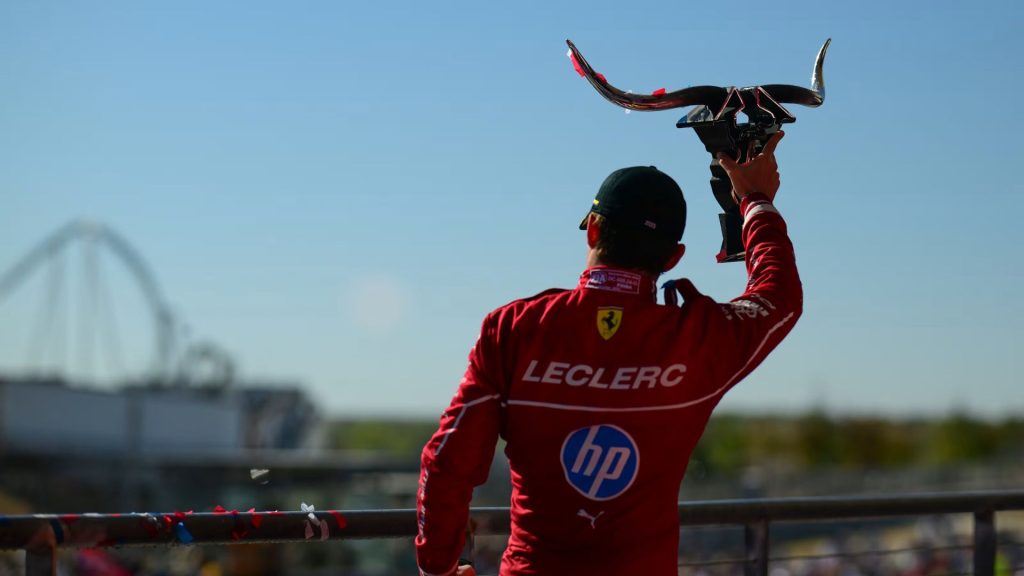
The Italian manufacturer has brought its final major aerodynamic package of 2026, including modifications to the floor and bodywork intended to improve the SF-26’s efficiency and consistency.
The changes will be evaluated across the circuit’s combination of high-speed corners, long straights and slower sections.
Hot track conditions could influence the conclusions drawn from the tests, particularly because tyre behaviour can affect the balance and lap times of the car.
Engineers will need to distinguish improvements generated by the new components from changes caused by tyre temperatures, fuel loads and track evolution.
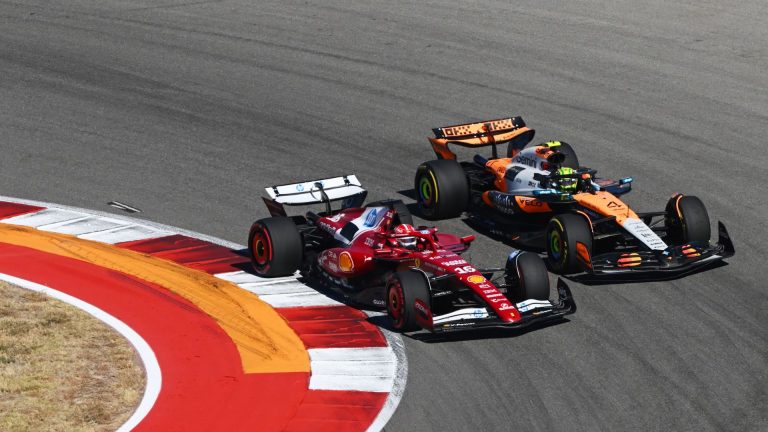
The final Ferrari development package is centred on aerodynamic improvements for Hamilton and Leclerc, as the team attempts to maintain its position in the Constructors’ Championship.
The additional practice time available at Austin should help the manufacturer collect data under different conditions.
Unlike recent sprint events, the United States Grand Prix features three free-practice sessions before qualifying.
Strong winds could affect aerodynamic balance on Sunday
The forecast also highlights the possibility of stronger winds during Sunday’s Grand Prix.
Formula 1 expects southerly gusts of approximately 35–40 km/h during the afternoon, compared with maximum gusts of 30 km/h on Friday and 35 km/h on Saturday.
Wind direction can influence how a Formula 1 car behaves through corners, particularly when it changes between headwinds, tailwinds and crosswinds.
A headwind can increase the airflow over the car and affect aerodynamic load, while a tailwind may reduce the effective airflow at a given ground speed.
Crosswinds can also influence stability, especially through rapid direction changes.
Austin’s exposed layout makes wind conditions relevant in several sections, including the high-speed sequence of corners in the opening sector.
However, the impact will depend on the actual wind speed and direction during each session.
The forecast does not establish that teams will experience serious aerodynamic instability.
Instead, it identifies a factor that engineers may need to consider when selecting wing levels and balancing their cars for qualifying and the race.
Could rain affect the United States Grand Prix?
Formula 1’s official forecast gives Sunday’s race a 20% chance of rain, with increasing cloud cover expected as a storm system develops over the central United States.
The forecast does not predict rain during Friday practice or Saturday qualifying.
That creates a possible situation in which teams complete their preparation entirely in dry conditions before facing a small risk of changing weather during the Grand Prix.
If rain arrives, teams may need to reconsider tyre strategy and respond to changing grip levels.
However, a 20% probability means dry conditions remain the more likely scenario under the forecast published on October 21.
The expected cloud cover could also influence track temperatures.
Formula 1 currently expects the asphalt to approach 50°C on Sunday, but that figure could increase if cloud cover is less extensive than predicted.
The situation should become clearer as the race approaches and updated forecasts become available.
Verstappen and Antonelli prepare for another Austin battle
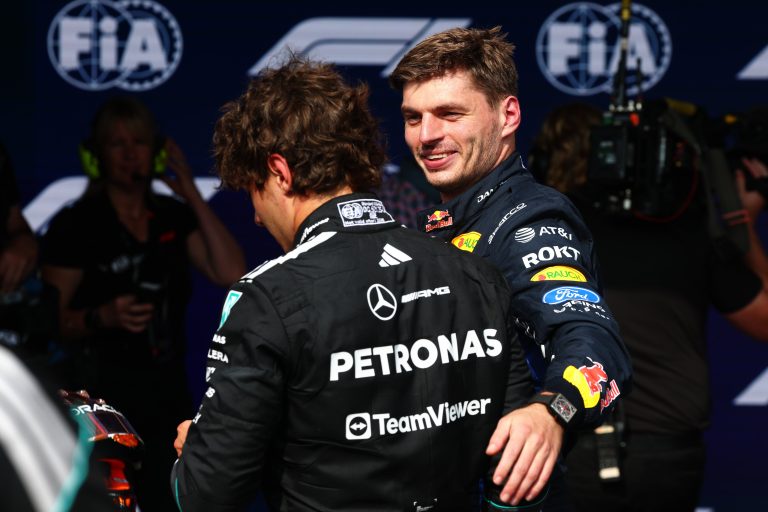
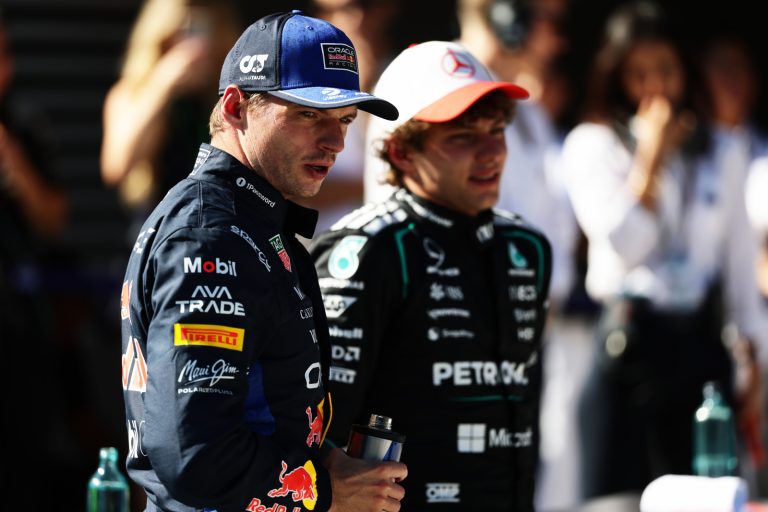
The weather conditions add another variable to the competition between Max Verstappen and Kimi Antonelli.
Verstappen arrives after consecutive victories in Malaysia and Singapore, having helped Red Bull recover from a difficult first half of the season.
The Dutchman has outscored Antonelli by 25 points across the last three Grands Prix, although the Mercedes driver retains a commanding advantage in the championship.
The comparison between Verstappen and Antonelli since Red Bull’s comeback highlights the shift in competitive form heading into Austin.
Antonelli also has his first mathematical opportunity to secure the Drivers’ Championship during the United States Grand Prix.
The Italian must win Sunday’s race while George Russell finishes ninth or lower and Lewis Hamilton fifth or lower.
The complete title scenarios explain the results Antonelli needs to become champion in Austin.
Verstappen, meanwhile, is attempting to equal Hamilton’s record of five victories at Circuit of The Americas.
The combination of recent Red Bull performance, Mercedes’ championship advantage and potentially demanding track conditions creates several important questions for the weekend.
United States GP 2026: Full weekend schedule
The United States Grand Prix takes place at Circuit of The Americas from October 23–25, with three practice sessions, Saturday qualifying and Sunday’s 56-lap race.
| Session | Austin (CDT) | Brasília (BRT) | United Kingdom |
|---|---|---|---|
| Friday FP1 | 12:30 | 14:30 | 18:30 BST |
| Friday FP2 | 16:00 | 18:00 | 22:00 BST |
| Saturday FP3 | 12:30 | 14:30 | 18:30 BST |
| Saturday qualifying | 16:00 | 18:00 | 22:00 BST |
| Sunday Grand Prix | 15:00 | 17:00 | 20:00 GMT |
The United Kingdom switches from BST to GMT early on Sunday, October 25.
The complete Austin practice guide includes start times for Friday’s FP1 and FP2 sessions worldwide.
Fans can follow the race through Apple TV in the United States, Sky Sports in the United Kingdom, FanCode in India and Fox Sports/Kayo in Australia.
The international United States Grand Prix viewing guide provides further information about broadcasters and streaming platforms.