News Summary
- Ferrari is preparing its fourth and final major aerodynamic upgrade of 2026 for the United States Grand Prix in Austin.
- The package centres on a redesigned floor, with additional revisions to the sidepods, bodywork and cooling outlets.
- Austin will be the final major development test for the SF-26, before Ferrari concentrates on circuit-specific adjustments and its 2027 car.
Ferrari is preparing its final major Formula 1 upgrade package of 2026 for the United States Grand Prix, with Lewis Hamilton and Charles Leclerc set to receive a redesigned floor, revised sidepods and modified bodywork as the Italian manufacturer attempts to close the gap to Red Bull and Mercedes before shifting its development resources towards 2027.
The update, expected to debut at Circuit of The Americas on October 23–25, will be Ferrari’s fourth significant aerodynamic package of the season. According to technical information reported by The Race, the changes extend across the floor, from its leading edge to the diffuser, with the objective of generating additional downforce while improving the SF-26’s aerodynamic balance and operating window.
Ferrari also intends to reduce aerodynamic drag and improve airflow management around the sidepods. The modifications are not expected to represent a radical change of concept, with the team instead refining the architecture already introduced during the season.
The upgrade comes after Ferrari outscored Mercedes at the Malaysian and Singapore Grands Prix, although Verstappen’s consecutive victories have highlighted Red Bull’s growing competitiveness.
Ferrari redesigns entire floor for final Austin upgrade
The floor is the central element of Ferrari’s latest development package, with modifications extending from the front section through to the diffuser.
Under Formula 1’s 2026 regulations, the floor plays an important role in managing airflow beneath the car and generating aerodynamic load. Its performance depends on the interaction between the front wing, sidepods, suspension and rear bodywork.
Ferrari’s engineers have concentrated on improving the consistency of that airflow, attempting to increase downforce without making the car excessively sensitive to changes in ride height and operating conditions.
The objective is to give Hamilton and Leclerc a more predictable balance across different types of corners, while reducing the compromises required when selecting the car’s setup.
The SF-26 has demonstrated competitive performance at several circuits during the second half of the season, but Ferrari has struggled to maintain the same level of consistency from one Grand Prix to another.
The new floor is intended to address those limitations while improving the correlation between the team’s development tools and the behaviour observed on track.
As GRANDE PRÊMIO explained before Ferrari’s Italian Grand Prix upgrades, the team has previously pursued improvements in aerodynamic efficiency, combining floor revisions with changes intended to reduce drag and improve straight-line performance.
The Austin package represents a more extensive development of the floor rather than a circuit-specific adjustment.
Sidepods and cooling system also receive changes
Ferrari’s latest update will also introduce revisions to the sidepods and upper bodywork, although these are expected to be less extensive than the floor changes.
The team has studied the aerodynamic solutions introduced by Red Bull during the season, particularly the way airflow is managed around the sidepods and directed towards the rear of the car.
However, Ferrari has decided against adopting a radically different bodywork concept.
Instead, the revisions will refine the existing design, with the aim of improving airflow efficiency and reducing unnecessary drag.
The cooling system will also receive changes, including modifications to the louvres and openings used to extract hot air from the sidepods.
Those adjustments are intended to improve the relationship between cooling requirements and aerodynamic performance.
The team will then prepare additional cooling configurations for the Mexican Grand Prix, where the altitude of the Autódromo Hermanos Rodríguez creates a different challenge.
At approximately 2,200 metres above sea level, the thinner air reduces cooling efficiency, often requiring teams to use larger openings to manage power-unit and component temperatures.
Ferrari is therefore expected to bring additional bodywork configurations to Mexico, although these will be circuit-specific adaptations rather than another major aerodynamic package.
Ferrari avoids radical changes despite Red Bull’s recovery
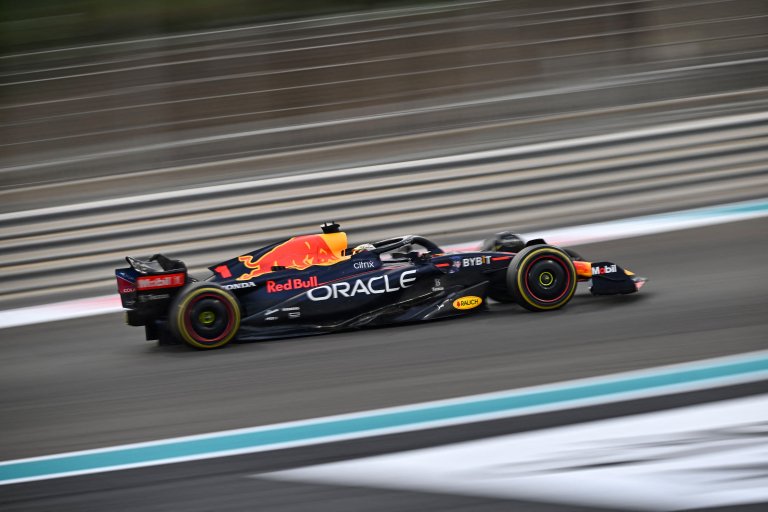
The decision to refine the existing SF-26 concept comes as Ferrari attempts to respond to Red Bull’s improvement during the second half of the championship.
Verstappen has won the last two Grands Prix, in Malaysia and Singapore, after the Austrian team introduced technical changes that improved its performance across different circuit characteristics.
As GRANDE PRÊMIO examined in its analysis of Red Bull’s comeback, the team has recovered significantly since Azerbaijan, where Verstappen had been more than 1.5% slower than the pole-position benchmark.
Ferrari has also made progress, but its recent results have been less consistent.
Leclerc finished second in Singapore, while Hamilton placed sixth, allowing the Italian team to outscore Mercedes for the second consecutive race.
However, the Ferrari drivers were unable to match Verstappen’s winning pace throughout the event.
The Austin package will therefore provide an important opportunity to evaluate whether Ferrari can improve its competitiveness against Red Bull without compromising the strengths of its current car.
The team also faces pressure from Mercedes, which continues to lead the Constructors’ Championship by a substantial margin.
GRANDE PRÊMIO’s analysis of the Constructors’ title scenarios shows that Ferrari remains the principal mathematical obstacle to Mercedes securing the championship before the final rounds.
Austin marks the end of major SF-26 development
Ferrari plans to conclude its principal aerodynamic development programme after the United States Grand Prix.
The team will continue preparing adjustments for individual circuits, but no further major packages are currently expected during the final races of 2026.
Most of the manufacturer’s development resources are already being directed towards the 2027 car, which will build on selected elements of the SF-26 while incorporating revised aerodynamic solutions.
Austin will also serve as an important opportunity to assess the relationship between Ferrari’s simulations, wind-tunnel results and the car’s performance on track.
A successful correlation would provide valuable information for the development of next season’s machinery, even if the immediate performance gains are relatively modest.
The SF-26 has already received several major updates during the year, including modifications introduced around the Italian Grand Prix and further refinements at Singapore.
Leclerc previously acknowledged that Ferrari had improved its car but still lacked the performance required to challenge Red Bull consistently.
The team’s latest package is expected to be evaluated during Friday’s free-practice sessions before qualifying on Saturday.
Ferrari prepares for Austin after stronger Singapore result
Ferrari enters the United States Grand Prix second in the Constructors’ Championship with 444 points, trailing Mercedes by 134.
The Italian team has won two Grands Prix in 2026, with Hamilton victorious in Barcelona and Leclerc winning the British Grand Prix.
The recent improvement has allowed Ferrari to strengthen its position ahead of McLaren and Red Bull, although both remain threats during the final six rounds.
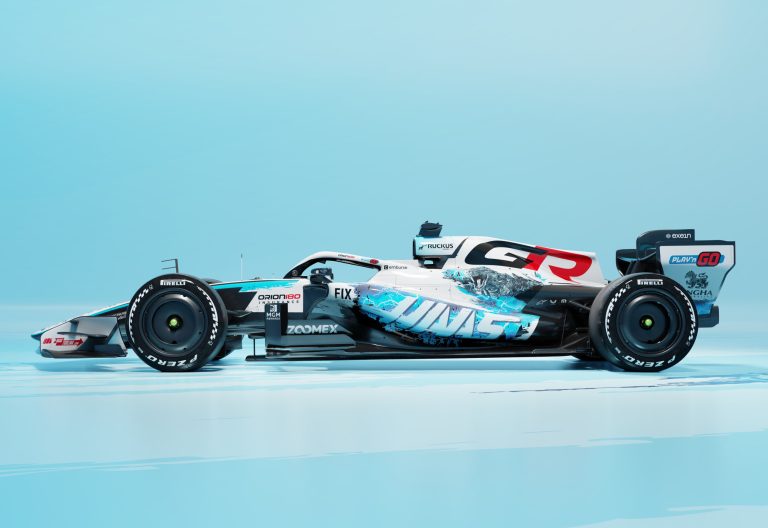
The Austin weekend will also feature a special visual presentation for Ferrari’s drivers.
As GRANDE PRÊMIO reported on Monday, Hamilton and Leclerc will wear special red-and-white race suits, with the team also hinting at a possible one-off SF-26 livery.
The United States Grand Prix takes place from October 23–25, with three free-practice sessions, qualifying and Sunday’s 56-lap race.
The complete programme is available in GRANDE PRÊMIO’s Austin schedule and viewing guide.