News Summary
- Verstappen qualified eighth in Azerbaijan, 1.555 seconds off pole, before securing pole position in both Malaysia and Singapore.
- Red Bull won the last two grands prix, with Verstappen finishing 2.307 seconds ahead of Mercedes in Sepang and 7.335 seconds ahead of Ferrari in Singapore.
- The results demonstrate a major competitive recovery, although differences in circuits, tyres and race conditions prevent a direct calculation of aerodynamic gains.
Max Verstappen’s remarkable late-season recovery has transformed Red Bull from an inconsistent Formula 1 contender into a team capable of defeating Mercedes, Ferrari and McLaren on consecutive weekends. The change is visible in the results, but the most revealing evidence comes from comparing qualifying performance, race outcomes and the different demands of the circuits where the RB22 has recently competed.
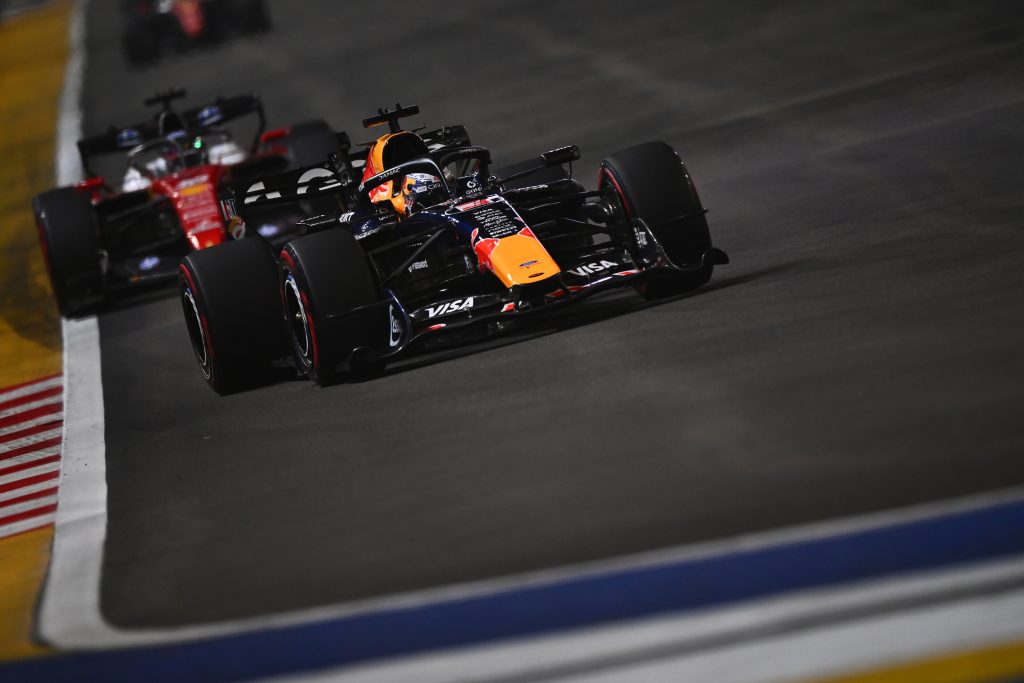
At the Azerbaijan Grand Prix, Verstappen qualified eighth, 1.555 seconds behind George Russell’s pole position. Just one week later, the Dutchman took pole and victory at Sepang before repeating the achievement at Singapore’s Marina Bay Street Circuit. The progression has been particularly striking because the three venues place very different demands on aerodynamic efficiency, energy deployment, tyre management and mechanical grip.
An analysis by GRANDE PRÊMIO of the official Formula 1 results shows that Verstappen has moved from a substantial qualifying deficit to consecutive victories, while Red Bull has also demonstrated improved competitiveness over race distances. However, the results require careful interpretation: the difference between lap times at separate circuits cannot be treated as a direct measurement of the car’s aerodynamic development.
Red Bull’s qualifying improvement: from eighth to consecutive poles
The clearest measurable change appears in qualifying. At Baku, Verstappen’s final Q3 time of 1:44.081 was 1.555 seconds slower than Russell’s pole of 1:42.526, representing a 1.52% deficit relative to the fastest lap.
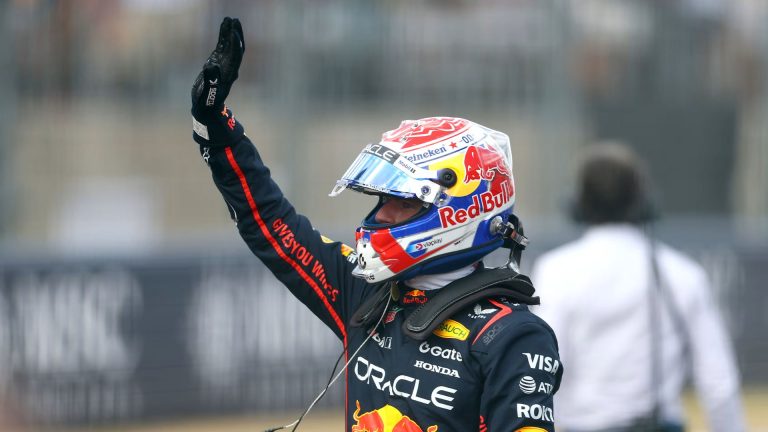
In Malaysia, Verstappen secured pole with 1:35.130, beating Lewis Hamilton by 0.298 seconds. He then claimed pole in Singapore with 1:31.373, finishing 0.054 seconds ahead of Charles Leclerc and 0.189 seconds ahead of Kimi Antonelli.
| Grand Prix | Verstappen qualifying | Pole time | Gap to pole | Percentage deficit |
|---|---|---|---|---|
| Azerbaijan | 8th — 1:44.081 | Russell — 1:42.526 | +1.555s | +1.52% |
| Malaysia (Sepang) | 1st — 1:35.130 | Verstappen — 1:35.130 | 0.000s | 0.00% |
| Singapore | 1st — 1:31.373 | Verstappen — 1:31.373 | 0.000s | 0.00% |
Methodology: the percentage deficit is calculated by dividing the driver’s classified qualifying gap by the pole-position lap time. This measures relative qualifying performance at each event, not the percentage increase in the car’s underlying speed.
The progression is significant because Verstappen moved from eighth on the grid in Azerbaijan to pole position at two consecutive events. Nevertheless, the Baku result requires an important qualification: Verstappen’s best lap of the entire qualifying session was 1:43.706 in Q2, faster than his eventual Q3 time. Using that lap would reduce his deficit to Russell’s pole to 1.180 seconds, or approximately 1.15%.
The distinction demonstrates why a single qualifying lap can exaggerate the apparent difference between cars. A driver’s final position is influenced by execution, tyre preparation, traffic, track evolution and mistakes, in addition to the underlying performance of the machinery.

How Red Bull compared with Mercedes and McLaren in qualifying
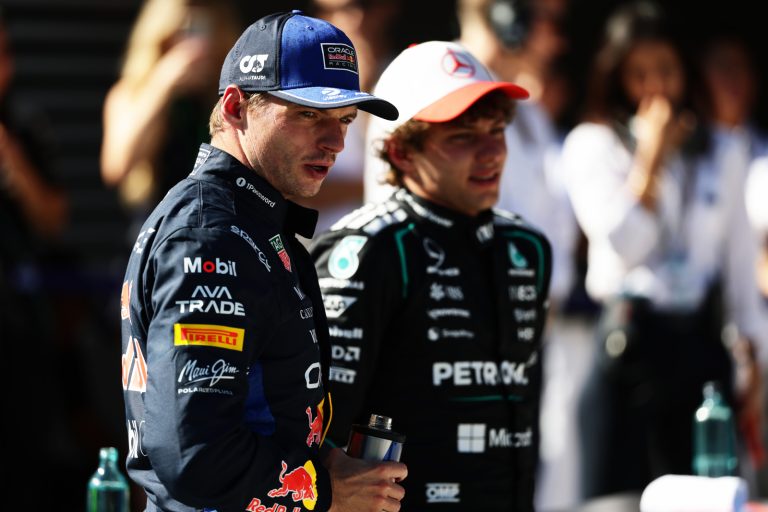
The Singapore results provide a more direct picture of Red Bull’s position relative to its principal rivals. Verstappen beat Antonelli’s Mercedes by 0.189 seconds and Norris’ McLaren by 0.339 seconds, while Russell qualified sixth using an older Mercedes aerodynamic specification.
| Driver | Team | Singapore Q3 time | Gap to Verstappen |
|---|---|---|---|
| M. VERSTAPPEN | Red Bull | 1:31.373 | — |
| C. LECLERC | Ferrari | 1:31.427 | +0.054s |
| L. HAMILTON | Ferrari | 1:31.496 | +0.123s |
| K. ANTONELLI | Mercedes | 1:31.562 | +0.189s |
| L. NORRIS | McLaren | 1:31.712 | +0.339s |
Verstappen’s advantage over Antonelli represented approximately 0.21% of the Mercedes driver’s lap time, while the difference to Norris was approximately 0.37%. These margins suggest that Red Bull had become competitive with the leading cars over a single lap at Marina Bay, a circuit where the team had previously experienced significant difficulties.
However, Mercedes’ performance also needs context. The team deliberately ran different aerodynamic specifications during the weekend, with Antonelli using the latest development package and Russell reverting to an older version. Mercedes subsequently confirmed that Antonelli’s updated W17 was faster by the end of the Singapore weekend.
The comparison therefore establishes that Red Bull was fastest in Singapore qualifying, but does not prove it had developed a permanent advantage over Mercedes across every type of circuit.
Race results show Red Bull’s recovery is not limited to qualifying
The improvement has also translated into race victories. Verstappen finished second in Azerbaijan, only 0.196 seconds behind Russell, before winning the Malaysian and Singapore Grands Prix.
| Grand Prix | Verstappen result | Winner or nearest rival | Final gap |
|---|---|---|---|
| Azerbaijan | 2nd | Russell, Mercedes | +0.196s |
| Malaysia | 1st | Antonelli, Mercedes | Verstappen +2.307s ahead |
| Singapore | 1st | Leclerc, Ferrari | Verstappen +7.335s ahead |
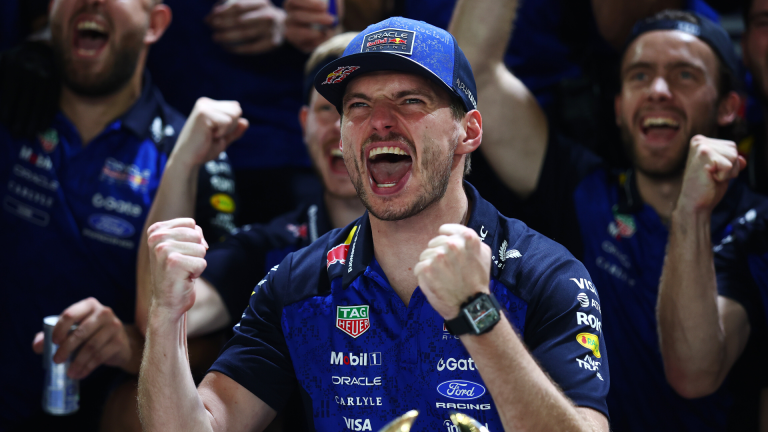
The results reveal a significant change in Red Bull’s competitive position. In Azerbaijan, Verstappen came close to defeating Mercedes despite qualifying eighth. At Sepang, he converted pole position into victory against Antonelli, while Singapore produced another pole-to-win performance against Ferrari.
Across the last three grands prix, Verstappen recorded two victories and one second-place finish, collecting 68 points from the main races alone. He also won the Singapore sprint, adding eight more points and taking his total for the three weekends to 76.
The sequence contrasts sharply with Red Bull’s earlier season, when inconsistent balance, reliability concerns and difficulties extracting performance from the RB22 frequently prevented Verstappen from challenging for victories.
Yet the final margins cannot be converted directly into average lap-time superiority. Verstappen’s 7.335-second victory over Leclerc in Singapore, for example, does not mean the Red Bull was consistently 0.118 seconds per lap faster across all 62 laps. Such a calculation would ignore tyre age, pit-stop timing, traffic, neutralisations and the possibility that the leading driver was managing the gap.
Why the three circuits provide an important test
Azerbaijan, Sepang and Singapore offer substantially different technical challenges, making the results more informative than three consecutive races at similar venues.
Baku combines an exceptionally long straight with slow corners and heavy braking zones, rewarding aerodynamic efficiency and strong energy deployment. Sepang features long straights, fast and medium-speed corners, demanding traction zones and high temperatures, placing considerable emphasis on tyre management and the balance between downforce and drag.
Singapore is different again. Marina Bay requires stability under braking, mechanical grip, traction and precise energy management through a sequence of relatively slow corners. The circuit’s physical demands and limited overtaking opportunities also increase the importance of qualifying.
Red Bull’s strongest evidence of genuine progress is that Verstappen was competitive across all three configurations, rather than only at one circuit that particularly suited the RB22.
His narrow defeat in Azerbaijan demonstrated improved race competitiveness despite an unconvincing qualifying result. Sepang then showed that the car could challenge Mercedes over a full race distance, while Singapore provided evidence of strong one-lap performance and effective race execution on a demanding street circuit.
The results are consistent with a broader improvement in the car’s operating characteristics, although they do not isolate the contribution of each technical development.
What changed on Red Bull’s RB22?
Red Bull’s recovery followed a difficult start to the 2026 season, when the RB22 suffered from inconsistent handling, excess weight and challenges associated with the team’s new power-unit programme.
The manufacturer introduced developments during the season, including packages at Miami, Austria and Azerbaijan, while working to improve aerodynamic balance, energy deployment and reliability.
Team principal Laurent Mekies has emphasised Verstappen’s contribution to the development process, particularly his ability to identify the behaviour of the car and communicate the changes needed to improve it.
The Dutchman’s technical feedback has helped Red Bull understand its limitations and refine the operating window of the RB22. That progress has become more visible during the second half of the championship, culminating in consecutive victories at Sepang and Singapore.
However, the precise lap-time contribution of each upgrade has not been publicly established. It would therefore be misleading to assign a specific percentage of the improvement to the floor, aerodynamic efficiency, reduced weight or power-unit management without controlled comparative data.
The evidence supports a substantial competitive recovery, but not a precise attribution of the gains to individual components.
How much faster is Verstappen over a race stint?
Qualifying results provide a relatively straightforward comparison because drivers attempt to maximise performance over a single lap. Race-stint analysis is considerably more complicated.
To establish whether Verstappen’s RB22 is consistently faster than Mercedes and McLaren, the relevant comparison must use laps completed on equivalent tyre compounds, with similar tyre age and comparable fuel loads. Laps affected by traffic, overtaking, Safety Cars, Virtual Safety Cars or significant tyre-management instructions must be identified separately.
A reliable analysis should calculate the median representative lap time for each comparable stint, rather than simply dividing the final race margin by the number of laps completed.
| Measurement | What it establishes | Main limitation |
|---|---|---|
| Qualifying gap (%) | Relative single-lap competitiveness | Tyre preparation and lap execution |
| Median clean-air stint pace | Representative race speed | Fuel, tyre age and setup differences |
| Tyre degradation per lap | Pace loss during a stint | Track evolution and compound behaviour |
| Final race margin | Actual sporting outcome | Strategy, traffic and neutralisations |
| Sector-time comparison | Where a car gains or loses time | Energy deployment and corner-exit effects |
The publicly verified qualifying and classification data establish Red Bull’s improvement in results, but do not provide a sufficiently controlled lap-by-lap sample to publish exact clean-air stint advantages over Mercedes or McLaren.
That distinction is particularly important at Singapore, where Verstappen raced from pole position while Antonelli and Norris encountered different traffic and strategic conditions. A simple comparison of their total race times would risk attributing those differences entirely to car performance.
McLaren’s decline has amplified Red Bull’s progress
Red Bull’s improvement has coincided with a deterioration in McLaren’s relative position among Formula 1’s leading teams.
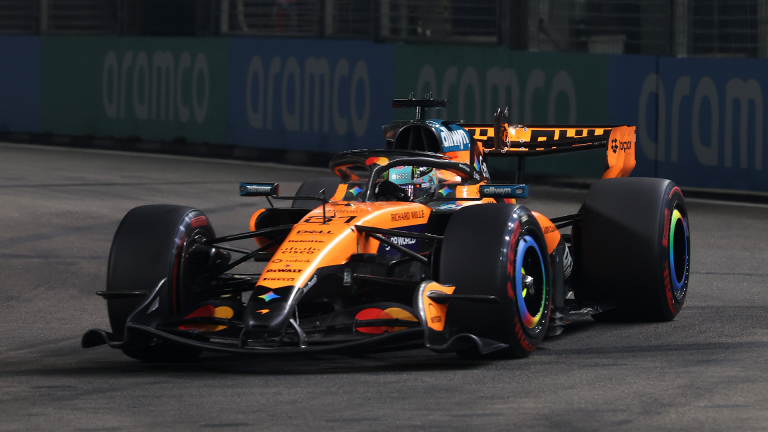
Earlier in the season, McLaren demonstrated race-winning pace, particularly at Hungary and the Netherlands, where Lando Norris secured victories. However, the team’s competitive position became more difficult as Red Bull introduced developments and Mercedes continued refining its W17.
At Singapore, Norris qualified fifth, 0.339 seconds behind Verstappen, while Oscar Piastri also struggled to challenge for the leading positions.
The analysis of McLaren’s decline from the third-fastest to the fourth-fastest F1 team examines how the competitive order has changed.
The contrast is important because Red Bull’s recent success reflects both its own improvement and the changing performance of its rivals. A team can gain positions through development, but also because competitors fail to maintain their previous advantage.
The available results do not establish how much of Red Bull’s recovery comes from each factor.
Mercedes remains the key benchmark for Red Bull
Mercedes has been the strongest team across much of the 2026 season, with Antonelli leading the Drivers’ Championship and Russell remaining second despite recent setbacks.
However, the team’s latest aerodynamic package has created additional setup challenges. Russell reverted to an older specification at Singapore, while Antonelli continued evaluating the updated car.
The direct comparison eventually showed that the newer Mercedes package was faster, but the team acknowledged that it remained difficult to operate consistently.
That creates an important distinction between the two manufacturers. Red Bull appears to have improved the usability and consistency of its car, while Mercedes is still refining the operating window of its latest development package.
The championship standings nevertheless show that Mercedes retains a substantial advantage over the season as a whole. Antonelli leads Verstappen by 119 points after Singapore, demonstrating how much ground Red Bull lost during the earlier rounds.
Verstappen’s resurgence has therefore changed the immediate competitive picture without overturning the championship position established by Mercedes.
What the numbers say about Red Bull’s comeback
The available evidence supports three findings.
First, Red Bull’s single-lap competitiveness has improved dramatically. Verstappen went from eighth in Azerbaijan to consecutive pole positions, beating Mercedes and McLaren at Sepang and Singapore.
Second, the improvement has translated into race results. Two consecutive victories and a second-place finish demonstrate that the team can now compete at the front across different circuit layouts.
Third, the exact performance gain remains uncertain. Qualifying percentages and finishing margins reveal changes in competitiveness, but they cannot establish the precise aerodynamic improvement or a universal race-pace advantage without controlled stint data.
The distinction matters because a successful development programme should ultimately improve performance across a wide range of conditions, not simply produce isolated results at favourable circuits.
Red Bull’s recent performances provide encouraging evidence on that question, but Austin will offer another opportunity to assess the RB22 against Mercedes and McLaren.
Austin provides the next comparison
The United States Grand Prix takes place at the Circuit of The Americas from October 23 to 25, bringing another combination of high-speed corners, heavy braking zones and demanding changes of direction.
The circuit should provide a useful test of Red Bull’s improved balance and aerodynamic efficiency, particularly through its fast opening sector and technical middle section.
Verstappen enters the weekend after consecutive victories, while Mercedes is attempting to consolidate Antonelli’s championship advantage and McLaren is working to recover its previous competitiveness.
The complete United States Grand Prix schedule and international start times are available on GRANDE PRÊMIO.
Has Red Bull really become faster?
The results indicate a genuine competitive recovery, rather than a single circuit-specific performance. Red Bull has achieved strong results on three contrasting circuits, converted consecutive poles into victories and reduced the gap to Mercedes and McLaren in qualifying.
However, the available evidence does not establish a precise percentage improvement in the RB22’s underlying performance. That would require consistent lap-by-lap and sector-by-sector comparisons across representative race stints, adjusted for tyres, fuel, traffic and race conditions.
For now, the most defensible finding is that Red Bull has moved back into contention for victories across different circuit types, while the size and durability of its advantage remain to be tested over the final six rounds.