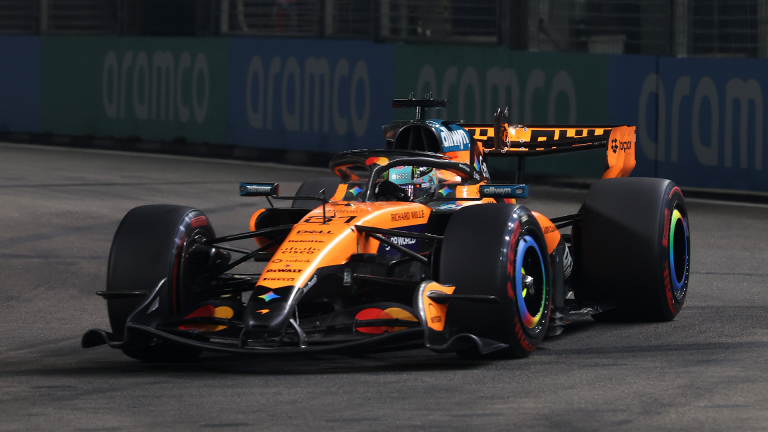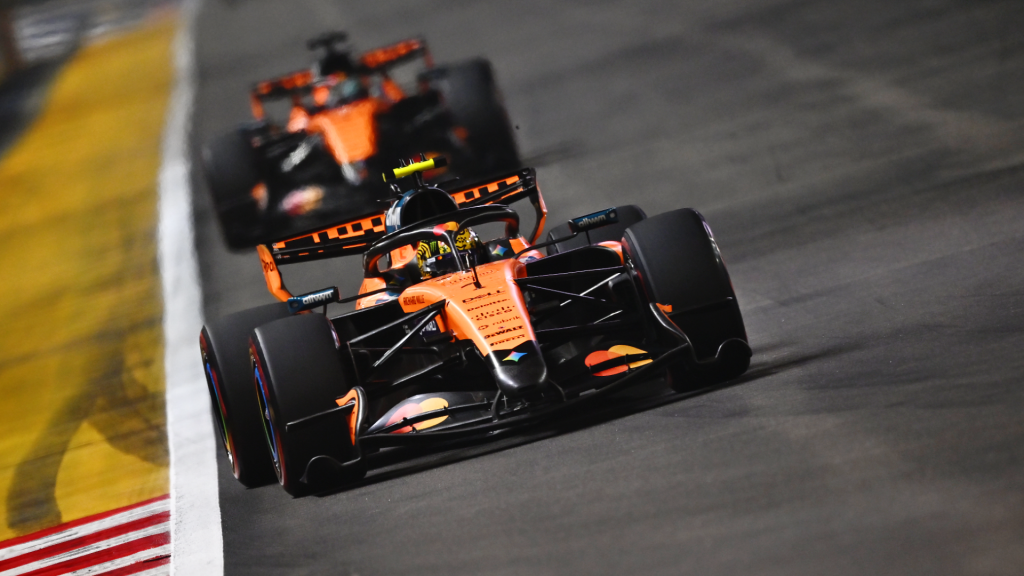
McLaren left the Singapore Grand Prix facing an increasingly uncomfortable reality: the team that won the Formula 1 World Championship in 2025 now considers itself the fourth-fastest on the grid. Lando Norris finished fourth and Oscar Piastri fifth at Marina Bay on Sunday (11 October), but neither result disguised the performance deficit to Red Bull, Ferrari and Mercedes.
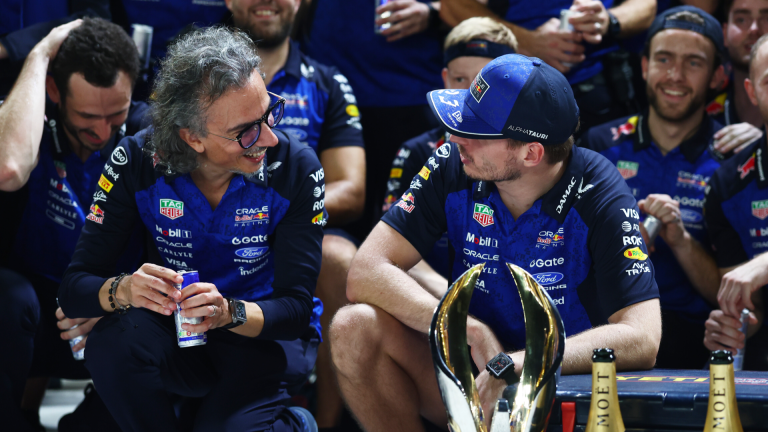
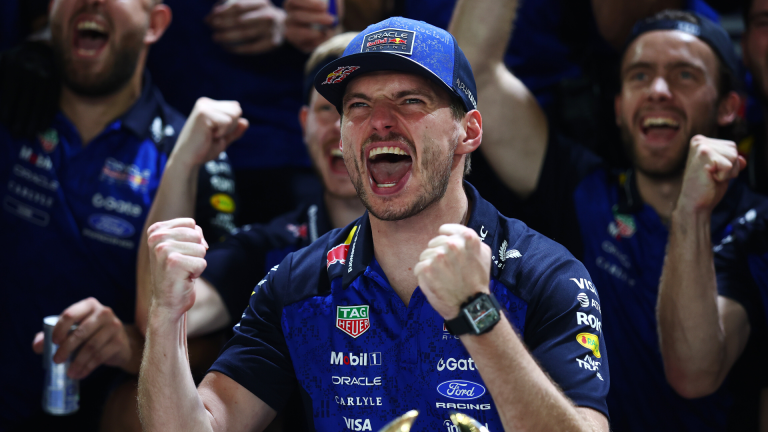
The situation is particularly concerning because Red Bull has reduced McLaren’s advantage to just 7 points in the Constructors’ Championship. Max Verstappen’s consecutive victories in Malaysia and Singapore have transformed the competitive order, while McLaren has struggled to keep pace with the development of its rivals.
The decline has not happened overnight. Mercedes established the benchmark at the beginning of the 2026 season, leaving McLaren behind after the introduction of the new technical regulations. The Woking team subsequently recovered enough performance to challenge for victories, with Norris winning in Hungary and the Netherlands, but that progress has not been sustained.
The latest two Grands Prix have exposed how much the balance has changed. At Sepang, Andrea Stella already considered McLaren to have the fourth-fastest package. Singapore provided further evidence, with Norris finishing 40.506 seconds behind Verstappen despite taking fourth place.
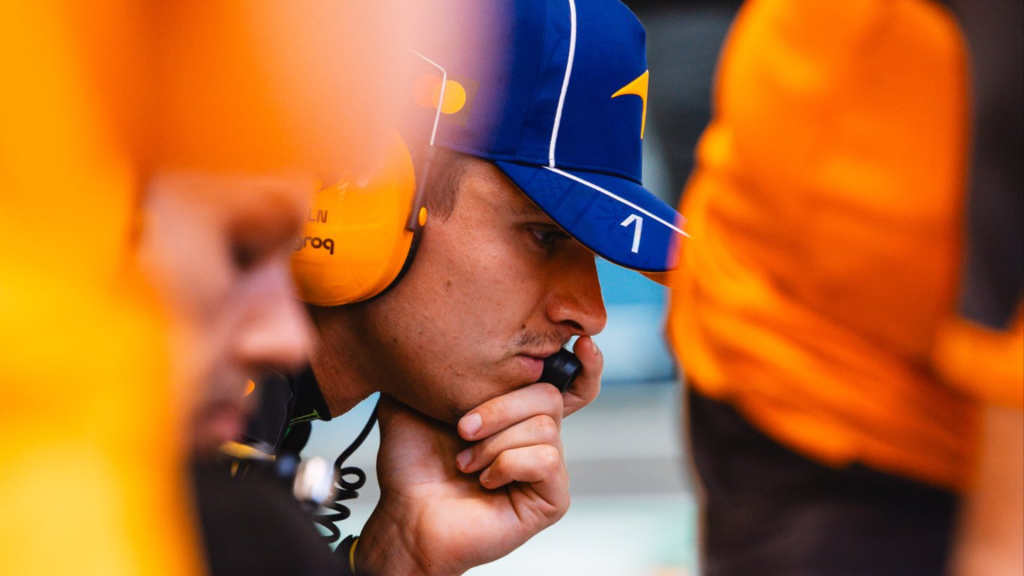
McLaren’s problem is not simply that its car has become slower
The most important distinction is between losing performance and losing competitiveness.
There is no conclusive evidence that McLaren’s current car is slower in absolute terms than it was during the summer. However, Red Bull has made a significant improvement, while Ferrari and Mercedes have continued developing their own packages, leaving McLaren further behind in the relative performance order.
Verstappen’s recent results illustrate the scale of the change. After showing stronger pace in Azerbaijan, Red Bull dominated the Malaysian Grand Prix at Sepang before repeating that performance on Singapore’s very different street circuit.
The contrast matters because Sepang and Marina Bay place different demands on a Formula 1 car. Malaysia combines long straights and flowing corners, while Singapore requires effective traction, low-speed performance and confidence over bumps.
Red Bull’s resurgence across those contrasting circuits suggests that its improvement is not limited to one particular track layout.
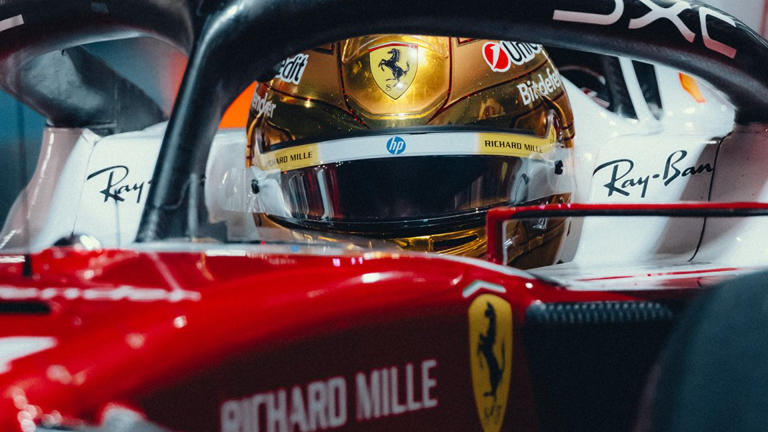
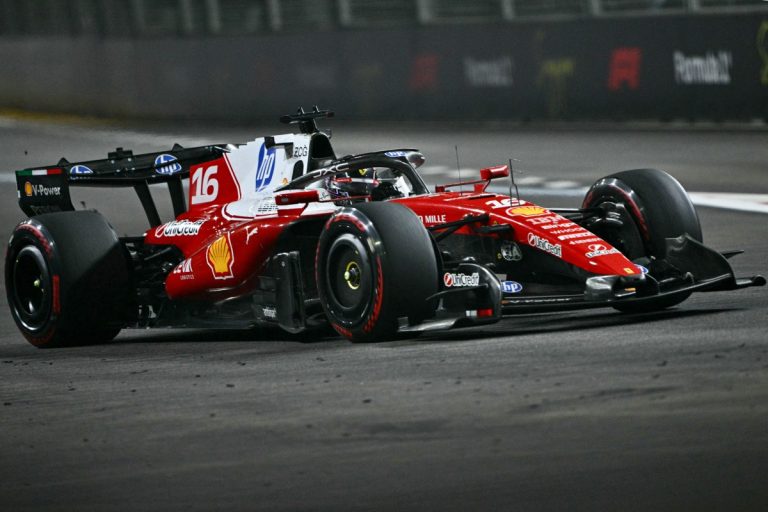
Ferrari has also made progress. Charles Leclerc finished second in Singapore and revealed that the team had introduced small new components, although he acknowledged that further development was required to match Verstappen.
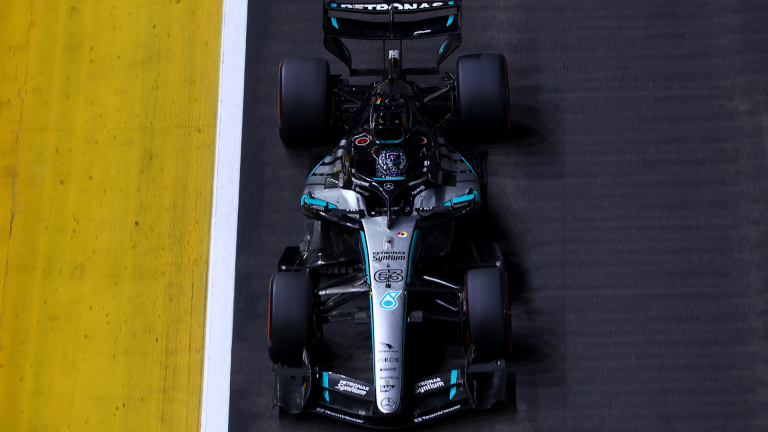
Mercedes remains competitive despite difficulties understanding its latest aerodynamic package. Kimi Antonelli finished third at Marina Bay, demonstrating that the W17 could still deliver a podium even when the team was not operating at its strongest level.
McLaren, meanwhile, has not found an equivalent response.
Norris admits McLaren needs upgrades it does not yet have
Norris’s post-race assessment was unusually direct.
The reigning world champion acknowledged that McLaren had fallen to the back of Formula 1’s leading group and warned that the team would struggle to recover without further development.
“We can’t unless we bring upgrades and we don’t have anything for a little bit,” Norris told Sky Sports F1 when asked how McLaren could close the gap.
“But at the minute, we’re fourth fastest. We’re back to the back of the front, back of the top group, which is closer than we were at the beginning of the year.”
The British driver accepted that McLaren could still fight for strong results, but considered the performance deficit too large to challenge consistently for victories.
“We can still fight pretty well. We’re still fighting for top four and almost for a podium. But we’re still too far off and we’re the worst of the top four teams. So we have to just keep trying to upgrade the car.”
His comments reinforce the technical concerns McLaren had already identified before the Singapore weekend. Norris previously highlighted straight-line speed as one of the team’s weaknesses, although the Marina Bay result showed that the problem extends beyond one performance characteristic.
McLaren remains competitive enough to finish near the front, but no longer has the margin required to compensate consistently for the progress of its rivals.
Singapore exposed both McLaren’s pace deficit and its execution problems
The Singapore weekend demonstrated that McLaren’s difficulties are not exclusively technical.
Saturday’s sprint ended with Norris and Piastri colliding while fighting for position. The incident eliminated Piastri and left Norris eighth, costing the team valuable points before Sunday’s Grand Prix.
The collision also breached McLaren’s established principle that its drivers should avoid contact with each other. Although the FIA did not assign predominant responsibility to either driver, the team lost an opportunity to strengthen its Constructors’ Championship position.
Sunday brought a different set of problems.
Norris had an opportunity to challenge Lewis Hamilton for a podium position but made an unnecessary overtaking attempt, allowing Antonelli to move ahead. The Mercedes driver subsequently passed Hamilton, while Norris recovered to fourth.
The British driver accepted responsibility for the mistake, acknowledging that his decision-making had not been good enough throughout the weekend.
As Norris explained after the Grand Prix, the team needs both better performance and stronger execution to challenge its rivals.
Piastri’s race was also compromised by a slow puncture, which required an additional pit stop. The Australian recovered to fifth after overtaking Hamilton late in the race, but did not believe the tyre problem had fundamentally changed the result available to him.
The two drivers therefore arrived at the same conclusion through different experiences: McLaren had extracted a reasonable result from a car that lacked the speed to fight for victory.
Piastri’s difficult season reflects McLaren’s wider challenge
Piastri’s 2026 campaign offers another indication of how much McLaren’s position has changed.
The Australian fought Norris for the 2025 championship, winning seven Grands Prix before finishing just 13 points behind his teammate. This season, however, he has yet to win a race and has already been mathematically eliminated from the title battle.
His fifth place in Singapore extended his sequence without a Grand Prix podium to 13 races, with his last top-three finish coming in Miami.
McLaren’s reduced competitiveness explains part of that decline, but it does not account for every missed opportunity. Piastri failed to start the opening two Grands Prix and suffered further setbacks during the season, including his retirement in Hungary.
Andrea Stella also acknowledged earlier in the year that the team had been working to adapt Piastri’s driving style to the characteristics of the new-generation car.
As GRANDE PRÊMIO examined in its analysis of Piastri’s difficult 2026 campaign, the Australian’s results reflect a combination of technical limitations, lost opportunities and the challenge of adapting to a different car.
Singapore reinforced the problem. Piastri was competitive enough to finish fifth, but Verstappen, Leclerc and Antonelli were all beyond McLaren’s reach on outright pace.
The team’s immediate challenge is therefore broader than improving one driver’s performance. McLaren needs to recover the competitiveness that allowed both cars to fight near the front during the strongest period of its season.
Red Bull’s resurgence threatens McLaren’s third place
The most immediate championship consequence is the narrowing gap between McLaren and Red Bull.
Only 7 points separate the teams in the Constructors’ Championship after Singapore, a remarkable development considering Red Bull’s difficulties earlier in the season.
Verstappen has been the main reason for the recovery, collecting consecutive victories and consistently maximising the team’s strongest opportunities. Isack Hadjar also contributed a point in Singapore by finishing tenth.
McLaren, by comparison, collected 22 points through Norris and Piastri on Sunday, but lost ground over the weekend because of Red Bull’s stronger sprint and Grand Prix results.
The distinction between individual race performance and the broader championship battle is important. McLaren can still outscore Red Bull on a given Sunday by placing both cars near the front, even when Verstappen wins. However, the team’s margin for mistakes has become much smaller, particularly when the Dutchman is capable of dominating entire weekends.
Norris’s assessment that McLaren is fourth-fastest does not mean the team is guaranteed to finish fourth in the championship. The Constructors’ Championship rewards the combined results of both drivers, and Red Bull still needs consistent contributions from Hadjar to maximise its recovery.
Nevertheless, the recent trend places McLaren under increasing pressure.
Austin will test whether McLaren can stop the decline
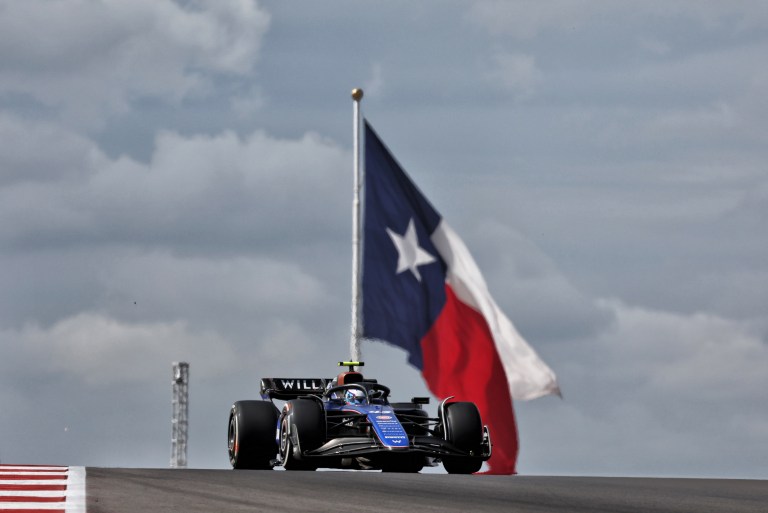
The United States Grand Prix at Circuit of the Americas on October 23–25 will provide McLaren with another opportunity to evaluate its position.
Austin combines long straights, fast direction changes and slower technical sections, demanding a more complete performance package than some of the circuits visited earlier in the season.
For Red Bull, the objective will be to demonstrate that its recent advantage can continue across another different layout. Ferrari will seek to build on its Singapore improvements, while Mercedes continues working to understand its latest aerodynamic package.
McLaren faces a more immediate question: can the team remain competitive enough to defend third place before its next upgrades arrive?
Norris has already made clear that no major improvement is expected immediately. That places greater emphasis on qualifying execution, tyre management, strategy and avoiding unnecessary incidents.
The challenge is particularly significant because McLaren’s strongest results this season have come when it combined competitive machinery with effective race execution. Singapore showed that even a relatively clean Grand Prix can leave the team behind its rivals when the underlying performance is insufficient.
Formula 1 returns for the United States Grand Prix on October 23–25. GRANDE PRÊMIO continues its Formula 1 coverage as McLaren attempts to defend its position against Red Bull during the final stages of the season.