News Summary
- Red Bull increased its points average by 54.8%, from 16.36 to 25.33 per round, the largest absolute improvement of any team.
- Mercedes remains the highest-scoring constructor since the summer break, with 199 points across six rounds.
- Audi and Aston Martin also improved their averages, while Ferrari, McLaren and seven other teams either declined or remained scoreless.
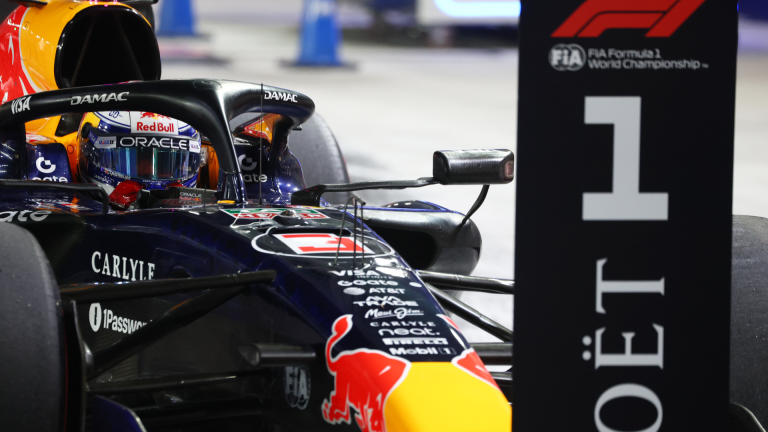
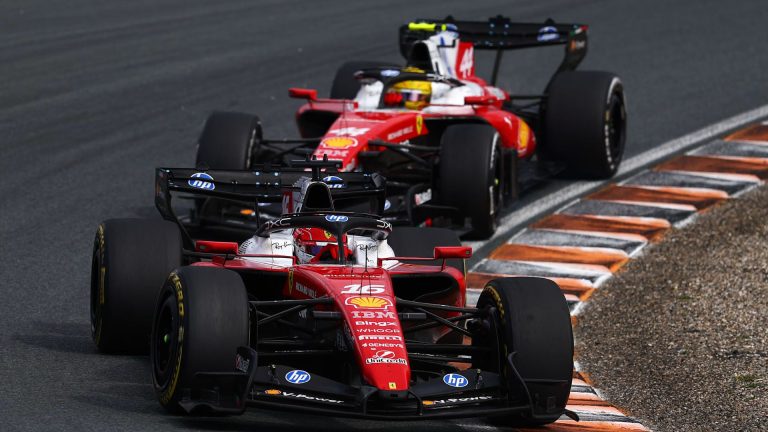
Max Verstappen’s consecutive victories in Malaysia and Singapore have transformed Red Bull’s position in the 2026 Formula 1 season, but the scale of the team’s recovery becomes clearer when its results are compared with those of all 11 constructors.
An analysis of the official championship points awarded across the first 17 rounds shows that Red Bull has increased its average from 16.36 points per weekend before the summer break to 25.33 since racing resumed at Zandvoort, an improvement of 54.8%.
No other team has achieved a larger increase in average points per round in absolute terms. Mercedes continues to lead the championship and has scored more points than any rival during the six post-break events, but its average has fallen slightly. Ferrari and McLaren have also declined, while smaller teams such as Audi and Aston Martin have improved from much lower starting positions.
The figures offer a different perspective on a season that Mercedes has largely controlled, showing how Red Bull has recovered competitiveness while several of its rivals have struggled to maintain their earlier scoring rates.
How all 11 F1 teams compare before and after the summer break
The comparison divides the 2026 season into two periods: the first 11 grands prix, from Australia to Hungary, and the six rounds from the Netherlands to Singapore.
Because the periods contain different numbers of events, points per round provide a more meaningful comparison than raw totals.
| Team | Before break | After break | Average before | Average after | Change |
|---|---|---|---|---|---|
| Aston Martin | 1 | 6 | 0.09 | 1.00 | +1,000% |
| Audi | 12 | 11 | 1.09 | 1.83 | +68.1% |
| Red Bull | 180 | 152 | 16.36 | 25.33 | +54.8% |
| McLaren | 222 | 117 | 20.18 | 19.50 | -3.4% |
| Mercedes | 379 | 199 | 34.45 | 33.17 | -3.7% |
| Ferrari | 307 | 137 | 27.91 | 22.83 | -18.2% |
| Racing Bulls | 70 | 30 | 6.36 | 5.00 | -21.4% |
| Haas | 21 | 9 | 1.91 | 1.50 | -21.4% |
| Alpine | 52 | 16 | 4.73 | 2.67 | -43.6% |
| Williams | 11 | 1 | 1.00 | 0.17 | -83.3% |
| Cadillac | 0 | 0 | 0.00 | 0.00 | N/A |
Source: official Formula 1 team championship results through the Singapore Grand Prix. Figures include sprint points. Percentage changes are calculated from unrounded points-per-round averages.
The percentages require context. Aston Martin’s 1,000% improvement reflects a rise from just one point across 11 rounds to six across the following six. Audi’s 68.1% increase is also significant proportionally, but its post-break average remains below two points per weekend.
Red Bull’s improvement is different because it combines a substantial percentage increase with a major rise in actual points scored, making it the clearest competitive recovery among the leading teams.
Red Bull turns a difficult first half into race-winning form
Red Bull collected 180 points during the first 11 rounds, averaging 16.36 per event. Since Zandvoort, it has scored another 152 in only six weekends.
The recovery has accelerated as the season progressed.
The team scored nine points in the Netherlands and 15 in Italy before improving to 26 in Spain and 33 in Azerbaijan. Its strongest consecutive results followed in Malaysia and Singapore, where Verstappen won both grands prix.
Across those final three weekends alone, Red Bull scored 102 points, more than Mercedes’ 75, Ferrari’s 86 or McLaren’s 33.
| Grand Prix | Red Bull | Mercedes | Ferrari | McLaren |
|---|---|---|---|---|
| Netherlands | 9 | 46 | 31 | 43 |
| Italy | 15 | 43 | 8 | 22 |
| Spain | 26 | 35 | 12 | 19 |
| Azerbaijan | 33 | 35 | 20 | 0 |
| Bahrain | 35 | 18 | 27 | 10 |
| Singapore | 34 | 22 | 39 | 23 |
| Total | 152 | 199 | 137 | 117 |
The turnaround has been associated with developments that improved the RB22’s balance and consistency, allowing Verstappen to become competitive across different circuit characteristics.
As GRANDE PRÊMIO examined in its analysis of Red Bull’s 2027 preparations, the team’s recent victories have also strengthened its prospects for next season.
However, championship points are not a direct measurement of car speed. Reliability, incidents, driver performance and the number of sprint events can all influence the totals.
Mercedes remains the benchmark despite Red Bull’s recovery
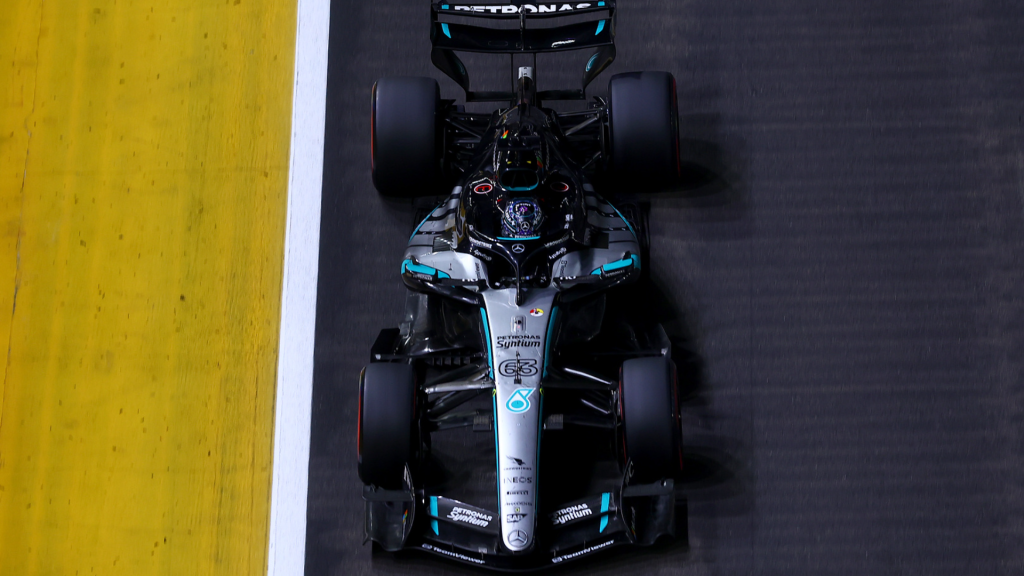
Mercedes has experienced a small reduction in its average, from 34.45 to 33.17 points per round, but remains comfortably ahead of every other team in total points since the summer break.
The German manufacturer has collected 199 points across six rounds, 47 more than Red Bull.
That reflects the strength of its overall campaign, particularly the contributions of championship leader Kimi Antonelli and George Russell.
Mercedes has nevertheless faced challenges in recent races. Russell’s retirement in Malaysia and grid penalties in Singapore affected the team’s results, while its latest aerodynamic developments initially proved difficult to optimise.
The team subsequently confirmed that Antonelli’s updated W17 was faster than Russell’s older specification after its Singapore comparison, providing a clearer technical direction ahead of Austin.
Ferrari and McLaren have lost momentum in different ways
Ferrari’s average has fallen by 18.2%, from 27.91 to 22.83 points per round.
The Scuderia remains second in the Constructors’ Championship with 444 points, but its results since the summer break have fluctuated considerably.
It scored 31 points in the Netherlands before collecting only eight in Italy and 12 in Spain. The team subsequently recovered to 20 in Azerbaijan, 27 in Malaysia and 39 in Singapore.
McLaren’s decline has been smaller in percentage terms, with its average falling from 20.18 to 19.50 points per round.
However, the distribution of those results reveals a more immediate concern.
McLaren scored 43 points at Zandvoort but none in Azerbaijan and only ten in Malaysia, allowing Red Bull to close rapidly in the Constructors’ Championship.
The difference between the teams has fallen to just seven points, with McLaren third on 339 and Red Bull fourth on 332.
The situation has increased the importance of McLaren’s planned developments for Austin, where the team will attempt to halt Red Bull’s recent progress.

Audi improves while Williams suffers the sharpest decline
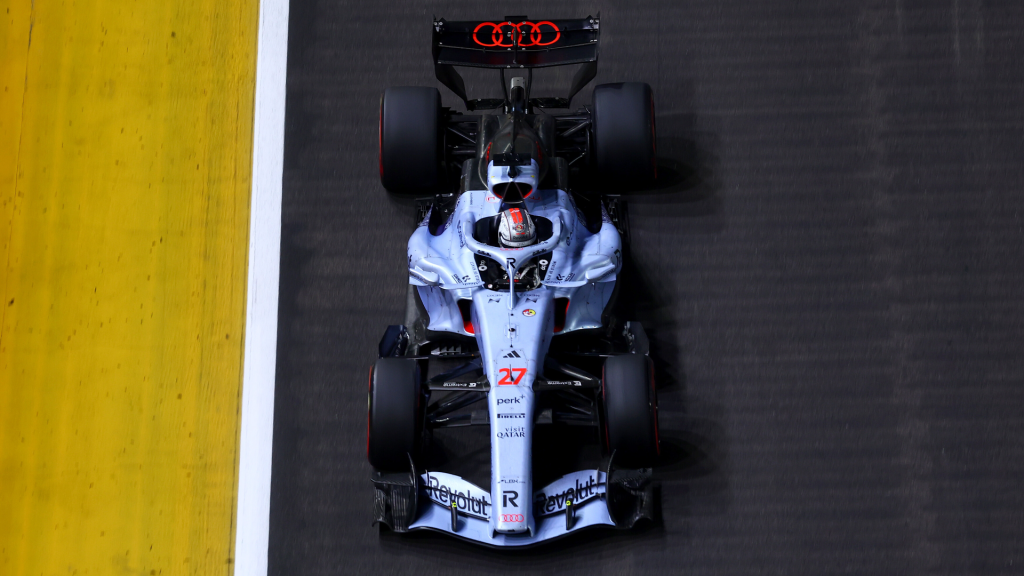
Away from the leading teams, Audi has improved its average from 1.09 to 1.83 points per round, a rise of 68.1%.
The German manufacturer scored 12 points before the summer break and 11 in the following six events, including six in Singapore.
Aston Martin has also improved, collecting six points after the break compared with just one before it. Its percentage increase is substantial, but the extremely small initial total means it should not be interpreted as evidence of a comparable leap in competitiveness to Red Bull’s.
At the other end of the comparison, Williams has suffered the steepest proportional decline among teams that scored points in both periods. Its average has fallen from 1.00 to just 0.17 per weekend, with only one point collected since Zandvoort.
Alpine has also struggled, dropping from 4.73 to 2.67 points per round, while Racing Bulls and Haas have recorded smaller averages than in the opening 11 events.
Cadillac remains the only constructor yet to score a championship point in 2026.
What the numbers reveal before Austin
The comparison highlights the difference between sustained championship performance and recent competitive momentum.
Mercedes remains the strongest constructor by total points, while Ferrari continues to hold second place despite a lower post-break scoring average. McLaren has retained third, but Red Bull’s recovery has made that position increasingly vulnerable.
Red Bull is the only established front-running team to record a substantial increase in its points-per-round average, while Audi and Aston Martin have improved from much smaller bases.
The United States Grand Prix at Austin, scheduled for October 23–25, will provide the next opportunity to assess whether those trends continue.
The complete Austin schedule and international start times are available on GRANDE PRÊMIO.