News Summary
- Mercedes studied the Macarena rear-wing concept more than a year ago.
- Simone Resta says the aerodynamic trade-off did not justify investing in development and manufacturing.
- Mercedes could reconsider the solution after Ferrari, McLaren and Red Bull introduced their own versions.
Mercedes has revealed that it designed and evaluated a version of Formula 1’s radical ‘Macarena’ rear wing more than a year ago, but rejected the concept after concluding that its drag-reduction benefits did not justify the accompanying aerodynamic compromises.
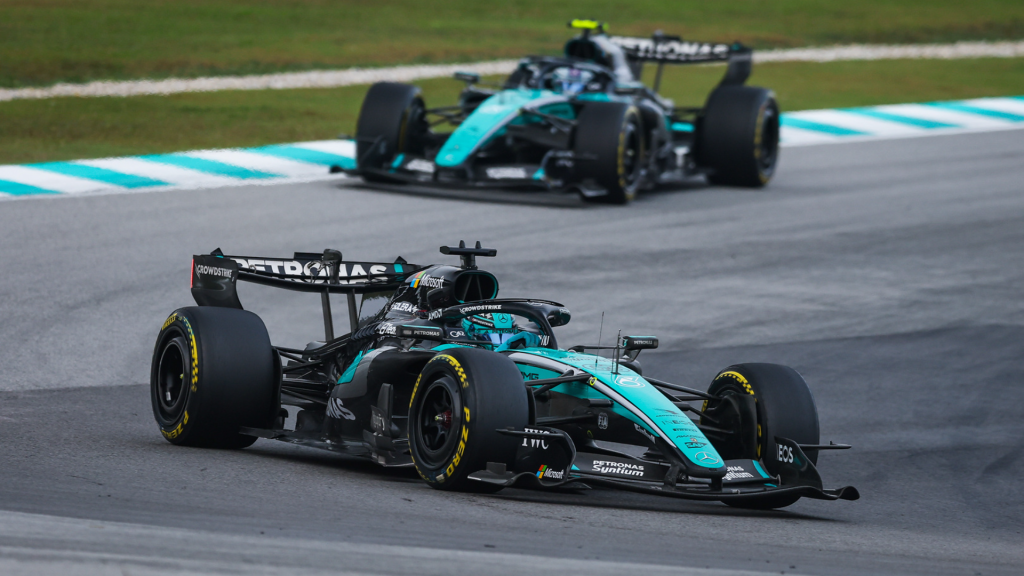
The admission came from Simone Resta, Mercedes’ deputy technical director, during the Nu Silver Arrows Radio Show. While Ferrari, Red Bull and McLaren have experimented with the rotating rear-wing concept during the 2026 season, Mercedes has continued pursuing a different approach.
Resta’s comments demonstrate that the Brackley team was familiar with the idea long before it became one of the most recognisable technical innovations of the new regulatory era.
“I am probably going to say something we have not shared before,” Resta said, revealing that the design had been considered during the early development of the W17.
The Italian explained that Mercedes had evaluated the solution but decided not to commit resources to manufacturing and track development.
Why Mercedes rejected the Macarena wing
The Macarena wing is designed to exploit Formula 1’s active aerodynamic regulations, which allow cars to change their aerodynamic configuration between corners and designated straight-line sections.
By rotating the rear-wing element, teams can reduce aerodynamic drag and improve straight-line efficiency, an increasingly important consideration under regulations that place greater demands on electrical energy management.
However, the benefit comes with a trade-off.
Resta explained that the configuration reduces aerodynamic load while the system is open. Mercedes concluded that the overall compromise did not justify the investment required to develop the concept.
The team’s assessment involved more than a comparison of straight-line speed. Engineers must consider the relationship between drag, downforce, stability, energy deployment and the behaviour of the entire aerodynamic package.
A solution that produces a benefit in one phase of a lap does not necessarily improve the complete lap time.
Mercedes therefore continued developing its existing rear-wing architecture rather than introducing the rotating concept.
Ferrari, McLaren and Red Bull follow another path
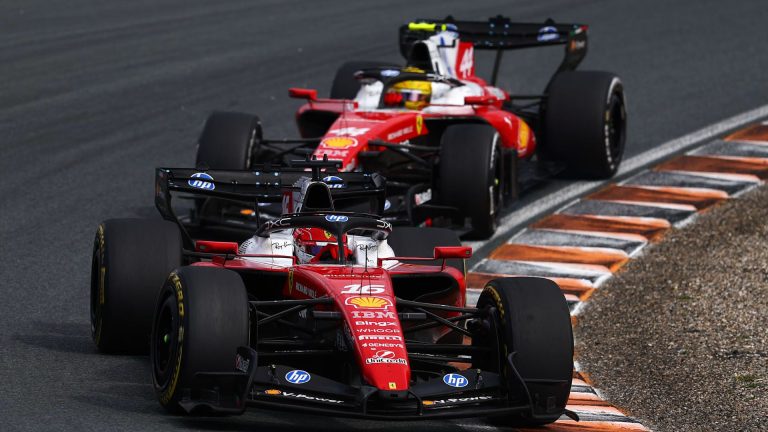
Ferrari attracted widespread attention when it introduced the rotating rear-wing concept during pre-season testing, with the unusual movement earning the nickname Macarena.
Red Bull subsequently developed its own version, while McLaren spent several months evaluating the system before introducing it in competition.
As GRANDE PRÊMIO reported when McLaren confirmed the debut of its Macarena wing at Monza, the Woking team had conducted an extensive development programme before deciding that the device was ready for racing.
McLaren’s version, known as the H-Wing, was designed to improve straight-line efficiency at circuits where low drag is especially important.
However, the team did not consider the configuration suitable for every venue.
Following its Monza debut, McLaren removed the Macarena wing for the Spanish Grand Prix, returning to a higher-downforce configuration better suited to Madrid’s circuit characteristics.
The decision illustrated the same fundamental trade-off that influenced Mercedes’ original assessment: reducing drag can be valuable, but the overall performance depends on the circuit and the aerodynamic balance of the car.
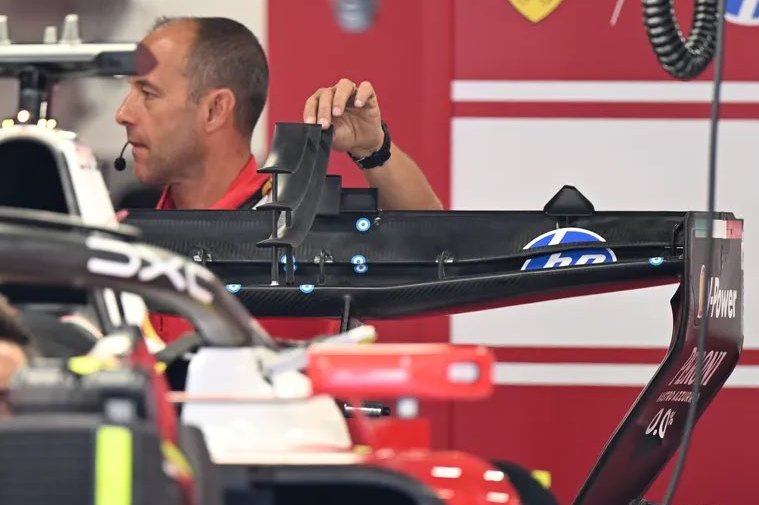
Ferrari has also continued refining its interpretation of the concept.
At the Hungarian Grand Prix, Ferrari introduced a revised Macarena wing inspired by McLaren’s aerodynamic development, adding further components intended to improve the rear wing’s performance.
FIA examined Macarena safety after Verstappen crashes
The rotating wing has also attracted attention because of safety concerns.
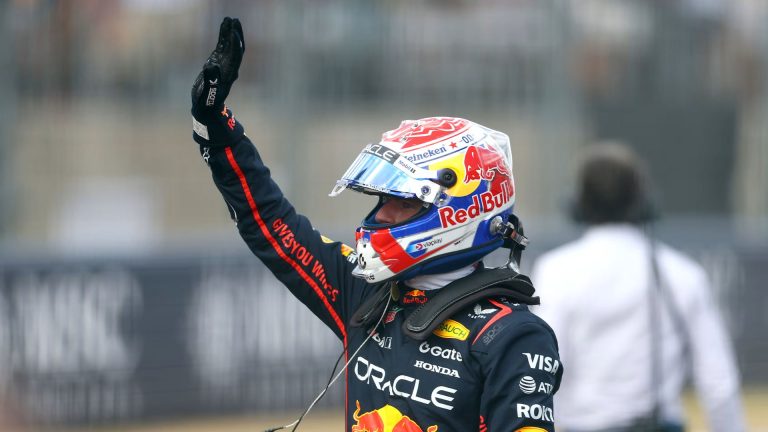
Red Bull experienced incidents involving Max Verstappen after problems with the operation of its version of the device, prompting the team to review the system and introduce modifications.
The FIA subsequently assessed the concept and confirmed that it remained legal and acceptable under the regulations, provided the necessary safety requirements were satisfied.
As GRANDE PRÊMIO reported following the FIA’s technical assessment, single-seater director Nikolas Tombazis explained that the governing body had worked with teams to ensure the mechanism operated safely.
The FIA did not impose a general ban on the design.
Mercedes’ decision to reject the concept should not be confused with those later safety concerns. Resta’s explanation centred on aerodynamic efficiency and the cost of development rather than a claim that the wing was inherently unsafe.
Mercedes could reconsider its decision
Although Mercedes decided against building the wing, Resta acknowledged that the conclusion was not necessarily permanent.
Formula 1 development is a continuous process, and teams regularly reassess concepts as competitors introduce new solutions and provide additional evidence of their performance.
Mercedes therefore remains open to revisiting the rotating-wing concept if future analysis demonstrates a worthwhile improvement.
The team’s approach reflects the wider technical competition under the 2026 regulations, with manufacturers still learning how to balance downforce, drag and electrical energy use.
For now, Mercedes has maintained its existing aerodynamic philosophy while Ferrari, McLaren and Red Bull continue developing their interpretations of the Macarena concept.
Formula 1 returns at the United States Grand Prix in Austin on October 23–25. GRANDE PRÊMIO will follow the teams’ latest technical developments through its Formula 1 coverage.