News Summary
- Hamilton has 229 points against Leclerc’s 215, despite the Monegasque leading their qualifying comparison 9–8.
- The Ferrari drivers are also separated by one result in races, with Hamilton ahead 9–8, while Leclerc has suffered more retirements.
- Singapore and Zandvoort demonstrate how strategy, traffic and tyre differences can distort direct comparisons of driver performance.
Lewis Hamilton and Charles Leclerc have experienced remarkably similar levels of competitiveness during the 2026 Formula 1 season, yet the seven-time world champion holds a 14-point advantage over his Ferrari team-mate with six rounds remaining.
Hamilton has accumulated 229 points after 17 grands prix, compared with Leclerc’s 215. The British driver occupies third place in the Drivers’ Championship, while the Monegasque is fifth, with Max Verstappen separating them in fourth.
However, the championship standings do not reflect a clear advantage for either driver in outright performance. Leclerc leads their qualifying head-to-head comparison 9–8, while Hamilton holds an identical 9–8 advantage in race results. The margins indicate that neither driver has consistently dominated the other, despite their different championship totals.
An examination by GRANDE PRÊMIO of Ferrari’s results, reliability record and strategic decisions reveals that the difference between Hamilton and Leclerc has been shaped by more than driving performance. Mechanical retirements, tyre selection, pit-stop timing and the difficulty of racing in traffic have repeatedly influenced the results of the two SF-26 drivers.
Hamilton vs Leclerc: 2026 F1 statistics after Singapore
| Statistic | Lewis Hamilton | Charles Leclerc |
|---|---|---|
| Championship position | 3rd | 5th |
| Championship points | 229 | 215 |
| Points per weekend | 13.47 | 12.65 |
| Qualifying head-to-head | 8 | 9 |
| Race head-to-head | 9 | 8 |
| Grand prix retirements | 1 | 3 |
| Points difference | +14 | −14 |
Statistics cover the 17 completed Formula 1 rounds through the Singapore Grand Prix on October 11, 2026. The head-to-head figures represent recorded results, not a measurement of average lap-time advantage.
Hamilton has averaged 13.47 points per weekend, compared with 12.65 for Leclerc. The difference is approximately 0.82 points per round, a relatively small margin considering the number of races already contested.
The head-to-head figures reinforce that impression. Leclerc has been ahead in 52.9% of qualifying comparisons, while Hamilton has finished ahead in 52.9% of race comparisons.
Neither figure establishes a meaningful average speed advantage without examining the actual time differences, but together they demonstrate that Ferrari’s internal competition has been considerably closer than the championship positions might suggest.
Leclerc leads qualifying — but by how much?
Leclerc’s 9–8 qualifying advantage is consistent with his reputation for extracting strong single-lap performance from Ferrari machinery. However, the narrow margin indicates that Hamilton has frequently been capable of matching or beating the Monegasque over one lap.
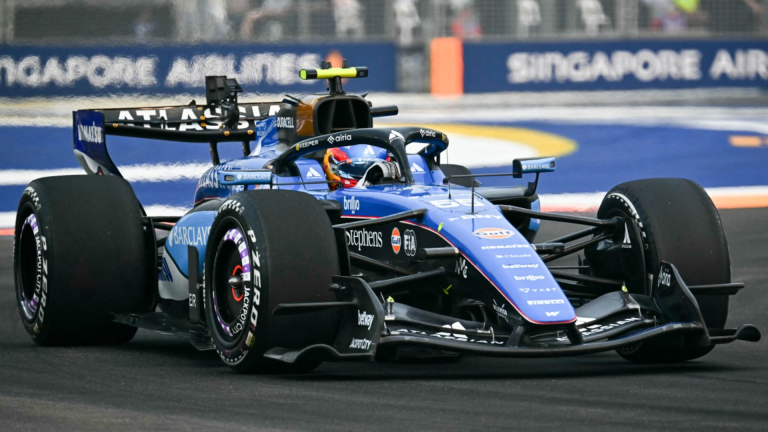
The Singapore Grand Prix provided a particularly useful example. Leclerc qualified second with a time of 1:31.427, just 0.054 seconds behind Max Verstappen’s pole position. Hamilton secured third with 1:31.496, only 0.069 seconds behind his team-mate.
| Driver | Singapore Q3 time | Gap to pole |
|---|---|---|
| M. VERSTAPPEN | 1:31.373 | — |
| C. LECLERC | 1:31.427 | +0.054s |
| L. HAMILTON | 1:31.496 | +0.123s |
| K. ANTONELLI | 1:31.562 | +0.189s |
The Ferrari drivers were separated by approximately 0.075% of Leclerc’s qualifying lap time. That is a very small difference, particularly at a circuit where precision, tyre preparation and confidence through slow corners can significantly influence lap performance.
Hamilton had shown competitive speed earlier in the weekend but struggled with oversteer during the final phase of qualifying. He subsequently acknowledged that the SF-26’s rear-end instability had prevented him from converting his earlier pace into a stronger result.
The British driver had also experienced difficulties during sprint qualifying, when a different run plan and a sudden loss of rear grip compromised his final attempt. Those circumstances demonstrate why a qualifying result cannot always be interpreted as a straightforward measurement of a driver’s underlying speed.
Across the season, Leclerc’s 9–8 advantage establishes that he has more frequently finished ahead, but it does not prove that he has been consistently faster by a significant margin.
Race results tell a different story
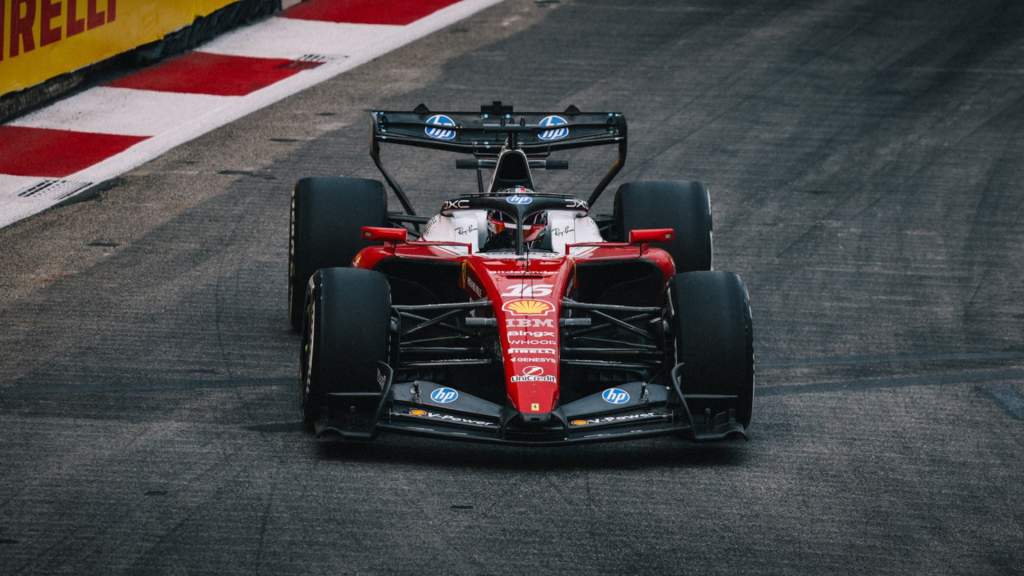
Hamilton’s 9–8 advantage in race results reverses the qualifying comparison, suggesting that the British driver has been marginally more successful at converting race weekends into stronger finishing positions.
However, the reliability record is an important factor. Leclerc has recorded three grand prix retirements, compared with one for Hamilton, reducing his opportunities to accumulate points and finish ahead of his team-mate.
The distinction is especially relevant because a retirement can have a substantial impact on the championship standings without establishing that the retiring driver was slower.
A mechanical failure, collision or other incident may remove a driver from contention even when the car has been competitive. Conversely, a driver who finishes a race may benefit from the retirement of rivals without necessarily demonstrating superior outright pace.
The 14-point difference between Hamilton and Leclerc is therefore the result of actual championship scoring, but it cannot be translated directly into a difference in driving performance.
A complete reconstruction of Ferrari’s internal battle would need to identify the causes of each retirement, the positions occupied when the incidents occurred and the realistic range of results available at those moments.
Singapore: how tyre strategy changed Ferrari’s internal battle
Singapore offers one of the clearest examples of how strategic circumstances can influence the comparison between Hamilton and Leclerc.
Ferrari started the race with different tyre compounds. Leclerc selected the soft tyre, while Hamilton began on mediums, reflecting uncertainty over tyre performance after limited representative running during the weekend.
The difference proved significant. Ferrari subsequently discovered that the soft compound performed better than anticipated, allowing Leclerc to maintain a competitive pace during the opening stint while Hamilton struggled to match the leading cars.
Hamilton stopped on lap 18 and switched to soft tyres, committing himself to a long second stint. The strategy initially allowed him to remain in contention near the front, but it became increasingly difficult as tyre wear accumulated.
A Virtual Safety Car triggered by Lance Stroll’s retirement created an opportunity for Ferrari to change tyres again. Team principal Frédéric Vasseur later confirmed that both drivers had been instructed to pit, but Hamilton missed the pit entry, leaving him on an increasingly compromised strategy.
Leclerc completed his stop and subsequently finished second, while Hamilton lost positions to Kimi Antonelli, Lando Norris and Oscar Piastri before finishing sixth.
The explanation of Hamilton’s missed Ferrari pit call in Singapore established that the team had intended to bring both drivers into the pits. Hamilton also accepted responsibility for the decision after the race.
Why Hamilton’s late Singapore pace was misleading
Hamilton’s lap times deteriorated substantially during the closing stages at Marina Bay, creating a large difference between the two Ferrari drivers.
However, the final-stint comparison cannot be treated as a representative measure of their natural race pace. Hamilton was attempting to complete an exceptionally long stint on soft tyres, while Leclerc had fresher rubber following his stop under the Virtual Safety Car.
The difference in tyre age altered the conditions under which the drivers were competing. Hamilton’s performance was increasingly affected by degradation, while Leclerc could exploit a more favourable tyre condition.
The race also illustrated how an individual strategic decision can influence a team’s result. Vasseur believed Ferrari had the potential to finish second and third, but Hamilton’s failure to stop removed the opportunity to protect both podium positions.
Even that assessment remains a counterfactual scenario. Hamilton was running in a position that offered a realistic podium opportunity, but the precise finishing order cannot be established with certainty once an alternative strategy is assumed.
The result therefore provides evidence of a costly execution error, rather than proof that Leclerc was intrinsically several seconds per lap faster.
Zandvoort: Leclerc’s strategy affected Hamilton’s race
The Dutch Grand Prix produced a different type of complication.
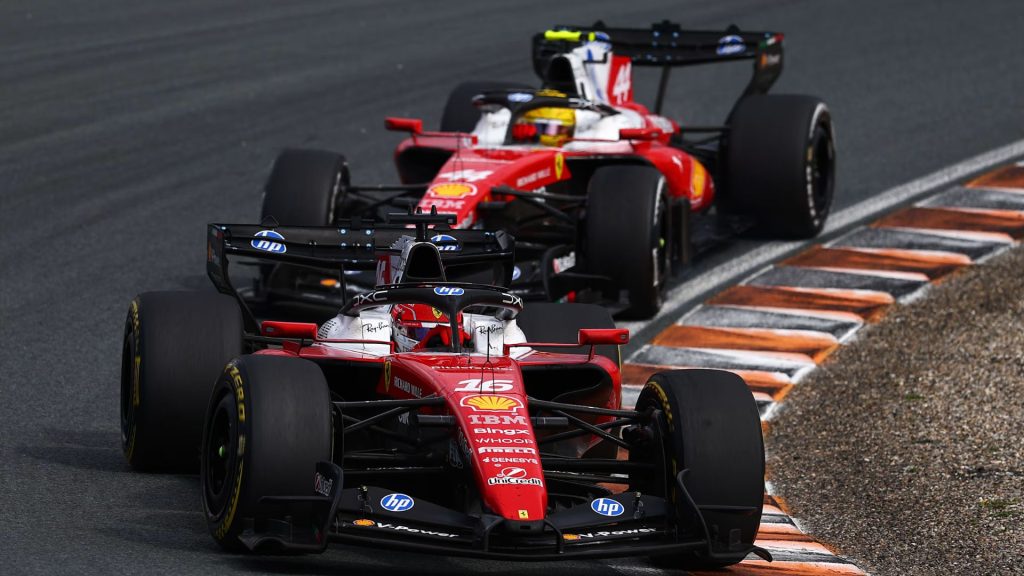
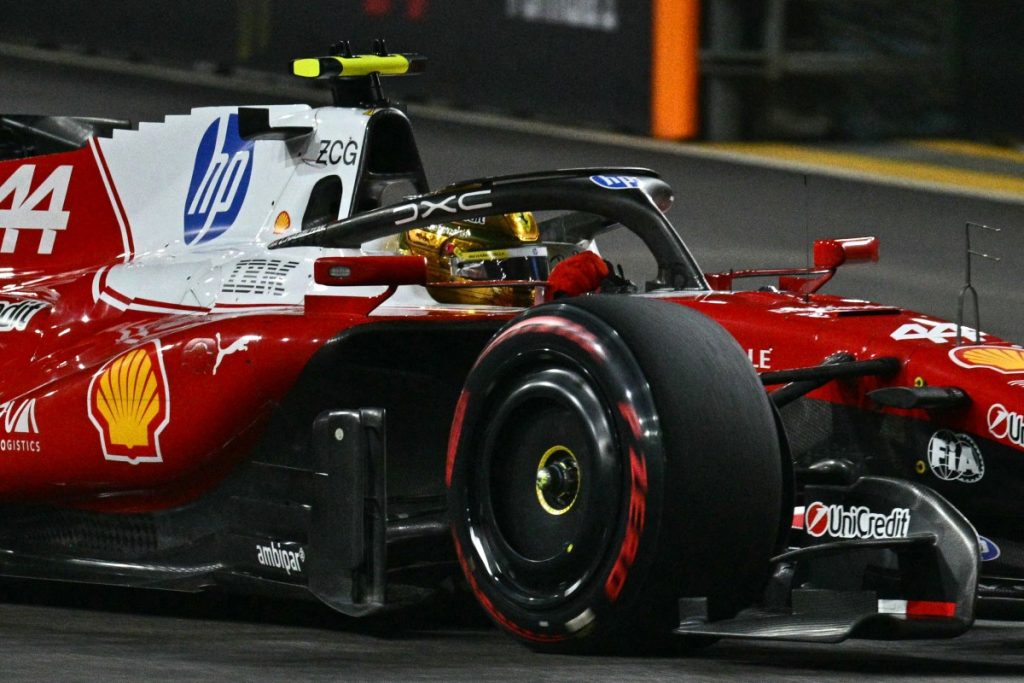
At Zandvoort, Ferrari’s two drivers found themselves on different tyre strategies while attempting to challenge George Russell for a podium position. Hamilton had fresher hard tyres during the second stint, while Leclerc remained ahead on older rubber.
The situation created frustration for Hamilton, who believed the delay behind his team-mate was compromising his opportunity to attack the Mercedes driver.
A previous GRANDE PRÊMIO lap-time investigation of Ferrari’s Zandvoort strategy found that Hamilton lost more than two seconds relative to Russell while running behind Leclerc.
That figure identifies a measurable loss during the relevant phase of the race, but it does not establish that Hamilton would have secured the podium had Ferrari managed the situation differently.
Leclerc also questioned the timing of his own second pit stop, arguing that extending the stint might have provided a stronger tyre advantage later in the race.
The Monegasque’s criticism of Ferrari’s Zandvoort pit timing showed that both drivers had concerns about how the team managed the race.
The episode illustrates why comparing their finishing positions without accounting for tyre strategy and traffic would produce an incomplete assessment.
Monza: when Ferrari’s drivers became each other’s problem
The Italian Grand Prix introduced another factor into Ferrari’s internal comparison: direct contact between its drivers.
Hamilton and Leclerc collided during the opening lap at Monza, with the British driver forced onto the gravel and losing positions. Leclerc subsequently retired following a separate accident, while Hamilton recovered to finish sixth.
The incident generated disagreement over how Ferrari should manage wheel-to-wheel racing between its drivers. Hamilton questioned the lack of clear internal rules, contrasting the situation with the procedures he had experienced at Mercedes.
The dispute over Ferrari’s driver-management approach at Monza became part of a broader debate about communication and decision-making within the team.
For statistical purposes, Monza demonstrates another limitation of simple head-to-head comparisons. A driver may finish ahead because the other retires, while the finishing driver’s own result may also have been compromised by their interaction.
Such incidents should be classified separately from weekends in which both drivers completed clean races under comparable conditions.
How much of Ferrari’s points difference comes from reliability?
The reliability comparison favours Hamilton, who has completed more grands prix than Leclerc.
However, the precise championship cost of Leclerc’s additional retirements cannot be determined simply by assigning points based on his position before each incident.
A driver running third when a mechanical problem occurs has a potential 15-point result, but that does not mean 15 points were guaranteed. Tyre degradation, strategy, rival performance and later incidents could all have changed the outcome.
The same caution applies to Hamilton’s missed podium opportunity in Singapore and the traffic-related losses at Zandvoort.
| Factor | Evidence from 2026 | What can be concluded |
|---|---|---|
| Qualifying | Leclerc leads 9–8 | Small advantage in head-to-head results |
| Race finishes | Hamilton leads 9–8 | Small advantage in classified race comparisons |
| Reliability | Leclerc has three retirements; Hamilton one | Leclerc has lost more finishing opportunities |
| Singapore strategy | Hamilton missed Ferrari’s VSC pit call | Confirmed execution error affected his result |
| Zandvoort traffic | Hamilton lost time behind Leclerc | Measurable delay, but podium not guaranteed |
| Monza incident | Ferrari drivers made contact | Race outcomes affected by an internal incident |
The table separates confirmed results and events from interpretations that would require additional lap-time or strategic modelling.
Reliability has contributed to Hamilton’s points advantage, but the available evidence does not establish how many of the 14 points should be attributed to mechanical problems rather than driver performance.
Can Hamilton and Leclerc be compared by average race pace?
The most useful next step is to measure the drivers’ performance during representative race stints, rather than relying exclusively on finishing positions.
For a meaningful comparison, the data must be restricted to laps completed on equivalent tyre compounds, with similar tyre age and comparable fuel loads. Pit-entry and exit laps, Safety Car periods, significant traffic and laps affected by mechanical problems should be identified separately.
A median lap-time comparison can reduce the influence of isolated slow laps, while a tyre-degradation analysis can help establish whether one driver maintains performance more effectively over a stint.
| Metric | What it measures | Main limitation |
|---|---|---|
| Qualifying lap gap (%) | Relative single-lap speed | Different qualifying conditions |
| Clean-air median race lap | Representative stint pace | Fuel and tyre-age differences |
| Tyre degradation | Pace loss over a stint | Track evolution and tyre management |
| Positions gained or lost | Race execution | Grid position and strategy |
| Points per race start | Scoring efficiency | Reliability and race incidents |
| Head-to-head results | Frequency of beating team-mate | Does not quantify speed advantage |
The confirmed results establish a close competition between Hamilton and Leclerc, but a reliable season-long average race-pace advantage cannot be calculated from championship points or head-to-head results alone.
Singapore is a particularly strong example of why that distinction matters. Including Hamilton’s heavily degraded final stint without accounting for tyre condition would distort the comparison.
The same applies to Zandvoort, where traffic and strategic differences affected the lap times available to both drivers.
Ferrari’s competitive position adds another complication
Ferrari has demonstrated race-winning potential at several points during 2026, but the SF-26 has not consistently matched Mercedes across the championship.
The team has also faced renewed competition from Red Bull, which has improved significantly during the second half of the season.
At Singapore, Ferrari qualified second and third, showing that the SF-26 could challenge for pole position. Leclerc subsequently finished second, while Hamilton’s compromised strategy prevented the team from converting both strong starting positions into podium finishes.
That weekend illustrates the difference between the performance available from the car and the points ultimately scored.
Ferrari’s internal management has also attracted attention, with the relationship between Hamilton, Leclerc and the team’s strategic decisions becoming a recurring subject during the season.
However, the team’s difficulties should not be treated as evidence that one driver has consistently received inferior machinery or deliberate strategic disadvantages. The documented incidents require individual examination.
What the numbers reveal about Hamilton and Leclerc
After 17 rounds, Ferrari’s two drivers are separated by just 14 points and one result in each head-to-head comparison.
Leclerc has more frequently qualified ahead, while Hamilton has more frequently finished ahead in races. Their championship scoring rates differ by less than one point per weekend.
Those figures support the assessment that Ferrari’s internal battle has been closely contested rather than dominated by either driver.
The larger differences have emerged during particular race weekends, when reliability, tyre selection, traffic and strategic execution have changed the available results.
Singapore is the clearest recent example. Hamilton’s missed pit call was a confirmed error that compromised his race, but the resulting gap to Leclerc cannot be used as a direct measure of their relative driving speed.
At Zandvoort, the opposite complication appeared, with Hamilton losing time behind his team-mate while Ferrari managed different tyre strategies.
Who has been Ferrari’s stronger driver in 2026?
Hamilton has delivered the better championship return, while Leclerc holds the narrow advantage in qualifying. The race head-to-head favours Hamilton by the same 9–8 margin, but the difference in retirements means that comparison is not entirely independent of reliability.
Neither driver has established a decisive statistical advantage across every measure.
The most defensible finding is that Ferrari has two closely matched drivers whose results have been shaped by different combinations of performance, reliability and race execution.
The final six rounds will provide further opportunities to examine that relationship, beginning with the United States Grand Prix at Austin on October 23–25.