News Summary
- Verstappen hated Red Bull’s original 2022 car, which had been developed with Alexander Albon’s simulator feedback and suited Pérez’s driving style.
- Verstappen’s management demanded a change of development direction during the Azerbaijan Grand Prix weekend in 2022.
- Horner says Red Bull naturally prioritised its fastest driver, helping explain why Pérez, Ricciardo, Albon and now Hadjar have struggled with Verstappen’s preferred handling characteristics.
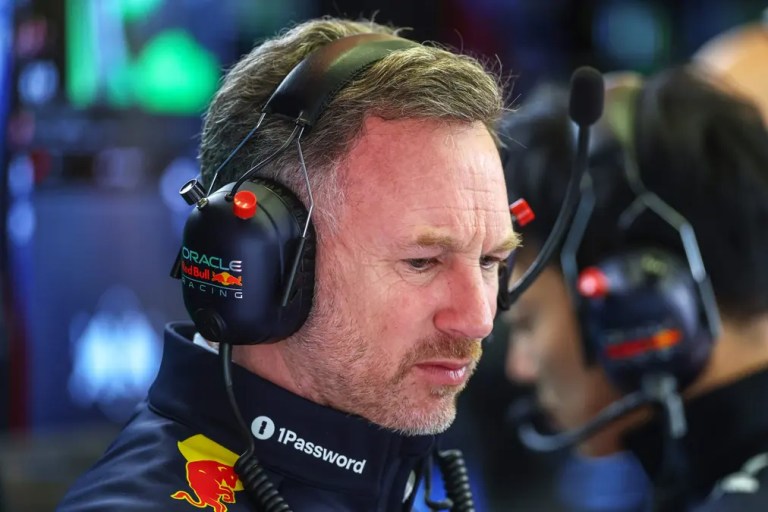
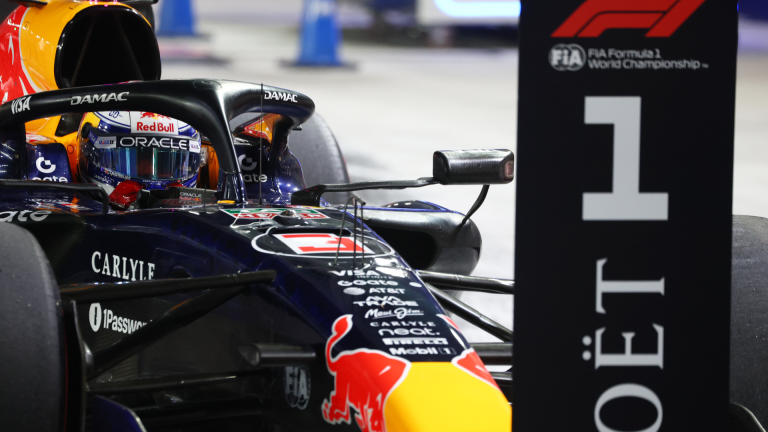
Christian Horner has revealed that Max Verstappen initially hated Red Bull’s 2022 Formula 1 car because it had been developed around handling characteristics more suitable for Sergio Pérez, prompting the Dutchman’s management to demand a change in the team’s technical direction during the Azerbaijan Grand Prix weekend.
Speaking on the High Performance podcast, the former Red Bull team principal explained how the team’s development priorities gradually moved towards Verstappen’s unusual driving style, which requires exceptional front-end grip and a willingness to manage an unstable rear end. Horner acknowledged that the approach made the cars increasingly difficult for teammates who preferred more conventional handling characteristics.
The former team boss insisted that Red Bull had not deliberately attempted to disadvantage its second driver. Instead, he argued that engineers naturally followed the feedback of the competitor most capable of delivering victories.
“Any technical department is naturally going to gravitate towards their fastest driver,” Horner said, explaining why Verstappen’s preferences became central to Red Bull’s development programme.

Verstappen hated Red Bull’s 2022 car as Pérez gained confidence
Horner traced the origins of the situation to Red Bull’s preparations for Formula 1’s major technical regulation changes in 2022.
During the previous season, Verstappen had been engaged in an intense championship battle with Lewis Hamilton, forcing Red Bull to continue developing its 2021 car until the closing stages.
Alexander Albon, who had lost his race seat to Pérez, remained involved in the organisation as a reserve and development driver, contributing extensively to simulator work on the new RB18.
According to Horner, Albon’s feedback reflected a relatively conventional driving style, closer to those preferred by Pérez and Daniel Ricciardo.
“Alex did a hell of a job in the background developing the ’22 car,” Horner said.
The resulting RB18 initially suffered from understeer, making it less responsive at corner entry than Verstappen preferred.
“When we started the ’22 season, Max hated the car,” Horner revealed.
The handling characteristics helped Pérez remain closer to Verstappen during the opening rounds, with both drivers winning races early in the campaign.
Horner explained that Pérez was particularly comfortable with the car’s predictable behaviour, allowing him to challenge his teammate more consistently than during later stages of the season.
Verstappen’s management demanded changes in Baku
The situation reached a turning point during the 2022 Azerbaijan Grand Prix weekend.
Horner recalled a meeting with Verstappen’s management, which questioned why Red Bull had developed a car that appeared better suited to Pérez.
The message was direct.
“You’ve developed this car around Checo. You need to be following what Max needs,” Horner recalled being told.
According to the former team principal, the discussion made the driver’s expectations clear.
Red Bull subsequently continued developing the RB18, introducing changes that improved the front-end response and allowed Verstappen to exploit his preferred driving style more effectively.
The Dutchman became increasingly dominant as the season progressed, eventually securing 15 Grand Prix victories and his second world championship.
Pérez finished third in the standings, but his performance relative to Verstappen deteriorated as the car evolved.
The Mexican had previously acknowledged that the direction of development made the Red Bull more difficult for him to drive.
Speaking in 2022, Pérez explained that the car had increasingly moved away from the characteristics he preferred, reducing his confidence and consistency.
Horner’s latest account provides additional context for those comments, confirming that Verstappen’s management had directly questioned the team’s initial development direction.
Why Verstappen’s driving style creates problems for teammates
Horner explained that Verstappen possesses an unusual ability to control cars with extremely responsive front ends and relatively unstable rear ends.
Most drivers prefer a more predictable balance, allowing them to build confidence through corners without having to make constant corrections.
Verstappen, however, is comfortable with a car that rotates aggressively on corner entry, even when that creates instability during the transition to acceleration.
“Max is tremendously demanding for what he wants,” Horner said.
The former Red Bull boss described the Dutchman’s ability to handle rear instability as exceptional.
“He can just cope with whatever the rear does,” he explained.
That characteristic has influenced the direction of Red Bull’s technical development since approximately 2018, when Verstappen began establishing a consistent advantage over Ricciardo.
Horner acknowledged that the resulting cars became increasingly difficult for teammates with more conventional driving preferences.
As GRANDE PRÊMIO reported following Red Bull technical director Pierre Waché’s assessment, Verstappen’s ability to identify handling problems and communicate precise feedback is another important part of his contribution to the team’s development.
Waché described the Dutchman’s technical sensitivity as an exceptional quality, helping engineers identify performance opportunities that other drivers might not recognise.
The combination of unusual car-control ability and detailed technical feedback has made Verstappen particularly influential in shaping Red Bull’s cars.
Horner says Hadjar faces same challenge in 2026
Horner believes the effects of that development philosophy remain visible in Red Bull’s current driver pairing.
Isack Hadjar joined the senior team for 2026 after impressing during his rookie season at Racing Bulls, but has struggled to match Verstappen’s results as the championship progressed.
The contrast has become more pronounced since Red Bull introduced major updates during the second half of the season.
Verstappen won consecutive Grands Prix in Malaysia and Singapore, while Hadjar experienced a decline in performance despite the overall improvement of the RB22.
Horner suggested that the difference reflects the challenge of extracting performance from a car that rewards Verstappen’s distinctive driving style.
He also acknowledged that limitations in Red Bull’s development tools had contributed to the problem during his time as team principal.
The team’s wind tunnel and simulation systems were not always sufficiently accurate, making it harder to predict how technical changes would affect different drivers.
Those limitations increased the importance of Verstappen’s feedback, particularly because he consistently delivered stronger results than his teammates.
As GRANDE PRÊMIO examined in its analysis of Red Bull’s recent recovery, the team’s performance improved significantly after updates introduced around Azerbaijan, allowing Verstappen to return to winning form.
The difference between Verstappen and Hadjar has nevertheless remained an important concern.
Red Bull’s 2026 revival renews debate over second seat
The question of whether Red Bull’s cars are too closely aligned with Verstappen’s preferences has become particularly relevant as the team prepares for 2027.
Horner’s former organisation has struggled to establish a consistently competitive second driver since Ricciardo’s departure at the end of 2018.
Pierre Gasly, Albon, Pérez, Liam Lawson and Yuki Tsunoda all experienced difficulties in the senior team, although their circumstances and opportunities differed substantially.
Hadjar has demonstrated competitive speed during 2026, but the increasing gap to Verstappen has raised questions about whether the team can consistently score points with both cars.
Red Bull currently sits fourth in the Constructors’ Championship, just seven points behind McLaren, despite Verstappen’s recent victories.
GRANDE PRÊMIO’s analysis of the post-summer points battle examines how Verstappen’s performances have allowed the team to recover ground against its rivals.
The championship returns at the United States Grand Prix in Austin on October 23–25, where Red Bull will attempt to continue its recent improvement.