News Summary
- Alonso reported a reduction in Aston Martin’s deficit from around four seconds to 1.3 seconds during the first half of the season, although those figures came from different circuits.
- Aston Martin introduced a major aerodynamic upgrade in Hungary, followed by Honda’s revised power unit at Zandvoort.
- Alonso qualified 17th and finished 16th in Singapore, while Lance Stroll retired with a clutch problem, showing that performance and reliability remain concerns.
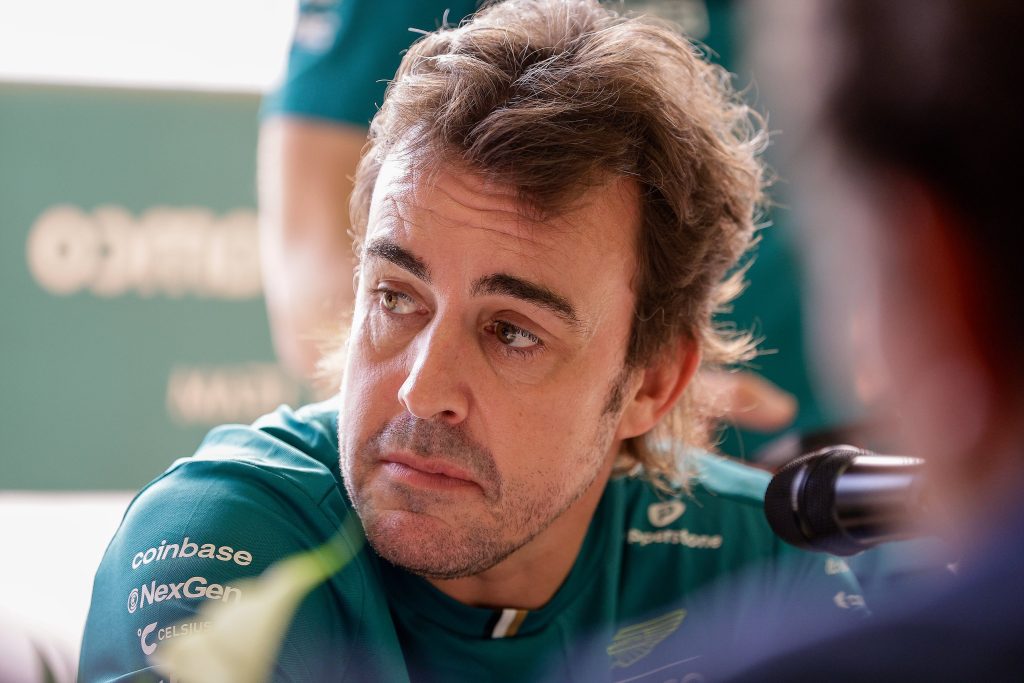
Fernando Alonso’s 2026 Formula 1 season has been dominated by questions about the competitiveness of Aston Martin’s partnership with Honda, but the Spanish driver believes the team has made substantial progress since the beginning of the championship. The improvement, however, has not been sufficient to transform the AMR26 into a consistent points-scoring car.
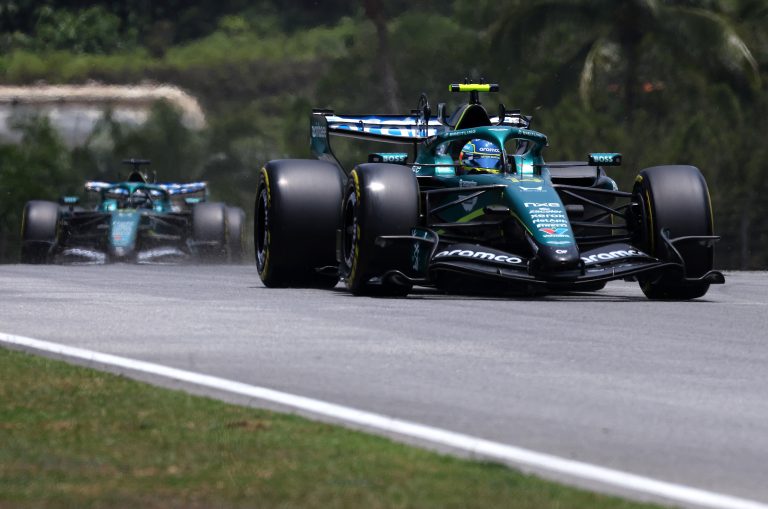
The contrast became particularly clear during the Singapore Grand Prix, where Alonso qualified 17th despite the aerodynamic developments introduced earlier in the season and Honda’s revised power unit. The two-time world champion subsequently finished 16th, one lap behind winner Max Verstappen, while team-mate Lance Stroll retired because of a clutch problem.
An investigation by GRANDE PRÊMIO into Aston Martin’s development programme reveals that the team has made progress in several areas, including aerodynamic performance, weight reduction and the integration of Honda’s power unit. However, the available results also demonstrate that improving the car does not necessarily mean closing the gap to the leading teams at every circuit.
The distinction is particularly important because Alonso has referred to an improvement of almost three seconds since the beginning of the year. That figure describes the change in the team’s reported competitiveness, but it cannot be treated as a precise measurement of aerodynamic or engine gains without accounting for differences between circuits, track conditions and the performance of rival cars.
How much has Aston Martin improved since the start of 2026?
Aston Martin began the season struggling with severe power-unit vibrations, reliability problems and an AMR26 that lacked the performance required to compete regularly for points. Alonso described the early deficit to the leading teams as approximately four seconds per lap, highlighting the scale of the challenge facing the Silverstone-based operation.
By the Dutch Grand Prix at Zandvoort, the Spaniard offered a more encouraging assessment. After qualifying 18th, Alonso explained that Aston Martin had reduced its deficit to approximately 1.3 seconds in Q1, compared with the much larger gaps recorded earlier in the championship.
The difference between those figures is approximately 2.7 seconds, but the comparison has an important limitation: it refers to performances at different circuits, under different conditions, against rivals whose cars were also developing.
| Performance reference | Reported deficit | Context |
|---|---|---|
| Early 2026 | Approximately 4.0s | Alonso’s assessment of the initial deficit |
| Zandvoort Q1 | Approximately 1.3s | Alonso’s assessment after qualifying |
| Apparent reduction | Approximately 2.7s | Comparison of the driver’s reported figures |
These figures are based on Alonso’s public assessments. They are not a controlled measurement of lap-time gains across identical conditions.
The reduction is encouraging, but it does not establish that Aston Martin physically gained 2.7 seconds through upgrades alone. Part of the change may reflect the characteristics of the circuits, different competitive conditions or variations in the performance of the leading teams.
A more reliable measurement would compare Aston Martin’s qualifying deficit as a percentage of the fastest lap at every round, preferably using representative times from the same qualifying segment.

Why Aston Martin’s Hungarian upgrade mattered
The Hungarian Grand Prix marked an important stage in Aston Martin’s development programme, with the team introducing its first major aerodynamic update under Adrian Newey’s technical direction.
The package was intended to improve the AMR26’s overall aerodynamic efficiency, balance and consistency. It also provided an opportunity to evaluate whether the team’s updated simulation tools were producing results that matched the behaviour of the car on track.
Aston Martin subsequently reported encouraging correlation between its simulations and the performance observed in Hungary, an important step for a team attempting to recover from a difficult start to the season.
However, Alonso and Stroll finished outside the points, in 14th and 13th respectively. The results demonstrated that the new components had not immediately transformed the team’s competitive position.
The Hungarian upgrade was therefore more significant as evidence of a potentially improved development direction than as an immediate breakthrough in race results. It provided a foundation for further work, particularly as Honda prepared to introduce its own revised power unit.
Honda’s Spec 2 engine: what actually changed?
Honda introduced its first major power-unit update of the season at Zandvoort, following the aerodynamic developments brought by Aston Martin in Hungary.
The revised engine focused on the internal combustion unit, with Honda working to improve performance and address limitations identified during the opening races.
Chief engineer Shintaro Orihara confirmed that the upgrade was consistent with the manufacturer’s expectations, but declined to disclose the precise improvement in horsepower or lap time.
That distinction is important. Honda has confirmed technical progress, but has not publicly established a numerical horsepower gain that can be independently converted into seconds per lap.
The manufacturer also acknowledged that drivability remained an area requiring improvement. This refers to how effectively the driver can control and use the available power, particularly during acceleration and transitions between different phases of energy deployment.
A more powerful engine does not necessarily produce a faster car if its characteristics make traction, braking or energy management more difficult.
The Honda update therefore represented progress in the power-unit programme without resolving every aspect of the AMR26’s performance deficit.

Zandvoort showed progress — but also its limitations
The Dutch Grand Prix provided the first competitive opportunity to assess the revised Honda power unit.
Alonso qualified 18th, with Stroll 19th, leaving both Aston Martins eliminated in Q1. The Spaniard nevertheless emphasised the progress made compared with the beginning of the season, pointing to the reduction in the gap to the leading cars.
The result illustrated the difference between relative improvement and competitive position. Aston Martin could reduce its deficit substantially and still remain near the back of the grid, particularly in a tightly contested midfield.
Zandvoort also placed considerable emphasis on cornering balance and aerodynamic stability, meaning the result could not isolate the contribution of the new engine from the characteristics of the chassis.
The weekend therefore provided evidence that the team’s overall performance had improved compared with its initial expectations, but not enough to establish Aston Martin as a consistent Q2 contender.
Singapore exposed the AMR26’s remaining weaknesses
The Singapore Grand Prix offered another opportunity to evaluate Aston Martin’s development after the introduction of both the aerodynamic package and the revised Honda engine.
Alonso qualified 17th with a lap of 1:34.223, while Stroll finished 19th with 1:34.946. The Spaniard missed Q2 by just 0.054 seconds, indicating that Aston Martin remained close to the midfield cut-off but lacked the pace required to progress.
| Driver | Singapore qualifying | Best Q1 lap | Result |
|---|---|---|---|
| F. ALONSO | 17th | 1:34.223 | Eliminated in Q1 |
| L. STROLL | 19th | 1:34.946 | Eliminated in Q1 |
The difference between the Aston Martin drivers was 0.723 seconds, a substantial margin in a session where Alonso himself was only 0.054 seconds away from progressing.
However, the gap cannot be interpreted solely as a difference in driving performance. Stroll failed to complete his first representative attempt and made another mistake during his final run, while Alonso improved throughout the session.
Alonso subsequently explained that his final qualifying attempt had been clean and that the team had managed the session correctly, but the car still lacked sufficient performance. Aston Martin therefore decided to replace his power unit overnight.
The decision was followed by further changes to the suspension setup of both cars under parc fermé conditions, forcing Alonso and Stroll to start Sunday’s grand prix from the pit lane.
Reliability remains a major problem for Honda
Aston Martin’s performance difficulties have been compounded by reliability problems throughout the season.
The partnership began with severe vibrations from the Honda power unit, creating difficulties not only for outright performance but also for the operation and durability of components.
Honda and Aston Martin have worked to address those issues, but Singapore demonstrated that reliability remains a concern.
Stroll retired from the race because of a clutch problem, while Alonso completed the grand prix in 16th place. The Spaniard’s result came after starting from the pit lane following the team’s overnight changes.
The distinction between engine and transmission-related problems is important. Not every Aston Martin mechanical failure can automatically be attributed to Honda’s internal combustion engine, particularly when the problem involves the clutch, gearbox or other components of the powertrain installation.
Nevertheless, reliability across the complete car remains a major limitation on the team’s ability to convert improvements into championship points.
Alonso vs Stroll: what the results reveal
Alonso has generally provided Aston Martin’s strongest qualifying reference, including the Singapore weekend, when he outqualified Stroll by two positions and more than seven tenths of a second.
However, the comparison between the drivers must account for the circumstances of each session. Stroll’s mistakes during Singapore qualifying contributed to the gap, while Alonso’s cleaner execution allowed him to approach the Q2 threshold.
The race results also require context. Both drivers started from the pit lane, but Stroll retired with a mechanical problem, preventing a representative comparison of their performance over the full race distance.
The Hungarian Grand Prix produced a different outcome, with Stroll finishing 13th and Alonso 14th, demonstrating that the Spaniard has not been ahead in every race.

Has Honda improved Aston Martin’s straight-line speed?
One of the most important questions concerns the effect of Honda’s revised power unit on straight-line performance.
The Spec 2 update was focused on the internal combustion engine, making it reasonable to investigate whether Aston Martin improved its speed on circuits with long straights.
However, maximum speed figures cannot be interpreted as direct measurements of engine power.
A car’s speed at the end of a straight depends on aerodynamic drag, wing configuration, energy deployment, battery charge, corner-exit speed, slipstream and environmental conditions.
That means a car can record a higher top speed without having a more powerful engine, just as a power-unit improvement may not produce a higher maximum speed if the team chooses to run more aerodynamic downforce.
Honda has not published a sufficiently detailed breakdown of the upgrade’s horsepower gain to allow a reliable conversion into straight-line speed or lap time.
Why Aston Martin’s improvement has not produced consistent results
The AMR26’s development illustrates the difficulty of recovering competitiveness during a Formula 1 season in which rival teams are also introducing upgrades.
Aston Martin has made progress in aerodynamic development and Honda has improved its power-unit package, but the team’s results remain heavily dependent on circuit characteristics.
At venues where straight-line performance and energy deployment are particularly important, the car’s remaining limitations can become more visible. At circuits where aerodynamic balance and mechanical grip are more significant, Aston Martin may be better positioned to compete with the midfield.
Even that distinction is not absolute. Singapore was expected to offer opportunities because of its relatively limited emphasis on long straights, yet both cars were eliminated in Q1.
The result suggests that Aston Martin’s difficulties cannot be explained by engine power alone. Chassis balance, drivability, tyre preparation, reliability and the performance of rival teams all influence the competitive outcome.
How to measure Aston Martin’s real 2026 improvement
The most useful statistical measurement is the percentage difference between Aston Martin’s representative qualifying lap and the fastest comparable lap at each grand prix.
Using percentages rather than raw seconds allows results from circuits of different lengths to be compared more meaningfully, although variations in track characteristics and conditions remain relevant.
| Metric | What it reveals | Main limitation |
|---|---|---|
| Qualifying deficit (%) | Relative one-lap competitiveness | Circuit and session differences |
| Q2 / Q3 appearances | Frequency of midfield progression | Field competitiveness |
| Straight-line speed | Performance at speed traps | Drag, deployment and slipstream |
| Race finishing positions | Actual sporting results | Strategy, incidents and reliability |
| Mechanical retirements | Reliability record | Different failure causes |
| Alonso–Stroll head-to-head | Internal performance comparison | Unequal race circumstances |
The strongest analysis would also separate the season into three periods: before the Hungarian aerodynamic upgrade, between Hungary and Zandvoort, and after Honda’s Spec 2 introduction.
That would make it possible to examine whether Aston Martin’s improvement accelerated after either development, while recognising that the two upgrades affect different aspects of the car.
What the numbers say about Aston Martin and Honda
The available evidence supports a distinction between technical progress and competitive recovery.
Aston Martin’s Hungarian aerodynamic upgrade produced encouraging simulation correlation, while Honda’s revised engine met the manufacturer’s initial expectations. Alonso’s assessment at Zandvoort also indicated a substantial reduction in the gap compared with the beginning of the season.
However, the team remained outside Q2 in Singapore, with Alonso qualifying 17th and Stroll 19th. The race then produced another disappointing result, including a clutch-related retirement for Stroll.
Aston Martin has made technical progress, but the evidence does not establish that the AMR26 has become consistently competitive with the midfield. The remaining problems involve more than a simple shortage of engine power, and the team’s performance continues to vary significantly between circuits.
The United States Grand Prix at Austin will provide another opportunity to evaluate the combination of Honda’s revised power unit and Aston Martin’s aerodynamic developments.
The full United States Grand Prix schedule and international start times are available on GRANDE PRÊMIO.