News Summary
- McLaren has confirmed small floor changes and braking reliability and performance upgrades for the United States Grand Prix.
- Rob Marshall believes Austin could better suit the MCL40, but says Friday practice will be essential to validate the modifications.
- Red Bull is just seven points behind McLaren in the Constructors’ Championship, increasing the pressure on Lando Norris and Oscar Piastri.
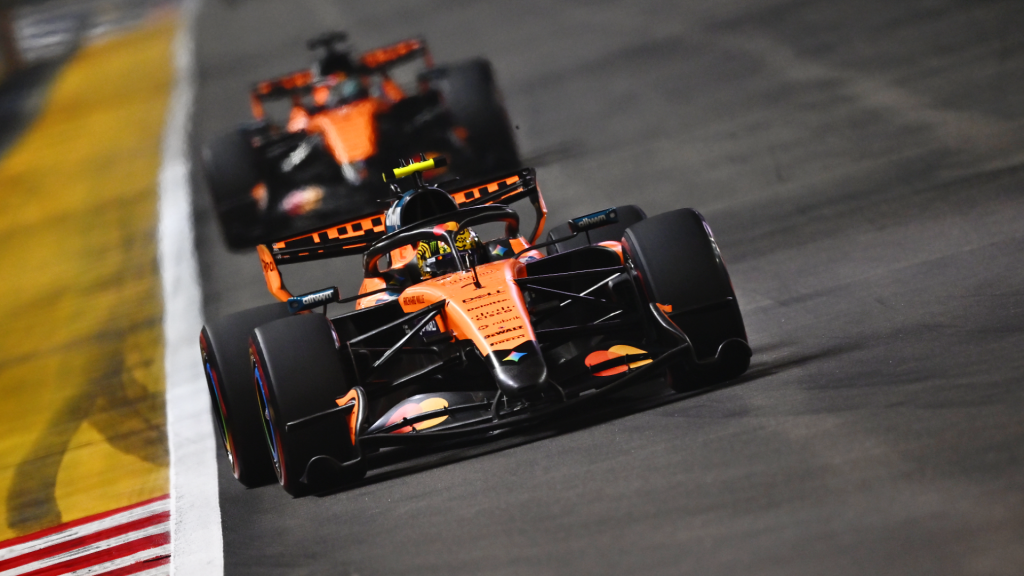
McLaren has confirmed that it will introduce modifications to the MCL40’s floor and braking system at the 2026 United States Grand Prix, as the British team attempts to recover competitiveness and defend its shrinking advantage over Red Bull in the Constructors’ Championship.
The changes were detailed by chief technical officer and chief designer Rob Marshall in McLaren’s official Austin preview, published on Tuesday, October 20. The team will bring a limited development package aimed at addressing braking reliability and performance problems, alongside smaller aerodynamic changes to be evaluated during practice.
The confirmation comes after McLaren announced plans to introduce further developments at Austin, without initially identifying the components involved. Marshall has now clarified the areas receiving attention, although the team has not disclosed the precise geometry of the floor modifications or the technical specifications of the braking changes.
McLaren targets braking problems and floor performance
Marshall explained that McLaren’s latest package is relatively modest, rather than a major redesign of the MCL40.
“We’re bringing a modest selection of upgrades for this event, aimed at improving some braking reliability and performance issues,” he said.
The British engineer also confirmed that the team intends to evaluate minor changes to the car’s floor during the weekend.
“We also have some small floor changes to test,” Marshall added.
The distinction is important because the two development areas address different aspects of the car’s performance.
Braking improvements can help drivers achieve greater consistency when approaching corners, particularly under heavy deceleration and when managing the transition between electrical energy recovery and conventional braking.
Floor modifications, meanwhile, can influence aerodynamic load, balance and the way the car responds to changes in speed and ride height.
McLaren has not confirmed that the new components will produce a specific lap-time improvement, nor has it detailed whether both drivers will immediately use identical specifications.
The team will evaluate the package during Friday’s two practice sessions before determining its final configuration for qualifying and the race.
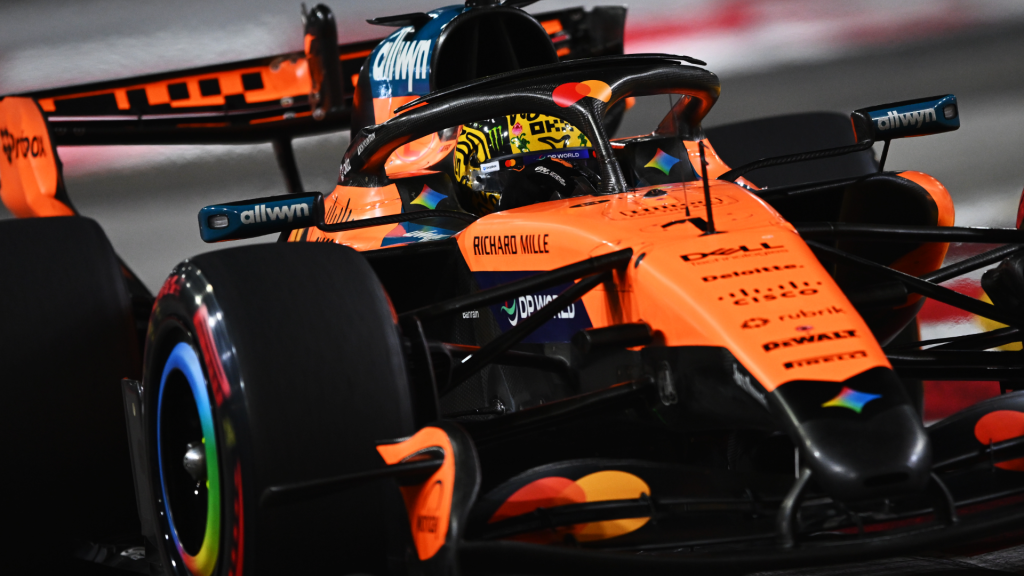
Marshall believes Austin could suit McLaren better
Circuit of The Americas presents a combination of characteristics that McLaren believes could be more favourable to the MCL40 than the circuits visited during the recent triple-header.
The opening sector features a demanding sequence of high-speed direction changes, while the second half of the lap includes a long straight, heavy braking zones and slower corners.
Marshall believes the circuit will provide an opportunity to assess whether McLaren’s recent difficulties were partly related to track characteristics rather than a fundamental lack of performance.
“The last few races have not been great for us, but I think we’re getting stronger again and Austin is probably a better circuit for our car,” he said.
However, the engineer acknowledged that predicting the competitive order has become increasingly difficult because teams continue introducing developments and the characteristics of individual circuits can influence performance.
The additional practice time at Austin will be particularly important.
Unlike Singapore, the United States Grand Prix will not feature a sprint race in 2026, allowing teams to complete three practice sessions before qualifying.
Marshall said McLaren will use that running to compare its simulation and development data with the car’s behaviour on track.
“Practice will be important for correlating what we’ve seen in our development tools with the track,” he explained.
“We are still learning how best to extract performance from this car.”
The engineer added that Austin’s variety of corners makes finding a balanced setup particularly important, with teams needing to compromise between high-speed stability, traction and braking performance.
Red Bull threatens McLaren’s third place after Singapore
McLaren’s technical programme has become increasingly important because of Red Bull’s improvement during the second half of the season.
The Austrian team has recovered strongly since Azerbaijan, with Max Verstappen winning consecutive Grands Prix in Malaysia and Singapore.
Those results have reduced McLaren’s advantage in the Constructors’ Championship to just seven points, after the British team previously led Red Bull by 83.
McLaren enters Austin third with 339 points, while Red Bull has 332.
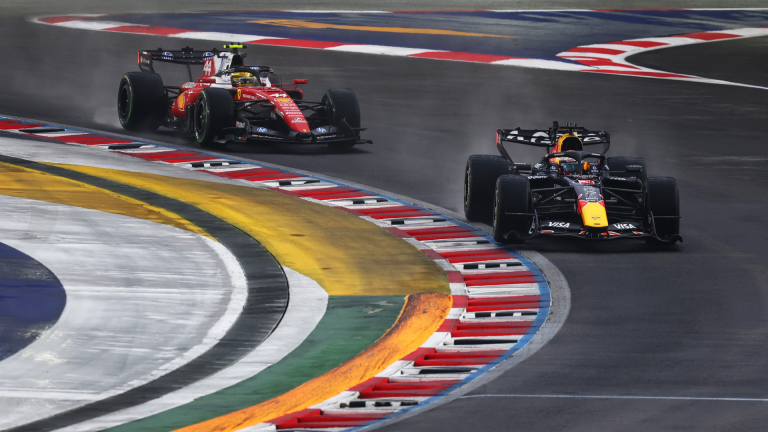
The fight for third place has tightened dramatically as Red Bull erases McLaren’s former advantage, creating another important championship battle during the final six rounds.
Norris and Piastri scored only 33 points between them across the Azerbaijan, Bahrain and Singapore triple-header, according to McLaren’s official preview.
The team has also struggled to match its rivals’ pace during several recent races, particularly when balancing aerodynamic performance with tyre management.
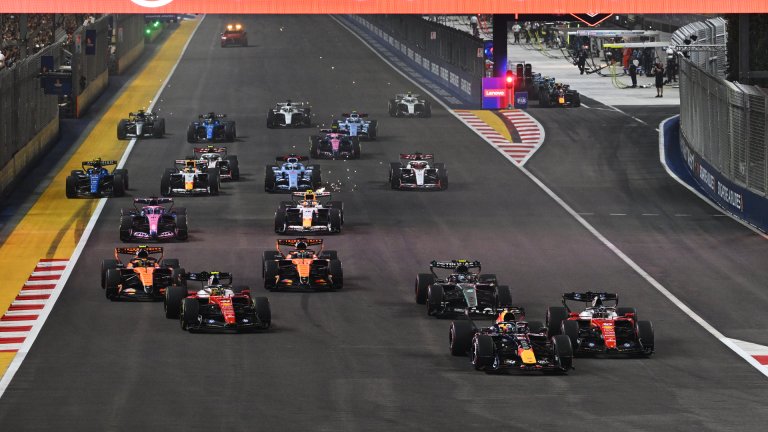
At Singapore, Norris finished fourth and Piastri fifth, but neither could challenge Verstappen for victory.
The result reinforced the importance of improving the MCL40 before the final rounds.
Stella demands recovery after difficult triple-header
Team principal Andrea Stella acknowledged that McLaren’s recent performances had fallen below expectations.
The Italian said the team had spent the break following Singapore reviewing its technical performance and operational decisions.
“After a difficult triple-header, we take the lessons learned from both our performance and execution and put them into action,” Stella said.
He emphasised that the team must continue improving rather than assume that previous success guarantees future results.
“In Formula 1, success is never guaranteed,” the McLaren boss added.
Both Norris and Piastri returned to the factory during the break to analyse the data and work in the simulator ahead of the final six Grands Prix.
The team believes Austin could provide a better opportunity to compete near the front, although its recent performance has made the outcome difficult to predict.
McLaren’s immediate objective is to recover enough competitiveness to challenge Red Bull directly while limiting the risk of further points losses.
Austin upgrades also help McLaren prepare for 2027
The modifications introduced in Texas will also provide information for McLaren’s next Formula 1 car.
Marshall explained that the changes between the 2026 and 2027 technical regulations are relatively limited, allowing teams to carry over much of their current development knowledge.
“The regulation changes for 2027 are quite modest, so most of the parts and philosophies on this car are relevant to the direction for next year,” he said.
That does not mean every component introduced at Austin will be transferred directly to the 2027 car.
Instead, McLaren is concentrating on understanding the relationship between simulations, wind-tunnel results and track performance.
Even when individual components are redesigned, the data collected during development can improve the team’s tools and engineering methods.
The floor modifications will therefore serve two purposes: attempting to improve the MCL40 immediately and providing additional information for the next championship.
McLaren faces a similar challenge to Ferrari, which has prepared its final major aerodynamic upgrade of 2026 for Austin.
The Italian team is concentrating on a redesigned floor and bodywork revisions, while McLaren is introducing a smaller package focused on specific weaknesses.
When will McLaren test its new upgrades?
McLaren will begin evaluating the changes during the opening free-practice session on Friday, October 23.
| Session | Austin (CDT) | Brasília (BRT) | UK |
|---|---|---|---|
| Friday FP1 | 12:30 | 14:30 | 18:30 BST |
| Friday FP2 | 16:00 | 18:00 | 22:00 BST |
| Saturday FP3 | 12:30 | 14:30 | 18:30 BST |
| Saturday qualifying | 16:00 | 18:00 | 22:00 BST |
| Sunday race | 15:00 | 17:00 | 20:00 GMT |
The full Austin practice guide provides FP1 and FP2 start times worldwide, including the United States, United Kingdom, India, Australia and New Zealand.