News Summary
- Max Verstappen recorded the fastest average race pace at the 2026 Mexican Grand Prix, just 0.061s per lap ahead of Lewis Hamilton, according to Formula Data Analysis.
- Andrea Kimi Antonelli was the fourth-fastest driver and outpaced Mercedes teammate George Russell by 0.176s per lap, reinforcing the strength of his championship-winning campaign.
- The data suggests Red Bull and Ferrari have narrowed Mercedes’ competitive advantage, while McLaren continues to struggle despite using the same power unit as the championship-winning team.
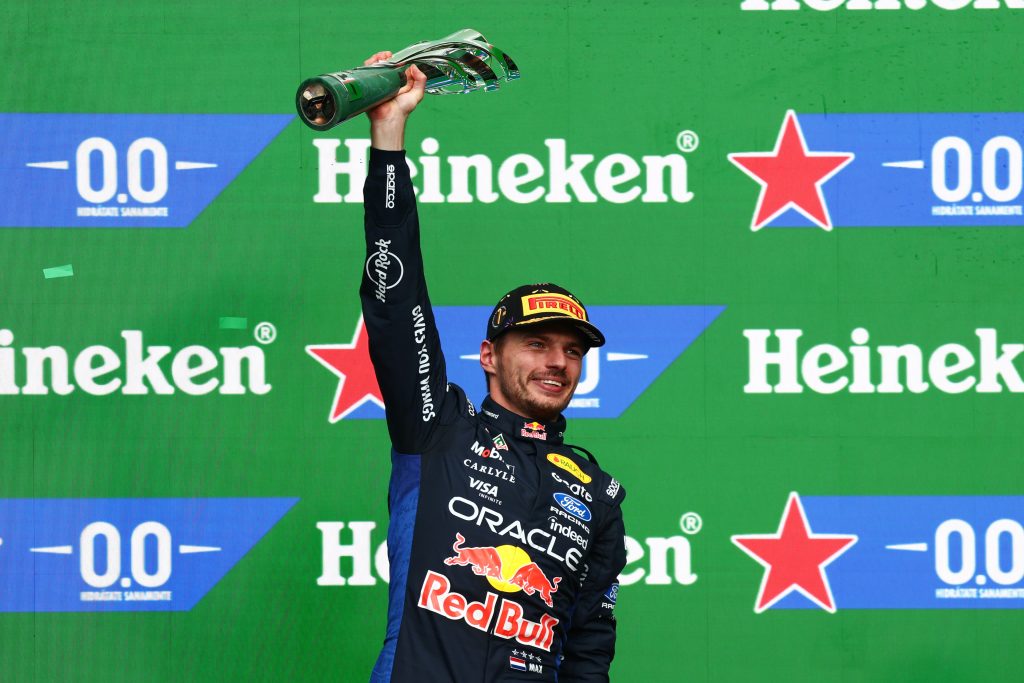
Ferrari may have opened the door for Max Verstappen to win the 2026 Mexico City Grand Prix, but the race-pace data suggests the Red Bull driver did considerably more than simply benefit from Lewis Hamilton and Charles Leclerc’s opening-lap confrontation. Verstappen recorded the fastest average lap time of the race, narrowly beating Hamilton in a performance that also raises questions about the competitive balance heading into Formula 1’s final rounds and the 2027 season.
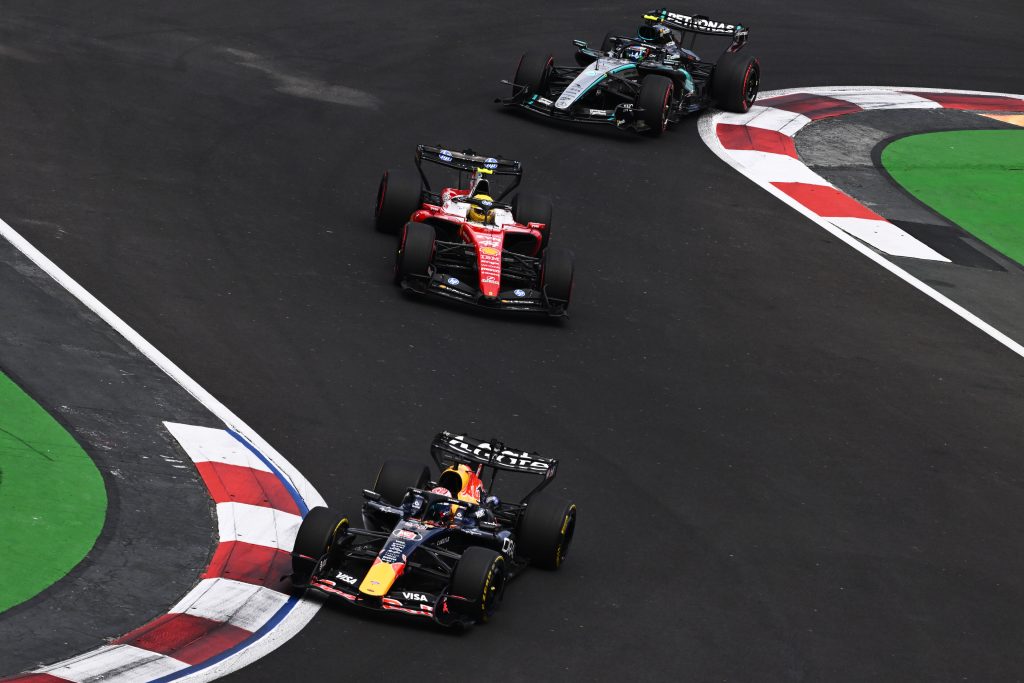
Verstappen averaged 1:20.654, compared with Hamilton’s 1:20.715. The difference of just 0.061s per lap illustrates how closely matched Red Bull and Ferrari were throughout the Mexican Grand Prix.
Verstappen had the pace to turn Ferrari’s mistake into victory
The opening lap at the Autódromo Hermanos Rodríguez has already generated considerable controversy.
Hamilton started from pole, but his battle with Leclerc through the opening corners compromised Ferrari’s opportunity to control the race.
Leclerc eventually received a five-second penalty for leaving the track and gaining an advantage, while Verstappen capitalised on the confrontation to move into contention for the lead.
Hamilton subsequently accused Leclerc of costing Ferrari victory, and team principal Frédéric Vasseur described the missed opportunity as unacceptable.
However, the pace analysis adds an important dimension to that argument.
Verstappen was the fastest driver on average, even if only marginally ahead of Hamilton.
The Dutchman combined an aggressive opening lap with effective strategy and strong execution during a race interrupted by Safety Cars and a red flag.
His victory margin of just 0.799s over Hamilton demonstrates how little separated the leading contenders at the finish.
It does not prove Verstappen would have won without the Ferrari incident. Race position, tyre management, traffic and the timing of the interruptions could all have produced a different outcome.
But the data challenges the suggestion that Red Bull simply inherited a victory it lacked the performance to achieve.
Ferrari’s pace makes missed opportunity even more painful
Hamilton’s performance was particularly encouraging for Ferrari.
The seven-time champion had already demonstrated the SF-26’s qualifying potential by securing pole position, ending a 1,197-day drought.
His race pace then confirmed that Ferrari’s competitiveness was not limited to a single flying lap.
Hamilton was just 0.061s per lap slower than Verstappen, while Leclerc ranked third with an average of 1:20.869, 0.215s behind the Red Bull driver.
The two Ferrari drivers therefore appeared among the three fastest competitors in the race-pace ranking.
That makes the team’s failure to win particularly frustrating.
Leclerc’s final stint on soft tyres was also compromised by a lock-up after the red flag, contributing to slower lap times during the closing phase.
The Monegasque eventually finished fourth, while Hamilton recovered to second.
Leclerc acknowledged that his five-second penalty was deserved, although he argued that both Ferrari drivers had made mistakes.
The pace figures strengthen the argument that Ferrari had a genuine opportunity to win, but they do not establish that a one-two finish was guaranteed.
Antonelli’s championship was built on more than Mercedes superiority
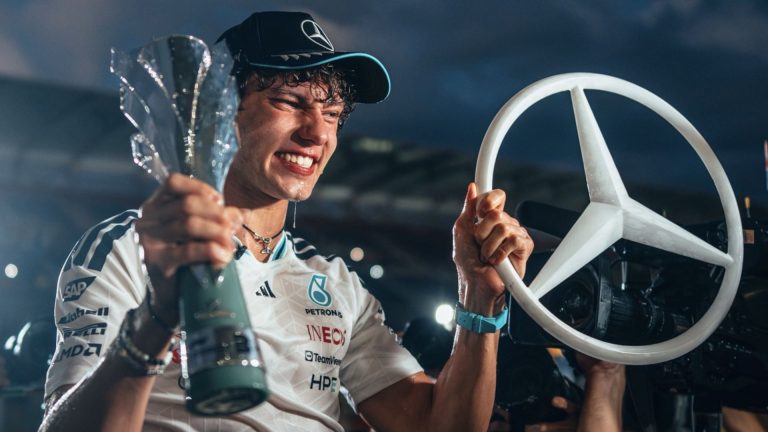
Andrea Kimi Antonelli’s third place secured the 2026 Drivers’ World Championship, making the Italian Formula 1’s youngest champion at 20.
The race-pace figures also highlight his individual contribution.
Antonelli averaged 1:20.963, placing him fourth overall and 0.176s per lap ahead of teammate Russell.
Russell’s average of 1:21.140 ranked fifth.
The difference is particularly relevant because Mercedes’ competitive advantage has not been equally evident at every circuit.
Antonelli has repeatedly demonstrated an ability to extract performance under pressure, and Mexico offered another example of his consistency.
The Italian secured the championship after finishing third behind Verstappen and Hamilton.
His campaign has combined outright speed with race management, consistency and the ability to capitalise when rivals encountered difficulties.
Mercedes provided a championship-winning platform, but Antonelli’s superiority over Russell in Mexico suggests that the driver’s contribution should not be overlooked.
Mercedes may no longer have the fastest car
Perhaps the most significant implication of the Mexican Grand Prix concerns the competitive order heading into 2027.
Mercedes has dominated much of the 2026 championship, benefiting from a strong interpretation of the new technical regulations.
However, the race-pace ranking places both Red Bull and Ferrari ahead of its drivers in Mexico.
Verstappen was 0.310s per lap faster than Antonelli, while Hamilton was 0.249s ahead of the new champion.
These differences suggest that Mercedes’ early-season performance advantage may have narrowed considerably.
Red Bull’s recovery has been especially notable, with Verstappen increasingly competitive as the team has addressed weaknesses that compromised its earlier races.
Ferrari has also made progress, although questions remain about its power unit performance and the impact of regulatory changes during the season.
The evidence from Mexico does not establish that Mercedes has permanently lost its advantage. Circuit characteristics, tyre choices and race circumstances can significantly affect comparisons.
Nevertheless, the German team can celebrate its 2026 Drivers’ Championship while recognising that its rivals appear better positioned to challenge next year than they did earlier in the season.
McLaren’s decline raises questions beyond the Mercedes engine
McLaren’s performance provides another revealing comparison.
The British team entered 2026 following its success in the previous championship cycle, but has struggled to match Mercedes despite using the same power unit supplier.
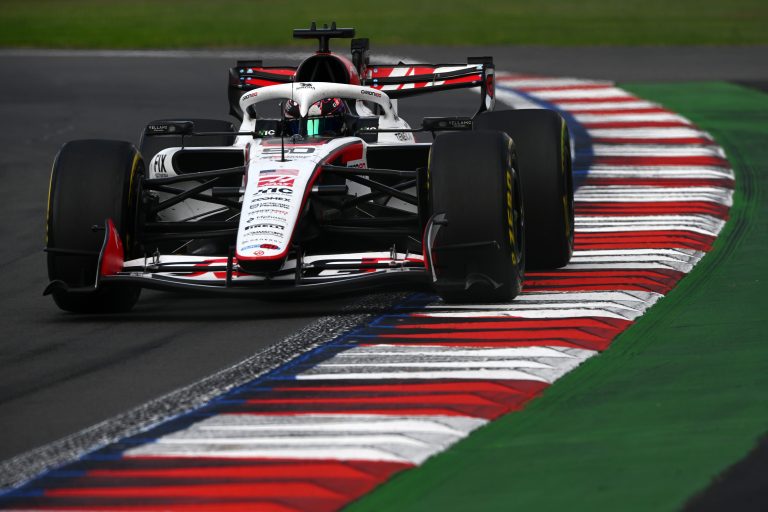
In Mexico, Norris averaged 1:21.206, placing him sixth in the race-pace ranking.
Piastri was considerably further behind at 1:21.646, almost one second per lap slower than Verstappen in the analysed sample.
The difference between McLaren and Mercedes suggests that the power unit alone cannot explain their contrasting performances.
Chassis efficiency, aerodynamic development, tyre management and transmission characteristics all influence race pace.
One possible contributing factor is McLaren’s gearing configuration, which may have affected how effectively the car exploited its available power at certain circuits.
However, the race-pace chart cannot establish whether gearing was responsible for the deficit, and that explanation requires additional technical evidence.
What the data does show is that McLaren was unable to match the average pace of either Mercedes driver in Mexico.
The team’s decline has been one of the major developments of the 2026 season, with Red Bull now ahead in the Constructors’ Championship following the Mexican Grand Prix and subsequent penalties.
Mexico offers a warning for the 2027 championship
The 2026 Drivers’ Championship has already been decided, but the Mexican Grand Prix offered a glimpse of a potentially different competitive landscape.
Verstappen’s victory demonstrated Red Bull’s capacity to challenge at the front. Ferrari’s pace showed that the SF-26 has developed into a genuine contender for race wins, even if execution remains a problem.
Mercedes, meanwhile, secured the title through Antonelli’s remarkable consistency and speed, but its advantage over the opposition appears less comfortable than earlier in the year.
McLaren faces perhaps the most difficult task, needing to recover performance against both the leading manufacturers and its own power unit supplier.
The central lesson from Mexico is that Mercedes may have won the championship before its rivals completed their recovery.
That does not diminish Antonelli’s achievement. It makes his ability to build a decisive advantage during the most favourable phase of the season even more significant.
And it leaves an intriguing question for 2027: if Verstappen, Hamilton and Antonelli begin the next championship with machinery as closely matched as their Mexican Grand Prix race pace suggests, the fight could look very different.
GRANDE PRÊMIO is following the 2026 Formula 1 World Championship with breaking news, full coverage and real-time updates in its Formula 1 section.