News Summary
- Lando Norris warned that the low temperatures expected in Las Vegas could make tyre warm-up particularly difficult with Formula 1’s 2026 cars.
- Max Verstappen criticised the narrow operating window of the wet-weather compounds, while Isack Hadjar raised concerns about aquaplaning during qualifying in Brazil.
- All three drivers identified tyre behaviour as a significant challenge after a São Paulo Grand Prix affected by changing weather conditions.
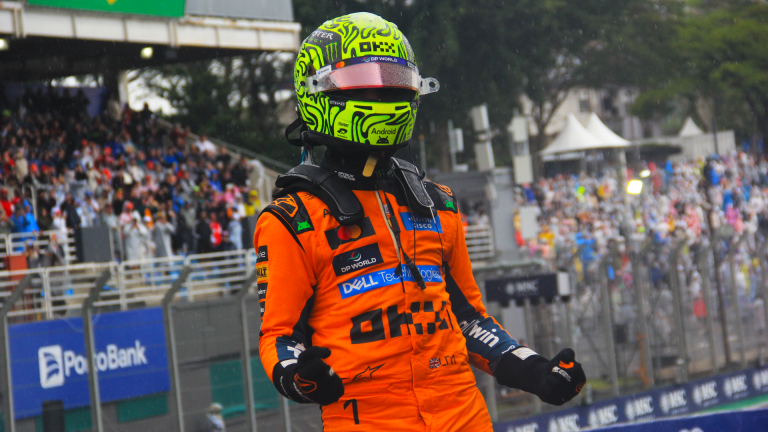
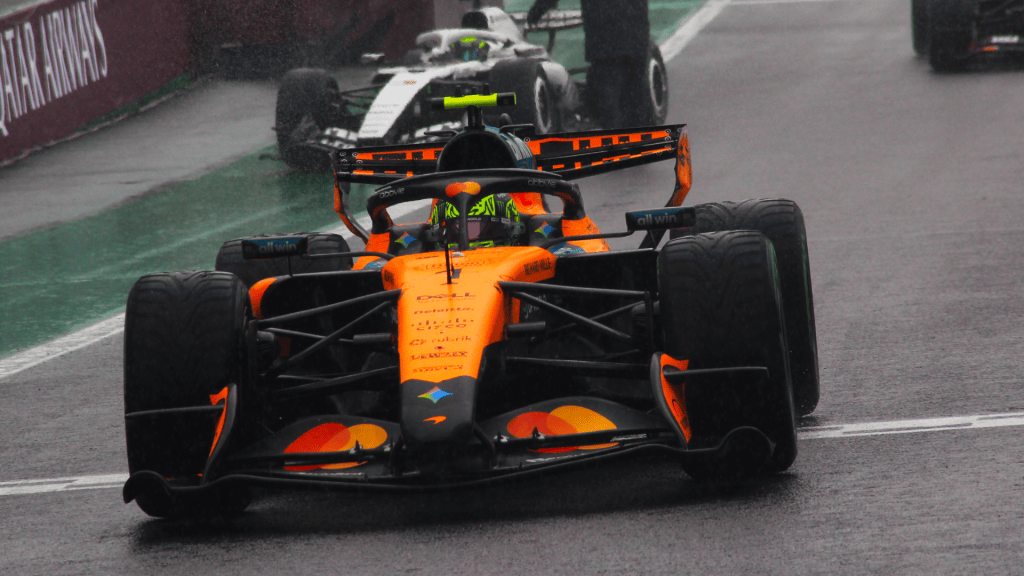
Lando Norris warned that Formula 1 could face serious tyre-temperature difficulties at the Las Vegas Grand Prix, describing the prospect of racing with insufficient grip in the cold as potentially “horrible” after a demanding weekend in changing conditions at Interlagos.
The McLaren driver raised the concern during the FIA’s post-race press conference following his victory at the São Paulo Grand Prix. Max Verstappen and Isack Hadjar also questioned aspects of the 2026 tyre compounds, particularly their performance when cold and their ability to cope with standing water.
Las Vegas presents a different challenge from Brazil. Its long straights and relatively low evening temperatures can make it difficult to keep tyres within their ideal operating window, potentially affecting braking, traction and driver confidence.

Norris warns Las Vegas could expose tyre weakness
Norris explained that the 2026 tyres become particularly difficult to manage when their temperature falls below the optimal range.
The Briton said Interlagos had been relatively forgiving because its layout allowed drivers to generate temperature more easily. Las Vegas, however, could expose the limitations more severely.
“For sure, when the tyres get cold, it’s pretty nasty,” Norris said.
“On laps to the grid, when they get very cold, they felt horrible. If they get into a good window, they’re good.”
The McLaren driver then identified Las Vegas as a potential concern.
“So, I think the scary times are if you go to Vegas and you can’t get any tyre temperature. You need a much better tyre than what we have here because that’s going to be horrible.”
Norris stressed that the tyres performed reasonably well in Brazil once they reached the correct temperature. The problem, he explained, is the difficulty of reaching that operating window consistently.
The warning comes as McLaren prepares to introduce further aerodynamic updates for Las Vegas, following improvements that contributed to Norris’ third victory of the season.
However, aerodynamic performance alone may not determine competitiveness if teams struggle to generate sufficient tyre temperature.
Verstappen says cold F1 tyres become ‘like a rock’
Verstappen agreed that tyre behaviour remains a significant concern, particularly with the intermediate and extreme-wet compounds.
The Red Bull driver argued that the available operating window is too narrow, leaving drivers with insufficient grip when the tyres are cold.
“I think it’s mainly that the working range is a bit too small,” Verstappen said.
“When they’re hot, it’s okay, but when they’re cold, they’re really like a rock.”
The four-time world champion called for changes that would make the compounds more effective across a wider range of temperatures.
“That’s something that we need to try and work on, to generate a bigger working range on the Extreme Wet and the Inter.”
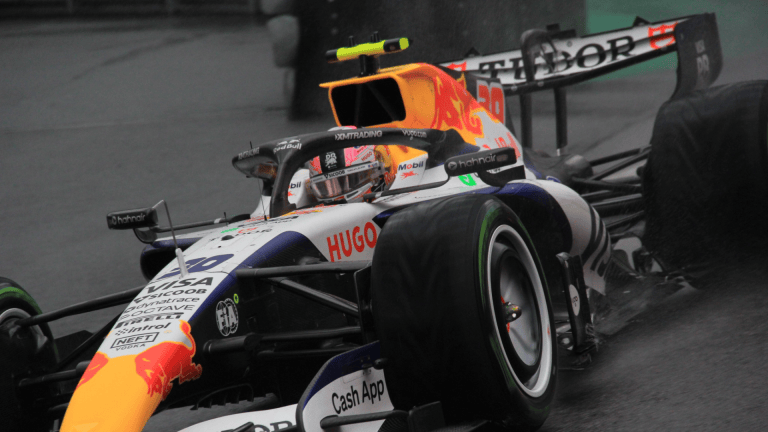
Verstappen’s concerns follow a race in which he recovered from 21st to second but reported a dramatic change in his Red Bull’s handling.
Looking specifically towards Las Vegas, the Dutchman also identified energy management as an important challenge because of the circuit’s long straight.
He suggested that slipstreaming could become particularly valuable under the current power-unit regulations, with drivers potentially needing to manage electrical deployment differently from other circuits.
The Red Bull driver acknowledged that the team has not traditionally been strongest in the cold conditions associated with Las Vegas.
Hadjar raises aquaplaning concerns after São Paulo qualifying
Isack Hadjar also questioned the performance of Formula 1’s wet-weather tyres after experiencing difficult conditions during Saturday’s qualifying session.
The Red Bull driver believes the extreme-wet compound provided insufficient grip for the amount of water present on the circuit.
“I didn’t think there was a crazy amount of water on the track, and yet to me it felt like there was too much aquaplaning considering the conditions,” Hadjar said.
The Frenchman also questioned the transition between extreme-wet and intermediate tyres, arguing that drivers were forced to wait until much of the standing water had disappeared.
“For me, it also seems like you have to wait a while to put the Inter on.”
Hadjar believes the compounds are harder than those used previously, making the cars more difficult to control in marginal conditions.
“I think we would all have a bit more fun with more grip, and I think there were times in qualifying yesterday where the very first three laps in Q1 were quite dangerous.”
Despite those concerns, Hadjar completed an impressive weekend at Interlagos, finishing third behind Norris and Verstappen.
His podium followed a difficult opening to the weekend, when Red Bull struggled to find a competitive setup before improving in qualifying and the race.
Norris says FIA made correct decisions in Brazil
Although Norris criticised the tyres’ behaviour at low temperatures, he did not suggest that the FIA had mishandled the São Paulo weekend.
The McLaren driver acknowledged that aquaplaning remained one of the most difficult aspects of racing in heavy rain, particularly when standing water appeared unexpectedly.
He explained that drivers sometimes needed to complete laps in challenging conditions before the racing line became sufficiently clear.
However, Norris praised the decisions made during the weekend and said the tyres had generally performed reasonably well at Interlagos.
He also distinguished between the conditions experienced in Brazil and the potential difficulties in Las Vegas.
The concerns do not mean the Las Vegas Grand Prix is expected to take place in the rain. Norris’ warning primarily concerns the challenge of generating tyre temperature in cold conditions, while the comments from Verstappen and Hadjar addressed the performance of the wet-weather compounds.
Las Vegas presents another test for F1 teams
The Las Vegas Grand Prix takes place on November 19–21, with the main race scheduled for Saturday evening local time.
The circuit’s combination of long straights, heavy braking zones and low temperatures presents a demanding test for tyre preparation and energy deployment.
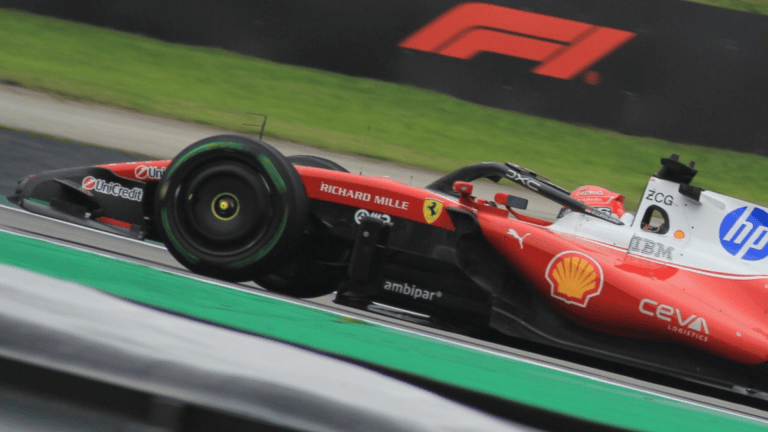
Ferrari has already expressed concern about similar conditions. Charles Leclerc warned that low temperatures could expose the team’s tyre problems after struggling for grip during the Brazilian Grand Prix.
McLaren, Red Bull and Mercedes will also need to understand how their cars respond to the different conditions, particularly as the final three rounds of the championship approach.
GRANDE PRÊMIO is following the final stages of the 2026 Formula 1 season, including preparations for the Las Vegas Grand Prix, with breaking news and real-time updates in its Formula 1 section.