News Summary
- Toto Wolff has admitted that Mercedes’ upgraded W17 is more difficult to drive than its previous specification.
- George Russell reverted to an older aerodynamic package in Singapore, while Kimi Antonelli continued with the updated car.
- Mercedes is investigating why its major development package has failed to deliver the expected performance improvement.
Mercedes has acknowledged that its latest Formula 1 upgrade has made the W17 more difficult to drive, with team principal Toto Wolff admitting that the package introduced at Sepang has not delivered the expected performance gains.
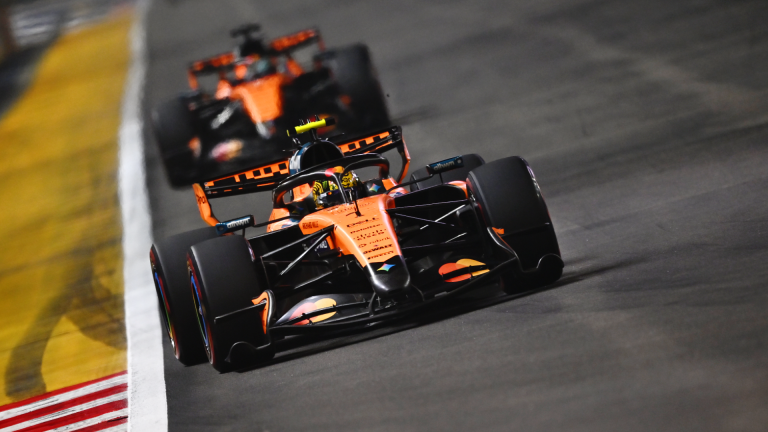
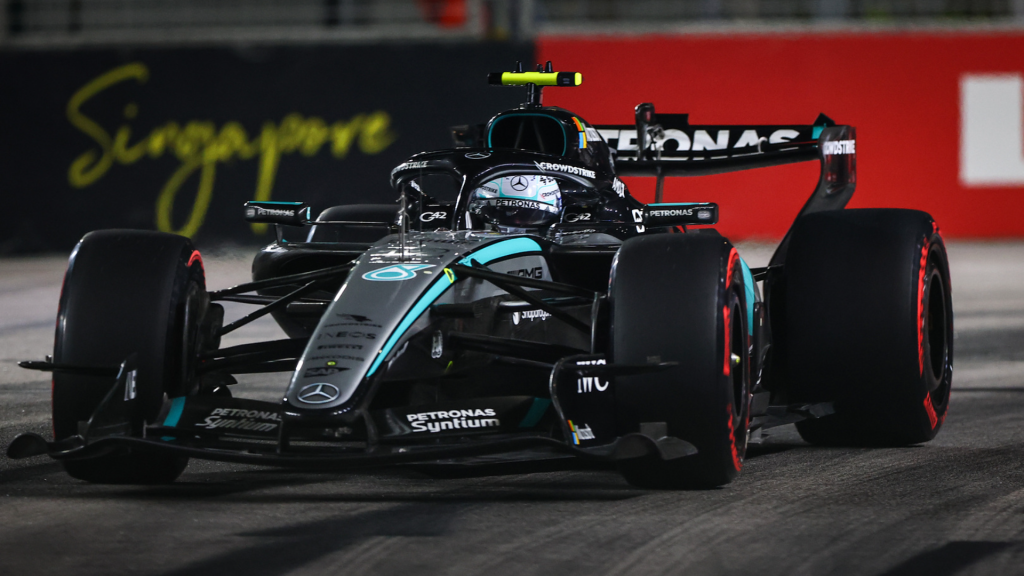
The German manufacturer adopted an unusual development strategy during the Singapore Grand Prix weekend, running George Russell in an older car specification while championship leader Kimi Antonelli retained the upgraded package.
The decision followed a disappointing debut for the new aerodynamic components at the Bahrain Grand Prix in Malaysia, where Mercedes struggled to extract the improvement predicted by its simulations.
Rather than immediately abandoning the package, the team used Singapore to compare the two configurations directly.
Russell returns to successful Baku specification
Russell reverted to the specification that had proved competitive at the Azerbaijan Grand Prix, where he dominated qualifying and won the race.
Antonelli continued with the updated W17 and tested an additional front-wing development, allowing Mercedes to collect comparative information.
The difference was immediately noticeable during Friday’s running. Russell finished ahead of Antonelli in both free practice and sprint qualifying, despite using the older aerodynamic configuration.
However, Mercedes has cautioned against interpreting the lap-time differences as definitive proof that its newer package is slower. Driver performance, car setup and track conditions can all affect the comparison.
Wolff acknowledged that the updated car appeared more difficult to operate consistently, describing its behaviour as “a little more tricky to drive”.
Mercedes investigates upgrade correlation problems
The latest development package represented Mercedes’ first major upgrade in approximately four months, increasing the importance of understanding why the expected improvement has not materialised.
The changes followed a period of strong results for the team, making the apparent regression particularly significant as the championship enters its final stages.
Mercedes’ split-specification experiment was designed to provide information that conventional race-weekend running had not delivered, particularly after the limited practice available at consecutive sprint events.
The investigation also comes amid the Formula 1 championship battle between Antonelli and Russell, whose different technical configurations have attracted additional scrutiny.
Mercedes will use the information collected at Marina Bay to assess its development direction ahead of the United States Grand Prix.