News Summary
- Bruno Michel admits Herta’s transition from IndyCar to Formula 2 was harder than expected, saying both sides underestimated the differences.
- Herta is 19th in the 2026 F2 standings without a podium, despite nine IndyCar victories and a runner-up championship finish.
- Michel identifies F2’s short practice and qualifying sessions as major obstacles, while Herta’s 2027 programme remains uncertain.
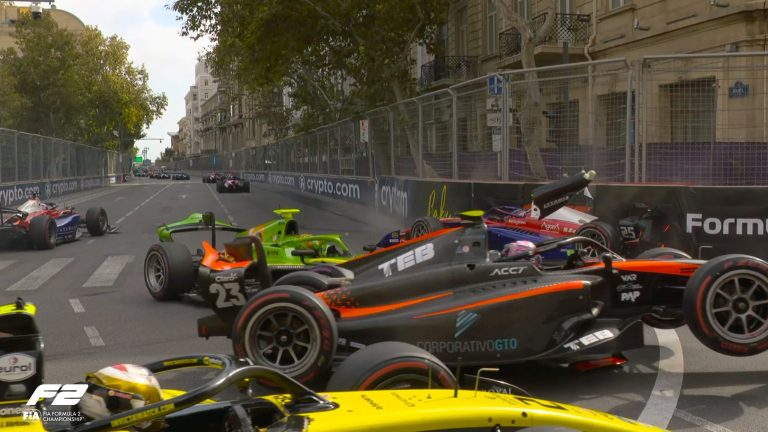
Formula 2 CEO Bruno Michel has admitted that Colton Herta’s decision to leave IndyCar for Formula 2 in 2026 has proved far more difficult than expected, acknowledging that both the American driver and the championship underestimated the differences between the two categories.
Herta abandoned his established IndyCar career to join Hitech in Formula 2 while taking on testing and development duties for Cadillac’s new Formula 1 team. The objective was to gain experience on Grand Prix circuits, adapt to Pirelli tyres and collect the FIA Super Licence points required for a potential promotion to F1.
However, the 26-year-old has struggled throughout the season and currently sits 19th in the championship without a podium finish, leaving his immediate Formula 1 ambitions in serious doubt.
Speaking to PlanetF1.com, Michel admitted that he had expected significantly stronger results from a driver who had already won nine IndyCar races.
“It has been more difficult than what I thought it was going to be because Colton is a very strong driver,” Michel said.
The Frenchman acknowledged that the scale of the adjustment had surprised both Herta and the championship’s management.
“He and we maybe underestimated the difference of working environment that we have, compared to IndyCar teams.”
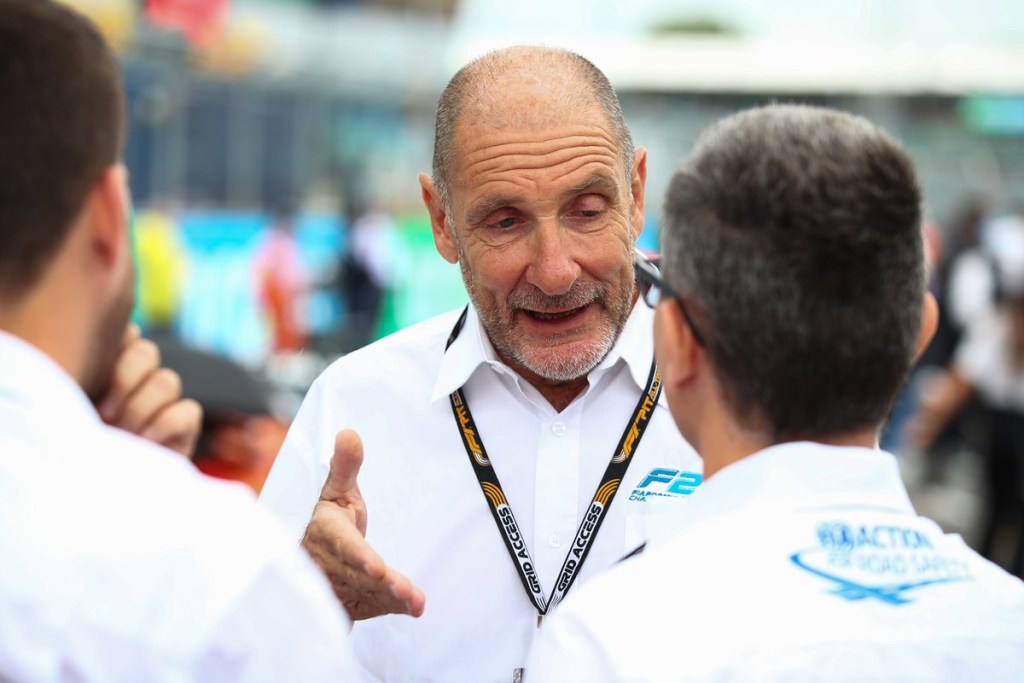
Michel explains why Herta struggled in F2 qualifying
Michel identified the championship’s restricted track time as one of the principal difficulties facing Herta.
Unlike IndyCar, where drivers generally have several practice sessions to adjust their cars and prepare for qualifying, Formula 2 weekends are considerably more compressed.
Drivers receive 45 minutes of free practice followed by a 30-minute qualifying session, leaving little time to evaluate setup changes, understand tyre behaviour or recover from mistakes.
The limited number of competitive laps makes tyre preparation and timing particularly important.
Michel explained that drivers must extract performance almost immediately, frequently with only two meaningful flying laps on each set of tyres.
“He had some good races as well. He had more difficulties in quali,” Michel said, pointing to the challenge of producing a competitive lap with so little preparation.
The F2 CEO believes those restrictions have affected Herta more severely than expected, particularly because the American arrived from a championship with different operating procedures and weekend formats.
Michel also stressed that the demanding structure is intentional. Formula 2 is designed to prepare drivers for Formula 1, where limited track time and pressure to perform quickly are important parts of a Grand Prix weekend.
Herta has shown flashes of competitiveness during races, but his qualifying difficulties have frequently left him starting from positions that make strong results harder to achieve.
Nine-time IndyCar winner fails to meet Cadillac’s F1 target
Herta’s struggles have attracted particular attention because of the career he left behind.
The Californian established himself as one of IndyCar’s leading drivers during seven full seasons, collecting nine victories, 19 podium finishes and 16 pole positions. He finished runner-up in the 2024 championship and was widely regarded as one of the strongest American candidates for a future Formula 1 seat.
Cadillac’s entry into Formula 1 created an opportunity to pursue that ambition, but Herta lacked the Super Licence points required to compete in Grands Prix.
The manufacturer therefore supported his move to Formula 2, with CEO Dan Towriss setting a target of finishing inside the championship’s top ten.
That objective is now beyond Herta’s reach under normal circumstances. The American remains 19th with two rounds scheduled, and his performances have not produced the points necessary to qualify for a Super Licence.
The situation has become more difficult because Cadillac has already committed to Valtteri Bottas and Sergio Pérez, leaving no confirmed race-seat opportunity for Herta in 2027.
As GRANDE PRÊMIO reported in its analysis of Cadillac’s American driver options, Herta’s difficulties have also increased attention on younger drivers who may become eligible for Formula 1 through other development programmes.
Michel nevertheless rejected the suggestion that Herta’s experience should discourage established drivers from attempting a similar move.
He emphasised that the American remains a talented competitor and that his results should be considered within the context of an unusually demanding transition.
Herta considers Indy 500 and endurance return as F1 future stalls
The uncertainty surrounding Herta’s Formula 1 prospects has already prompted him to consider alternative racing opportunities.
In an interview with Motorsport.com, the American confirmed that he would welcome another opportunity to compete in the Indianapolis 500 after missing the 2026 edition because of a late Formula 2 calendar change.
He also expressed interest in continuing his endurance programme with Wayne Taylor Racing and Cadillac, particularly at Daytona, Sebring and Petit Le Mans.
As GRANDE PRÊMIO reported on October 16, Herta has not confirmed his 2027 racing programme and remains open to different possibilities depending on Cadillac’s plans.
His comments suggested that a return to American racing could be combined with his development responsibilities in Formula 1, although no agreements have been announced.
Herta has also indicated that he has little interest in completing another full Formula 2 season, but has not completely ruled it out if Cadillac considers that the best option for his development.
Michel hopes the American will at least have the opportunity to finish his current campaign with stronger results.
The F2 CEO acknowledged that Herta had experienced difficult moments throughout the year but said his talent deserved a more positive conclusion.
Qatar and Abu Dhabi remain on Formula 2 calendar
Herta’s opportunity to improve his results depends on the championship completing its remaining two rounds.
Formula 2 is scheduled to race in Qatar on November 27–29 and Abu Dhabi on December 4–6, although both events have faced uncertainty because of the security situation in the Middle East.
Michel recently insisted that the championship intends to complete the season as planned.
As GRANDE PRÊMIO reported following Michel’s comments, the Frenchman rejected the possibility of declaring Rafael Câmara champion without allowing the remaining races to take place.
Câmara leads Nikola Tsolov by seven points, with Alexander Dunne also involved in the championship battle.