Dreyer & Reinbold Racing (DRR) announced the purchase of one of Rahal Letterman Lanigan Racing’s (RLL) charters on Wednesday (22). The team has yet to confirm its driver lineup for the 2027 IndyCar season—nor its engine partner, Chevrolet or Honda. Speaking in a press conference attended by GRANDE PRÊMIO, DRR president Brett DeBord noted that details will be shared at a later date. He also revealed an interest in fielding two entries for the Indianapolis 500, though acknowledging they aren’t ready to commit to that decision just yet.
RLL received three of the 25 charters distributed by IndyCar to full-time teams at the end of 2024. One of the main goals behind introducing the franchise model was to create added value for a grid spot, as entering the series previously lacked a fixed entry cost—a structure very similar to what NASCAR adopted in 2016. Under the old format, provided an outfit had the infrastructure and paid the race or season entry fee, there were no barriers to competing.
With RLL’s third car often finding itself in an uncompetitive or underfunded situation, finding the ideal buyer to take over the charter proved to be the best solution. The sale to DRR marks the first purchase of an IndyCar franchise, though it remains subject to series approval.
The team has not yet disclosed which manufacturer it will represent in 2027. DRR has run Chevrolet power since 2012, but DeBord avoided going into specifics about whether they will stay with the American manufacturer or switch to Honda power units.

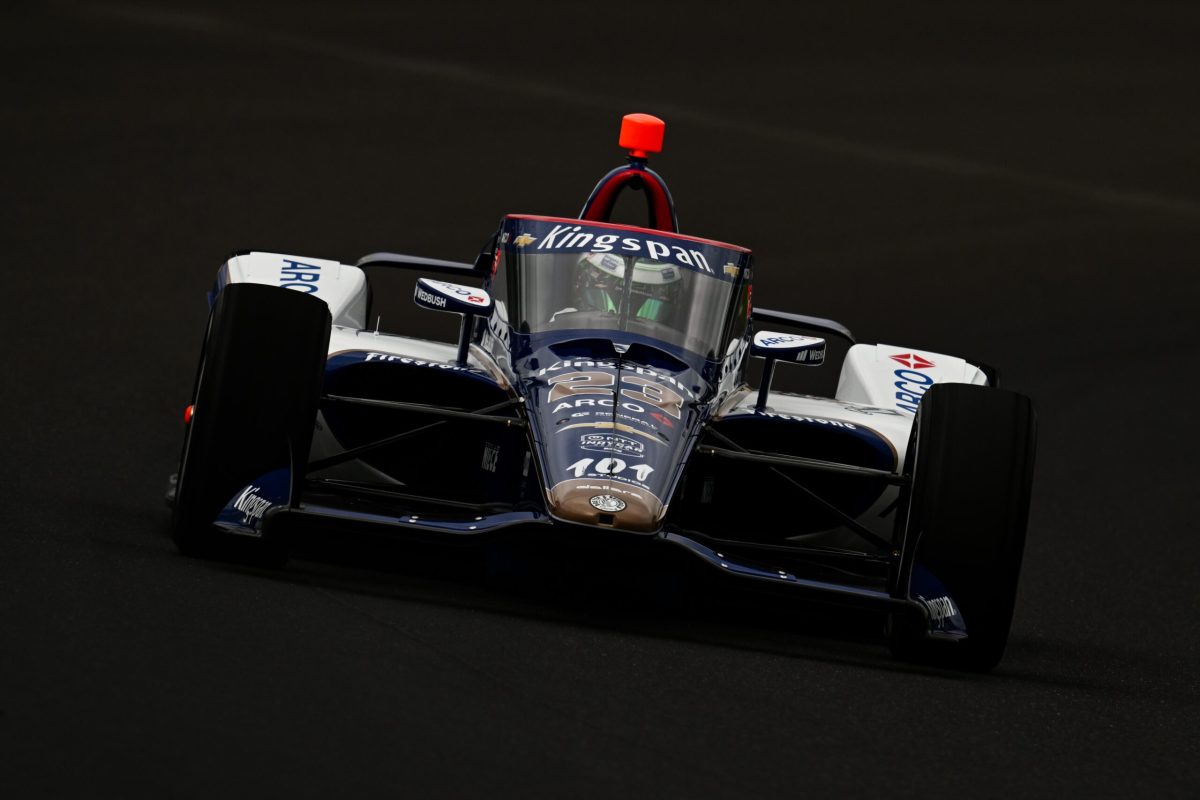
DRR has yet to decide on an engine supplier for 2027, despite running Chevrolet power in recent years (Photo: IndyCar)
“Regarding our manufacturer partnership, we’re not ready to speak on those details yet. We’ve had key discussions, and that information will be released down the road when we’re ready to make those announcements,” admitted the DRR president.
In recent years, DRR operated strictly as an Indy 500 one-off/part-time entrant, qualifying for the race every year with both entries and even leading laps, as seen in 2025 and 2026. DeBord highlighted the importance of the Month of May for the team, but stopped short of guaranteeing a two-car effort now that they are committing to a full-time schedule with significantly higher operational costs.
“Our goal is to keep two cars at Indianapolis—we’ve been doing that for a long time now. I believe the last time we ran a single car was back in 2017 with Sage [Karam]. We like having two cars at the Indianapolis Motor Speedway. I think part of our strength and the value we bring to the series—and to ourselves—lies in the fact that our cars are very competitive there,” he emphasized.
“We came very close to winning two years ago with Ryan [Hunter-Reay] and were right in the mix with Conor this year. He did an outstanding job for us. We would like to run two cars next year, but we need to have the right conversations and make sure it makes sense for everyone involved. We’re not ready to make that decision just yet,” he acknowledged.

Despite running only a single full-time entry for the 2027 IndyCar season, DRR’s president reiterated that the ultimate goal is to expand operations down the road. However, he emphasized that they are not underestimating the level of commitment required by the series and will only add a second full-season entry when the conditions are right.
“We’re keeping an open mind about future steps. We have a lot of work ahead of us with this single car and this first charter—so we are by no means underestimating the commitment needed to manage this and operate at the highest level. That spans everything from securing the right commercial partners to finalizing vendors and putting together all the necessary ingredients for a winning program. We have a lot of work ahead of us,” he noted.
“Looking to the future—and we won’t hide it—we certainly want to expand to more than one car. But again, the right opportunity has to present itself, the fit has to be right, and we must be in a position to do it properly. We don’t want to add cars and expand our footprint if we can’t do it the right way. If those opportunities arise, we’ll evaluate them, analyze them, and make the best choice for the organization,” he concluded.
IndyCar faces its final two off-weekends before the conclusion of the 2026 season, returning August 7–9 for the Portland Grand Prix—the first of six consecutive races leading up to the championship finale