News Summary
- Pedro Acosta admitted he was extremely nervous after crashing while leading the Sprint and falling again in warm-up
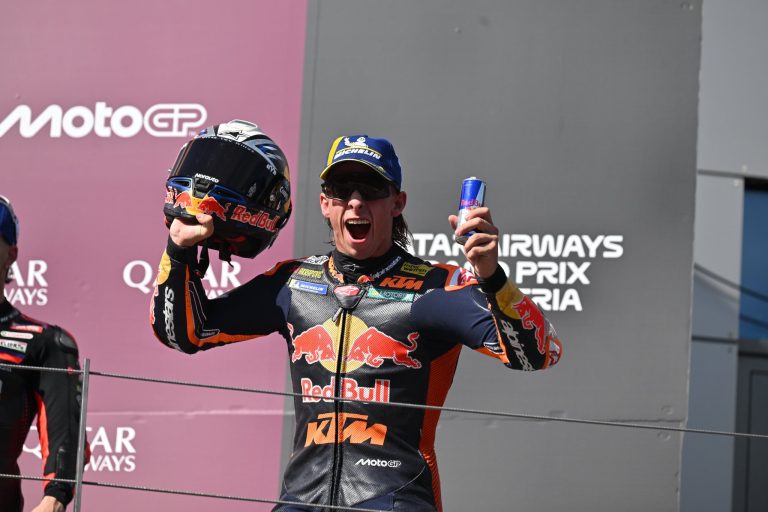
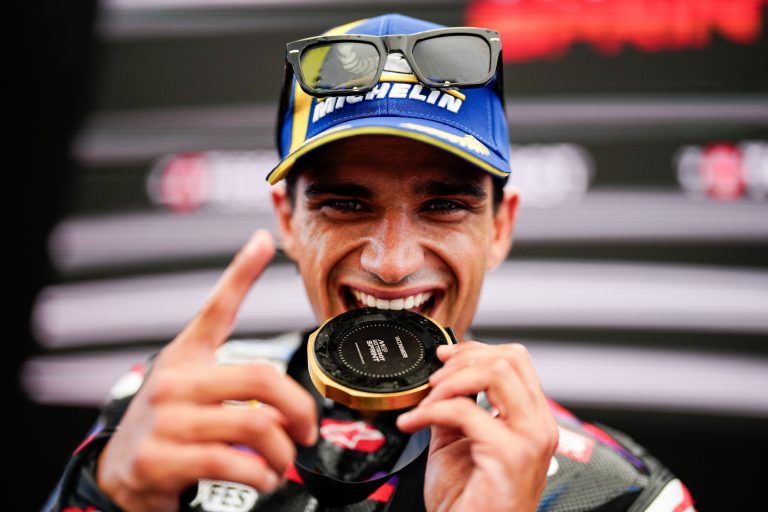
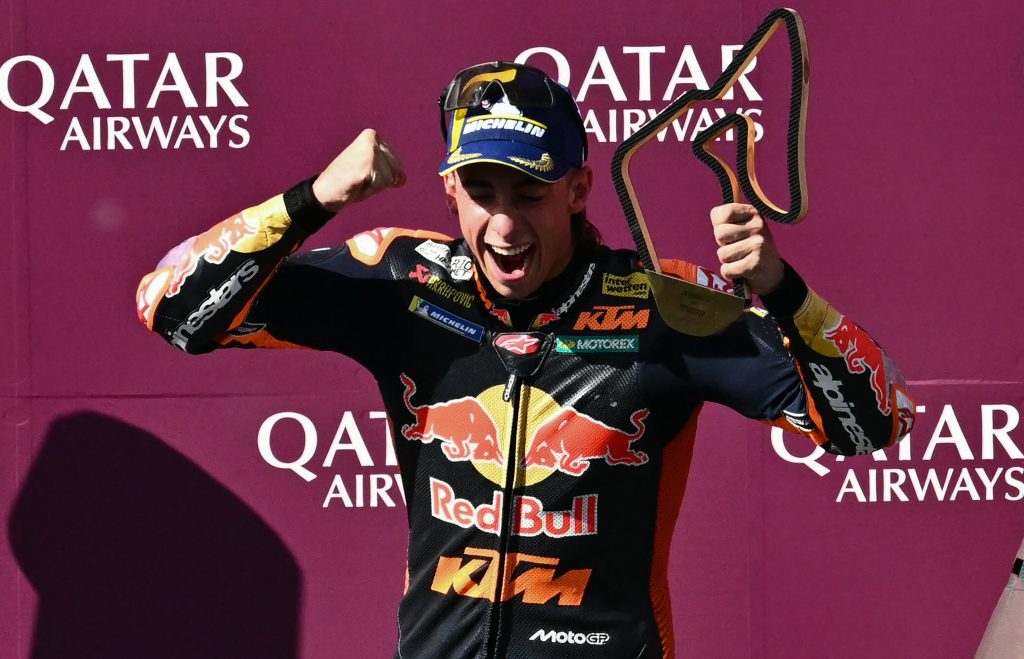
- The KTM rider recovered from a poor start to defeat Jorge Martín and secure his maiden MotoGP victory
- Acosta’s controlled race offered the clearest evidence yet that he has added tyre management and patience to his natural speed
Pedro Acosta had already demonstrated that he was fast enough to win in MotoGP. What remained unanswered was whether he could manage the pressure, the tyres and his own aggression for long enough to turn that speed into victory.
The answer arrived at the Red Bull Ring — but only after Acosta came dangerously close to allowing another opportunity to escape.
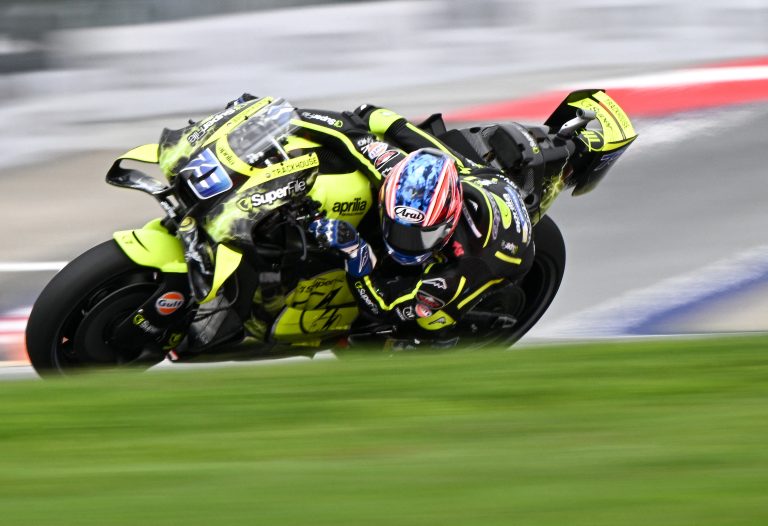
One day after crashing out of the lead in the Austrian GP Sprint, the Spaniard fell again during Sunday morning’s warm-up and badly damaged his KTM. Those two accidents transformed what should have been an encouraging weekend into a test of Acosta’s composure.
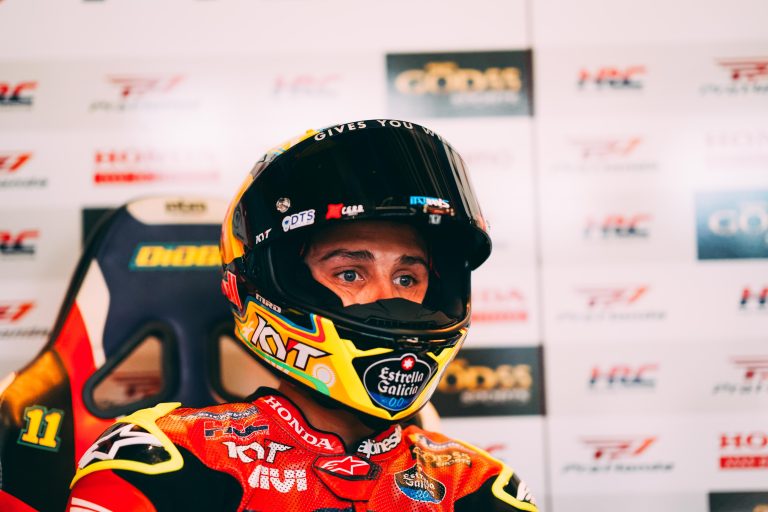
“Being honest, I was shitting my pants,” Acosta admitted in an interview with the official MotoGP website. He was afraid of making another mistake at KTM’s home circuit, especially after the work required to prepare both motorcycles for the race.
That admission matters because the fear did not disappear when the lights went out. Acosta simply learned how to race with it.
Acosta wins by controlling his aggression
Acosta made a poor launch from third and dropped to fifth, leaving Jorge Martín and Marco Bezzecchi at the front. Earlier in his MotoGP career, that setback might have prompted an immediate and overly aggressive response.
Instead, he rebuilt the race.
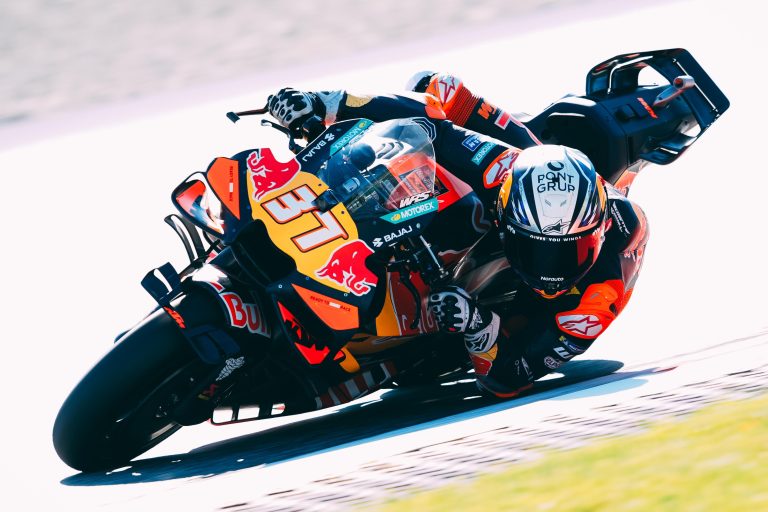
Acosta passed Marc Márquez, Ai Ogura and Bezzecchi in successive stages before catching Martín. He completed the decisive move on lap nine and then resisted the temptation to disappear into the distance.
That restraint was one of the most significant aspects of his victory.
During the Sprint, Acosta had built an advantage of approximately 2.4s before becoming distracted while checking information on the dashboard. He missed his braking point and crashed with only three laps remaining.
In the Grand Prix, there was no attempt to recreate that unnecessary cushion. Acosta kept Martín under control, protected the tyres and managed the final laps before winning by 1.017s.
“I was just trying to learn from the mistake yesterday,” he explained. Rather than opening the biggest possible gap, he concentrated on maintaining the advantage he actually needed.
It was the type of adjustment that separates a spectacular rider from a consistent MotoGP winner.
KTM performance alone does not explain the victory
The Red Bull Ring naturally suited several characteristics of the RC16. Its heavy braking zones and acceleration phases allowed Acosta to exploit the KTM’s stability on corner entry and its ability to launch out of slow turns.
However, circuit compatibility cannot fully explain the result.
Acosta had competed in 55 MotoGP races without winning and collected 15 podiums during that period. His speed was rarely questioned, but crashes, tyre consumption and the urge to extract more than the motorcycle could consistently provide repeatedly stood between him and victory.
Austria showed a more complete version of the rider.
Acosta still attacked aggressively under braking, but he did not ask the tyres to sustain qualifying-level performance throughout the race. Once ahead, he managed the gap rather than treating every lap as another opportunity to prove his superiority.
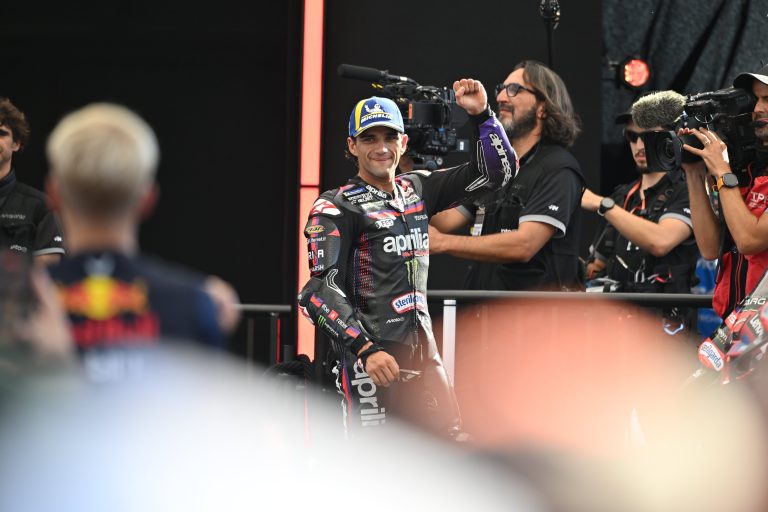
That development is especially important because KTM has not suddenly produced the strongest motorcycle on the grid. Aprilia placed Martín, Bezzecchi and Ogura immediately behind Acosta, while Ducati remained the more complete package across the season.
Acosta therefore did not win simply because KTM was unbeatable in Austria. He won because he extracted the RC16’s strongest qualities without allowing its limitations — or his own impatience — to dictate the race.
The Spaniard described the result as the “perfect” way to close his KTM story. He joined the Austrian manufacturer’s development programme as a teenager and won the Moto3 and Moto2 titles before reaching MotoGP.
Acosta will move to the factory Ducati team in 2027, where he is expected to partner Marc Márquez. Delivering KTM a home victory before leaving carried an emotional significance that extended beyond his personal breakthrough.
“There were many KTM employees around, and I’m extremely happy for them,” he said, adding that the people behind the project deserved the victory as much as he did.
The result also provided an important response to the previous day’s error. Acosta recognised that his Sprint crash had hurt the team, but the reaction from KTM personnel helped him reset before Sunday.
That support proved essential after the warm-up accident. Acosta thanked both the factory squad and members of Tech3 for helping repair the damaged motorcycle and ensuring he had two bikes available.
A victory built across 56 MotoGP starts
Acosta’s first victory came in his 56th MotoGP start. The number illustrates how different the premier class has been from the categories he previously conquered.
He won the Moto3 World Championship as a rookie in 2021 and claimed the Moto2 crown two years later. MotoGP demanded a longer apprenticeship.
The Austrian weekend encapsulated that education. Acosta made what he called one of the most embarrassing mistakes of his career on Saturday, crashed again on Sunday morning and then delivered his most controlled premier-class performance only a few hours later.
The achievement was not avoiding fear or mistakes. It was preventing them from defining the weekend.
After taking the lead, Acosta had the pace to escape, but chose control. When Martín remained close, he resisted the urge to overreact. When memories of the Sprint crash could have undermined his concentration, he focused on braking references, tyre condition and the gap behind.
That is why the Austrian victory represents more than a favourable circuit producing an isolated result.
Acosta has always possessed the speed required to win in MotoGP. At the Red Bull Ring, he finally demonstrated the discipline required to finish the job.
The victory moved Acosta into fourth place in the MotoGP championship standings, 72 points behind leader Martín. A title challenge remains unlikely with the remaining races, but the result changes the expectations surrounding his final appearances for KTM.
After climbing the technical mountain that had separated raw speed from race-winning control, Acosta can now approach his departure knowing that he delivered the victory KTM wanted most.
GRANDE PRÊMIO provides complete coverage of the MotoGP season.
MotoGP today: FAQ
Who won the 2026 Austrian MotoGP Grand Prix?
Pedro Acosta won the Austrian GP, beating Jorge Martín by 1.017s after taking the lead on lap nine.
Was Austria Pedro Acosta’s first MotoGP victory?
Yes. The 2026 Austrian GP was Acosta’s first full-distance MotoGP victory after 15 previous premier-class podiums.
Who leads the 2026 MotoGP championship after Austria?
Jorge Martín leads with 306 points. Marc Márquez is second on 294, leaving Martín 12 points ahead with seven rounds remaining.
What did Pedro Acosta say before winning the Austrian MotoGP race?
Acosta admitted he was extremely nervous about making another mistake after crashing while leading the Sprint and falling again during Sunday’s warm-up.