News Summary
- Ducati will field six motorcycles in 2027, with four receiving factory specifications and two beginning the season with lower-spec equipment.
- Marc Márquez, Pedro Acosta, Fermín Aldeguer and Joan Mir are expected to receive the four factory-spec motorcycles.
- Gigi Dall’Igna says the first year of the new regulations will feature continuous technical development, with further updates reaching satellite teams during the campaign.
Ducati has confirmed how it intends to distribute its motorcycles across the 2027 MotoGP grid, establishing a four-bike factory-specification programme for the first season of the championship’s new technical regulations.
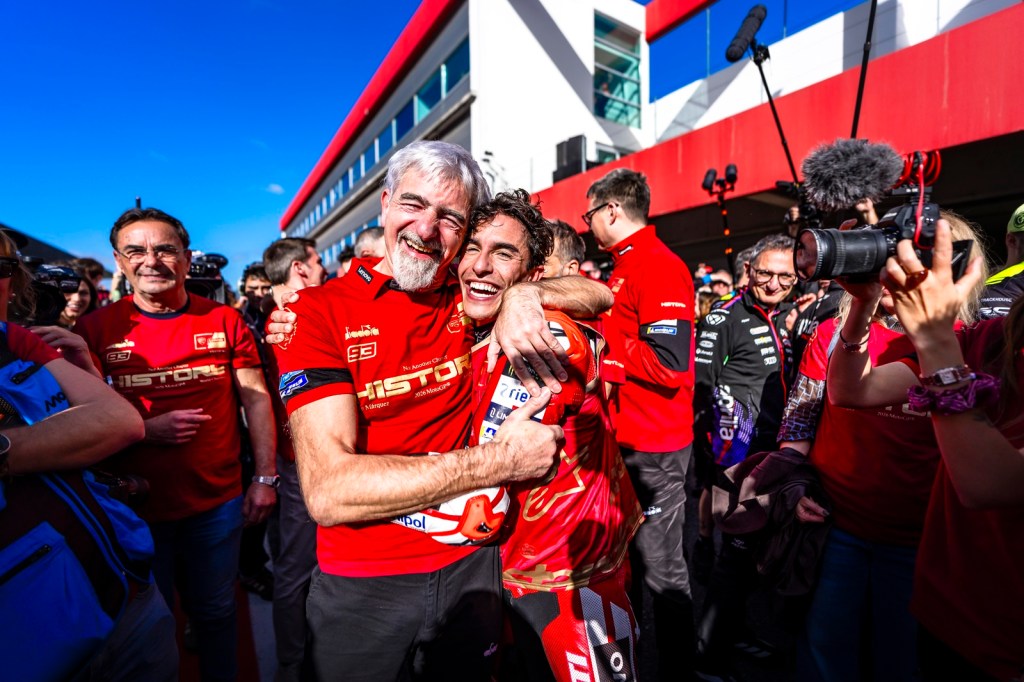
Technical director Gigi Dall’Igna explained that Ducati will retain six Desmosedici motorcycles across its factory operation and the VR46 and Gresini satellite teams.
Four bikes will receive factory specifications, while the remaining two will start with lower-specification equipment, although the manufacturer intends to develop and update those machines throughout the year.
The decision is particularly significant because every manufacturer will be working with the new 850cc engines and Pirelli tyres, making the development of the first 2027 machines potentially decisive.
Speaking to Sky Sport MotoGP in Italian, Dall’Igna confirmed the allocation.
“We’ll have four factory bikes next year and two bikes one step below,” he said.
“We will certainly develop them. I think the first year will involve continuous evolution, including some fairly significant developments, and we’ll decide along the way how to manage those upgrades.”
Which Ducati riders will receive factory-spec motorcycles?
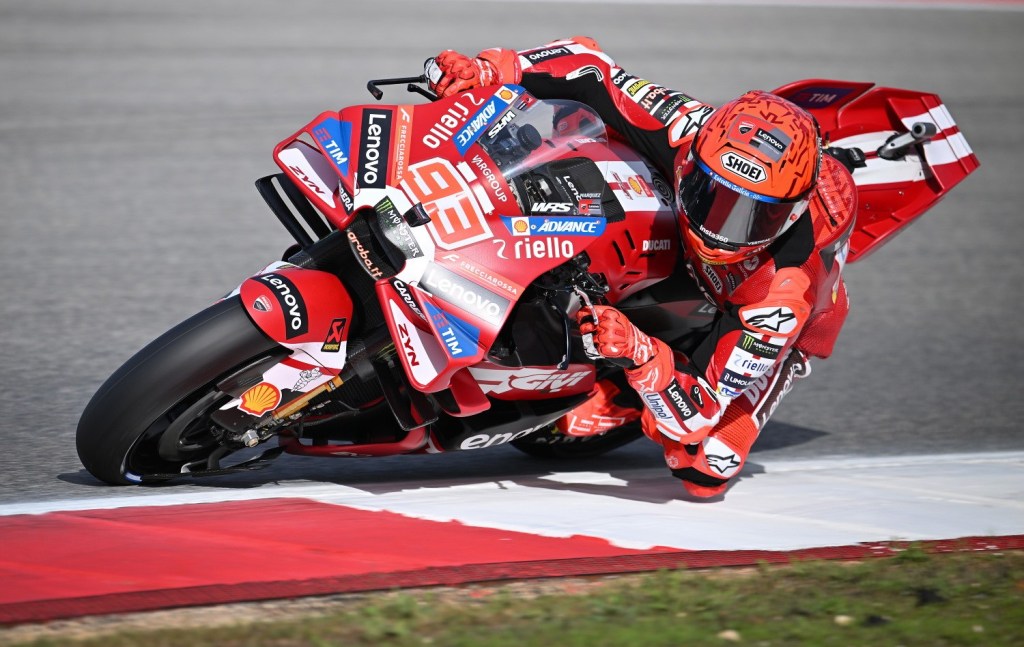
Ducati’s factory team will field Marc Márquez and Pedro Acosta in 2027.
Both riders are set to have the latest machinery available to the manufacturer.
The remaining two factory-specification motorcycles are expected to go to Fermín Aldeguer at VR46 and Joan Mir at Gresini, based on the announced equipment arrangements for the satellite operations.
That leaves two riders expected to begin the year with lower-specification motorcycles: Nicolò Bulega at VR46 and Daniel Holgado at Gresini.
| Team | Rider | Expected equipment |
|---|---|---|
| Ducati Lenovo | M. MÁRQUEZ | Factory specification |
| Ducati Lenovo | P. ACOSTA | Factory specification |
| VR46 Ducati | F. ALDEGUER | Factory specification |
| VR46 Ducati | N. BULEGA | Lower specification |
| Gresini Ducati | J. MIR | Factory specification |
| Gresini Ducati | D. HOLGADO | Lower specification |
The distinction does not necessarily mean that the satellite motorcycles will remain unchanged throughout the season.
Dall’Igna specifically indicated that development would continue as Ducati learns more about the new regulations.
However, the initial allocation establishes which riders are expected to begin the campaign with the manufacturer’s most advanced equipment.
Ducati prepares for historic technical reset
MotoGP will introduce 850cc engines in 2027, replacing the current 1000cc formula.
Pirelli will become the championship’s tyre supplier, aerodynamic development will be more restricted and ride-height systems will be prohibited.
These changes mean manufacturers cannot simply adapt their existing motorcycles through minor modifications.
The new engines, chassis and tyres will require extensive testing and technical development.
For Ducati, the challenge is particularly important because its current technical advantage has been built through years of refining its Desmosedici platform.
The manufacturer will need to establish a competitive baseline while managing development across six motorcycles.
As explained in GRANDE PRÊMIO’s guide to the major changes coming to MotoGP in 2027, the technical reset could alter the championship’s competitive order.
Dall’Igna believes the first year will require constant development rather than a stable specification maintained across the season.
That could make the timing and distribution of upgrades particularly important.
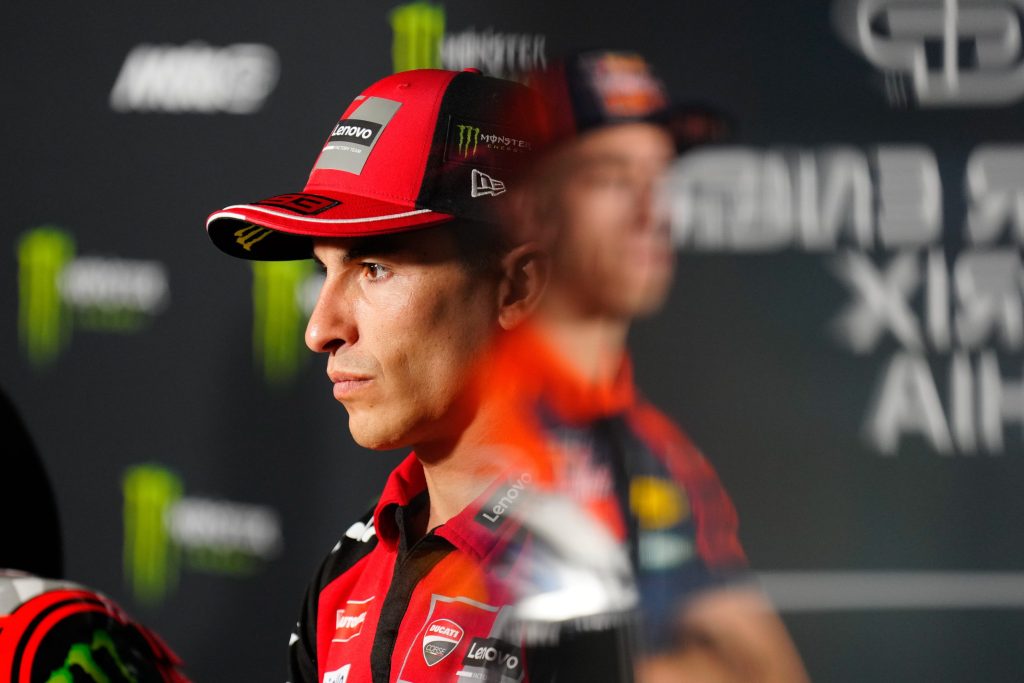
Márquez and Acosta lead Ducati’s new project
Ducati’s factory pairing will be one of the most closely watched combinations of 2027.
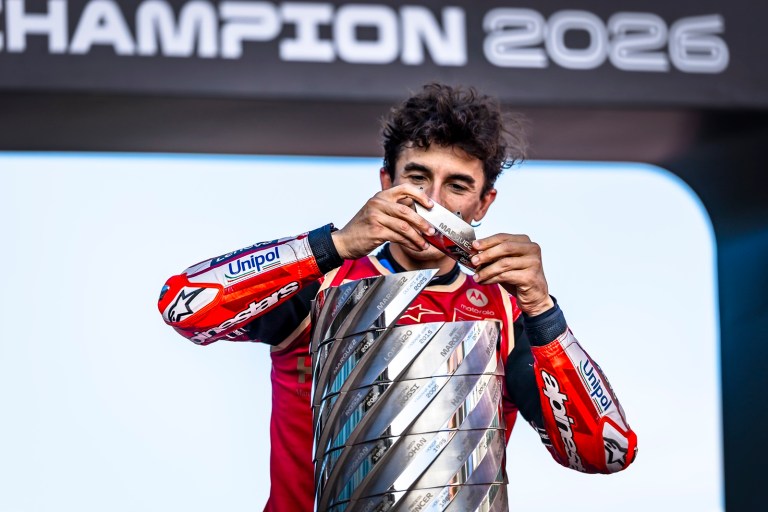
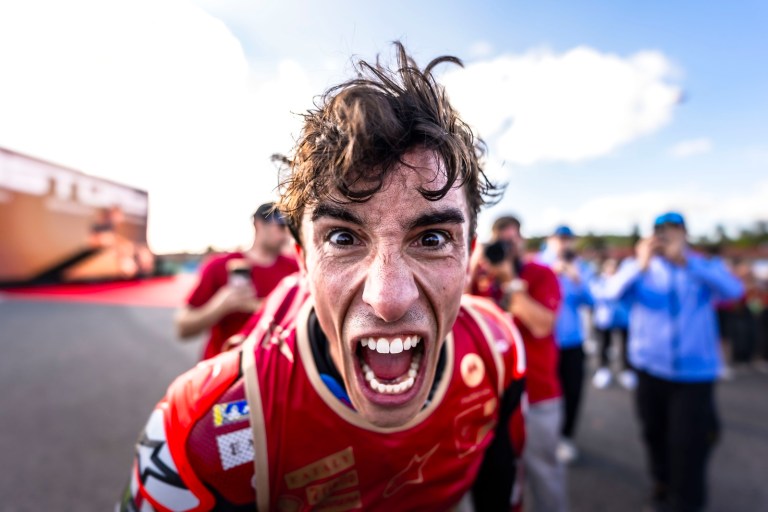
Márquez enters the new era after securing his tenth world championship in Portugal, while Acosta arrives from KTM as one of MotoGP’s most highly regarded younger riders.
The relationship will bring together an established champion and a rider expected to challenge for titles throughout the next generation of the sport.
Ducati has already confirmed that it will unveil its 2027 motorcycle and rider line-up on January 18, during its presentation in Madonna di Campiglio.
The four-bike factory allocation also demonstrates that Ducati intends to maintain meaningful technical support for its satellite operations.
For Aldeguer and Mir, factory-spec machinery could provide an important opportunity to compete directly with the manufacturer’s leading riders.
Bulega and Holgado, by contrast, will have to adapt to MotoGP while operating with equipment that may initially be less advanced.
Dall’Igna acknowledges Aprilia’s progress
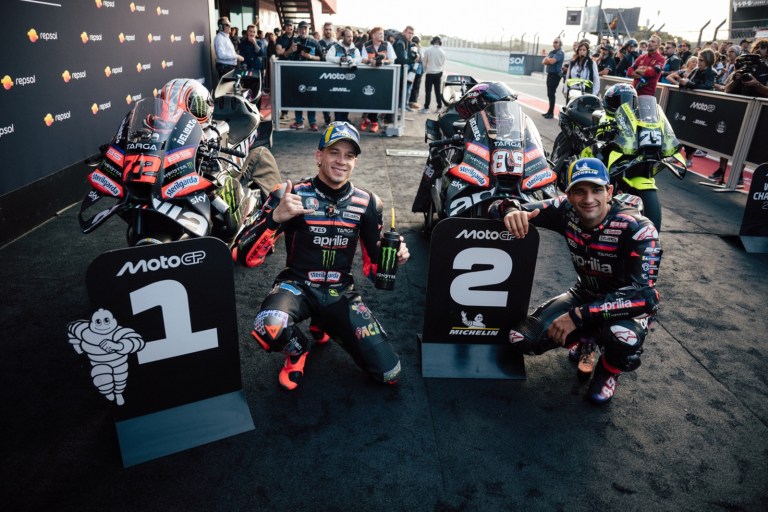
The announcement comes after a Portuguese Grand Prix in which Aprilia dominated the podium.
Dall’Igna acknowledged that rival manufacturers had developed their motorcycles effectively and deserved recognition for their progress.
“Others have done a good job, and that is a fact,” he said in the Sky Sport MotoGP interview, translated from Italian.
The assessment comes as Ducati risks losing the Constructors’ Championship to Aprilia.
Although Márquez has secured the Riders’ title, Ducati’s manufacturer-level advantage has come under increasing pressure.
The technical reset of 2027 will therefore begin with Ducati defending its position against rivals that have demonstrated substantial progress.
GRANDE PRÊMIO is following every session of the 2026 championship and preparations for the new era of MotoGP.
FAQ
How many factory bikes will Ducati have in MotoGP 2027?
Ducati has confirmed four factory-specification motorcycles and two lower-specification machines across its six-bike programme.
Which riders are expected to receive factory-spec Ducati motorcycles?
Marc Márquez, Pedro Acosta, Fermín Aldeguer and Joan Mir are expected to receive the four factory-spec bikes.
Will the other Ducati motorcycles receive updates?
Yes. Gigi Dall’Igna said Ducati intends to develop the lower-specification motorcycles during the season, with upgrades managed as the new regulations evolve.