
News Summary
- Liberty Media acquired control of MotoGP in July 2025 during a period of significant commercial growth.
- MotoGP reported an estimated global fanbase of 632 million and pro-forma annual revenue of $573 million in 2025.
- Márquez’s retirement presents a major commercial challenge, although its financial impact remains unquantified.
Liberty Media acquired control of MotoGP in July 2025 with an opportunity to expand a championship enjoying significant growth in attendance, television audiences and commercial revenue. Less than 17 months later, the American company faces an unexpected challenge: building on that momentum without Marc Márquez.
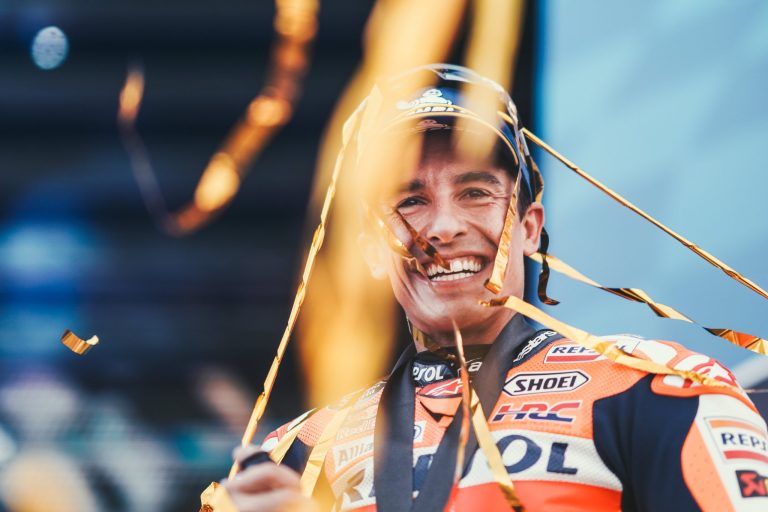
The Spaniard’s retirement announcement at Valencia comes at a particularly significant moment for the championship.
MotoGP is preparing to introduce new motorcycles, different technical regulations and a revised competitive landscape in 2027. Its commercial rights holder, meanwhile, is attempting to expand the sport’s relevance beyond its established audience.
The departure of Márquez removes a sporting personality whose achievements and remarkable comeback offered MotoGP an accessible story with international appeal.
MotoGP’s commercial growth before Márquez’s retirement
The championship’s published figures for 2025 demonstrated growth across several important indicators.
| Indicator | 2025 | Annual growth |
|---|---|---|
| Estimated global fanbase | 632 million | 12% |
| Event attendance | 3.66 million | 21% |
| Average Grand Prix TV audience | — | 9% |
| Sprint TV audience | — | 26% |
| Pro-forma revenue | $573 million | 14% |
| Pro-forma operating income | $54 million | 86% |
| Adjusted OIBDA | $201 million | 15% |
The financial figures were disclosed by Liberty Media using pro-forma comparisons that assume ownership from January 2024. Audience and fanbase figures were published by MotoGP.
Event attendance represents cumulative visits rather than unique spectators, while the estimated fanbase cannot be treated as an equivalent number of regular television viewers.
There is no publicly disclosed calculation establishing precisely how much of this growth can be attributed to Márquez.
Nevertheless, his championship-winning comeback in 2025 provided an exceptionally strong sporting narrative during an important period of commercial expansion.
Why Márquez offered MotoGP something beyond sporting success
MotoGP will continue to produce world champions after Márquez’s retirement. Its commercial challenge is ensuring those champions become recognisable to audiences outside motorcycle racing.
Márquez had already established himself as a dominant champion before the serious arm injury that interrupted his career in 2020.
His subsequent recovery, departure from Honda and return to championship-winning form with Ducati created a story that did not require extensive knowledge of motorcycle racing to understand.
That distinction matters for broadcasters, sponsors and event promoters attempting to introduce MotoGP to new audiences.
As explored in the analysis of MotoGP’s transition beyond Rossi, Stoner and Márquez, competitive success alone does not guarantee comparable public recognition.
Australia, India and the United States represent different challenges
MotoGP’s international ambitions cannot be separated from the particular characteristics of its individual markets.
In the United States, the championship must build on its motorcycle racing heritage while developing a consistent audience beyond its American Grand Prix.
Australia has a strong historical connection to premier-class motorcycle racing through champions such as Mick Doohan and Casey Stoner.
India and Southeast Asia represent markets in which distribution, accessibility and locally relevant stories could influence long-term audience growth.
A globally recognised rider can help establish an initial connection, but each territory requires its own distribution and promotional strategy.
The 2027 technical revolution offers Liberty a new sporting narrative
The introduction of 850cc engines and Pirelli tyres provides MotoGP with an opportunity to promote a substantially different sporting product in 2027.
Ducati must also rebuild its factory rider pairing after losing both Márquez and Francesco Bagnaia.
Pedro Acosta’s arrival, Bagnaia’s move to Aprilia and the development programmes of rival manufacturers could produce compelling competitive relationships.
However, the technical reset does not guarantee closer racing, higher television audiences or the emergence of another global superstar.
The most useful indicators will include returning television viewers, market-specific audience figures, sponsorship renewals, event demand and sustained digital engagement throughout 2027.
FAQ
Who owns MotoGP?
Liberty Media completed its acquisition of Dorna, MotoGP’s commercial rights holder, in July 2025.
How much revenue did MotoGP generate in 2025?
Liberty Media reported $573 million in annual revenue on a pro-forma basis, representing growth of 14% over 2024.
Will Marc Márquez’s retirement affect MotoGP’s revenue?
His departure creates a commercial challenge, but no publicly disclosed financial forecast quantifies its specific impact.