News Summary
- Marc Márquez leads Francesco Bagnaia by 258 points after Qatar, with 431 points compared with his teammate’s 173.
- Márquez has won seven Grands Prix, while Bagnaia has failed to win a Sunday race and sits ninth in the championship.
- Ducati must understand the causes of the disparity before Pedro Acosta arrives in 2027, particularly as Bagnaia prepares to join Aprilia.
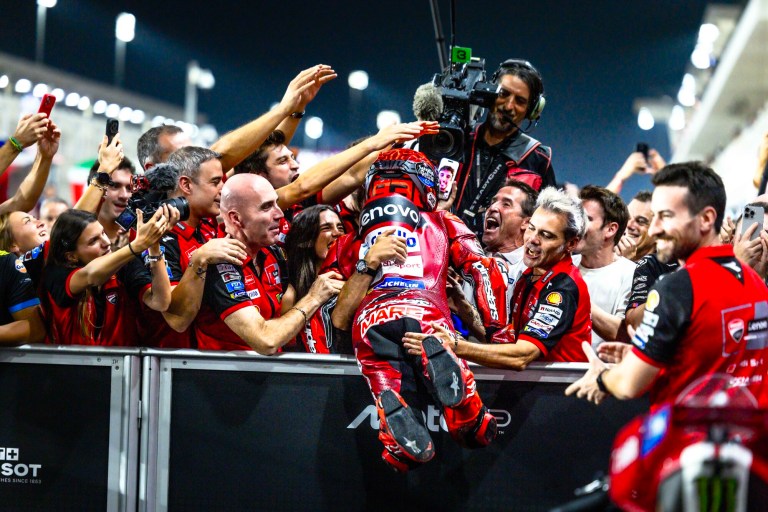
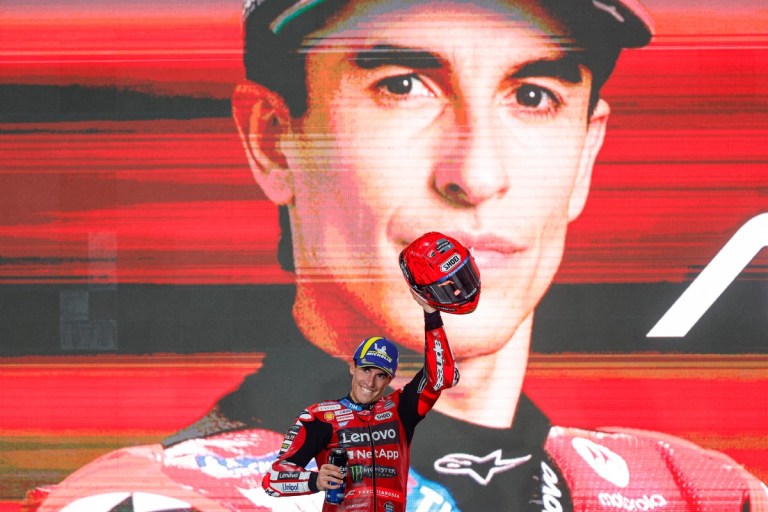
Marc Márquez and Francesco Bagnaia have spent the 2026 MotoGP season in the same factory Ducati garage, but their championship results tell radically different stories. Márquez leads the standings with 431 points and is approaching another world title, while Bagnaia sits ninth with 173 — an extraordinary 258-point difference between teammates.
The disparity has developed over several months rather than through a single disastrous weekend. Márquez transformed an inconsistent start into a championship-leading campaign, while Bagnaia struggled to reproduce the performances that made him a two-time premier-class world champion.
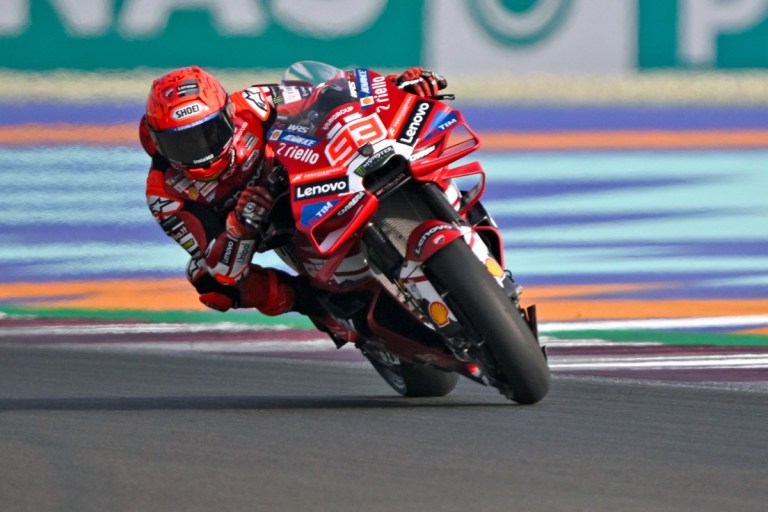
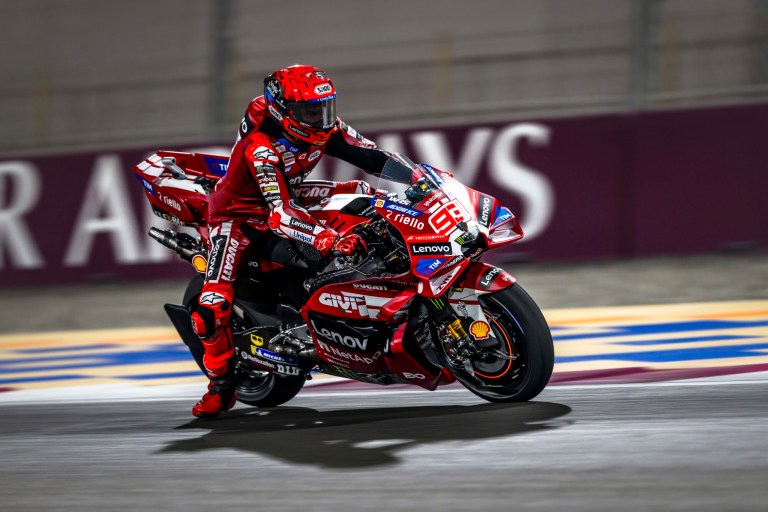
The difference is particularly striking because Ducati has insisted that the Desmosedici GP26 was not developed exclusively around Márquez. Team manager Davide Tardozzi previously rejected suggestions that the manufacturer had built its motorcycle specifically for the Spaniard, pointing to the different aerodynamic configurations available to its riders.
Nevertheless, the results reveal a substantial competitive imbalance that Ducati must understand before changing its factory line-up in 2027.
Márquez vs Bagnaia: Ducati’s 258-point difference
The MotoGP championship standings after Qatar show the extent of the gap between the factory teammates.
| Statistic | Marc Márquez | Francesco Bagnaia |
|---|---|---|
| Championship position | 1st | 9th |
| Championship points | 431 | 173 |
| Grand Prix victories | 7 | 0 |
| Grand Prix podiums | 8 | 4 |
| Points behind Márquez | — | 258 |
The victory and podium figures refer to Sunday Grands Prix, excluding sprint races. Championship points include both formats.
Márquez has scored approximately 2.5 times as many points as Bagnaia. The Spaniard’s seven victories contrast with his teammate’s failure to win a Sunday race throughout the season.
Bagnaia’s four podium finishes demonstrate that he has occasionally been competitive, but those performances have not developed into a sustained recovery.
The numbers do not establish that both motorcycles have behaved identically or that the difference is attributable exclusively to rider performance. Setup choices, riding characteristics, technical limitations and accidents have all influenced the season.
How Márquez recovered while Bagnaia’s season unravelled
Márquez did not begin 2026 with uninterrupted success. Physical difficulties and accidents affected his early campaign, while Bagnaia also struggled to establish consistent results.
The Italian finished ninth in Thailand and failed to score in Brazil. He later showed signs of improvement with podium finishes in Italy, Hungary and the Czech Republic.
However, that recovery proved temporary.
Bagnaia subsequently failed to score in the Grands Prix of Great Britain, Aragón and San Marino, before suffering further setbacks during the Asian rounds.
Márquez followed the opposite trajectory. Once his physical condition improved, he began converting competitive performances into victories and consistent points finishes.
The Spaniard won the Malaysian Grand Prix and followed that result with second place in Qatar, extending his championship advantage over Jorge Martín to 60 points.
Bagnaia, meanwhile, failed to score in Malaysia and missed Sunday’s race at Lusail.
The contrast illustrates why occasional podiums were insufficient to compensate for months of inconsistent results.
Sprint races have made Ducati’s performance gap even more costly
MotoGP’s sprint format has increased the importance of delivering competitive performances throughout an entire weekend.
Riders can score points on Saturday and Sunday, making qualifying position, tyre management and consistency particularly important.
Márquez has repeatedly converted his speed into results across both formats, while Bagnaia has struggled to achieve the same level of consistency.
The Qatar weekend provided another example.
Bagnaia qualified fifth and appeared capable of a stronger result before being struck by Fermín Aldeguer during Saturday’s sprint.
The collision caused fractures to the fourth and fifth metatarsals of his right foot, ruling him out of Sunday’s Grand Prix.
As Ducati confirmed after the accident, Bagnaia required surgery in Italy. The operation was subsequently completed in Turin, with doctors inserting a plate to stabilise the fourth metatarsal.
His participation in Portugal remains uncertain, with Valencia potentially offering his final opportunity to race for Ducati before joining Aprilia.
The injury interrupted a weekend that had begun with encouraging signs, but it cannot explain the entire 258-point deficit.
Bagnaia had already experienced months of disappointing results before arriving in Qatar.
Ducati must understand the gap before Acosta arrives
The comparison has implications beyond the final two rounds of 2026.
Bagnaia is preparing to leave Ducati for Aprilia, while Pedro Acosta is set to become Márquez’s factory teammate in 2027.
That change will create another high-profile pairing within the Italian manufacturer’s garage.
Acosta has established himself as one of MotoGP’s leading young talents, but his transition will bring different technical and competitive demands.
Ducati must understand why Bagnaia, a two-time world champion with the manufacturer, struggled so extensively alongside Márquez.
The answer cannot simply be that Márquez is faster.
Bagnaia previously demonstrated that he could win championships on Ducati machinery, making the scale of his decline particularly significant.
The manufacturer must examine whether changes in motorcycle characteristics, setup direction or individual riding requirements contributed to the difference.
That assessment will be especially important as MotoGP prepares for its next technical era.
For Acosta, Ducati’s experience with Bagnaia illustrates the difficulty of adapting to a factory environment alongside a highly successful teammate.
For Bagnaia, the move to Aprilia offers an opportunity to rebuild his career within a different technical structure.
Márquez approaches title as Bagnaia prepares for new chapter
The immediate championship picture remains heavily in Márquez’s favour.
The Spaniard leads Martín by 60 points, with 74 available across Portugal and Valencia. He can secure the championship at Portimão, potentially during Saturday’s sprint.
Bagnaia’s opportunities to improve his final championship position are limited by his injury and the remaining calendar.
Even if he returns for Valencia, the Italian will finish 2026 far behind the rider occupying the other side of the factory garage.
For Ducati, the final standings will provide an important reference when evaluating its preparations for 2027.
Márquez has demonstrated how effectively he can exploit the Desmosedici’s potential. Bagnaia’s difficulties show that the same factory environment does not necessarily produce comparable results for different riders.
The championship resumes at Portimão on November 20–22. Indian fans can consult the complete Portuguese Grand Prix schedule in IST, while the five lessons from Qatar explain how the weekend strengthened Márquez’s title position despite Aprilia’s dominant victory.
GRANDE PRÊMIO is following every session of the final two rounds of the 2026 MotoGP championship.
Márquez vs Bagnaia: The numbers behind Ducati’s 258-point gap
The championship standings after the Qatar Grand Prix reveal the scale of the difference.
| Statistic | Marc Márquez | Francesco Bagnaia |
|---|---|---|
| Championship position | 1st | 9th |
| Points | 431 | 173 |
| Grand Prix victories | 7 | 0 |
| Grand Prix podiums | 8 | 4 |
| Gap to championship leader | — | 258 |
<text color=”secondary” size=”sm”>Figures after the Qatar Grand Prix, November 8. Wins and podiums refer to Sunday races, excluding sprints.</text>
Márquez has scored approximately 2.5 times as many points as Bagnaia.
The Spaniard’s seven Grand Prix victories contrast with his teammate’s failure to win a Sunday race throughout the season.
Bagnaia’s four podium finishes demonstrate that he has occasionally been competitive, but those results have not developed into a sustained recovery.
The disparity is particularly significant because both riders compete within the same factory operation.
However, the numbers alone do not establish that the motorcycles have behaved identically or that the difference can be attributed exclusively to rider performance.
Ducati must distinguish between individual riding characteristics, setup decisions, technical limitations and the consequences of accidents.
How Márquez recovered while Bagnaia’s season unravelled
Márquez did not begin 2026 with an uninterrupted run of victories.
He struggled physically during the early part of the season and missed opportunities after incidents at several European rounds.
Bagnaia also endured a difficult start, finishing ninth in Thailand and failing to score in Brazil.
The Italian briefly appeared to recover during the middle of the championship, securing podium finishes in Italy, Hungary and the Czech Republic.
However, that improvement proved temporary.
Bagnaia subsequently failed to score in the Grands Prix of Great Britain, Aragón and San Marino, before suffering further setbacks during the Asian rounds.
Márquez followed a different trajectory.
Once his physical condition improved, the Spaniard began converting competitive performances into victories and consistent points finishes.
He won the Malaysian Grand Prix and followed that result with second place in Qatar, extending his championship lead over Jorge Martín to 60 points.
Bagnaia, meanwhile, failed to score in Malaysia and did not start Sunday’s race in Qatar.
The contrast shows why occasional podiums were insufficient to compensate for a prolonged sequence of disappointing results.
Sprint races have made Ducati’s performance gap even more costly
MotoGP’s sprint format has increased the importance of consistency across an entire weekend.
Riders can score points on Saturday and Sunday, meaning a poor sprint can compound the damage caused by a difficult Grand Prix.
Márquez has regularly converted his qualifying pace into strong results across both races.
Bagnaia has struggled to achieve the same consistency, despite showing competitive speed at individual circuits.
The Qatar weekend provided another example.
Bagnaia qualified fifth and appeared capable of a stronger result before being struck by Fermín Aldeguer during Saturday’s sprint.
The collision caused fractures to the fourth and fifth metatarsals of his right foot, ruling him out of Sunday’s Grand Prix.
He subsequently underwent surgery in Turin, where doctors inserted a plate to stabilise the fourth metatarsal.
His participation in Portugal remains uncertain, with Valencia a possible target for his return.
The injury represents a serious setback, but it does not explain the 258-point deficit by itself.
Bagnaia had already experienced months of inconsistent results before arriving in Qatar.
Ducati faces important questions before Acosta arrives
The comparison has implications beyond the final two rounds of 2026.
Bagnaia is preparing to leave Ducati for Aprilia, while Pedro Acosta is expected to become Márquez’s factory teammate in 2027.
That change will create another high-profile pairing within the Italian manufacturer’s garage.
Acosta has established himself as one of MotoGP’s leading young talents, but his transition will bring different technical and competitive demands.
Ducati must understand why Bagnaia, a two-time premier-class world champion with the manufacturer, struggled so extensively alongside Márquez.
The answer cannot simply be that Márquez is faster.
Bagnaia previously demonstrated that he could win championships on Ducati machinery, making the scale of his decline particularly striking.
The manufacturer will need to examine whether changes in the motorcycle’s characteristics