Marc Márquez is fighting for the 2026 MotoGP World Championship with a right arm that, according to his surgeon, will never return to normal.
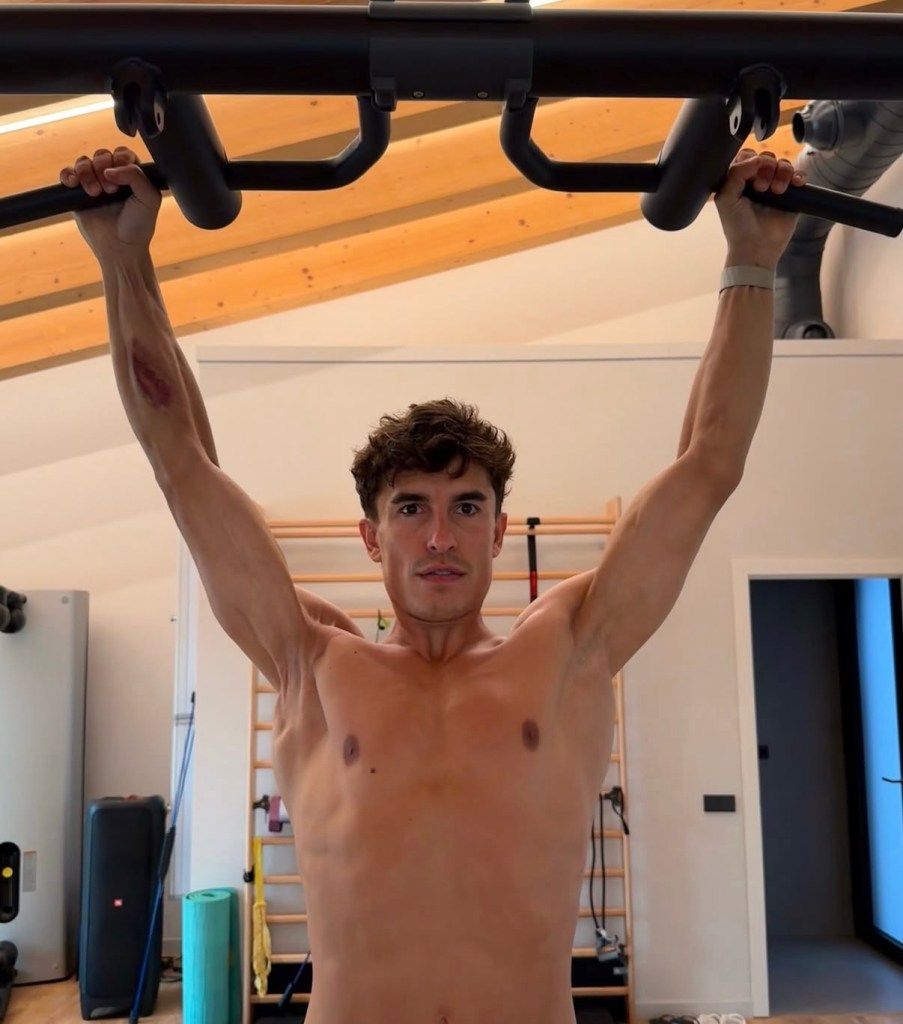
Samuel Antuña, the orthopedic surgeon who has treated Márquez, says the Ducati rider’s right arm is currently operating at around 50% of its capacity, with the biceps particularly affected by the consequences of seven surgeries. The comment provides a stark measure of the physical price Márquez has paid since his original right-arm injury in 2020 — and the complications that followed his 2025 crash at Mandalika.
But the number needs context. It does not mean Márquez has only half the physical ability of a healthy MotoGP rider, nor is it a precise laboratory measurement of his overall strength. Antuña was describing the condition of Márquez’s right arm, particularly its remaining strength, after repeated operations and muscle changes.
The 50% figure is about strength, not performance
Antuña explained that Márquez’s muscles have been altered by repeated surgeries. The latissimus dorsi and teres major remain strong but are mechanically compromised, while the biceps has suffered a more significant loss of strength.
The surgeon therefore described the arm as “very limited in strength,” particularly around the biceps, before estimating that it had about 50% of its capacity.
That distinction matters because MotoGP performance cannot be reduced to a single strength measurement. Braking, corner entry, body positioning, throttle control, balance and the ability to manage a prototype motorcycle over race distance all depend on a complex interaction between rider and machine.
Antuña also stressed that Márquez has developed ways of compensating through training and changes to his riding style. The surgeon said that adaptation has allowed the Spaniard to continue competing at the highest level despite an arm that will never return to normal.
The biggest problem may be consistency
The most important implication for Márquez’s career is not necessarily whether he can produce one extraordinary lap or race.
He clearly can.
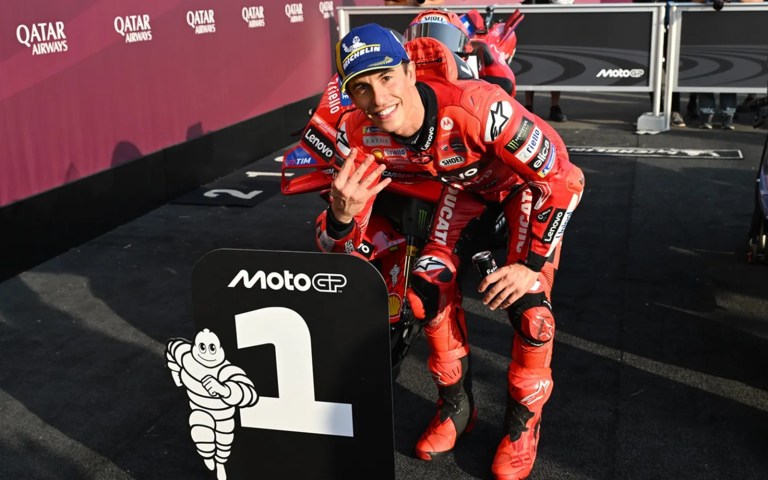
At Aragón, Márquez won both the Sprint and the Grand Prix to take 37 points, demonstrating that his physical condition has not prevented him from producing a dominant MotoGP weekend. The result moved him to second in the championship, just 19 points behind Jorge Martín.
His dominant Aragón weekend was therefore more than another victory. It showed that, when everything comes together, Márquez can still produce the kind of performance required to win a championship.
The bigger challenge is maintaining that level across a championship lasting 22 Grands Prix, with Sprint races adding further physical demands.
Márquez has already shown that the arm can become a limiting factor. At Silverstone, he revealed that he had lost control of his right arm during the Sprint, admitting that he came close to crashing because of the physical problem.
That episode was a reminder that his adaptation has limits, particularly when fatigue, tyre degradation and race intensity combine.
Mandalika is the obvious test
There is one circuit remaining on the 2026 calendar that carries an unusually heavy physical and psychological weight for Márquez: Mandalika.
The Indonesian track is where the 2025 crash involving Marco Bezzecchi triggered the chain of problems that ultimately led to another operation in May 2026. Márquez has already identified Indonesia as the venue he is most concerned about in the championship run-in, citing the “bad memories” surrounding Mandalika.
That makes Mandalika more than another round on the calendar. It will be a test of whether Márquez can manage a circuit associated with his most serious recent setback while carrying a permanently weakened arm.
The May surgery changed the equation
The latest operation was not simply another step in a long rehabilitation process.
After the Mandalika crash, a displaced bone fragment and hardware contributed to compression around the radial nerve and brachial plexus. Antuña said Márquez could sometimes completely lose control of the arm in certain riding positions, helping explain some of the falls he suffered.
The May surgery removed the problematic material and improved the situation. Márquez subsequently returned to competitive form, but the procedure could not restore the arm to its previous condition.
That is the key point behind Antuña’s comments: the problem has improved, but it has not disappeared.
Márquez has already proved the limitation is manageable
The most remarkable part of the story is therefore not the 50% figure itself.
It is that Márquez is still fighting for another MotoGP title despite it.
After a difficult period earlier in the season, Márquez recovered physically and competitively. His Aragón sweep moved him to 237 points, just 19 behind Martín, while Marco Bezzecchi sits third on 232.
The latest championship standings show just how quickly the picture has changed. Márquez has transformed what looked like a difficult title position into a genuine three-way fight.
That comeback changes the interpretation of his physical condition. The right arm is not necessarily preventing Márquez from winning races. Instead, it introduces an additional variable into a championship in which physical reserves can become decisive.
A rider who is 100% physically fit can still have a bad weekend. Márquez has to consider whether his right arm can deliver the same level of performance when the conditions become particularly demanding.
What does it mean for the rest of Márquez’s career?
Antuña was blunt about the long-term outlook: Márquez’s right arm is not a normal arm and will never be one again.
That does not mean retirement is approaching. In fact, Márquez’s performances in 2026 suggest the opposite. His ability to compensate, combined with Ducati’s competitiveness, means he remains capable of fighting for victories and championships.
The more relevant question is how much adaptation will be required as Márquez gets older and accumulates more races, injuries and physical stress.
MotoGP is already a sport in which riders operate close to their physical limits. Márquez is effectively doing so while managing a permanent asymmetry that requires additional preparation and adaptation.
The title fight is the ultimate proof
Márquez’s championship battle with Martín will provide the clearest answer.
Martín remains confident that he can hold the lead even if Márquez continues to close the gap, but the 19-point advantage is small enough for the Ducati rider to put genuine pressure on the championship leader.
If Márquez can continue collecting podiums and victories while managing the physical demands of the remaining races, the 50% figure will become less a limitation and more a measure of just how extraordinary his adaptation has been.
If the arm begins to deteriorate during long weekends, difficult circuits or consecutive races, however, the physical deficit could become one of the decisive factors in the title fight.
For now, Márquez has already demonstrated that a weakened right arm does not prevent him from being one of MotoGP’s fastest riders. The real significance of Antuña’s revelation is that every victory now comes with a physical cost that Márquez’s rivals do not necessarily have to pay.
And with the championship entering its decisive phase, that may matter as much as outright speed.
FAQ
Can Marc Márquez still win the 2026 MotoGP championship?
Yes. After winning both races at Aragón, Márquez is second in the standings, 19 points behind Jorge Martín, with seven rounds remaining.
Why is Marc Márquez’s right arm only at 50% capacity?
According to surgeon Samuel Antuña, Márquez has lost significant strength in his biceps, while several other muscles have been altered or partially atrophied by repeated surgeries. The “50%” figure refers to the arm’s remaining strength or capacity, rather than a precise measurement of his overall physical performance.
Will Marc Márquez’s arm affect his MotoGP career?
It could remain an important factor, particularly on physically demanding circuits and during long race weekends. Márquez has adapted his riding style and training, but the surgeon says the arm will never return to normal, meaning physical management will remain part of his career for the foreseeable future.