News Summary
- Isack Hadjar wants Formula 1 cooling vests banned, arguing that enduring extreme conditions is part of the challenge.
- Max Verstappen also opposes the equipment, criticising its cables, restricted movement and limited cooling duration.
- The FIA has declared a heat hazard for the Singapore GP, requiring teams to fit cooling systems while allowing drivers to opt out of wearing the vest.
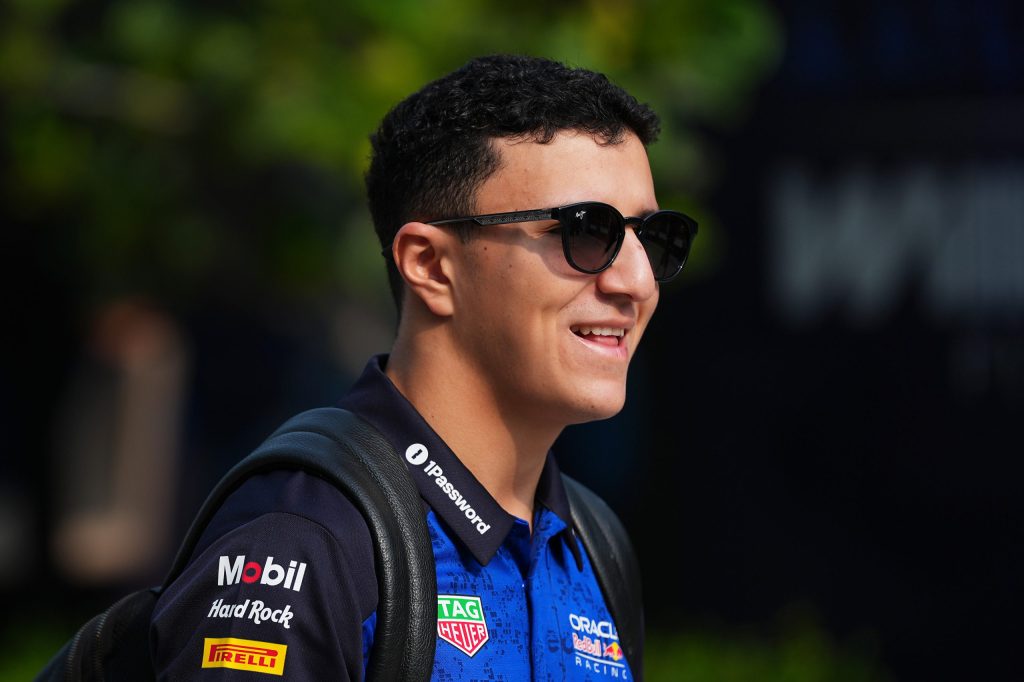
Isack Hadjar has called for cooling vests to be banned from Formula 1, arguing that coping with extreme heat should remain part of the physical challenge faced by drivers. Red Bull teammate Max Verstappen agrees that the equipment is unnecessary and has questioned whether it works effectively throughout a Grand Prix.
The comments come as the FIA activates its extreme heat regulations for the Singapore GP, where the heat index is forecast to exceed 31°C. Teams must prepare cooling systems for Saturday’s sprint and Sunday’s race, although drivers can choose not to wear the vest.
The equipment has divided the grid since its introduction, with some drivers welcoming additional protection against heat exhaustion and others complaining about discomfort, restricted movement and systems that stop providing effective cooling before the race ends.
Hadjar took the strongest position when asked about the disagreement between drivers over artificial cooling.
“I think it should be banned. Because it’s supposed to be tough,” the Red Bull driver told reporters in Singapore.
The Frenchman believes the physical demands of Formula 1 should remain an important part of the competition, particularly at circuits such as Sepang and Singapore, where high temperatures and humidity make racing considerably more exhausting.
The cooling system circulates chilled liquid through tubes in a fireproof garment worn beneath the driver’s race suit. Although it can initially reduce body temperature, its effectiveness depends on the cooling system continuing to maintain a sufficiently low fluid temperature throughout the race.
Hadjar’s proposal goes further than the current regulations, which already allow drivers to refuse the vest while requiring the cars to carry the necessary cooling-system components.
Verstappen criticises cables and limited effectiveness
Verstappen shares Hadjar’s opposition to the equipment, although his criticism focuses particularly on its practicality inside the cockpit.
“For me it’s not needed,” the four-time world champion said. “Yes, it’s hot, but it’s not a sauna, and with this cooling vest you have these stupid cables in your car, so it’s just limiting your movement as well.”
Verstappen also questioned whether the cooling system could provide a meaningful benefit throughout a full Grand Prix, particularly as cockpit temperatures rise and the liquid circulating through the garment becomes warmer.
“I don’t need it, even if it would work for one and a half hours, like cool, cool, I don’t need it, but it doesn’t work anyway for one and a half hours. I don’t think it has worked for one and a half hours in any category.”
The Red Bull driver therefore objects to both the physical restrictions created by the equipment and its inability, in his assessment, to provide sustained cooling.

FIA activates heat hazard rules for Singapore
The disagreement comes at a particularly relevant moment. The FIA has declared a heat hazard for the Singapore GP after the official weather service forecast a heat index exceeding 31°C during the sprint or Grand Prix.
The regulations require cars to carry the approved cooling-system components. However, drivers are not required to wear the cooling garment itself. Those who opt out must carry the prescribed additional ballast in the cockpit to compensate for the difference in equipment weight.
The distinction means Hadjar and Verstappen can refuse to wear the vest without violating the current regulations, even though they want the system removed or consider it unnecessary.
As GRANDE PRÊMIO reported, the FIA’s heat hazard declaration applies to both competitive races this weekend.
Singapore is among Formula 1’s most physically demanding events, combining high humidity with a long, technical street circuit. The Grand Prix takes place at night, but the absence of direct sunlight does not eliminate the heat trapped around the cockpit.
Other F1 drivers defend cooling technology
The Red Bull drivers’ position is not shared across the grid.
George Russell is among the strongest supporters of cooling technology, arguing that extreme cockpit temperatures can affect driver performance and safety. He has pointed to the physical distress experienced by drivers during the 2023 Qatar GP as evidence of the need for effective protection.
Charles Leclerc has also acknowledged that cooling vests can work well during the early stages of a race, although he believes the technology must maintain its effectiveness for longer.
Kimi Antonelli has expressed reservations after experiencing a cooling-system failure that left him exposed to excessively hot liquid during a previous session. His concern centres on reliability rather than rejecting the idea of cooling altogether.
The debate therefore extends beyond whether Formula 1 should remain physically demanding. Drivers also disagree about whether the current systems provide reliable protection without creating additional discomfort or technical risks.
The Singapore GP takes place from October 9-11, with the sprint on Saturday and Sunday’s Grand Prix beginning at 20:00 local time. GRANDE PRÊMIO follows all the latest Formula 1 news throughout the Singapore GP weekend.
F1 today: FAQ
What time is Singapore GP sprint qualifying today?
Sprint qualifying starts at 20:30 Singapore time on Friday, October 9, equivalent to 13:30 BST in the UK, 08:30 ET in the United States and Canada, and 18:00 IST in India. The session determines the starting grid for Saturday’s sprint.
Who was fastest in Singapore GP FP1?
George Russell topped FP1 with a 1:32.274, driving Mercedes’ older W17 aerodynamic specification. Charles Leclerc finished second, 0.198s behind, followed by Lando Norris in third. Kimi Antonelli was seventh with the upgraded Mercedes, while Gabriel Bortoleto finished 16th.
Why is George Russell using the old Mercedes at the Singapore GP?
Mercedes is comparing its previous W17 specification with the aerodynamic upgrade introduced at Sepang. Russell is using the older package, while championship leader Kimi Antonelli retains the new version. Russell led FP1, but differences in tyre compounds and run programmes mean the result alone does not establish which specification is faster.
Why does Isack Hadjar want F1 cooling vests banned?
Hadjar believes enduring extreme temperatures should remain part of Formula 1’s physical challenge. He said the equipment should be banned because racing is supposed to be tough.