News Summary
- Ferrari’s driver confrontations at Monza, Mexico City and Las Vegas have produced penalties, compromised races and repeated warnings from Frédéric Vasseur.
- At Las Vegas, Leclerc fell from sixth on the road to tenth after a ten-second penalty, while Hamilton recovered to seventh following their collision.
- Ferrari scored 18 points in Mexico and seven in Las Vegas, but the number of points specifically lost through teammate incidents cannot be established without speculative counterfactuals.
Ferrari’s increasingly difficult relationship between Lewis Hamilton and Charles Leclerc has become one of the defining stories of the closing stages of the 2026 Formula 1 season.
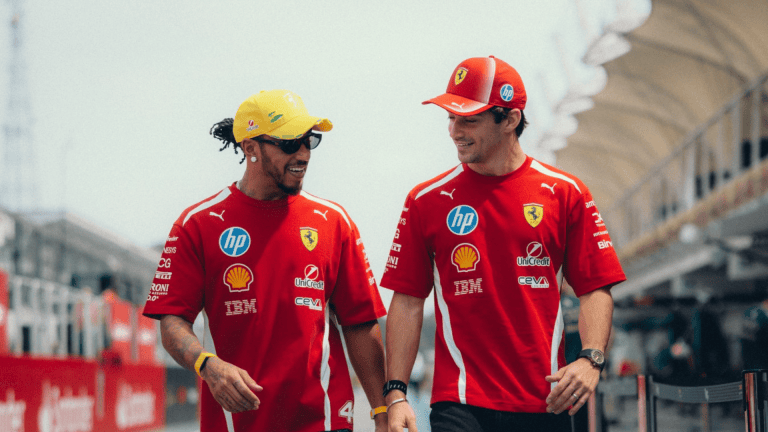
The pair have clashed repeatedly while fighting for position, forcing team principal Frédéric Vasseur to intervene after incidents in Italy, Mexico and Las Vegas.
The sporting damage is clear. Establishing precisely how many championship points Ferrari lost, however, is considerably more complicated than subtracting the drivers’ final positions from hypothetical results.
Some losses are directly measurable, including penalties and changes in the final classification. Others involve missed opportunities whose outcome depended on race pace, tyre strategy, traffic and the actions of rival drivers.
The distinction matters because Ferrari’s internal conflict has generated dramatic headlines, but its championship consequences deserve a more rigorous assessment.
Ferrari’s three major flashpoints: Results and consequences
| Grand Prix | Incident | Hamilton result | Leclerc result | Confirmed consequence |
|---|---|---|---|---|
| Italy | Opening-lap confrontation; Leclerc later crashes | P6, 8 points | DNF, 0 | Hamilton runs through gravel; Leclerc retires after a separate loss of control |
| Mexico | Opening-lap fight and investigation | P2, 18 points | P4, 12 points | Leclerc receives five-second penalty |
| Las Vegas | Leclerc hits Hamilton at Turn 7 | P7, 6 points | P10, 1 point | Ten-second penalty for Leclerc; Hamilton spins |
Across these three Grands Prix, Ferrari collected 45 points: eight at Monza, 30 in Mexico and seven in Las Vegas.
Those 45 points are confirmed results, not an estimate of what Ferrari should have scored. The difference between actual and potential points requires separate analysis for each race.

Monza: Hamilton loses ground, but Leclerc’s retirement cannot simply be blamed on the clash
The Italian Grand Prix provided the first major warning.
Hamilton and Leclerc raced closely through the opening corners, with the seven-time world champion forced across the gravel after attempting to hold position on the outside.
Hamilton lost places and complained over the team radio.
Leclerc subsequently crashed at Parabolica on the second lap, bringing his race to an end.
The Monegasque acknowledged that the opening-lap battle had been extremely close.
“With Lewis it was a way too close into Turn 1 and unfortunately in Turn 2 – I don’t know if we had contact or whatsoever,” Leclerc said after the race.
He added: “I was quite a lot on the inside curve and tried to make the corner, which I didn’t do it tight enough.”
Hamilton recovered to finish sixth, securing eight points.
Leclerc retired without scoring.
There is no sound basis for assigning Leclerc’s entire potential points haul as a loss caused by the confrontation with Hamilton. His retirement followed a separate incident after losing control of the car.
Likewise, Hamilton’s eventual sixth place does not establish where he would have finished without the opening-lap dispute.
What can be confirmed is that Ferrari lost track position in the opening exchange and subsequently lost one car to a crash.
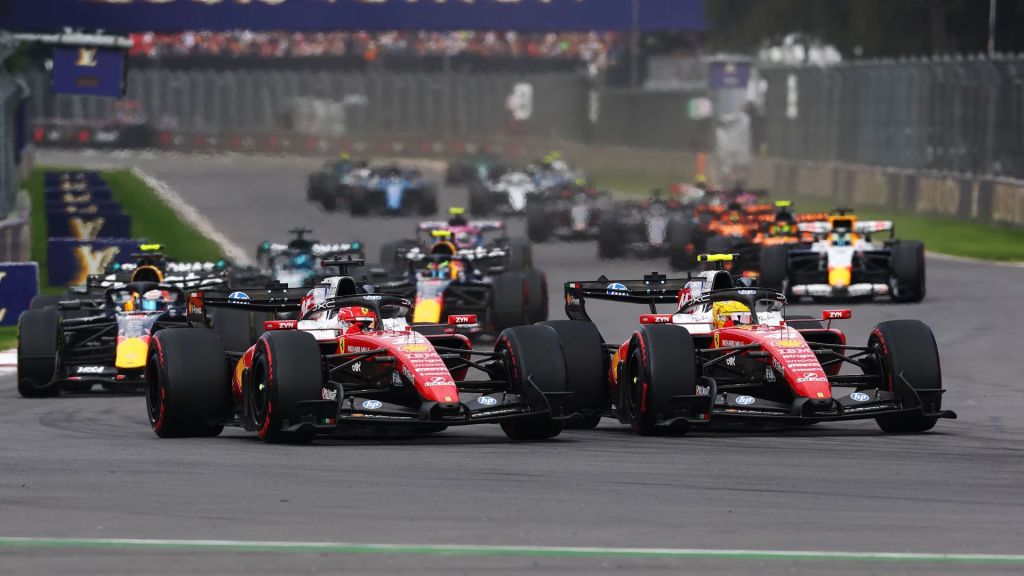
Mexico: Another investigation, but Ferrari still scores 30 points
The Mexico City Grand Prix created an even more complicated situation because both Ferrari drivers were competing near the front.
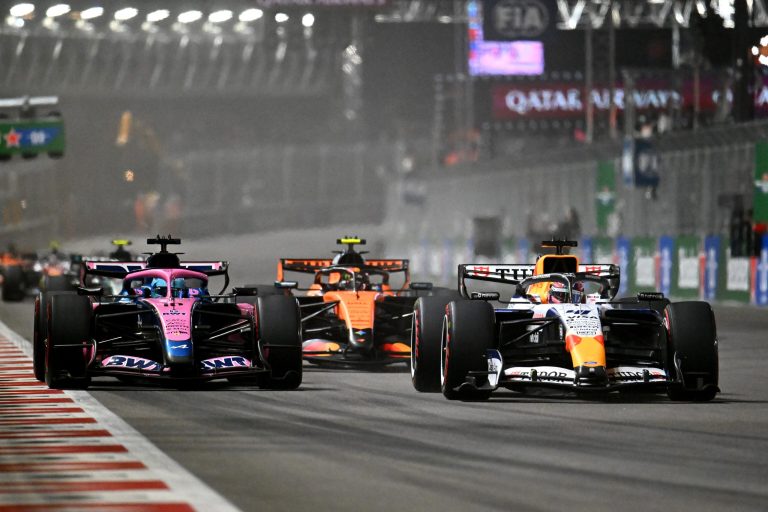
Hamilton started from pole position and initially led, while Leclerc attempted to overtake around the opening sequence of corners.
The two drivers ran side by side, with both leaving the track before Leclerc emerged ahead.
The stewards investigated the incident and imposed a five-second penalty on Leclerc.
Max Verstappen subsequently gained an advantage during the confusion and eventually won the race.
Hamilton recovered to second, finishing just 0.799 seconds behind the Red Bull driver.
Leclerc was classified fourth, earning another 12 points.
Ferrari therefore scored 30 points in Mexico.
The question is whether avoiding the opening-lap confrontation could have produced a victory or a better combined result.
It is possible, but not demonstrable.
Verstappen’s race pace, the Safety Car and the interaction between the leading cars all influenced the final outcome.
Hamilton’s narrow deficit to Verstappen does not prove that the opening-lap clash cost him victory.
The situation nevertheless created enough concern for Vasseur to summon both drivers for discussions before the São Paulo Grand Prix.
Las Vegas: The clearest evidence of direct sporting damage
The Las Vegas Grand Prix provides the strongest documented example of Ferrari’s internal rivalry producing an immediate sporting penalty.
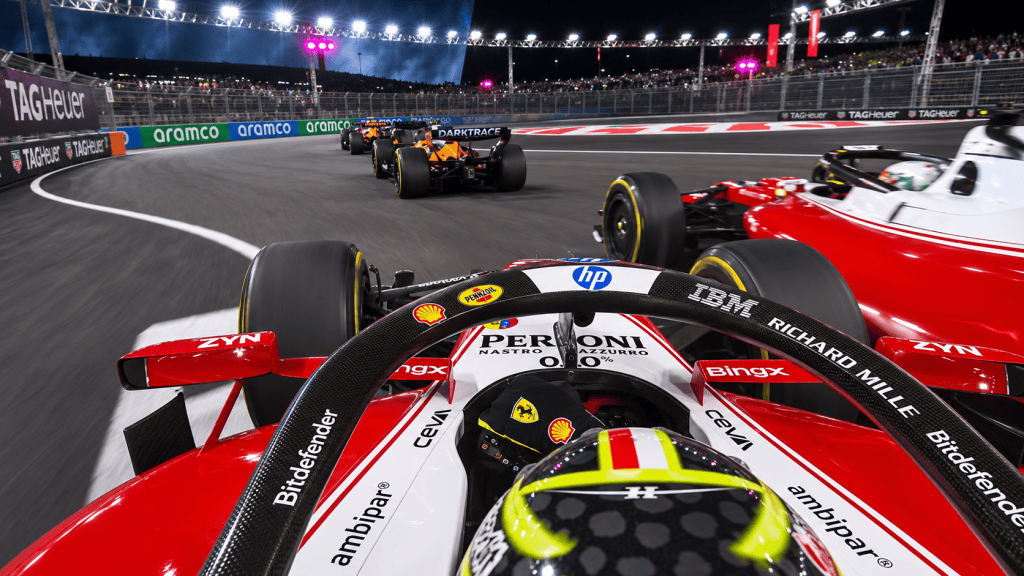
Hamilton and Leclerc were fighting for position when the Monegasque attempted to pass on the inside at Turn 7.
The stewards concluded that Leclerc had not established sufficient overlap and was wholly responsible for the resulting collision.
Hamilton spun and dropped to tenth before recovering to seventh.
Leclerc crossed the finish line sixth but received a ten-second penalty, falling to tenth in the final classification.
The difference between sixth and tenth is seven championship points under the standard scoring system: eight for sixth compared with one for tenth.
That seven-point difference quantifies the effect of Leclerc’s post-race penalty on his classification. It does not establish Ferrari’s total points loss caused solely by the collision.
Hamilton had already received a separate ten-second penalty for leaving the track and gaining an advantage while battling Lando Norris.
That independent sanction also affected his strategy and final race position.
The combination makes an exact counterfactual impossible without reconstructing the race in a way that assumes how competitors would have behaved.
Hamilton nevertheless believed a stronger result had been available.
“I felt a podium was on today but it was a tough race and the penalty, followed by the contact, made that difficult,” the Briton said in Ferrari’s post-race comments.
Leclerc accepted responsibility.
“The race didn’t finish well for us, and my mistake was part of that,” he said.
“I accept the penalty and we will review what I could have done differently so it doesn’t happen again.”
What Ferrari can actually measure
The distinction between confirmed results and estimated consequences is essential.
| Measure | Confirmed figure | What it establishes |
|---|---|---|
| Ferrari points at Monza | 8 | Actual team result |
| Ferrari points in Mexico | 30 | Actual team result |
| Ferrari points in Las Vegas | 7 | Actual team result |
| Combined points across three races | 45 | Actual championship contribution |
| Leclerc’s Las Vegas penalty | 10 seconds | Confirmed sporting sanction |
| Leclerc’s Las Vegas classification change | P6 to P10 | Four places lost after penalty |
| Leclerc’s associated points difference | 7 | Difference between P6 and P10 scoring |
| Total points lost because of all clashes | Not established | Requires hypothetical race outcomes |
A statistical assessment must also account for the different causes of Ferrari’s poor results.
Hamilton’s Las Vegas penalty was not caused by Leclerc.
Leclerc’s Monza retirement followed a separate driving error.
And Mexico’s eventual outcome was shaped by factors extending beyond the opening-lap confrontation.
Therefore, adding the potential points of those episodes together would create a misleading total.
Vasseur’s problem extends beyond championship arithmetic
The most serious consequence may be Ferrari’s inability to control its own drivers.
After Las Vegas, Vasseur acknowledged that discussions following Mexico had failed to prevent another incident.
“I am more than upset because that message was clear after Mexico,” the team principal told Sky Sports Italia.
“We had a chat all together in Brazil. Today we passed the message to think about the team when they were racing together and the outcome is this one.”
His frustration subsequently led to reports that Ferrari was considering internal sanctions against Hamilton and Leclerc.
The manufacturer’s senior leadership has also left Vasseur responsible for resolving the dispute, rather than publicly intervening in the drivers’ relationship.
The situation is particularly uncomfortable because Hamilton has questioned whether Ferrari’s management of the championship prevented him from challenging Kimi Antonelli more effectively.
The seven-time champion argued that additional support could have changed his title battle, despite denying that he had requested official number-one status.
Ferrari remains second, but the conflict is damaging its authority
Ferrari has 517 points after Las Vegas, remaining second in the Constructors’ Championship.
Red Bull is third with 440, followed by McLaren on 431.
The Scuderia therefore holds a 77-point advantage over Red Bull with two races remaining.
The championship position gives Ferrari a significant cushion, but the repeated incidents have generated questions about how the team manages its two drivers.
The challenge for Qatar and Abu Dhabi is to convert its competitive potential into results without another internal collision.
The available evidence does not support a single definitive figure for points lost because of the rivalry.
What it does establish is repeated disruption, two FIA penalties connected to incidents between the drivers, compromised race outcomes and a team principal who has publicly acknowledged that previous warnings have not worked.
FAQ
How many points did Hamilton and Leclerc’s clashes cost Ferrari in 2026?
There is no reliable single total. Ferrari scored 45 points across the three main flashpoints, but calculating the points lost through the incidents requires hypothetical race outcomes.
How many positions did Leclerc lose after his Las Vegas penalty?
Leclerc crossed the finish line sixth and was classified tenth after a ten-second penalty, a four-place drop equivalent to seven championship points.
Did Ferrari punish Hamilton and Leclerc internally?
Ferrari has reportedly considered disciplinary measures, but no confirmed internal financial sanction has been announced.