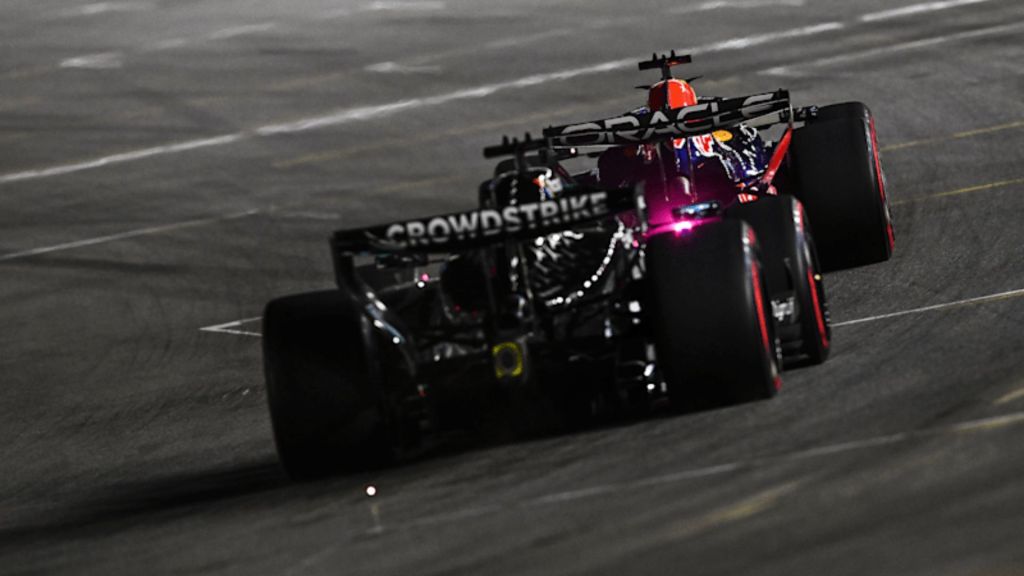
News Summary
- George Russell proposed a temporary agreement with Max Verstappen on lap 11 of the Las Vegas Grand Prix, hoping both drivers could pull away from their pursuers.
- Russell’s engineer did not respond to the suggestion, and Verstappen was never informed of the proposed arrangement.
- The revelation adds an ironic dimension to their rivalry after Verstappen won the race, Russell crashed and the Dutchman mocked his opponent’s performance.
George Russell attempted to negotiate an unusual agreement with Max Verstappen during the 2026 Las Vegas Grand Prix, suggesting the two drivers stop defending against each other to establish a greater advantage over the chasing pack.
The proposal emerged from a review of team-radio communications conducted by RaceFans, which identified the message Russell sent to Mercedes race engineer Marcus Dudley on lap 11 of the 50-lap race.
The most remarkable detail is that Verstappen never received the proposal. Neither Russell’s engineer nor the Red Bull pit wall passed the suggestion on, leaving the two drivers to continue their battle without any agreement.
The revelation comes after a weekend dominated by tension between Russell and Verstappen, who collided during final practice and subsequently exchanged increasingly aggressive comments.

Russell proposes temporary truce with Verstappen
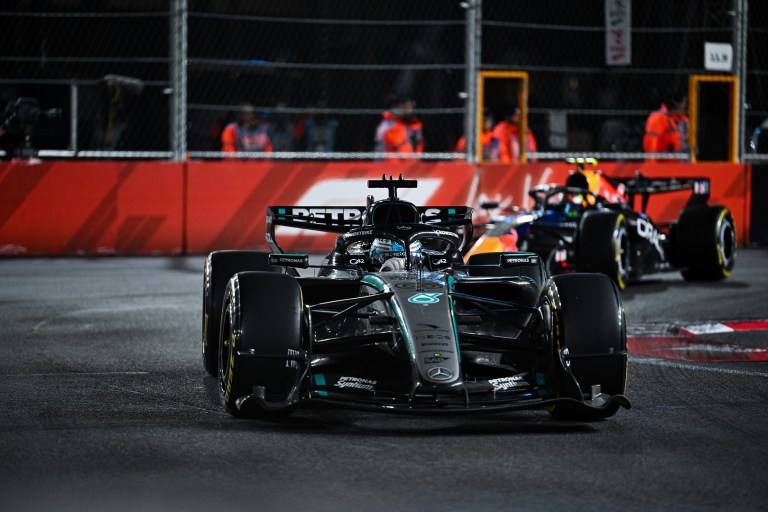
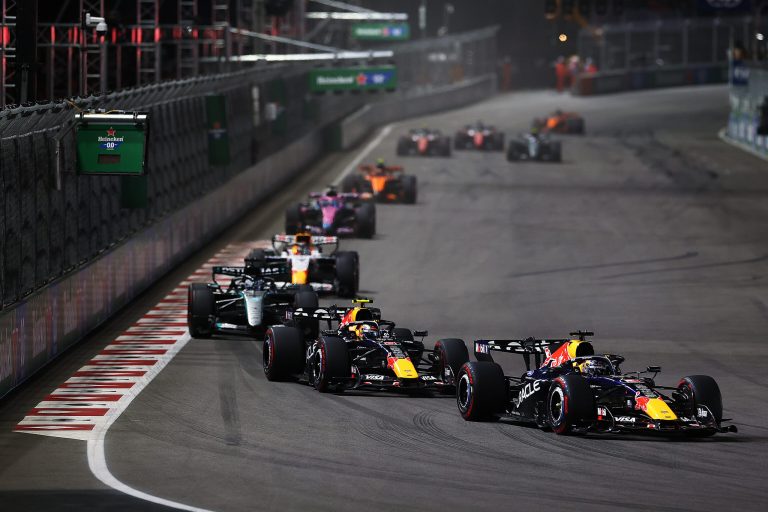
Russell made the suggestion while battling Verstappen for the lead during the opening stint.
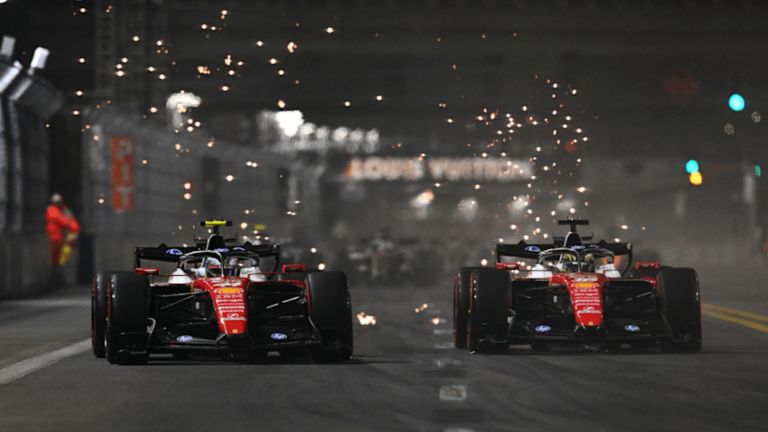
The two drivers had repeatedly exchanged positions as the unusual energy-management characteristics of the Las Vegas circuit made overtaking and counterattacking particularly effective.
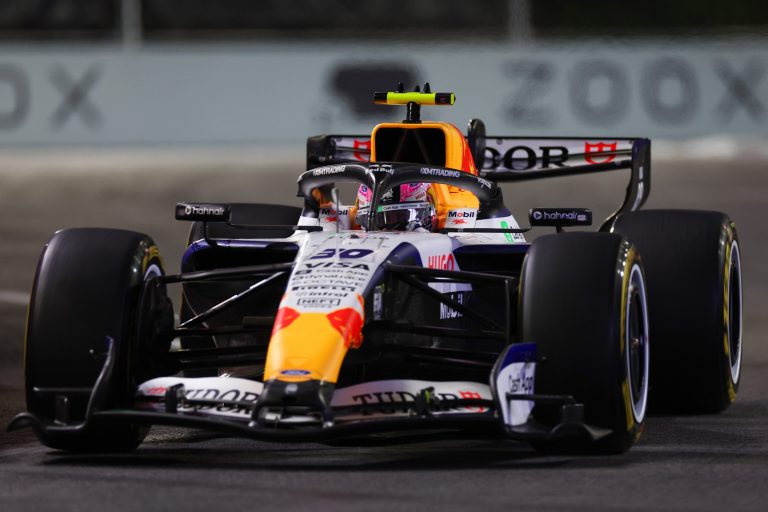
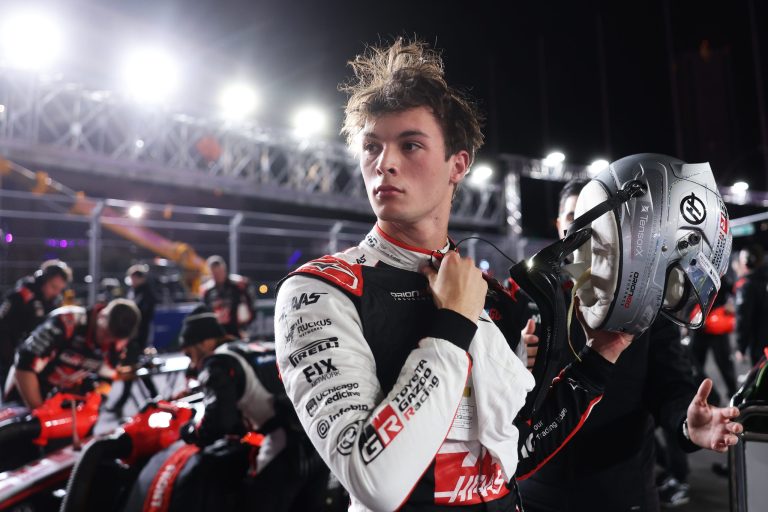
At that stage, Isack Hadjar was running close enough to threaten the leading pair, creating an incentive for Russell and Verstappen to avoid losing time defending against each other.
Russell therefore suggested a temporary arrangement over the team radio.
“I’m happy to work together with Max, if that’s going to break us away from the pack,” Russell told Dudley.
“So if he wants to yo-yo, let’s yo-yo, but no defending.”
The proposal was straightforward: allow the repeated exchanges of the lead to continue without defensive moves that could slow both cars and bring their rivals closer.
Russell was effectively offering Verstappen a temporary non-aggression agreement despite their increasingly hostile relationship outside the cockpit.
However, Dudley did not acknowledge the suggestion, and Verstappen’s race engineer Tom Hart did not communicate it to the Red Bull driver.
There is therefore no evidence that Verstappen knowingly rejected Russell’s proposal.
Las Vegas racing creates unusual strategic opportunities
Russell’s suggestion reflected the unusual characteristics of Formula 1’s 2026 regulations.
The balance between electrical energy deployment, combustion power, aerodynamic settings and slipstreaming has created situations in which remaining behind another car can become a temporary advantage.
Drivers can conserve electrical energy, benefit from reduced aerodynamic drag and then deploy additional power to complete an overtake.
The consequence is that overtaking does not necessarily produce a lasting advantage.
A driver who moves ahead can become vulnerable almost immediately.
As Verstappen explained after criticising Formula 1’s ‘yo-yo racing’, the system can produce repeated changes of position without either driver establishing a decisive performance advantage.
Russell recognised that defending aggressively could make the situation worse.
By allowing both cars to exchange positions without unnecessary resistance, the leaders might have preserved their advantage over Hadjar and the pursuing McLarens.
That was the strategic reasoning behind the proposal, although it was never tested through a mutual agreement.
Verstappen dominates battle and Russell crashes
Without a response from Red Bull, the drivers continued competing for the lead.
Russell repeatedly challenged Verstappen, but the Dutchman remained in control of the decisive phases of the race.
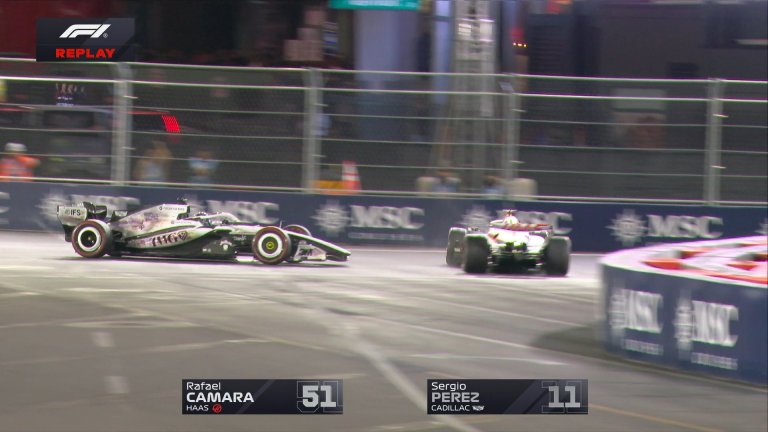
The Mercedes driver ultimately suffered a much more damaging setback when he attempted to overtake teammate Kimi Antonelli late in the Grand Prix.
Russell locked up, ran into the barriers and dropped down the order, eventually finishing ninth.
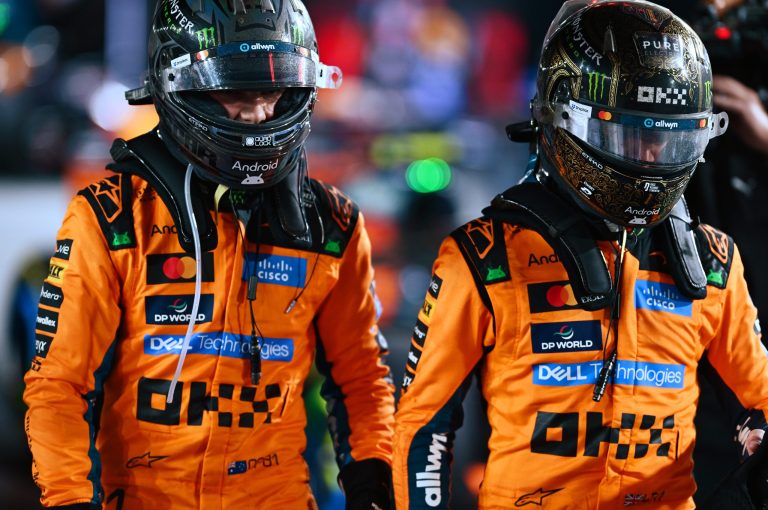
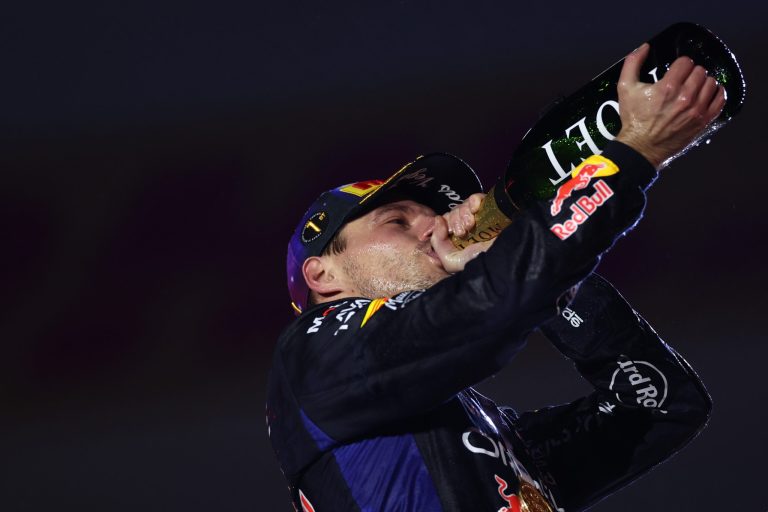
Verstappen took victory, while McLaren secured second and third with Lando Norris and Oscar Piastri.
The result reinforced the contrast between the two drivers’ performances.
As GRANDE PRÊMIO analysed after Las Vegas, Russell had spent the weekend confronting Verstappen away from the circuit but struggled to convert his competitive Mercedes into an equivalent result.
The Dutchman, meanwhile, secured another victory and strengthened his position in the Drivers’ Championship.
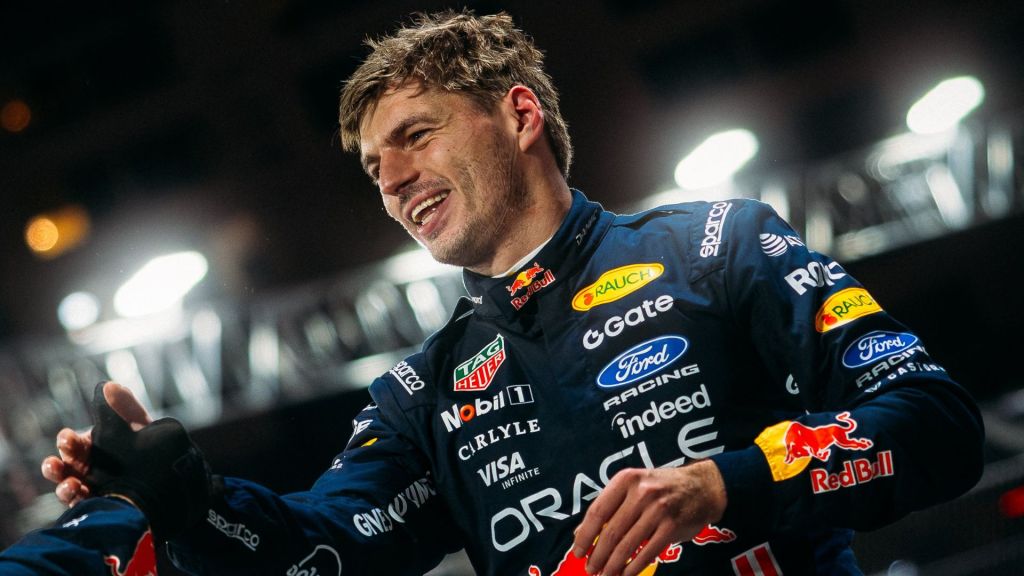
Verstappen mocks Russell after race
The revelation about Russell’s attempted agreement is particularly striking given what happened after the chequered flag.
Verstappen responded to his rival’s earlier criticism with a series of dismissive comments during the post-race press conference.
Russell had accused Verstappen of repeatedly pushing the limits of acceptable conduct following their collision during final practice.
The FIA stewards issued the Red Bull driver a warning after concluding that he had changed direction under braking.
Verstappen subsequently dismissed Russell’s criticism and openly celebrated his rival’s mistake during the race.
“The thing is, he speaks a lot next to the track,” Verstappen said.
The Dutchman added that Russell was “so far below my level” that he saw little reason to engage in the argument.
The comments turned an already tense rivalry into one of the principal talking points of the Las Vegas weekend.
The previously unheard radio proposal now adds another dimension.
While Russell was publicly challenging Verstappen’s conduct, he had privately attempted to establish a cooperative arrangement with him during the race — without the Dutchman ever knowing.
That does not necessarily contradict Russell’s criticism of Verstappen. Racing cooperation and disagreements over driving standards are separate matters.
But it illustrates how significantly the relationship between the two drivers can change depending on whether they are competing on track or discussing each other’s behaviour away from it.
The rivalry will have another opportunity to develop at the Qatar Grand Prix on November 27-29.
GRANDE PRÊMIO is following every session of the 2026 championship, with full coverage and analysis of Formula 1.
FAQ
What did George Russell propose to Max Verstappen in Las Vegas?
Russell suggested that the two drivers avoid defending against each other so they could build a larger advantage over the chasing pack.
Did Max Verstappen reject Russell’s proposal?
No. The proposal was not relayed to Verstappen, so the Red Bull driver had no opportunity to accept or reject it.
Why were Russell and Verstappen arguing in Las Vegas?
The two drivers collided during final practice, resulting in an FIA warning for Verstappen. Russell criticised his rival’s behaviour, while Verstappen subsequently mocked Russell after winning the race.