News Summary
- George Russell was right to challenge Max Verstappen’s behaviour in Las Vegas, but the Dutchman responded by beating him on track and publicly ridiculing his performance.
- Russell’s ninth-place finish underlined his struggles against Kimi Antonelli, who has already secured the 2026 F1 title and leads his Mercedes teammate by 138 points.
- The British driver’s apparent decline into a supporting role could suit Mercedes, giving the team a clear hierarchy without another Hamilton-Rosberg-style confrontation.
George Russell has developed an impressive ability to stand up to Max Verstappen whenever the two are away from their Formula 1 cars. He confronts him, challenges his behaviour and publicly questions the privileges the Red Bull driver appears to enjoy. Sometimes, as happened in Las Vegas, Russell is absolutely right.
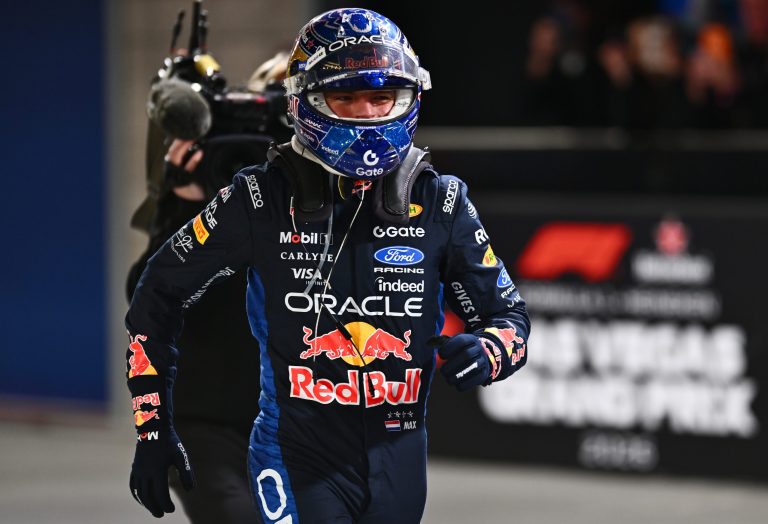
The problem is what happens when they get back behind the wheel. The lion that confronts Verstappen in the paddock becomes a kitten on the racetrack. And in Las Vegas, the contrast was so brutal that Verstappen did not even bother disguising his contempt.
Russell had complained about Verstappen’s conduct during final practice, when their cars made contact after the Red Bull driver changed direction under braking. The stewards agreed that Verstappen’s behaviour warranted a warning. Russell was justified in questioning why his rival repeatedly pushes the limits of acceptable conduct.
But the moment the confrontation moved from words to racing, Verstappen took control of the argument. Not by shouting louder, but by doing what Russell has consistently struggled to do against him: delivering when the stakes are highest.
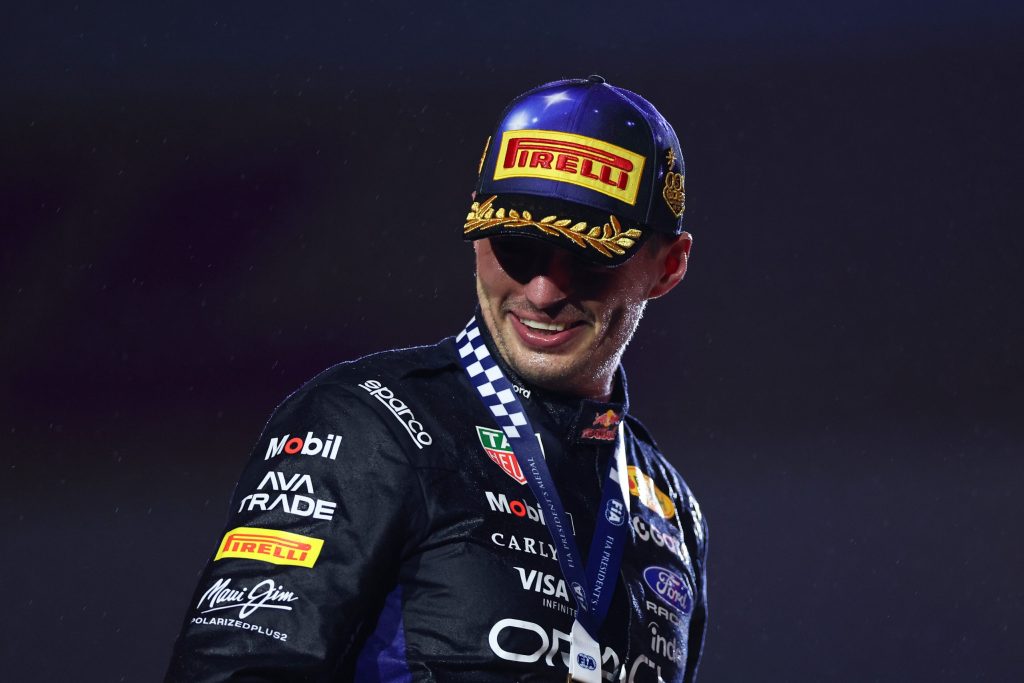
Verstappen did not just beat Russell — he made him look ordinary
Las Vegas offered Russell almost everything he could have wanted. Mercedes was competitive, the circuit suited its car, and a penalty for Kimi Antonelli promoted the Briton to the front row alongside Verstappen.
He had the machinery, the opportunity and a direct confrontation with the driver he had spent the weekend criticising.
What followed was an extraordinarily revealing demonstration of the difference between the two.
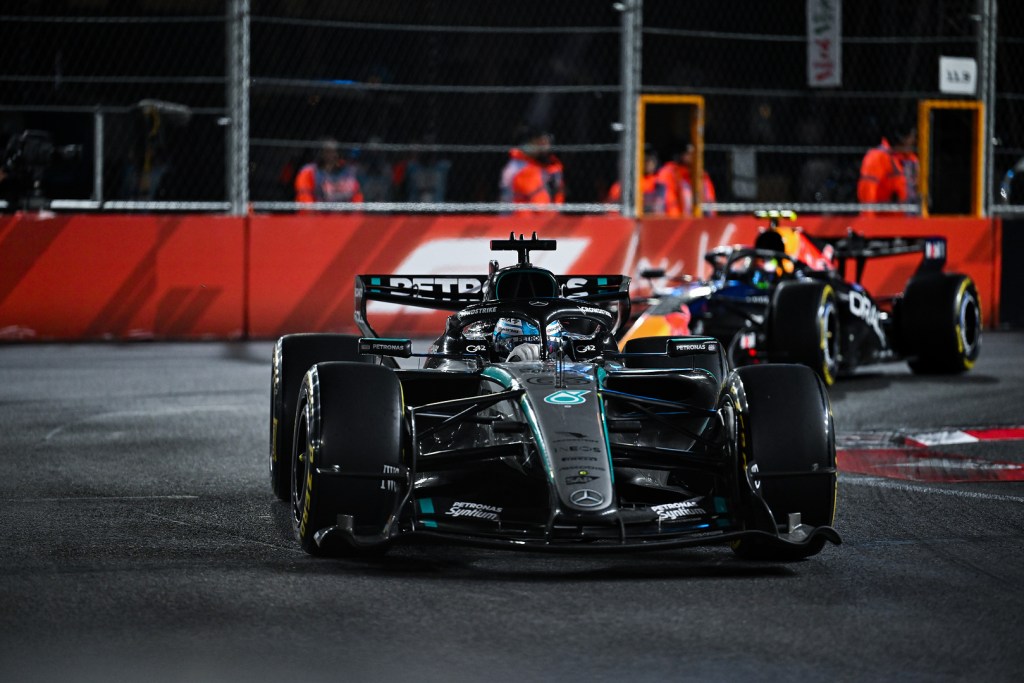
Russell repeatedly managed to get ahead of Verstappen during a race dominated by slipstreaming and energy management. Yet every time he took the lead, the Red Bull driver found a way to recover it. Russell could execute an overtake. Verstappen understood how to win the battle.
The distinction matters. Las Vegas was not simply about having the fastest car or producing the best move at the end of a straight. It was about knowing when to spend electrical energy, when to attack, when to surrender a temporary advantage and how to position the car for the next sequence of corners.
As the analysis of the five key lessons from the Las Vegas Grand Prix demonstrated, Verstappen mastered the entire contest. Russell repeatedly won individual exchanges without managing to turn them into anything lasting.
And when the Mercedes driver eventually tried to attack Antonelli in the closing stages, he locked up, hit the barriers and dropped to ninth. Verstappen won. Russell collected two points.
It was a sporting humiliation made worse by the fact that Verstappen had already beaten him in the psychological contest.
The Dutchman subsequently launched a brutal verbal attack on Russell, reportedly describing his rival as all talk away from the circuit and dismissing his performances throughout the season. The remarks, attributed to Verstappen by Dutch journalist Erik van Haren, also framed Russell’s misfortune as deserved karma.
Verstappen’s behaviour was ruthless and hardly gracious. But Russell had handed him the perfect ammunition.
The Briton had spent the weekend demanding that somebody stand up to Verstappen. When his own opportunity arrived, he could not finish the job.

Russell’s real problem is not Verstappen. It is Antonelli
There is an even more damaging element to Russell’s situation. Losing to Verstappen is hardly a disgrace. The Dutchman is a four-time world champion and one of the most formidable competitors Formula 1 has ever seen.
Being comprehensively overshadowed by his own teammate is a different matter.
Kimi Antonelli has already won the 2026 World Championship. Russell, meanwhile, arrives at the closing races with 264 points against the Italian’s 402.
That is a 138-point deficit between two drivers operating with Mercedes machinery. The scale of the difference makes it increasingly difficult to present Russell as an equal partner in the team’s sporting hierarchy.
The qualifying session in Las Vegas illustrated the problem perfectly. Antonelli delivered the fastest lap despite a difficult session and traffic complications. Russell, who had looked competitive throughout the weekend, ended up third on raw pace.
The race was no kinder. Antonelli remained in contention for victory, finishing fourth after an intense fight at the front. Russell crashed while attempting to pass him.
What makes the episode even more telling is that Russell refused to regret the failed manoeuvre against Antonelli, insisting that he had to take the risk to fight for victory.
There is something admirable about a racing driver refusing to settle for a lesser result. But ambition alone does not absolve execution. Russell needed to make the move work. Instead, he lost a potential podium and handed his greatest rival another opportunity to ridicule him.
Antonelli has won the championship. Russell is fighting to avoid finishing behind Verstappen and Lewis Hamilton in the standings, with Lando Norris also level on points.
For a driver who was expected to establish himself as Mercedes’ leader following Hamilton’s departure, that is a particularly uncomfortable position.
Russell is not an incapable driver. He is fast, experienced, technically articulate and perfectly capable of delivering excellent qualifying laps and race performances. But Formula 1 does not distribute its greatest prizes according to technical vocabulary, polished interviews or the ability to confront an opponent in a press conference.
A genuine team leader must impose himself when another exceptional driver occupies the opposite side of the garage. Antonelli has done that to Russell. Russell has not found an answer.
Mercedes may have found exactly the hierarchy it wants
There is, however, another side to this story — and it concerns Mercedes rather than Russell.
Toto Wolff knows better than almost anyone what happens when two drivers of comparable status refuse to accept anything other than victory. The rivalry between Lewis Hamilton and Nico Rosberg produced championships, extraordinary tension and a level of internal conflict that repeatedly threatened to destabilise the team.
It was spectacular for Formula 1. It was considerably less comfortable for Mercedes management.
The situation with Antonelli and Russell is different.
Antonelli is already the world champion, the driver around whom Mercedes can build its future and the personality with the greatest sporting momentum. Russell offers experience, technical knowledge, continuity and the ability to score substantial points without currently presenting the same championship threat.
For Mercedes, that could be an almost ideal arrangement: one unmistakable number one, one capable number two and no need to manage another destructive internal war.
This does not mean Mercedes has officially designated Russell as its second driver. There is no need to invent team orders or claim that Wolff deliberately wants him to lose.
The argument is more straightforward. The championship has created a hierarchy that Mercedes management would otherwise have had to establish.
Antonelli occupies the top position because he earned it. Russell has been pushed into a supporting role by the results.
And if the team continues winning, why would Mercedes feel compelled to disrupt such a convenient balance?
Russell can remain valuable without being indispensable as a title contender. He can contribute to constructors’ championship campaigns, support development and occasionally win races. None of those qualities requires him to be treated as Antonelli’s equal in the long-term sporting project.
In fact, accepting that reality may be the most useful contribution he can now make.
A lion in the paddock, a kitten when Verstappen attacks
Russell’s criticism of Verstappen should not be dismissed simply because the Dutchman is the better driver. Rules apply equally to world champions and midfield competitors, and Russell was entirely entitled to challenge conduct that the stewards themselves considered worthy of a warning.
But being right about Verstappen’s behaviour does not make Russell his equal as a competitor.
That is the distinction Las Vegas exposed so mercilessly.
Verstappen can be provocative, arrogant and unnecessarily aggressive in his public comments. He can also be accused of crossing sporting boundaries. Russell does not have to accept any of that in silence.
Yet when the race demanded precision, calculation and composure, Verstappen delivered all three. Russell ultimately threw away his result.
Then came the final indignity: Verstappen did not merely win the Grand Prix. He watched Russell’s mistake, enjoyed it and used the press conference to belittle him.
The Red Bull driver effectively reduced the Mercedes driver to a supporting character in his own victory story.
And the 2026 Formula 1 championship standings after Las Vegas make that assessment even more uncomfortable. Russell is 138 points behind Antonelli, 40 behind Verstappen and now even trails Hamilton, the driver whose departure was supposed to open the door to his leadership of Mercedes.
That is not the profile of a driver forcing Formula 1 to recognise him as a dominant figure. It is the profile of someone being overtaken in the sport’s hierarchy.
Russell can continue confronting Verstappen in interviews, criticising his conduct and demanding respect. Some of those arguments will undoubtedly be justified.
But respect at the sharp end of Formula 1 is ultimately established on Sunday — or, in Las Vegas, Saturday night.
Verstappen demonstrated the difference between talking like a champion and racing like one. Antonelli has already demonstrated which Mercedes driver belongs at the top.
And George Russell, whether he likes it or not, is beginning to look like exactly the number two Mercedes needs.
GRANDE PRÊMIO is following every session of the 2026 championship, with full coverage, news and analysis of Formula 1.
FAQ
Why did Max Verstappen mock George Russell after Las Vegas?
Verstappen reacted to Russell’s criticism following an incident in final practice. After winning the Grand Prix while Russell finished ninth, the Red Bull driver reportedly dismissed his rival’s performances and described the outcome as deserved karma.
How far behind Kimi Antonelli is George Russell in the 2026 F1 championship?
Antonelli has 402 points after Las Vegas, compared with Russell’s 264. The 138-point gap reflects the Italian’s commanding position within Mercedes.
Has Mercedes officially made Russell its second driver?
No official number-two designation has been established. However, Antonelli’s world championship and substantial points advantage provide a strong sporting basis for considering him the team’s leading driver.