News Summary
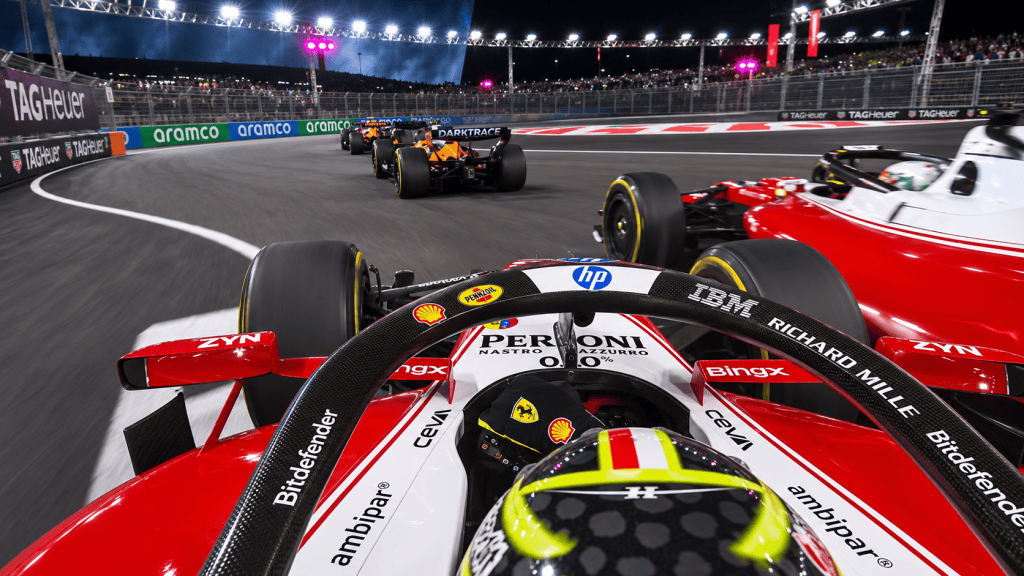
- Ferrari’s Leclerc-Hamilton collision triggered a ten-second penalty and renewed criticism from Frédéric Vasseur.
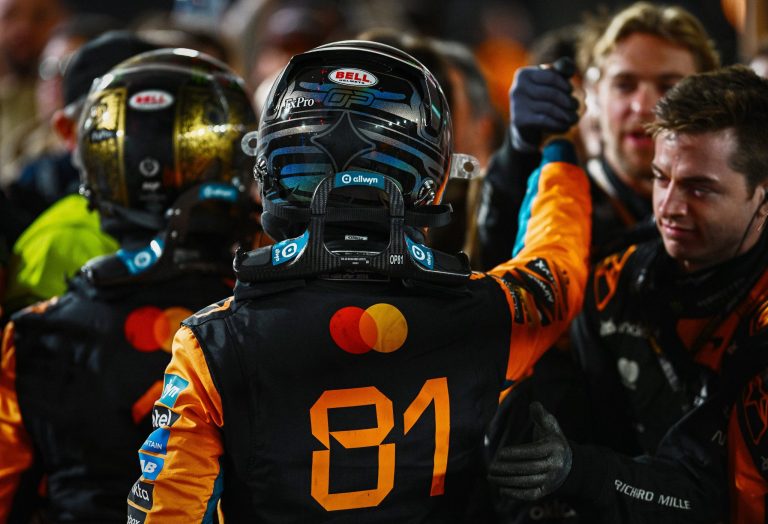
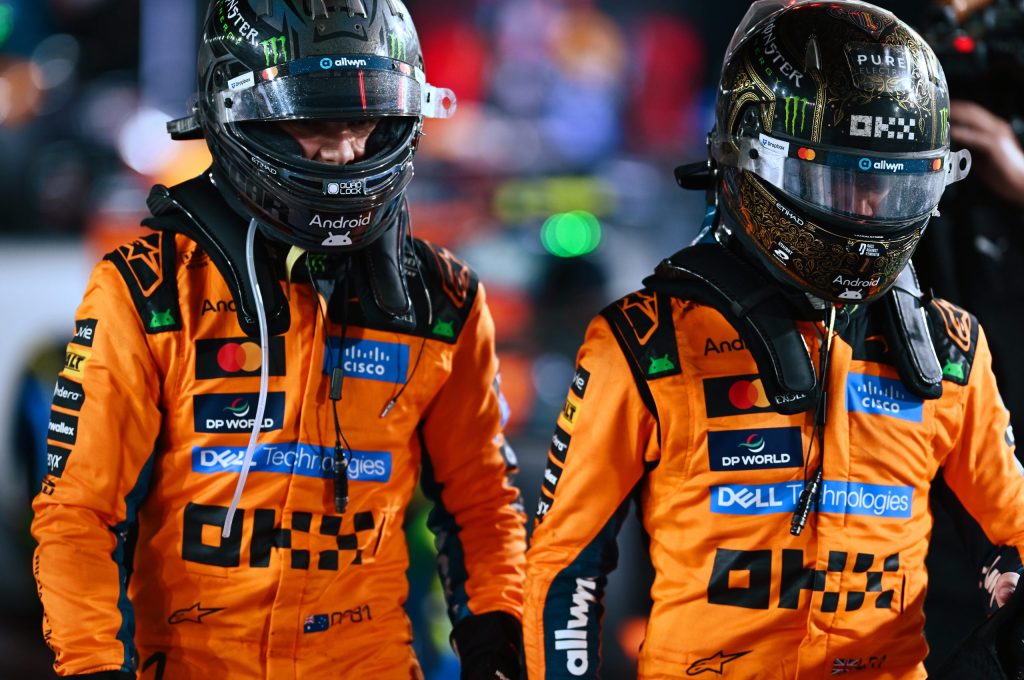
- McLaren finished second and third through Lando Norris and Oscar Piastri, collecting 33 points.
- The result exposed contrasting outcomes for two teams trying to maximise their opportunities in an unpredictable race.
Ferrari and McLaren faced the same extraordinary racing conditions in Las Vegas. One left with a double podium; the other with another internal dispute and a damaged result.
The contrast was one of the defining consequences of the 2026 Grand Prix, even if it does not tell the complete story of either team’s competitiveness.
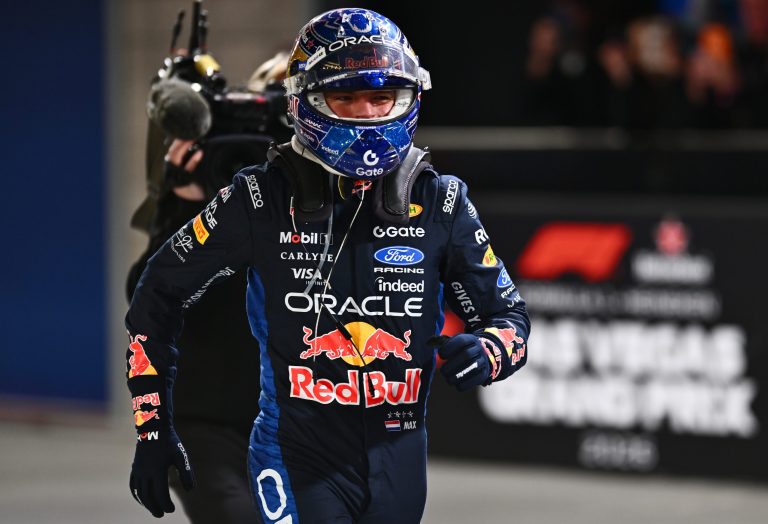
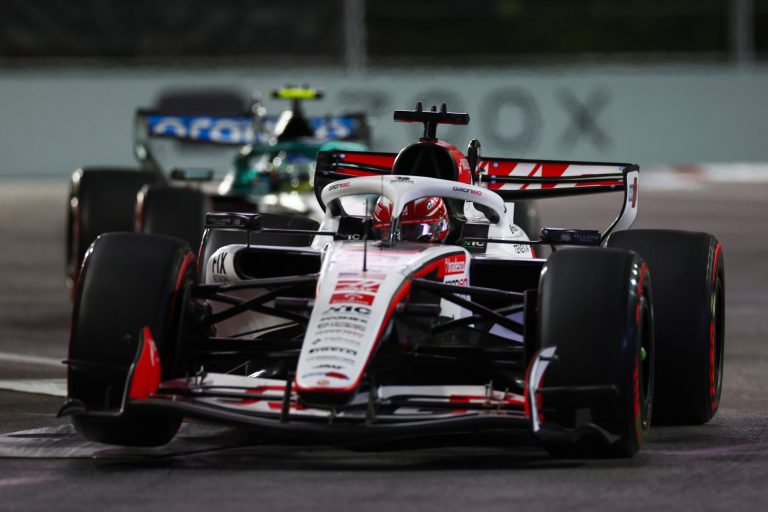
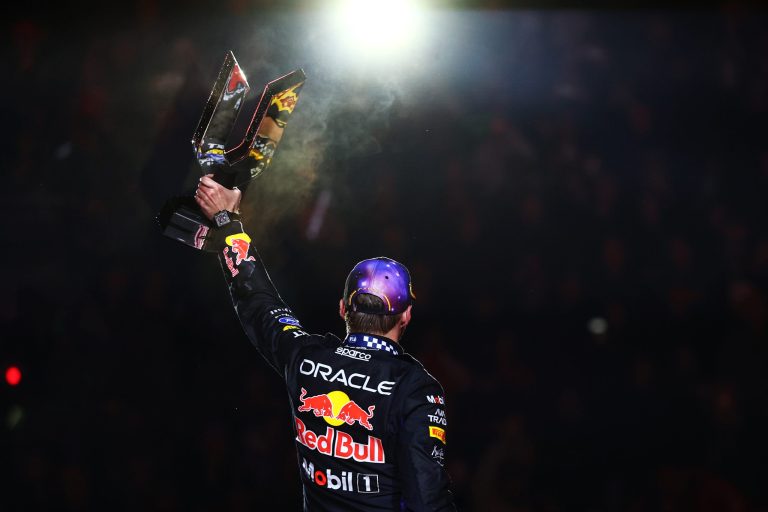
Lando Norris finished second, just 0.639 seconds behind winner Max Verstappen, while Oscar Piastri recovered from 17th to third.
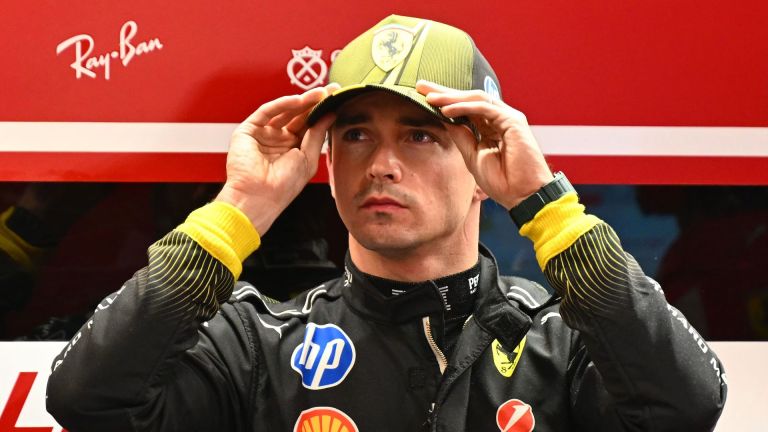
Ferrari’s Lewis Hamilton finished seventh, with Charles Leclerc tenth after receiving a ten-second penalty for causing a collision with his teammate.
McLaren converted uncertainty into 33 points. Ferrari converted another intra-team battle into an investigation, a penalty and public criticism from its own team principal.
McLaren survives an unpredictable race
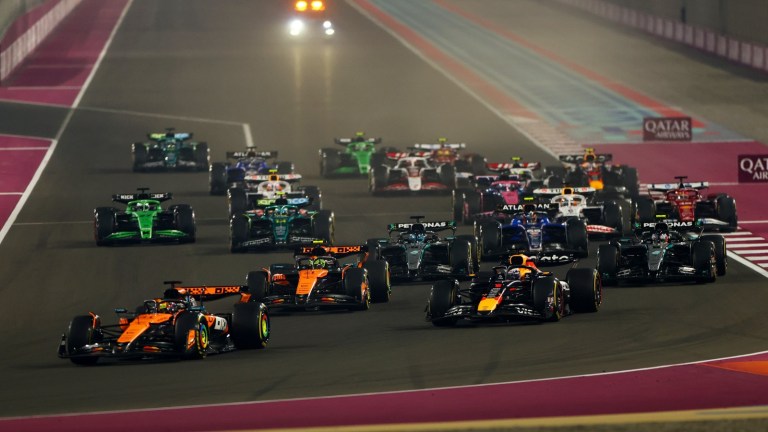
Las Vegas was unusually difficult to manage.
Drivers repeatedly exchanged positions because of the interaction between slipstreaming and electrical energy deployment, making it difficult for the leading cars to establish lasting advantages.
Norris admitted afterwards that he sometimes struggled to understand whether he was in contention for victory or at risk of falling down the order.
Piastri faced an even more complicated challenge after a power-unit penalty dropped him to 17th.
Yet both McLarens recovered.
The team navigated the Safety Car period, capitalised on late mistakes from Mercedes and completed the race with its drivers on the podium.
There were moments of pressure and competition between the teammates, but neither suffered an intra-team collision.
The value was measurable: McLaren reduced Red Bull’s Constructors’ Championship lead from 17 to nine points.
Norris discussed the outcome in his post-race assessment of what he called Formula 1’s most chaotic race.

Ferrari’s instructions fail again
Ferrari’s situation was different.
Leclerc and Hamilton had already clashed in Mexico, prompting discussions involving team principal Frédéric Vasseur.
The intention was to establish clearer expectations before further damage occurred.
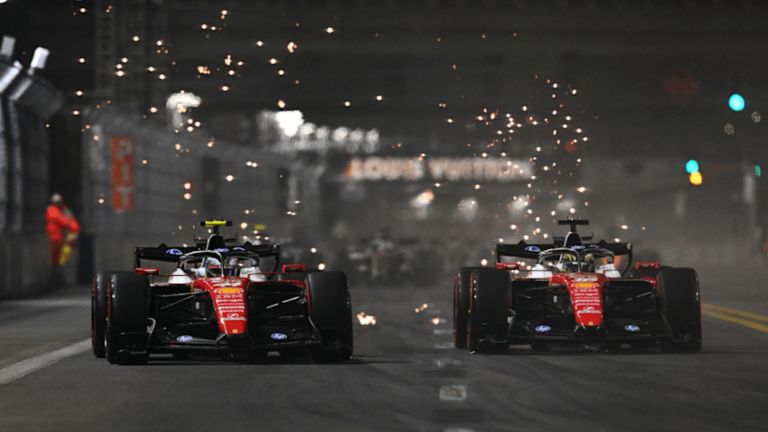
However, Leclerc made contact with Hamilton at Turn 7 in Las Vegas, sending his teammate spinning.
The stewards held Leclerc responsible and imposed a ten-second penalty.
Vasseur’s reaction was especially significant because Ferrari had reportedly repeated its instructions during the race.
The team principal accused Leclerc of ignoring its interests, while Hamilton suggested he had already done everything possible to resolve the situation.
Ferrari’s problem was not simply that two drivers fought. It was that the management intervention designed to prevent another incident failed.
The issue has already prompted a wider examination of Ferrari’s long-term commitment to Leclerc.
The gap is bigger than one race
McLaren’s podium does not establish that its drivers are always better at cooperating.
Nor does Ferrari’s collision mean that the team should forbid Hamilton and Leclerc from racing.
The drivers compete for individual positions, and internal tension is unavoidable at Formula 1’s highest level.
But the consequences of a collision are especially damaging when rivals are separated by small margins.
Leclerc crossed the finish line sixth before his penalty dropped him to tenth, while Hamilton had already lost ground after being spun.
McLaren took full advantage of the race’s circumstances.
The result strengthened its championship position, leaving the team just nine points behind Red Bull with Qatar and Abu Dhabi remaining.
Ferrari remains second in the Constructors’ Championship, but its performance has to be judged against the title-winning standard set by Mercedes and the efficiency demonstrated by rival teams.
Ferrari must turn criticism into a decision
The most important issue for Ferrari is what happens next.
Vasseur has publicly criticised Leclerc, but further criticism alone will not prevent another incident.
The team needs clear instructions, predictable consequences and drivers willing to accept that individual ambition cannot repeatedly compromise the organisation.
McLaren’s Las Vegas result demonstrates how valuable a double finish can be when the leading teams are separated by small margins.
Ferrari’s failure illustrates the opposite.
Maranello has enough evidence that its drivers are fast. The question is whether it can make them effective together.
The next test comes in Qatar, where Formula 1 returns on November 27–29.
GRANDE PRÊMIO is following every session of the championship and the latest developments in Formula 1.
FAQ
What happened between Leclerc and Hamilton in Las Vegas?
Leclerc collided with Hamilton, sending his teammate spinning. The stewards imposed a ten-second penalty on Leclerc.
Where did McLaren finish in Las Vegas?
Lando Norris finished second and Oscar Piastri third, collecting 33 points for McLaren.
How far is McLaren behind Red Bull?
McLaren trails Red Bull by nine points, 431 to 440, with two Grands Prix remaining.