News Summary
- Max Verstappen says Formula 1’s current reliance on electrical energy management will continue to distort racing despite planned changes to the power-unit regulations.
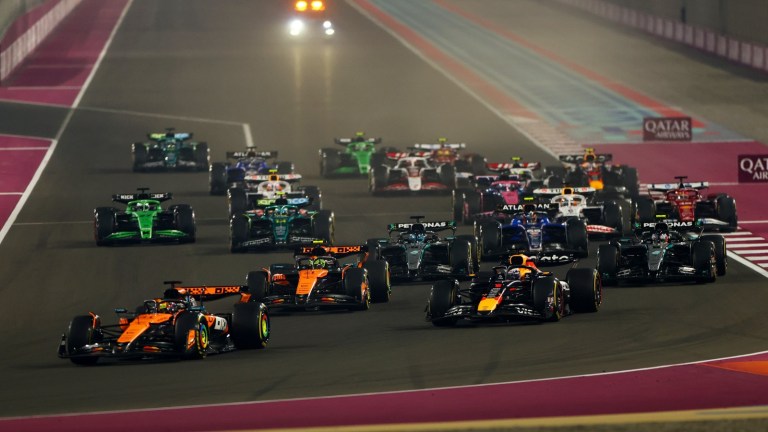
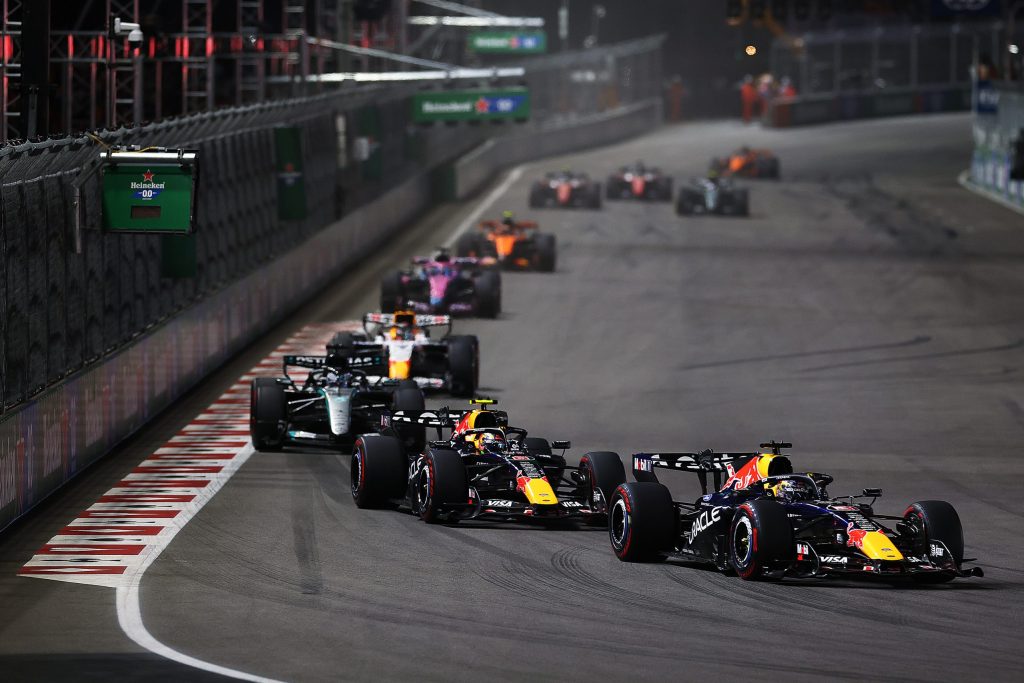
- The Las Vegas Grand Prix featured more than 350 position changes and 35 changes of leadership, highlighting the unusual racing dynamics created by slipstreaming and battery deployment.
- Lando Norris also expects chaotic battles to continue in 2027, while Formula 1 prepares a new V8 engine formula for 2030.
Max Verstappen has warned that Formula 1’s controversial style of energy-management racing could remain largely unchanged until 2030, despite technical modifications intended to improve the balance between combustion power and electrical deployment.
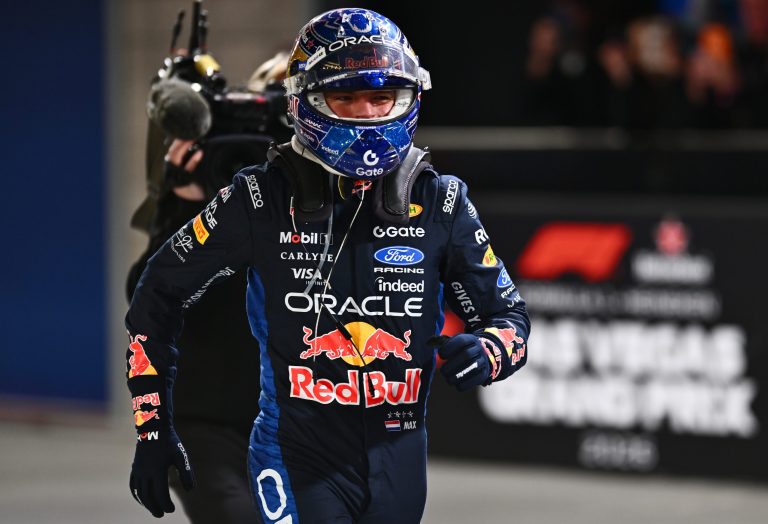
The four-time world champion expressed his frustration following his victory at the Las Vegas Grand Prix, where cars repeatedly exchanged positions because of the interaction between slipstreaming, straight-line mode and battery management.
Verstappen believes Formula 1 needs a much greater reduction in the electrical contribution of its power units, arguing that the adjustments planned for the next two seasons will do little to eliminate the artificial characteristics of the current racing.
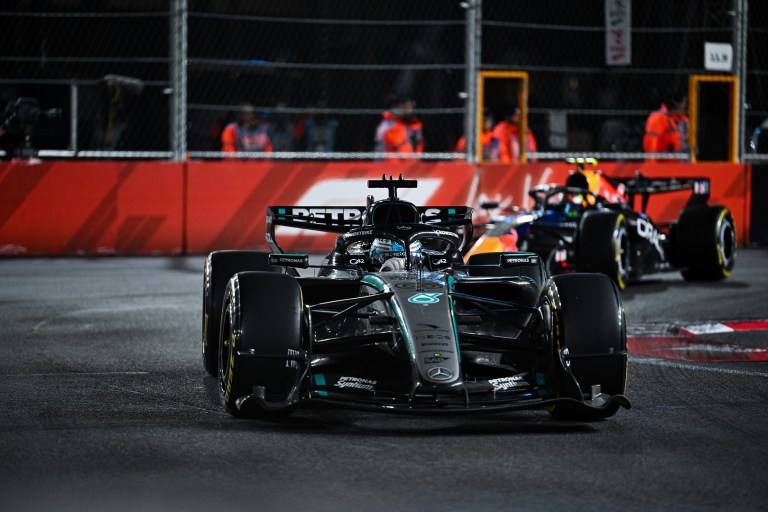
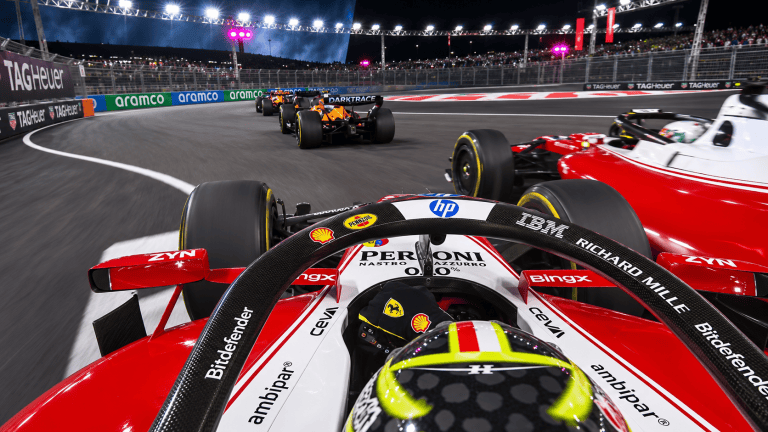
Las Vegas provided one of the most striking demonstrations of the problem.
Formula 1 recorded more than 350 position changes during the race, including 35 changes of leadership. The unusually high figures reflected a circuit where long straights, low aerodynamic drag and energy deployment repeatedly allowed drivers to overtake before immediately becoming vulnerable to counterattacks.
The result was spectacular, but it also raised questions about whether the wheel-to-wheel action reflected conventional racing skill or the strategic exploitation of electrical energy.

Verstappen says F1 needs an 80-20 power split
Under the current generation of regulations, Formula 1’s power units distribute their output approximately equally between the internal combustion engine and electrical systems.
Changes planned for 2027 will increase the combustion contribution to 58%, leaving 42% to electrical power. A further adjustment to approximately 60-40 is expected for 2028.
Verstappen does not consider those changes sufficient.
Speaking during the post-race press conference in Las Vegas, attended by GRANDE PRÊMIO, the Red Bull driver argued that a substantially larger combustion contribution is required.
“The more you increase the engine’s contribution and reduce the battery’s, the better,” Verstappen said, describing the proposed 60-40 split as only a marginal improvement.
He suggested that an 80-20 distribution would be considerably more effective in restoring a conventional relationship between acceleration, power delivery and speed.
“If we still want to keep a battery, it needs to be at least 80% [combustion] to 20% [battery] for things to be more normal,” Verstappen argued.
“But let’s just hope that 2030 solves everything, or at least most of the problems.”
The remarks reflect Verstappen’s broader criticism of the 2026 regulations, which have made electrical energy deployment an unusually influential factor in overtaking and defensive driving.
A driver who consumes too much electrical power during an attack can become vulnerable on the following straight, allowing the opponent to regain the position even without an obvious advantage in cornering speed.
That was particularly visible in Verstappen’s victory at Las Vegas, where the leading drivers repeatedly exchanged positions before the Red Bull driver established control of the race.

Norris expects chaotic racing to continue in 2027
Lando Norris, who finished second in Las Vegas, also believes the planned technical adjustments represent only part of the solution.
The McLaren driver welcomed the gradual reduction in electrical power but argued that the circuit’s unusual racing was not caused exclusively by the batteries.
The combination of slipstreaming and straight-line aerodynamic settings also played an important role.
Norris suggested that the sport could experience similarly unpredictable races in 2027, even with a revised engine-power distribution.
The Briton also raised concerns about the way drivers currently manage acceleration.
Under certain conditions, applying the throttle earlier can result in a lower speed at the end of a straight because the additional energy consumption leaves less electrical power available later in the lap.
For drivers accustomed to being rewarded for accelerating as early as possible, this creates a counterintuitive driving style.
Norris believes the planned changes represent progress towards a more natural relationship between driver inputs and performance, but not a complete solution.
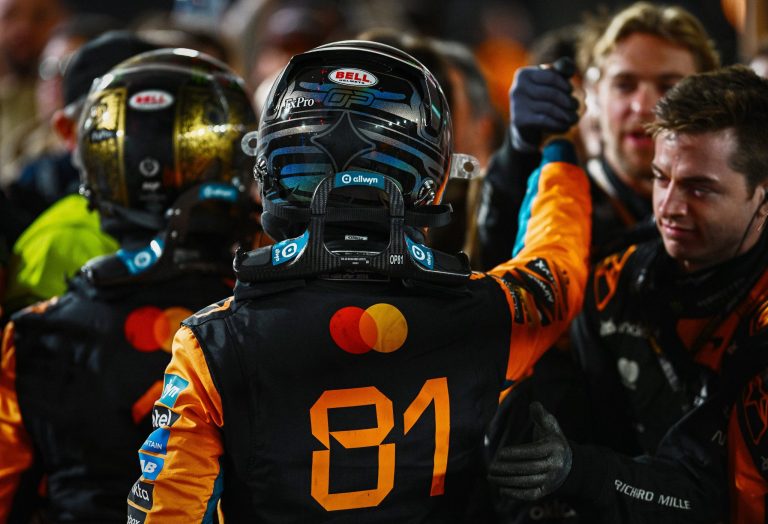
The discussion is particularly relevant after McLaren secured second and third places in Las Vegas, a race in which energy management and late position changes shaped the outcome.
New V8 engines could change F1 from 2030
Formula 1 is already preparing a significantly different engine architecture for the next regulatory cycle.
The FIA and power-unit manufacturers have reached an agreement in principle to introduce turbocharged V8 engines in 2030, replacing the current 1.6-litre V6 hybrid formula.
The proposal centres on a 2.1-litre V8 engine, reduced electrical assistance and the continued use of sustainable fuels.
The new framework is intended to lower costs, simplify power-unit technology and address some of the complaints raised by drivers and manufacturers.
However, important technical details still require definitive regulatory approval.
As the FIA subsequently clarified in its latest announcement, manufacturers have reached unanimous agreement on the broad direction, but that does not mean every element of the 2030 regulations has already been finalised.
For Verstappen, the central question is whether the new formula will make racing less dependent on complex battery-deployment strategies.
The Dutchman has repeatedly argued that drivers should be rewarded primarily for braking, cornering and accelerating effectively, rather than for manipulating electrical energy to create temporary speed advantages.
GRANDE PRÊMIO is following every session of the 2026 championship, with full coverage and analysis of Formula 1.
FAQ
Why does Verstappen dislike F1’s current energy-management racing?
Verstappen believes the high electrical contribution creates artificial overtaking situations, allowing drivers to exchange positions repeatedly because of differences in battery deployment rather than conventional car performance.
What changes are planned for F1 engines in 2027?
The combustion engine’s share of power is planned to increase to approximately 58%, while the electrical contribution will fall to 42%. Further adjustments are expected in 2028.
Will Formula 1 introduce V8 engines in 2030?
The FIA and manufacturers have reached an agreement in principle on a new turbocharged V8 formula. The definitive technical regulations still require formal approval.