News Summary
- The 2026 Mexican Grand Prix takes place approximately 2,240 metres above sea level, where thinner air reduces aerodynamic downforce and makes engine, battery and brake cooling more demanding.
- Formula 1’s new power units combine approximately 400 kW from the combustion engine with up to 350 kW of electrical power, while the removal of the MGU-H changes the turbocharger and energy-management challenge.
- Mercedes, Ferrari, Red Bull-Ford, Honda and Audi face their first Mexican Grand Prix under the 2026 regulations, with cooling efficiency, electrical deployment and turbo performance potentially influencing the competitive order.
Formula 1’s new-generation power units face an unprecedented test at the 2026 Mexican Grand Prix, where the combination of extreme altitude, reduced air density and greater reliance on electrical energy could expose technical differences between manufacturers. Autódromo Hermanos Rodríguez sits approximately 2,240 metres above sea level, making it the highest-altitude circuit on the calendar and one of the most demanding venues for engine cooling and aerodynamic performance.
The event, scheduled for October 30 to November 1, will be the first Mexican Grand Prix contested under the new Formula 1 regulations. Although the circuit has always challenged turbochargers, radiators and brakes, the removal of the MGU-H and the introduction of a much more powerful electrical system create additional questions about how effectively teams can manage their power units over a complete lap.
Why Mexico City’s altitude makes Formula 1 engines work harder
The defining characteristic of Autódromo Hermanos Rodríguez is the reduced density of the air.
At approximately 2,240 metres above sea level, atmospheric pressure is substantially lower than at circuits closer to sea level. As a result, less air passes through the car’s aerodynamic surfaces, cooling ducts and engine intake for a given volume of airflow.
This creates three interrelated problems.
First, the engine’s turbocharger must compensate for the lower intake pressure to deliver the required charge to the combustion chambers.
Second, cooling systems receive less dense airflow, reducing their ability to remove heat from components.
Third, the wings and underfloor generate less aerodynamic downforce at a given speed, changing how the car behaves through corners.
The Mexican Grand Prix organisers identify reduced air density as the defining technical challenge of the circuit, affecting power-unit operation, aerodynamics and cooling.
For teams, the objective is not simply to produce the maximum possible engine power.
They must maintain competitive performance without allowing temperatures or energy-management demands to compromise reliability.
That balance becomes particularly important in 2026 because the power-unit regulations have changed substantially.

What changed in Formula 1’s 2026 engines?
The current engines retain the 1.6-litre turbocharged V6 architecture introduced during Formula 1’s previous hybrid era.
However, the contribution of the two principal sources of propulsion has changed dramatically.
Under the 2026 regulations, the internal combustion engine produces approximately 400 kW, compared with roughly 550–560 kW under the previous formula.
The maximum electrical output has increased from 120 kW to 350 kW, giving the hybrid system a much greater role in delivering performance.
The FIA also eliminated the MGU-H, the motor-generator previously connected to the turbocharger.
F1 power units: Previous regulations vs 2026
| Technical feature | Previous generation | 2026 generation |
|---|---|---|
| Combustion engine | 1.6-litre turbo V6 | 1.6-litre turbo V6 |
| Approximate combustion output | 550–560 kW | 400 kW |
| Maximum MGU-K output | 120 kW | 350 kW |
| MGU-H | Present | Removed |
| Electrical contribution | Smaller share | Much greater share |
| Energy recovery | Braking plus turbo-related recovery | Primarily through MGU-K |
| Fuel | Previous fuel specification | Advanced sustainable fuel |
Figures represent the FIA’s regulatory power-unit architecture. Actual delivered power varies with operating conditions and applicable deployment limits.
The result is a very different relationship between combustion performance and electrical energy.
Previously, the engine provided the overwhelming majority of propulsion, while the electrical system supplied a comparatively smaller contribution.
In 2026, electrical power plays a much larger role, making battery state of charge and energy recovery critical to lap performance.
As the FIA explained when introducing the new generation of Formula 1 regulations, the architecture also aims to improve efficiency while simplifying the power unit and encouraging new manufacturers to enter the championship.
Mexico offers an unusual environment in which to evaluate how successfully those objectives have been achieved.
Why the disappearance of the MGU-H matters in Mexico
One of the most interesting technical questions concerns the turbocharger.
During the previous hybrid era, the MGU-H was connected to the turbocharger shaft. It could recover energy from the turbo system and help control turbo speed, including when the driver was not demanding maximum engine power.
That arrangement helped manufacturers manage transient turbo response and provided another method of recovering electrical energy.
The 2026 regulations eliminate the device.
The turbocharger must therefore operate without the same electrical assistance, increasing the importance of its conventional aerodynamic and mechanical characteristics.
At high altitude, the compressor faces a particularly demanding task because the ambient pressure is lower.
To maintain a comparable intake manifold pressure, it may need to operate at a higher pressure ratio than at sea level.
Depending on the power-unit design and operating conditions, that can increase compressor workload and affect the temperature of the compressed air.
The intercooling system must then remove heat from the intake charge before it reaches the combustion chambers.
But Mexico’s thinner air also reduces the effectiveness of air-based cooling systems.
This interaction between turbocharging, intake temperatures and cooling capacity is one of the reasons Mexico remains such a difficult circuit for Formula 1 power-unit manufacturers.
It would be incorrect, however, to assume that every turbocharged engine automatically loses the same percentage of power because of altitude.
Turbochargers can compensate for reduced ambient pressure within their operating limits, while differences in compressor efficiency and thermal management influence the outcome.
The actual performance impact depends on the individual engine and its operating conditions.
Does high altitude affect the electrical power of the 2026 F1 cars?
Not in the same direct way that reduced ambient pressure can affect an internal combustion engine.
The MGU-K is an electrical machine, meaning it does not require atmospheric oxygen to generate torque.
Its maximum regulated electrical output is therefore not intrinsically reduced simply because the car is racing 2,240 metres above sea level.
But that does not make the hybrid system immune to Mexico’s conditions.
The battery, power electronics, motor-generator and associated systems generate heat during operation.
They depend on cooling systems to maintain temperatures within safe working limits.
At high altitude, reduced air density can make that cooling task more difficult.
If temperatures approach operational limits, a manufacturer may need to manage the system more conservatively, potentially influencing how much performance can be sustained.
There is also the question of energy availability.
A power unit capable of producing 350 kW electrically cannot necessarily deliver that maximum contribution continuously throughout a lap.
The amount of electrical energy available depends on how much can be recovered, how much remains stored and how the driver deploys it.
Those considerations are fundamental to the 2026 regulations.
Why energy recovery could become decisive at the Mexican Grand Prix
The new Formula 1 power units recover electrical energy primarily through the MGU-K, using braking and other permitted operating conditions to replenish the energy store.
That makes braking zones and the distribution of acceleration periods particularly important.
Mexico features a long start-finish straight followed by heavy braking into Turn 1.
Additional braking zones and slower corners provide further opportunities for energy recovery, while the long acceleration periods demand careful electrical deployment.
A team must decide where using stored energy delivers the greatest performance benefit.
Deploying too much electrical energy early in the lap could leave less available for subsequent acceleration zones.
Conversely, using too little may compromise lap time even when sufficient battery energy remains available.
The FIA has also refined the 2026 regulations to improve energy management.
Among the changes announced during the season were adjustments to permitted energy recovery and the operation of the MGU-K, including a reduction in the maximum qualifying recharge allowance from 8 MJ to 7 MJ under the revised parameters.
The FIA also confirmed different deployment provisions for acceleration zones and other portions of the lap.
Those modifications aim to reduce excessive energy harvesting and encourage more consistent flat-out driving.
Their practical effect at Mexico will depend on the event-specific parameters and each team’s approach.
The key issue is not whether the thinner air makes electrical energy less powerful, but whether manufacturers can recover, cool and deploy that energy efficiently enough over the entire lap.
This is an important distinction when evaluating the performance of the 2026 engines.
Why do F1 cars run large wings but still struggle for grip in Mexico?
The altitude problem is not restricted to the power unit.
Aerodynamic downforce depends partly on air density. With thinner air, a wing produces less downforce at a given speed and configuration.
Teams traditionally respond at Mexico by selecting relatively high-downforce aerodynamic packages.
Yet even those settings can produce less absolute downforce than similar configurations at sea level.
That explains why drivers frequently report sliding and reduced grip at Autódromo Hermanos Rodríguez, despite running wings associated with slower circuits.
The same reduced air density also lowers aerodynamic drag.
Consequently, cars can reach very high top speeds on the circuit’s long straight even while carrying comparatively large aerodynamic surfaces.
The 2026 rules introduce another variable: active aerodynamics.
The cars can change aerodynamic configuration according to the applicable operating conditions, reducing drag on the straights and increasing aerodynamic load where necessary.
Mexico will therefore test not only the performance of the power units but also how efficiently the new aerodynamic systems interact with energy deployment.
A car that reduces drag effectively may require less energy to sustain speed on the straights.
A car that generates stronger downforce in the corners may compensate for the circuit’s reduced grip.
But neither advantage guarantees the best overall lap time, because cooling, tyres, mechanical grip and power-unit management remain part of the equation.
Could the Mexico circuit change the order between Mercedes, Ferrari, Red Bull and Honda?
It is possible, but there is not enough public evidence to establish which manufacturer will benefit most before the cars run.
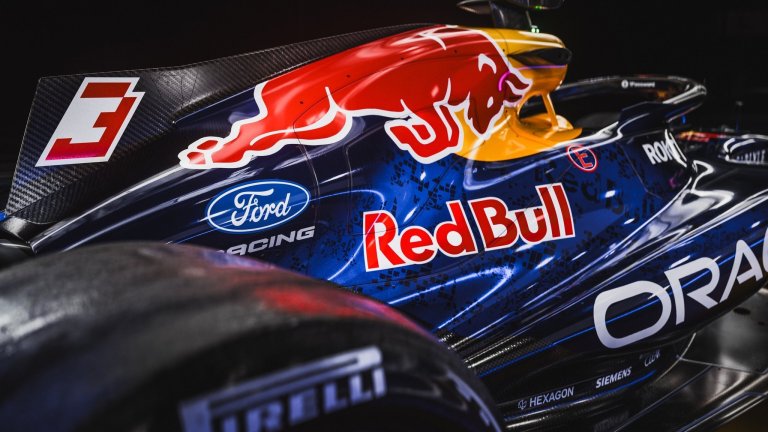
The 2026 grid includes power units developed by five manufacturers: Mercedes, Ferrari, Red Bull-Ford, Honda and Audi.
Each has approached the new regulations with different designs and development priorities.
The Mexican Grand Prix will create an opportunity to compare those solutions under conditions that differ significantly from most other circuits.
What Mexico will test in each power-unit package
| Manufacturer | Teams using its power unit | Principal technical questions |
|---|---|---|
| Mercedes | Mercedes, McLaren, Williams, Alpine | Turbo efficiency, cooling and sustained hybrid deployment |
| Ferrari | Ferrari, Haas, Cadillac | Combustion efficiency, temperature control and electrical management |
| Red Bull-Ford | Red Bull, Racing Bulls | Turbo response, energy recovery and cooling |
| Honda | Aston Martin | Thermal management, turbo operation and hybrid reliability |
| Audi | Audi | Cooling efficiency, turbocharging and electrical deployment |
These are technical areas relevant to all manufacturers, not confirmed weaknesses or predictions about competitive performance.
Mercedes arrives as the leading manufacturer in the championship, with Andrea Kimi Antonelli having won nine Grands Prix in 2026.
Ferrari and Red Bull have also demonstrated strong performance during the second half of the season, while McLaren has encountered difficulties extracting consistent speed from its package.
But results from Austin or Singapore cannot be transferred directly to Mexico.
The significantly lower air density creates a different technical environment.
A cooling arrangement that works comfortably at one venue may require larger bodywork openings at another.
Those changes can alter aerodynamic efficiency and therefore influence lap time.
Likewise, a power unit with competitive deployment characteristics at a low-altitude circuit may behave differently when the turbocharger and cooling systems face greater demands.
Mexico could reveal meaningful differences between the manufacturers, but claims of a clear advantage should wait for verified data from practice and qualifying.
Could teams sacrifice aerodynamics to improve cooling?
Yes. Cooling requirements can directly influence the aerodynamic configuration of an F1 car.
Teams usually prefer to minimise the size of cooling openings because larger outlets and ducts can increase aerodynamic drag or interfere with the airflow around the bodywork.
But insufficient cooling creates risks for the engine, hybrid components, brakes and other systems.
At Mexico, engineers may need to open up bodywork or adapt the cooling package to maintain appropriate temperatures.
Those modifications could carry a performance cost.
The challenge becomes more complicated when a driver follows another car closely.
Running in disturbed air can reduce the effectiveness of cooling systems, forcing drivers to monitor temperatures or create more space between cars.
During the race, a team may need to choose between remaining close enough to attempt an overtake and allowing additional airflow to protect temperatures.
High ambient temperatures would increase these pressures further, although the actual conditions must be assessed from the weekend’s forecasts and track measurements.
Cooling is therefore not simply a reliability precaution.
It can become part of the race strategy, affecting when drivers attack, defend or preserve their cars.
Mexico offers a crucial test as Antonelli approaches the 2026 F1 title
The technical questions surrounding the Mexican Grand Prix arrive at a decisive moment in the championship.
Antonelli leads the Drivers’ standings with 365 points, ahead of Mercedes teammate George Russell on 242 and Ferrari’s Lewis Hamilton on 241.
The Italian won the United States Grand Prix in Austin and can secure the World Championship in Mexico.
As GRANDE PRÊMIO explained in its complete title permutations, Antonelli needs only ninth place to become champion regardless of his rivals’ results.
However, the circuit’s characteristics mean Mercedes cannot simply assume it will reproduce its Austin performance.
A competitive aerodynamic package, reliable cooling and efficient electrical management will all be necessary to complete the 71-lap race without problems.
Russell also arrives seeking to recover from a difficult United States Grand Prix, in which he finished eighth and admitted that he could not explain his lack of pace.
The contrast between the two Mercedes drivers has become one of the defining stories of 2026.
The 123-point gap between Antonelli and Russell also highlights why understanding the W17’s operating characteristics remains important even as the championship approaches its conclusion.
Red Bull, meanwhile, will attempt to build on its recent improvement, while Ferrari seeks to maintain the competitiveness demonstrated at Austin.
For all five power-unit manufacturers, Mexico represents an opportunity to gather valuable information about their first-generation 2026 designs.
That knowledge could influence technical development long after the championship leaves Autódromo Hermanos Rodríguez.
When is the 2026 Mexican Grand Prix?
The Mexican Grand Prix takes place from October 30 to November 1 at Autódromo Hermanos Rodríguez, with three practice sessions, qualifying and Sunday’s race.
Mexico City Grand Prix 2026 — Key times
| Session | Mexico City (CST) | UK (GMT) | Brasília (BRT) |
|---|---|---|---|
| FP1 — Friday, Oct 30 | 12:30 | 18:30 | 15:30 |
| FP2 — Friday, Oct 30 | 16:00 | 22:00 | 19:00 |
| FP3 — Saturday, Oct 31 | 11:30 | 17:30 | 14:30 |
| Qualifying — Saturday, Oct 31 | 15:00 | 21:00 | 18:00 |
| Race — Sunday, Nov 1 | 14:00 | 20:00 | 17:00 |
Times based on the official Formula 1 weekend schedule.
For international viewers, the Mexico City Grand Prix worldwide schedule covers the main markets.
Fans in India can consult the complete IST timetable and streaming guide, while audiences in A