
News Summary
- Marc Márquez’s victory in Malaysia demonstrated a more calculated approach to racing, combining his familiar aggression with greater patience and control.
- The Ducati rider collected 34 of the 37 available points at Sepang, turning Jorge Martín’s absence into a 44-point championship advantage.
- An eighth premier-class title would put Márquez alongside Giacomo Agostini, but the uncertainty surrounding the Qatar Grand Prix adds another dimension to the championship’s final weeks.
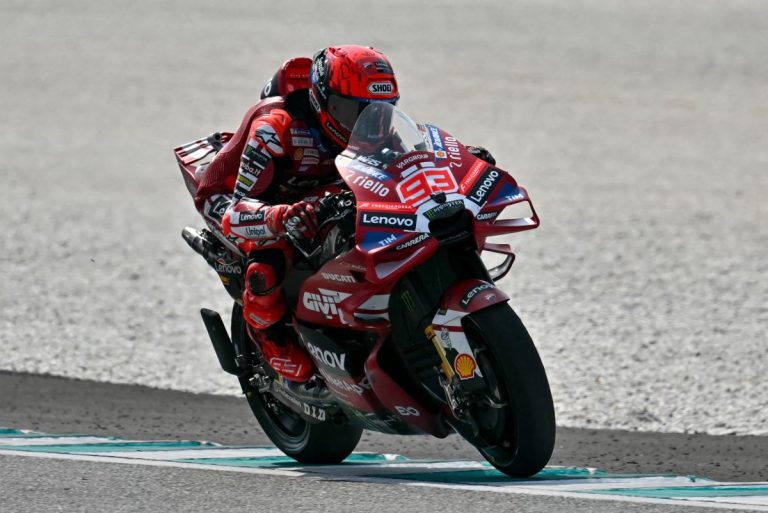
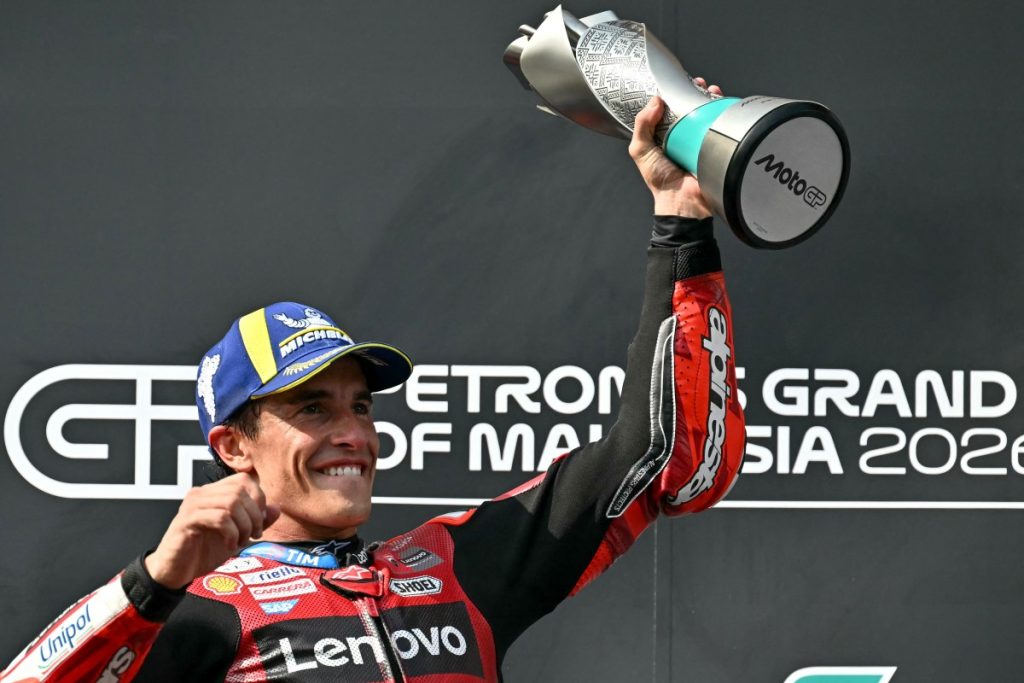
There was something revealing about the way Marc Márquez won the 2026 Malaysian Grand Prix. The Ducati rider did not need a spectacular recovery, a desperate last-lap overtake or a risky confrontation to demonstrate his superiority. Instead, he controlled the race from the opening lap, protected his tyres and steadily increased his advantage, producing precisely the kind of performance that wins championships.
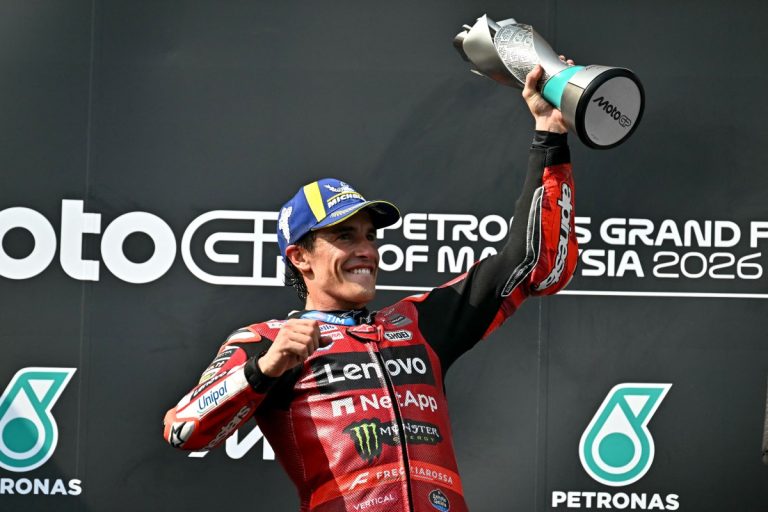
The result at Sepang was Márquez’s seventh Grand Prix victory of the season and his 80th in MotoGP’s premier class. More importantly, it transformed the title fight. What had been a closely contested battle with Jorge Martín only weeks earlier now looks increasingly like a question of when, rather than whether, the Spaniard will secure his eighth crown.
The old Márquez aggression remains — but the risks have changed
Márquez’s approach was evident within the opening corners at Sepang.
Starting second behind his younger brother Álex, he attacked immediately into Turn 1 and took the lead. Álex attempted to respond at Turn 4 but ran wide, allowing the factory Ducati rider to regain control.
That was effectively the last serious challenge Márquez faced.
Pedro Acosta moved past Álex for second on lap ten, but by then the championship leader had already established a significant advantage.
Márquez did not need to respond to Acosta’s progress with unnecessary risks. He continued increasing his lead while managing tyre degradation in the intense Malaysian heat.
The margin eventually reached 4.172s at the finish, an emphatic result at a circuit where tyre preservation can be decisive.
The performance was consistent with Márquez’s own assessment of his evolution as a rider.
After the race, he acknowledged that he is mentally stronger than ever, even if his physical condition is no longer at its peak.
That distinction helps explain his 2026 campaign. Márquez still possesses the instinct to attack, but he increasingly recognises when the championship demands control rather than confrontation.
Martín’s injury opened the door — Márquez made the opportunity count
The decisive change in the championship began at Phillip Island.
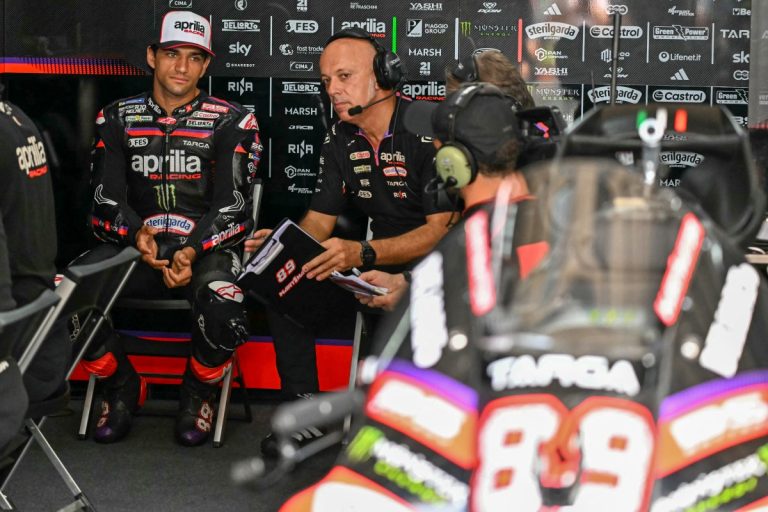
Martín’s crash during the Australian sprint left him with a fractured wrist, preventing the Aprilia rider from contesting the main race in Malaysia.
Márquez arrived at Sepang with a ten-point lead, but the situation presented an opportunity to build a much larger advantage.
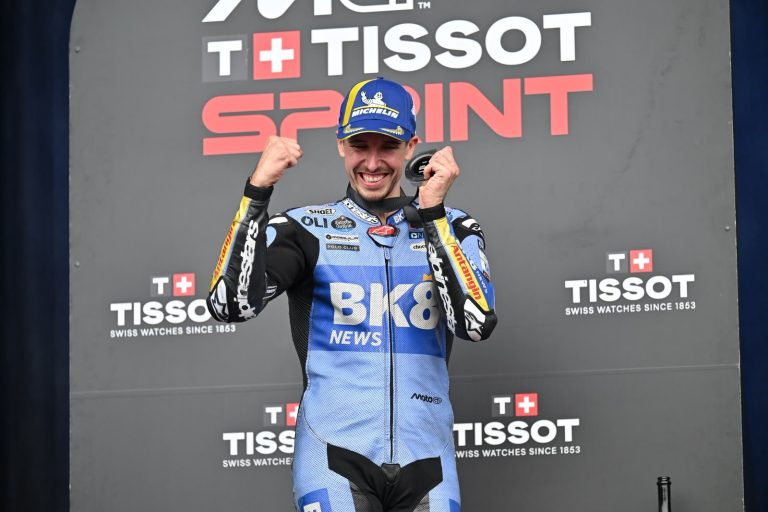
He took second in Saturday’s sprint behind Acosta, scoring nine points, before adding another 25 with Sunday’s victory.
Thirty-four points from a possible 37 represented almost the maximum return from a weekend in which his principal rival could not score.
The outcome left Márquez with 399 points, compared with Martín’s 355.
The difference is particularly significant because Martín had been the strongest challenger to Ducati for much of the season. His injury has not merely removed a rival from the circuit; it has disrupted Aprilia’s ability to respond during the most important phase of the championship.
However, it would be misleading to attribute Márquez’s advantage solely to Martín’s absence.
The Ducati rider still needed to deliver results under pressure, and his Sepang performance demonstrated why he remains so difficult to beat when an opportunity presents itself.
Bezzecchi’s difficult Sunday further strengthens Márquez’s position
Marco Bezzecchi entered Malaysia as another potential obstacle to Márquez’s championship ambitions.
The Aprilia rider had shown strong pace in recent rounds and remained mathematically capable of fighting for the title.
However, his race at Sepang illustrated the difference between challenging for podiums and consistently converting opportunities into major points.
Bezzecchi initially fought with Álex Márquez and appeared capable of contesting third place.
As the race progressed, however, he lost ground to Ai Ogura, who overtook him despite contact between the two Aprilia riders.
A mistake on the final lap then allowed Enea Bastianini to move ahead, leaving Bezzecchi sixth.
The Italian now trails Márquez by 67 points, a substantial deficit with only three rounds remaining.
The contrast was striking: while Bezzecchi lost positions in the closing stages, Márquez was extending his advantage at the front.
It was not simply a question of motorcycle performance. It was also about execution, consistency and the ability to manage a race without allowing small problems to become costly mistakes.
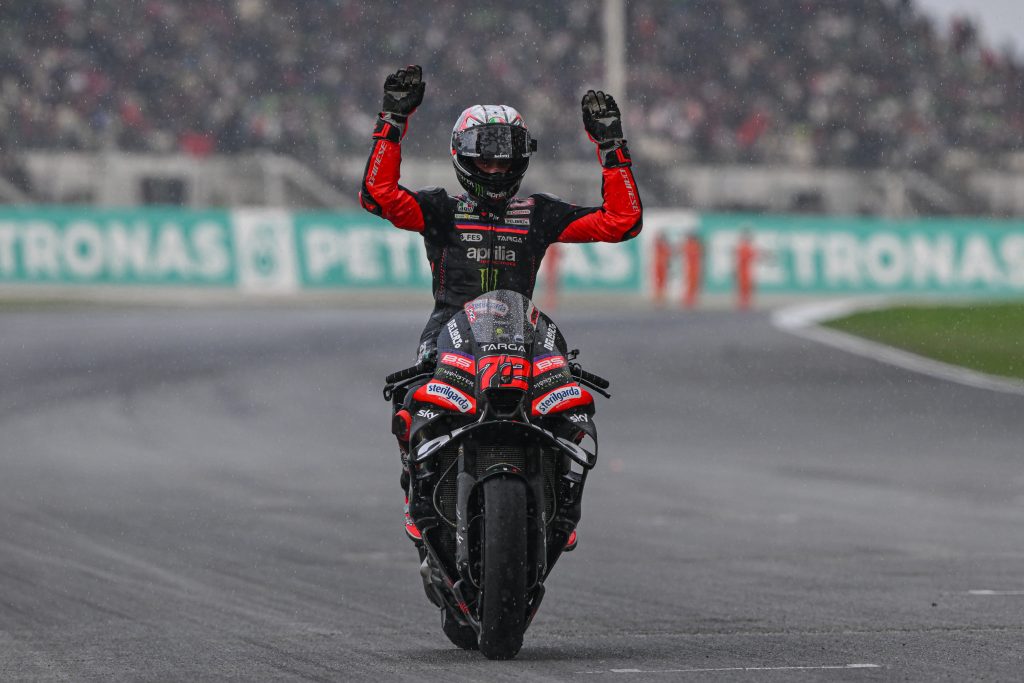
An eighth MotoGP title would place Márquez alongside Agostini
Márquez’s next championship would carry exceptional historical significance.
The Spaniard already has seven premier-class titles, matching Valentino Rossi’s total in MotoGP and the former 500cc category.
An eighth championship would move him level with Giacomo Agostini, who remains the benchmark for premier-class titles.
It would also represent Márquez’s second consecutive championship with Ducati, reinforcing the success of a partnership that has allowed him to return to the highest level after years disrupted by injuries.
The historical comparison is especially compelling because Márquez’s career has been defined by two distinct periods.
The first was built around extraordinary natural speed, aggressive riding and a willingness to challenge the physical limits of a motorcycle.
The second has required recovery, adaptation and a more measured understanding of risk.
The Márquez who dominated Sepang may not be physically identical to the rider who won his first MotoGP championship in 2013. But his ability to combine experience with speed has made him an even more complete championship contender.
Qatar uncertainty could complicate the final step
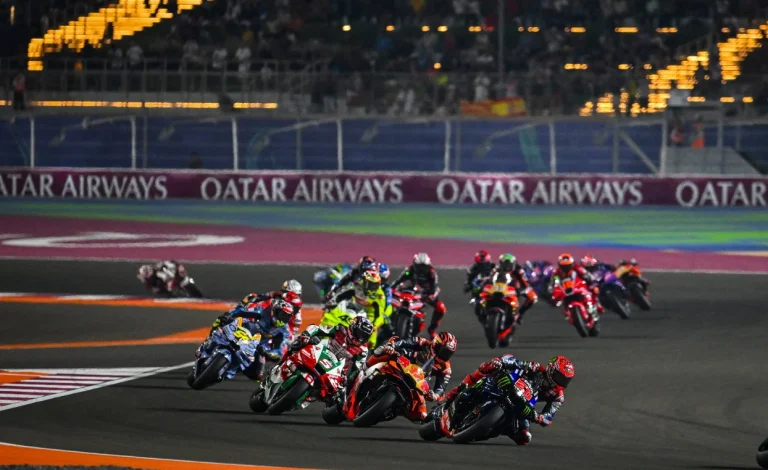
Márquez will have his first mathematical opportunity to secure the championship at the Qatar Grand Prix, scheduled for November 6–8.
He must leave Lusail with a sufficiently large advantage over Martín and Bezzecchi to make the remaining races in Portugal and Valencia irrelevant to the title fight.
The complete Qatar title scenarios show that Márquez needs to gain at least 30 points on Martín during the weekend, while also accounting for Bezzecchi’s remaining mathematical chances.
However, the event remains surrounded by security concerns linked to the conflict in the Middle East.
Yamaha has announced that it will not participate because of corporate travel restrictions, while MotoGP organisers insist that the Grand Prix will proceed.
Márquez’s title opportunity therefore depends not only on his performance but also on the championship maintaining its planned calendar.
The uncertainty introduces a final complication into a season in which the Ducati rider has repeatedly demonstrated an ability to adapt to circumstances beyond his control.
Márquez has made patience a championship weapon
The most important lesson from Sepang is not simply that Márquez was faster than Acosta or that Martín’s injury has made the title easier to secure.
It is that Márquez has learned to make the correct decision at the correct moment, resisting the temptation to turn every race into a demonstration of aggression.
His Malaysian victory combined a decisive opening attack with nearly 20 laps of disciplined management.
That balance has become one of the defining characteristics of his 2026 campaign.
At 33, Márquez is approaching a historic eighth premier-class title not by attempting to recreate the rider he once was, but by using everything he has learned to become a different kind of champion.
GRANDE PRÊMIO is following the 2026 MotoGP World Championship with breaking news, full coverage and real-time updates in its MotoGP section.
FAQ
Why was Marc Márquez’s Malaysian GP victory important?
Márquez scored 25 points while Jorge Martín remained sidelined through injury, extending his championship advantage to 44 points with three rounds remaining.
What would an eighth MotoGP title mean for Márquez?
It would put him level with Giacomo Agostini on eight premier-class championships, one ahead of Valentino Rossi.
Can Márquez secure the championship in Qatar?
Yes. He has his first mathematical opportunity to win the title at Lusail, although the exact outcome depends on his results and those of Martín and Bezzecchi.