
News Summary
- Toyota kept the #8 on used tyres and took on less fuel at the final pit stop, gaining track position over the Alpines.
- Martins closed in on fresh tyres, but Hirakawa held on to win by 0.591 seconds.
- Hirakawa, Sébastien Buemi and Brendon Hartley now lead on 89 points, ten ahead of Toyota’s #7 crew, with two rounds remaining.
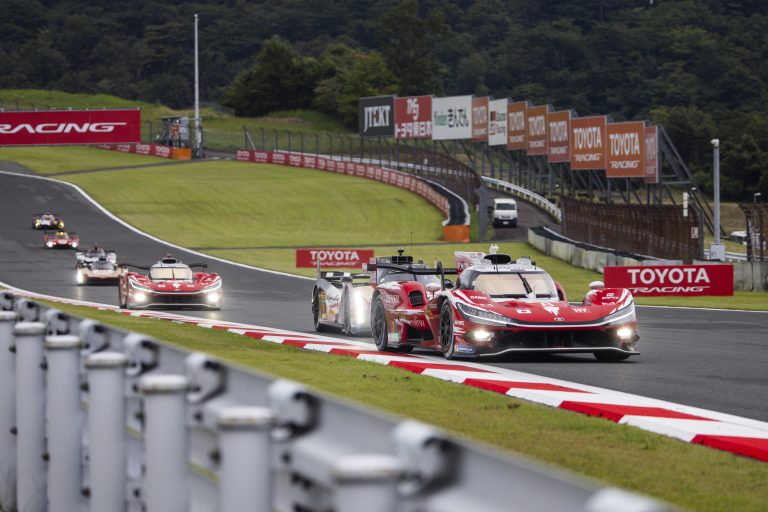
Alpine had spent most of the 6 Hours of Fuji building what looked like a one-two finish. Both A424s started from the front row, and the #35 and #36 controlled much of Sunday’s race. Toyota’s #8 was running sixth late on, having also lost time when Brendon Hartley was spun after contact with Harry Tincknell earlier in the afternoon. At that point, a Toyota victory appeared unlikely.
The race changed when Finn Gehrsitz crashed the #58 Garage 59 McLaren and the Safety Car brought the field together. The leaders needed a final stop, but they did not all need to make the same one. With little racing time left, Toyota chose track position over fresh tyres: it kept the used Michelins on the #8 and gave Ryō Hirakawa a shorter fuel fill.
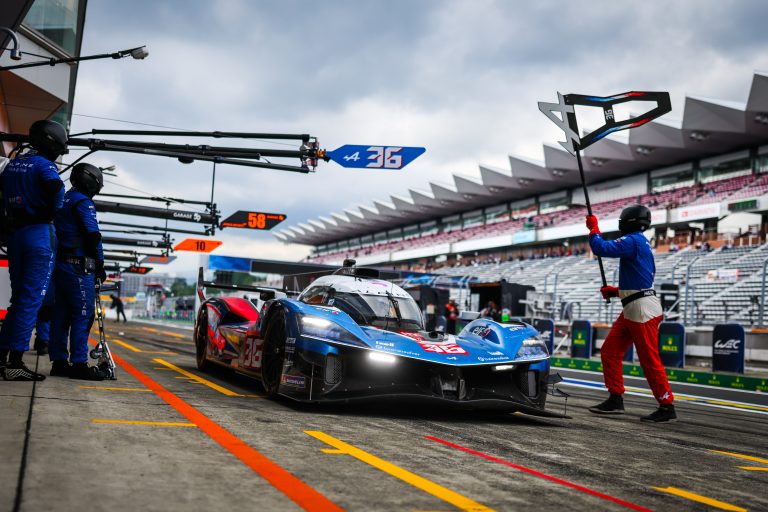
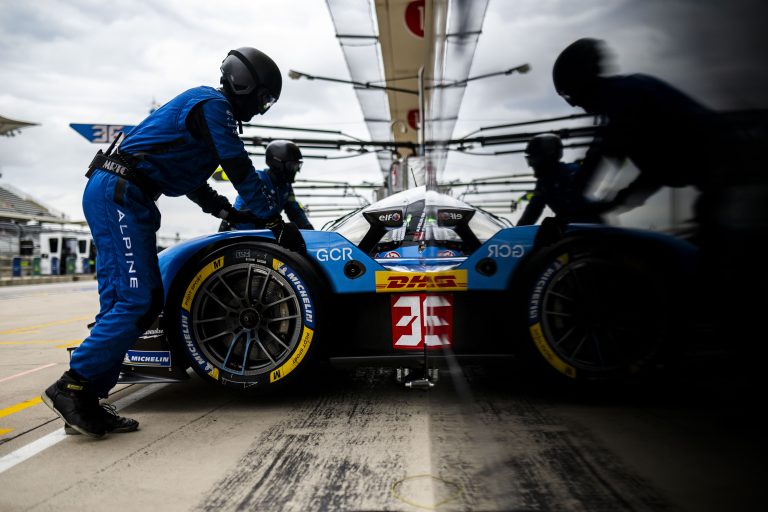
BMW made a similar call for Dries Vanthoor’s #15. Alpine took the opposite approach. Victor Martins received four fresh tyres in the #36, while Charles Milesi’s #35 received two new tyres on the left side. The Alpine cars would have more grip for the restart, but their longer stops put them behind Hirakawa and Vanthoor.
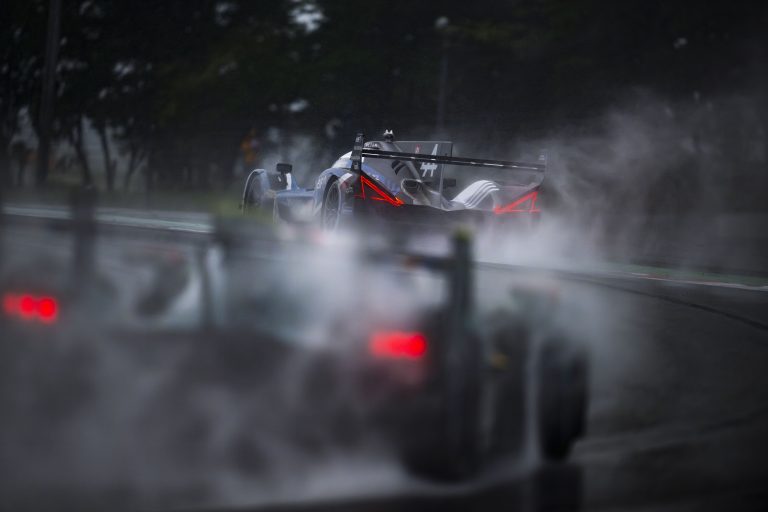
That was Toyota’s gamble. Saving time in the pits could only win the race if Hirakawa kept a faster car behind on worn tyres. Light rain added another complication: the surface was slightly damp, the tyres were cold and the drivers had roughly 20 minutes after the restart to settle the result.
Martins made quick progress. He passed Marco Sørensen’s Aston Martin, was let through by Alpine teammate Milesi and then overtook Vanthoor for second. That left only Hirakawa ahead. The Alpine closed to the Toyota’s rear, but Hirakawa placed the #8 where Martins could not complete a pass and took the chequered flag 0.591 seconds in front.
“The re-start was really tricky, with the conditions changing and being on cold tyres on a slightly damp track,” Hirakawa said afterward. He credited Toyota’s feedback during the closing laps, when the team told him where he needed to push and where he needed to defend.
The Safety Car created the chance; the pit-stop choice turned sixth place into the lead. Toyota then needed Hirakawa to make that lead last. Alpine’s decision gave Martins the pace to recover to second, but not enough time or space to take first. The #35 finished fourth, behind Vanthoor’s BMW, leaving Alpine with its best two-car result in the top class after having led much of the race.
For Toyota, the consequence extended well beyond its tenth WEC victory at Fuji. The #8 crew entered the weekend 11 points behind the joint championship leaders. Victory gave Hirakawa, Buemi and Hartley 25 points and moved them from 64 to 89. The sister #7 Toyota, eighth at Fuji, is now second on 79; René Rast and Robin Frijns, whose #20 BMW finished outside the points, remain on 75.
| Hypercar drivers’ standings after Fuji | Car | Points | Gap to lead |
|---|---|---|---|
| S BUEMI B HARTLEY R HIRAKAWA | #8 Toyota | 89 | — |
| M CONWAY K KOBAYASHI N DE VRIES | #7 Toyota | 79 | −10 |
| R RAST R FRIJNS | #20 BMW | 75 | −14 |
Toyota also extended its manufacturers’ championship lead. It has 169 points after Fuji, compared with BMW’s 146 and Ferrari’s 115. The difference between Toyota and BMW has grown from nine points before the race to 23, while Ferrari managed only one manufacturers’ point in Japan.
Fuji was the second victory of 2026 for Hirakawa, Buemi and Hartley, making them the first Hypercar crew to win more than once this season. The championship now moves to the 6 Hours of Barcelona on October 16–18, before its finale at Monza on November 8.
FAQ
How did Toyota win the 2026 WEC race at Fuji?
Toyota kept the #8 car on used tyres and took on less fuel during a late Safety Car pit stop. The shorter stop put Ryō Hirakawa ahead, and he held off Alpine’s Victor Martins by 0.591 seconds.
Who leads the 2026 WEC drivers’ championship after Fuji?
Sébastien Buemi, Brendon Hartley and Ryō Hirakawa lead with 89 points in Toyota’s #8, ten ahead of Toyota’s #7 crew.
How far ahead is Toyota in the WEC manufacturers’ championship?
Toyota has 169 points after Fuji, 23 ahead of BMW. Ferrari is third on 115.