News Summary
- Fernando Alonso says Honda remains far behind its Formula 1 rivals in both power and reliability, leaving Aston Martin unable to compete consistently.
- The Spaniard estimates the team loses more than two seconds per lap on the straights at circuits such as Las Vegas.
- Despite the engine problems, Alonso believes Adrian Newey’s chassis development has established a promising foundation for 2027.
Fernando Alonso has sharply criticised the performance of Honda’s Formula 1 power unit, arguing that Aston Martin cannot compete effectively while suffering such a substantial deficit in straight-line speed and reliability.
The two-time world champion made the assessment ahead of the Qatar Grand Prix, following another difficult weekend in Las Vegas in which Aston Martin struggled near the back of the field.
Alonso believes the Japanese manufacturer’s shortcomings are now preventing the team from demonstrating the full potential of a chassis that has improved considerably under Adrian Newey’s technical leadership.
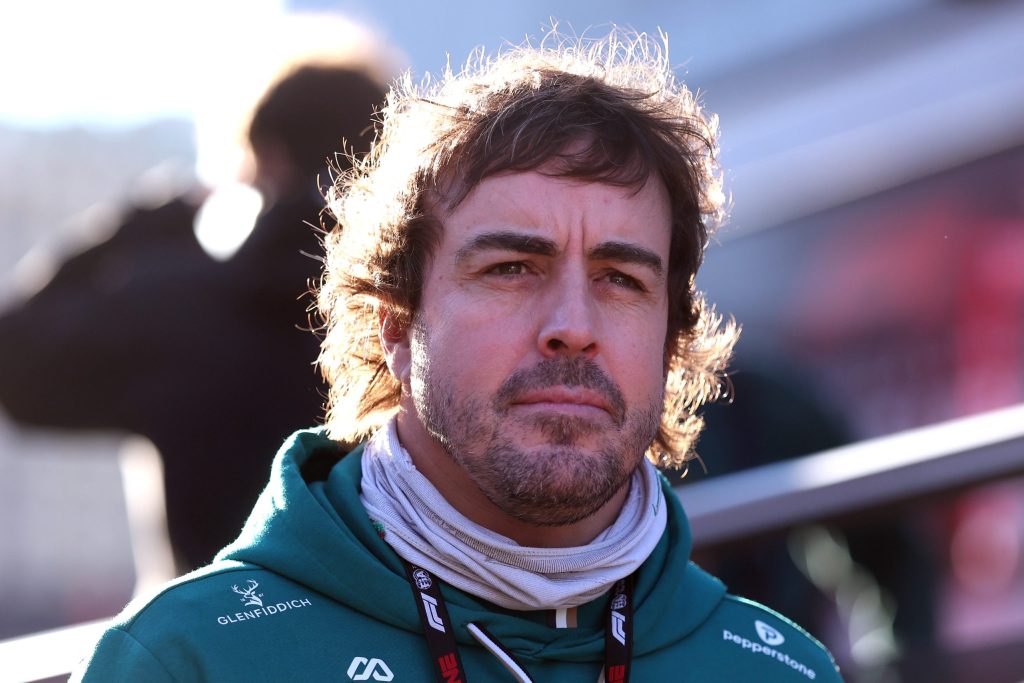
“On the engine side, we are a very long way behind,” Alonso said on Aston Martin’s official website.
His assessment comes after a season in which the team has repeatedly suffered inconsistent acceleration, energy-management problems and mechanical failures.
Aston Martin loses more than two seconds on Las Vegas straights
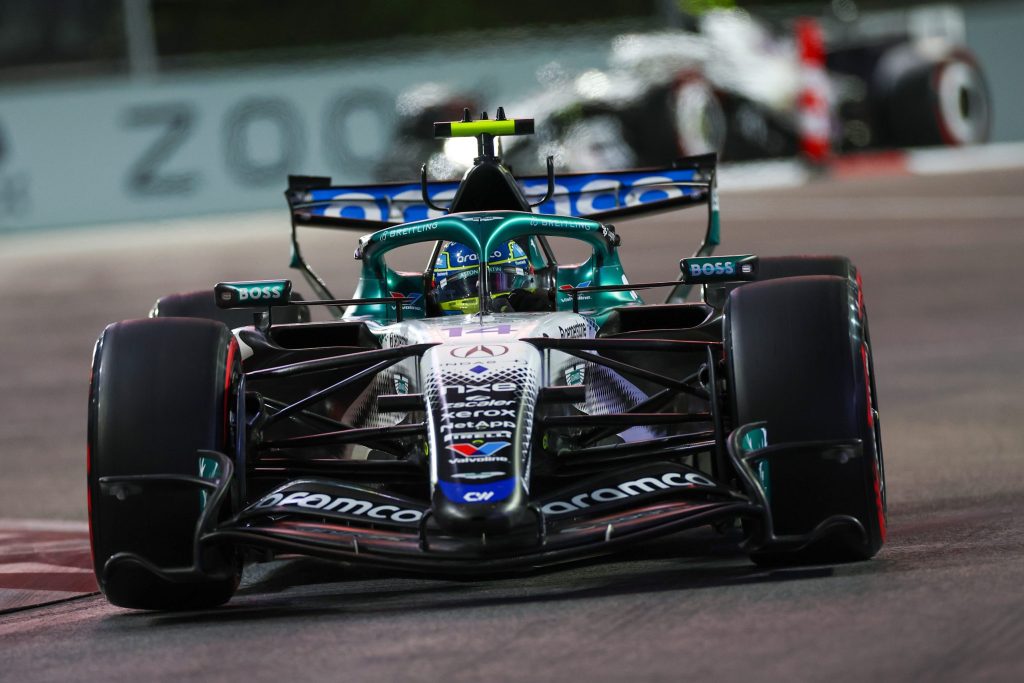
The high-speed Las Vegas circuit exposed Honda’s weaknesses particularly severely.
Aston Martin was 33km/h slower than the fastest car in qualifying and 27km/h slower during the race, according to figures examined by Motorsport.com.
Alonso explained that the deficit becomes most damaging at circuits with long full-throttle sections.
He estimated that Aston Martin loses more than two seconds per lap on the straights alone at certain venues, making it extremely difficult to compensate through cornering performance.
That is a particularly damaging limitation for a team whose recent aerodynamic upgrades have made it increasingly competitive in sections where engine power matters less.
The discrepancy was also apparent in previous GPS comparisons.
At Sepang and Singapore, Aston Martin’s straight-line losses exceeded its total qualifying deficit to Red Bull, suggesting that the chassis was recovering substantial time elsewhere.
However, such comparisons cannot isolate engine power from aerodynamic drag, gearing and energy deployment.
Reliability remains another problem for Honda
The lack of straight-line speed is not Honda’s only weakness.
Aston Martin has struggled with power-unit reliability throughout the season, including repeated electrical-system problems.
Lance Stroll suffered his 13th retirement of the year in Brazil because of an ERS failure.
Alonso has also complained about unpredictable downshifts and inconsistent acceleration.
Honda introduced an engine upgrade at Zandvoort, but the change did not completely resolve the difficulties.
The manufacturer subsequently investigated turbocharger and drivability concerns following the Singapore Grand Prix.
Its engineers acknowledged that the revised turbocharger had not eliminated Aston Martin’s acceleration problems.
For Alonso, the remaining gap is especially frustrating because Formula 1’s current regulations make electrical deployment central to race performance.
A competitive chassis cannot fully compensate when a car repeatedly loses significant speed on the straights.
Newey’s chassis gives Alonso reason for confidence
Despite the criticism, Alonso remains positive about Aston Martin’s chassis development.
The team’s major aerodynamic update in Hungary delivered improvements consistent with its internal expectations.
Alonso subsequently scored points at Zandvoort and Sepang, where the circuit characteristics reduced the effect of the engine deficit.
“The Budapest chassis upgrade was supposed to deliver a certain lap time, and it delivered that lap time,” he explained.
The Spaniard believes the team has entered the midfield through a relatively limited number of major changes, suggesting the development direction is correct.
That distinction is central to his assessment.
Alonso is not arguing that Aston Martin lacks engineering capability. He believes the car has improved enough for Honda’s remaining deficiencies to become the principal obstacle.
The team will now use Qatar and Abu Dhabi to gather further information before beginning preparations for 2027.
Honda faces pressure before the final two races
The Qatar Grand Prix offers a different technical challenge from Las Vegas.
Lusail’s high-speed corners could provide Aston Martin with an opportunity to evaluate its chassis performance more effectively, although engine power and energy deployment will remain significant.
Alonso wants Honda to continue improving reliability and drivability ahead of the next season.
The manufacturer has already committed resources to closing its performance deficit.
However, its first campaign with Aston Martin has demonstrated that recovering from such a substantial technological disadvantage requires more than a single upgrade.
For the team, the final two races will therefore be important development opportunities even if championship points remain difficult to obtain.
FAQ
How much time does Aston Martin lose because of its straight-line performance?
Alonso estimates that Aston Martin loses more than two seconds per lap on the straights alone at some circuits, including Las Vegas.
Is Alonso satisfied with Aston Martin’s chassis?
He believes the chassis has improved significantly, particularly following the major Hungarian Grand Prix update.
Has Honda solved Aston Martin’s reliability problems?
No. The manufacturer has introduced improvements, but the team continues experiencing power-unit performance and reliability difficulties.