News Summary
- Juan Pablo Montoya says Red Bull understood the unusual overtaking dynamics of Las Vegas better than Mercedes, which prepared for a more conventional race.
- Verstappen repeatedly recovered positions through superior electrical energy deployment, eventually winning despite Mercedes’ stronger qualifying performance.
- George Russell crashed while fighting Kimi Antonelli, whose own battery-management error cost him a potential podium.
Juan Pablo Montoya has identified Red Bull’s energy-management strategy as the decisive factor behind Max Verstappen’s victory at the Las Vegas Grand Prix, arguing that Mercedes misunderstood how the extraordinary racing dynamics would develop.
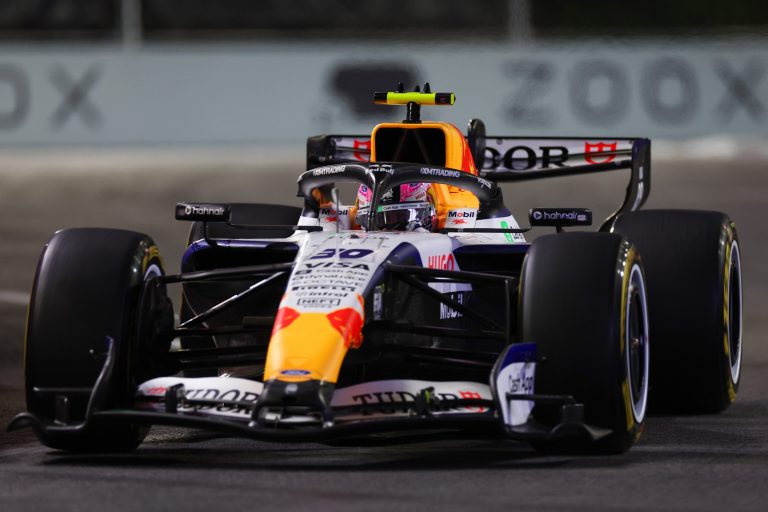
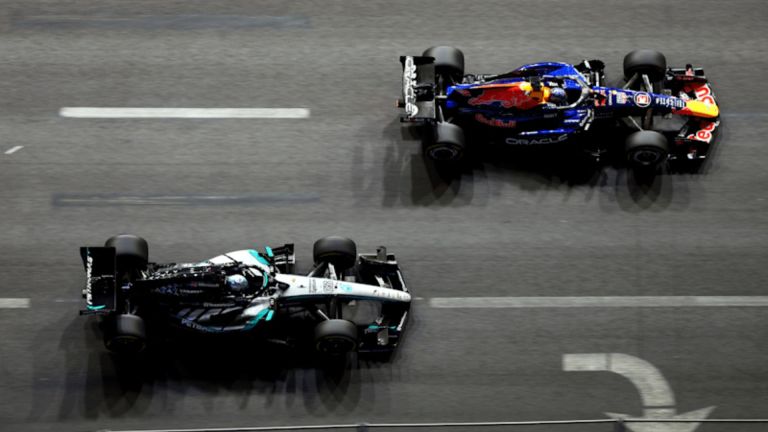
Mercedes entered the race with an extremely competitive car. Kimi Antonelli had topped qualifying before a five-place engine penalty dropped him to sixth on the grid, while George Russell lined up alongside polesitter Verstappen.
However, neither Mercedes driver finished on the podium.
Montoya believes the difference was not simply Verstappen’s driving ability, but Red Bull’s understanding of where and when electrical energy should be deployed to ensure its car remained strongest at the most important point of the lap.
Speaking on F1 TV’s post-race broadcast, the former Formula 1 driver praised the team’s approach.
“Not only Max, but Red Bull’s strategy was so good,” Montoya said.
The Colombian argued that Mercedes had prepared its car and energy strategy for what it expected to be the fastest conventional race, rather than one featuring almost constant position changes.
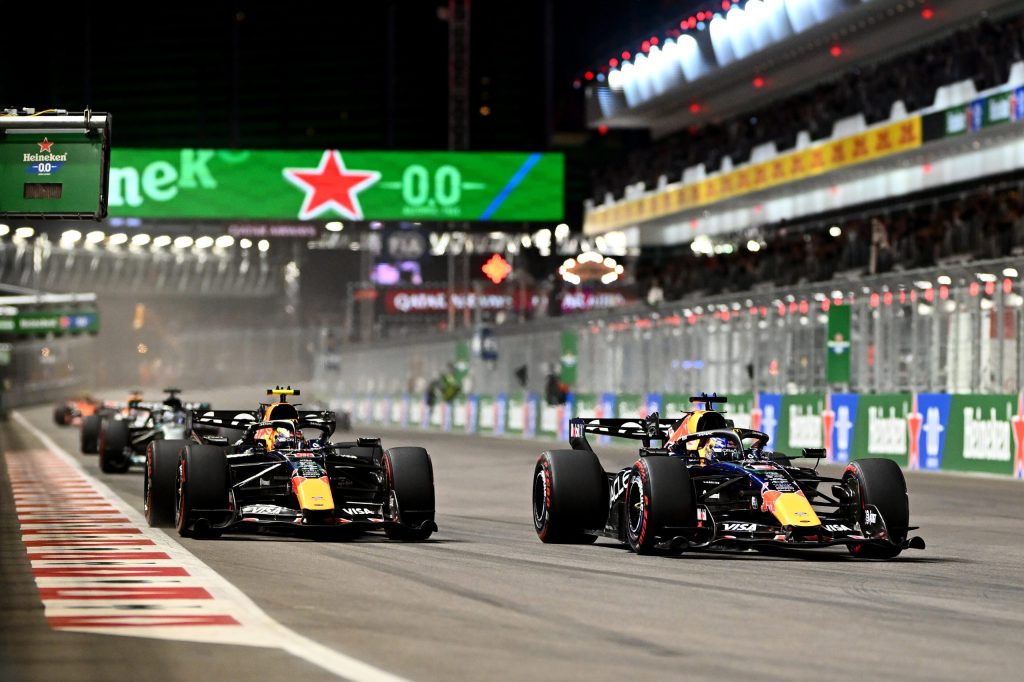
Red Bull deliberately sacrificed speed on the Las Vegas Strip
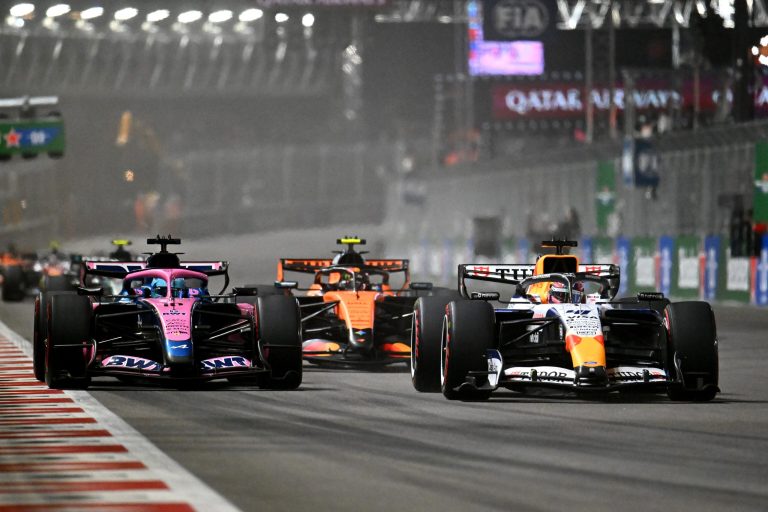
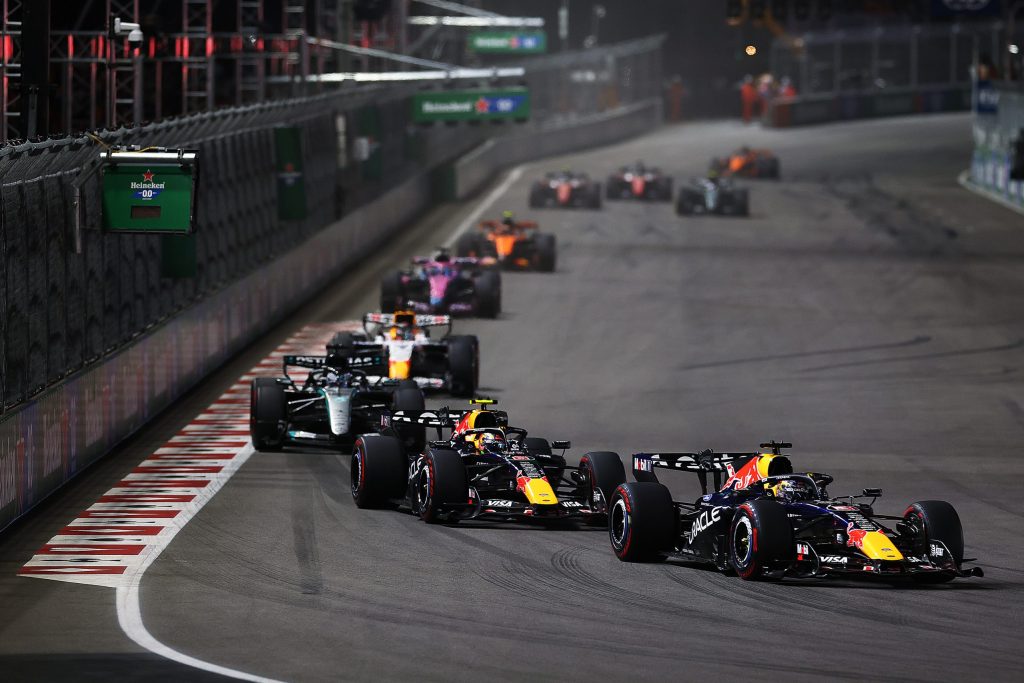
The Las Vegas Grand Prix featured 352 overtakes and 35 changes of leadership, setting new benchmarks for Formula 1.
The combination of long straights, slipstreaming and electrical energy deployment produced repeated battles in which overtaking was not necessarily a permanent advantage.
A driver moving into the lead could become vulnerable on the following straight, particularly after using substantial electrical energy to complete the manoeuvre.
Montoya believes Red Bull understood that dynamic better than Mercedes.
Rather than maximising speed at every point on the circuit, Verstappen’s team ensured it retained sufficient electrical energy to accelerate strongly from the final corner towards the finish line.
“Red Bull would always sacrifice a little bit on the Strip,” Montoya explained.
That approach meant Verstappen could allow another driver to move ahead without necessarily surrendering control of the race.
The crucial factor was the ability to respond at the end of the lap, where the timing of an overtake could determine the position recorded at the finish.
Mercedes had the speed but not the decisive energy advantage
The difference between the two teams was particularly striking because Mercedes possessed a strong qualifying package.
Antonelli had been the fastest driver over a single lap, while Russell showed enough pace to challenge Verstappen repeatedly.
The Red Bull, by contrast, ranked only 18th through the qualifying speed trap.
Ordinarily, such a low speed-trap position might suggest a serious disadvantage on a circuit dominated by long straights.
But Montoya believes those numbers concealed Red Bull’s advantage.
Verstappen did not need to be fastest at every speed trap or through every sector. He needed enough electrical energy to protect his position at the decisive moment.
The strategy was especially effective because the leading cars were repeatedly exchanging positions.
Mercedes could match or surpass Verstappen over parts of the lap without finding a way to remain ahead when it mattered.
Montoya identifies Russell’s partial solution
Montoya did acknowledge that Russell had understood part of Verstappen’s strategy.
The Mercedes driver occasionally managed his energy effectively enough to reach Turn 1 ahead of the Red Bull.
However, sustaining that advantage proved much more difficult.
Russell explained after the race that the differences in electrical energy deployment could produce an advantage of more than a second along the Strip, while leaving the attacking driver vulnerable through the middle section.
The British driver ultimately lost the opportunity to fight for a strong finish when he attempted to overtake Antonelli late in the race.
Russell locked up while braking on the dirty side of the circuit at Turn 5, slid into the barriers and finished ninth.
The incident added another setback to a weekend in which he had already become involved in a public confrontation with Verstappen.
The analysis of Russell’s performance and position within Mercedes examines the wider consequences of the defeat.
Antonelli’s battery mistake completes Mercedes disappointment
Antonelli also suffered a costly setback during the closing stages.
The newly crowned world champion was attempting to manage his position behind Verstappen when he lifted and reapplied the throttle on the back straight.
The manoeuvre had an unexpected effect on the car’s electrical energy management.
Antonelli depleted his available battery energy and became vulnerable to the two McLarens.
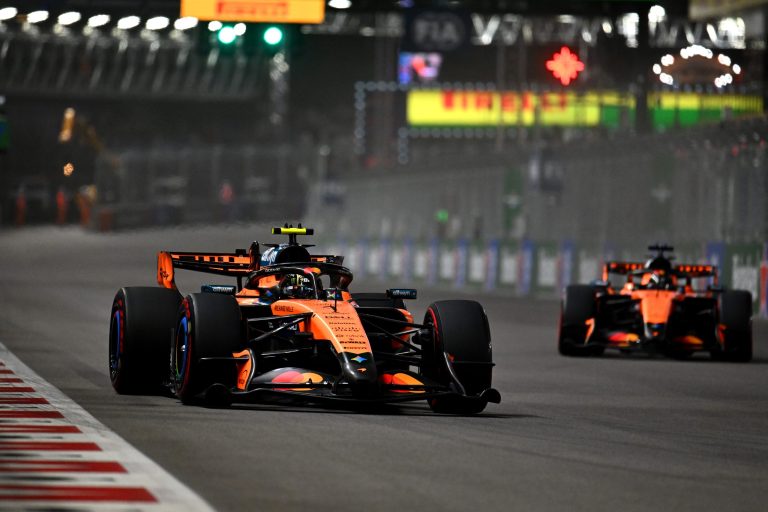
Lando Norris and Oscar Piastri both moved ahead, leaving Antonelli fourth.
The result was particularly disappointing given the pace he had demonstrated in qualifying.
Mercedes therefore left Las Vegas without a podium despite appearing to have one of the strongest cars throughout the weekend.
Verstappen confirms Red Bull prioritised the finish line
Verstappen subsequently explained that he had repeatedly communicated with his engineers to ensure the team was optimising its energy deployment.
The Dutchman wanted to retain enough electrical power for the final run to the finish line without compromising performance excessively elsewhere.
That was particularly important because overtaking another car too early could leave him exposed to a counterattack.
The approach also illustrates why Verstappen later criticised Formula 1’s repeated overtaking and energy-management battles, comparing some of the racing dynamics to Mario Kart.
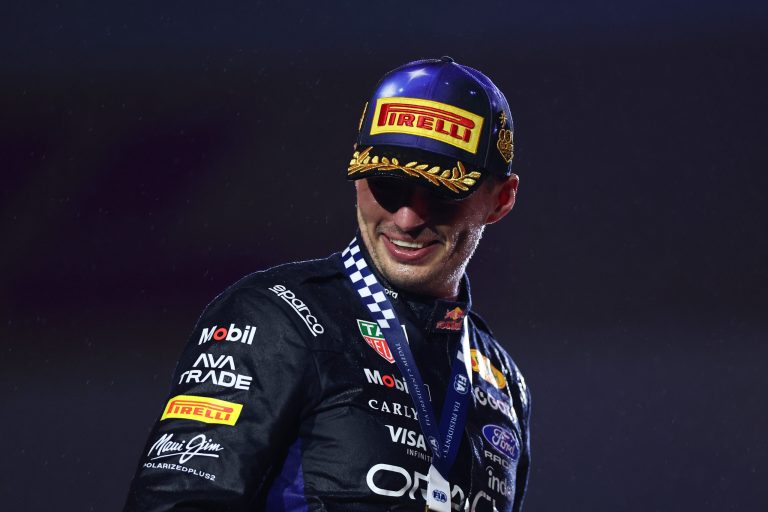
The Dutchman won his fourth Grand Prix of the season, moving to 304 championship points and strengthening his position in the battle for second place.
Montoya’s explanation also provides a technical context for Mercedes’ difficult Las Vegas result, including Russell’s unsuccessful attempt to arrange a temporary non-aggression agreement with Verstappen during the race.
FAQ
Why does Montoya believe Red Bull beat Mercedes in Las Vegas?
Montoya believes Red Bull managed electrical energy more effectively, sacrificing some straight-line speed to ensure Verstappen could recover positions near the finish.
Did Mercedes have a faster car than Red Bull?
Mercedes showed stronger single-lap pace in qualifying, with Antonelli setting the fastest time. However, that did not translate into a race victory.
What happened to Russell and Antonelli in the race?
Russell crashed while attempting to pass Antonelli and finished ninth. Antonelli lost positions to both McLaren drivers after a battery-management mistake, finishing fourth.