News Summary
- Fernando Alonso says he has a responsibility to use his experience to help F1 improve its current regulations
- The two-time champion speaks regularly with F1 CEO Stefano Domenicali and has also discussed the sport’s direction with FIA president Mohammed Ben Sulayem
- Alonso argues battery deployment has become too influential and says F1 cannot wait until the next major rules cycle in 2031 to address its problems
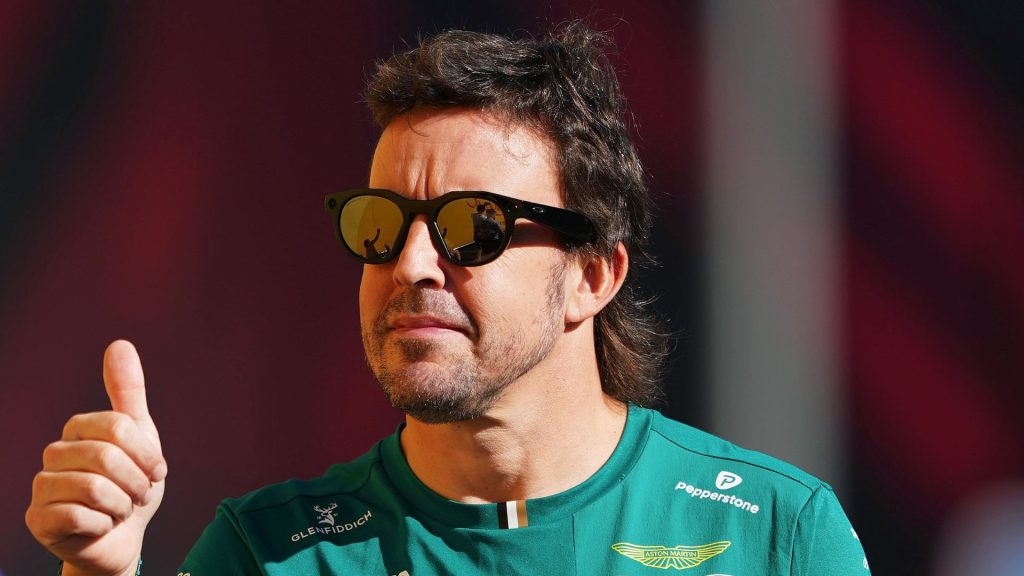
Fernando Alonso has spent much of 2026 criticising Formula 1’s new regulations, but the two-time world champion insists he does not simply want to complain about them. At 45 and with more F1 experience than any other driver on the grid, he believes he has a responsibility to help improve the championship.
That involvement already extends beyond public criticism. Alonso revealed during the Spanish GP weekend that he speaks regularly with F1 CEO Stefano Domenicali and has also discussed the situation with FIA president Mohammed Ben Sulayem.
“I speak with Stefano regularly every week because Formula 1 cannot continue in this way,” Alonso said. “We cannot wait for 2031 to have a proper sport.”
“So I think it’s also my responsibility to help them with my experience, to do whatever we can to improve these kinds of things.”
The comments add another dimension to Alonso’s uncertainty over whether he will continue racing in F1 in 2027. His dissatisfaction with the current cars is not the only factor in that decision, but the direction taken by next year’s rules will influence it.
Alonso wants drivers to make the difference again
Alonso’s main objection concerns the balance between driver input and electrical energy management under the 2026 regulations.
He used Madring’s spectacular banked section as an example. La Monumental should, in Alonso’s view, be precisely the kind of corner where commitment and driving ability separate the best drivers. Instead, he believes the amount and timing of electrical deployment can have a greater influence.
To illustrate the point, Alonso jokingly compared Max Verstappen with Aston Martin press officer Michael Clayton. His argument was that additional battery deployment should never allow an ordinary driver to be faster through such a demanding section than one of F1’s best.
“It cannot be Michael faster than Max Verstappen if he has more battery,” Alonso said. “Turn 12 is such an incredible corner that it has to be Max Verstappen making the difference compared to Michael. At the moment, we can’t.”
Alonso had already expressed similar frustration during the Spanish GP weekend, arguing that the current cars were reducing the driver’s influence at exactly the kind of circuit where skill should be most visible.
F1 future remains part of the equation
The regulatory debate inevitably intersects with Alonso’s own future.
Speaking at the FIA press conference in Madrid, attended by GRANDE PRÊMIO, Alonso refused to commit to another season and said he first wants to understand how the regulations will evolve for 2027.
“These cars are not the best to drive or to enjoy,” he said, while expressing hope that next year’s adjustments will move F1 in the right direction.
Alonso has already confirmed that his future will remain connected to Aston Martin even if he stops racing in F1, and admitted that a return to the World Endurance Championship is one possible option for 2027.
He has therefore stopped short of presenting regulatory changes as an ultimatum. Instead, his argument is that F1 should address the shortcomings of the current formula regardless of whether he remains on the grid.
Madrid reinforced Alonso’s concerns
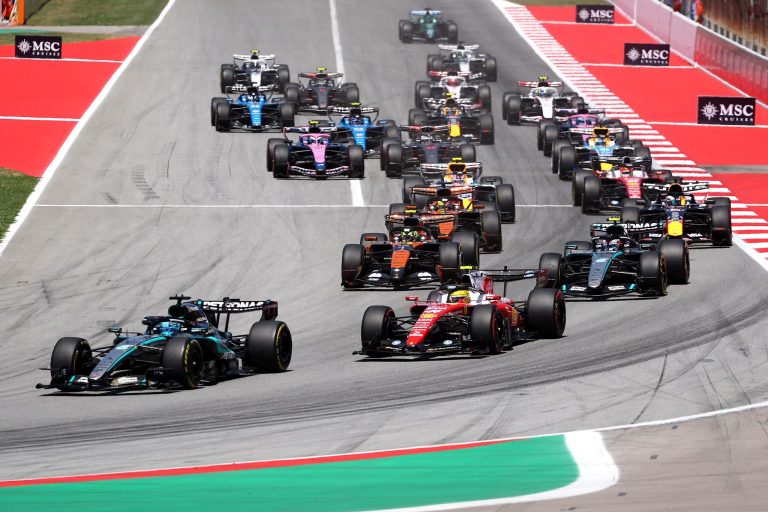
The Spanish GP ultimately provided further evidence for Alonso’s criticism, although in a different area.
Madring was praised by several drivers for its challenge over a single lap, but Sunday’s race produced widespread complaints about overtaking. After finishing 17th, Alonso called for modifications to sections of the circuit and said F1 should study what could be improved before returning in 2027.
Alonso was one of several drivers to criticise Madring’s racing limitations, while Oscar Piastri compared the difficulty of passing to Monaco.
For Alonso, however, the broader concern predates Madrid. He wants F1 to produce cars that reward driver skill more visibly and racing that depends less heavily on energy deployment.
Whether he will still be driving one of those cars in 2027 remains undecided. But Alonso has made clear that, after more than two decades in Formula 1, he intends to have a voice in shaping what comes next.

FAQ
Why is Fernando Alonso unhappy with the 2026 F1 rules?
Alonso believes electrical energy deployment has too much influence on performance and can reduce the difference a driver’s skill and commitment make, particularly through demanding high-speed corners.
Does Fernando Alonso speak to F1 about changing the rules?
Yes. Alonso says he speaks regularly with F1 CEO Stefano Domenicali and has also discussed the championship’s direction with FIA president Mohammed Ben Sulayem. He believes his experience gives him a responsibility to help improve the regulations.
Will Fernando Alonso race in F1 in 2027?
Alonso has not yet decided. He says the direction of the 2027 regulations will form part of his decision and has also confirmed that racing for Aston Martin in WEC is an option if he leaves Formula 1.
“Mas, na Fórmula 1, ou no automobilismo em geral, deveria ser assim: na curva 12, se o Michael for mais corajoso do que eu, ele anda mais rápido. Se eu tiver mais atributos, serei mais rápido que ele. É assim que deve ser na classificação, e agora tudo depende de quanta carga eu tenho e se serei mais rápido ou mais lento”, finalizou Alonso.
Agora, a Fórmula 1 faz uma pausa neste fim de semana e volta entre os dias 24 e 26 de setembro, com o GP do Azerbaijão, 15ª etapa da temporada.