Key Takeaways:
- Power Unit Switch: Alpine swapped its legacy Renault engine for Mercedes power units for the 2026 season, hiding early chassis deficits behind straight-line speed gains.
- Mid-Season Slump: After scoring 57 points across the first seven rounds—including Pierre Gasly’s podium in Monaco—the Enstone team secured just 4 points over the subsequent four races as development stalled.
- Constructors’ Battle: Alpine sits 6th in the 2026 Constructors’ Championship with 61 points (42 from Gasly, 19 from Franco Colapinto), falling behind Racing Bulls in pure mid-pack pace.
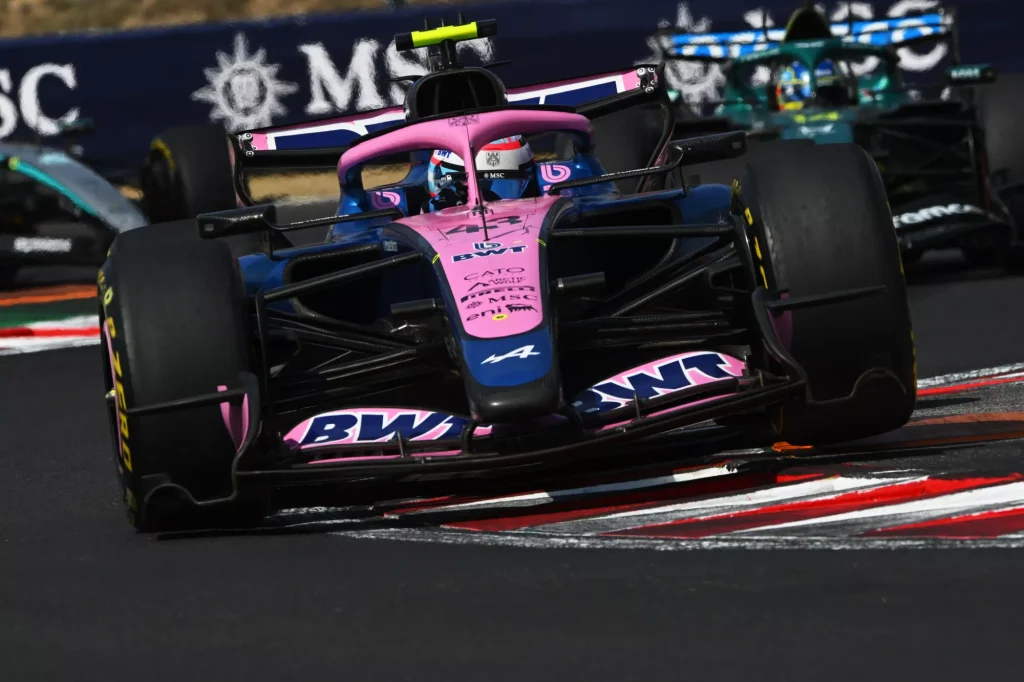
At first glance, a surface-level look at the standings might suggest Alpine is enjoying a remarkably solid Formula 1 campaign. The Enstone-based outfit holds sixth place in the Constructors’ Championship with 61 points—42 courtesy of Pierre Gasly and 19 from Franco Colapinto—bolstered by Gasly’s podium finish at the Monaco Grand Prix. While these figures easily eclipse their total from the same point in 2025, a closer look reveals a stark contrast between opportunistic race results and underlying car performance.
Gasly’s third-place finish in Monaco serves as a clear case study. Monte Carlo naturally minimizes aerodynamic power-to-drag disparities due to its low average speeds, lack of high-speed cornering demands, and track layout that favors track position. Alpine proved adept at capitalizing on these specific conditions early in the year, but those performances did not establish the A526 as the benchmark in the midfield.
In 2025, Alpine finished bottom of the standings with just 22 points, severely hampered by a power deficit that cost several tenths per lap depending on circuit layout. Following the termination of Renault’s works engine program, Alpine secured a customer supply deal for Mercedes power units and gearboxes running through 2030.
The integration of the Mercedes power unit removed a major performance bottleneck, masking the chassis’ true baseline. Under the 2026 regulations—which feature an increased reliance on electrical energy deployment and harvesting—a chassis can achieve competitive top speeds on straightaways even if its overall aerodynamic package lacks high-speed downforce and efficiency.

Early Results vs. Pure Qualifying Pace
Equipped with a competitive Mercedes power unit, Gasly extracted maximum results early in the campaign, scoring points in Australia, China, Japan, Canada, Monaco, and Spain. However, this early consistency masked persistent single-lap qualifying deficits.
The Austrian Grand Prix exposed the A526’s core limitations. Gasly finished 13th and Colapinto 15th in what the team labeled its worst weekend of the season to that point, citing a lack of mechanical grip, balance issues, high tire degradation, and unexpected straight-line speed drop-offs. If the Mercedes engine alone was enough to make the A526 a consistent midfield contender, Spielberg’s power-sensitive layout should not have caused such a drastic drop in form.
The setback was equally pronounced at Spa-Francorchamps—a circuit that theoretically favors Mercedes-powered entries due to its long flat-out sectors. Alpine struggled significantly during qualifying, with both drivers eliminated before Q3.
Across varying track conditions, the A526 has demonstrated a notable deficit in total downforce, difficulties generating front-tire temperature on single push laps, and trouble balancing downforce with aerodynamic drag. While the car remains relatively manageable during race stints focused on tire preservation, its single-lap performance ceiling remains low.
Stalled Upgrades and the Development Race
A major contributing factor to Alpine’s mid-season drop-off is development pace. Alpine introduced its last major aerodynamic upgrade package at the Miami Grand Prix, while key rivals continued to bring new floor and wing iterations to trackside events. Midfield competitors like Racing Bulls maintained an aggressive development cycle, eventually surpassing Alpine in pure lap-time performance.
The contrast in results tells the story: Alpine collected 57 points across the opening seven races, but managed just 4 points over the subsequent four events.

Flavio Briatore and team management are counting on an upcoming upgrade package to restore single-lap pace and give Gasly and Colapinto a realistic path back into Q3. For Alpine to defend its position in the Constructors’ Championship against a charging Racing Bulls, the A526 must generate higher downforce levels without suffering excessive drag penalties, reducing its reliance on race incidents and strategy to score points.
Formula 1 is currently in its summer break. Track action for the 2026 season resumes August 21–23 with the Dutch Grand Prix at Zandvoort.
Frequently Asked Questions (FAQ)
What engine does Alpine use in the 2026 F1 season?
Alpine switched from its internal Renault power plant to Mercedes power units and gearboxes starting in the 2026 season.
Who are Alpine’s drivers for the 2026 F1 season?
Alpine’s 2026 driver lineup features Frenchman Pierre Gasly and Argentine Franco Colapinto.