News Summary
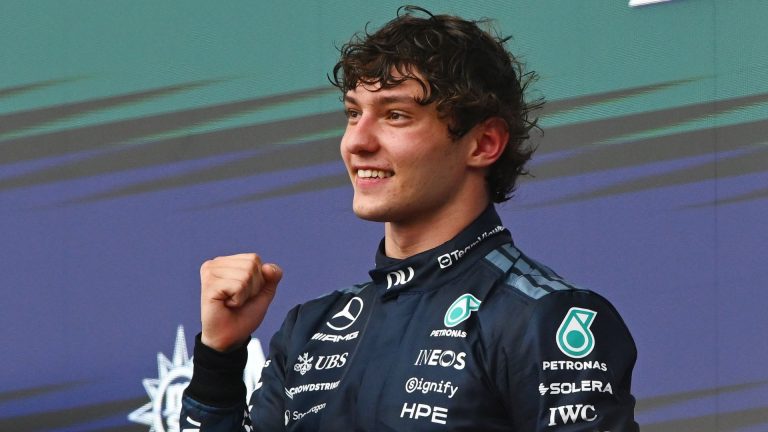
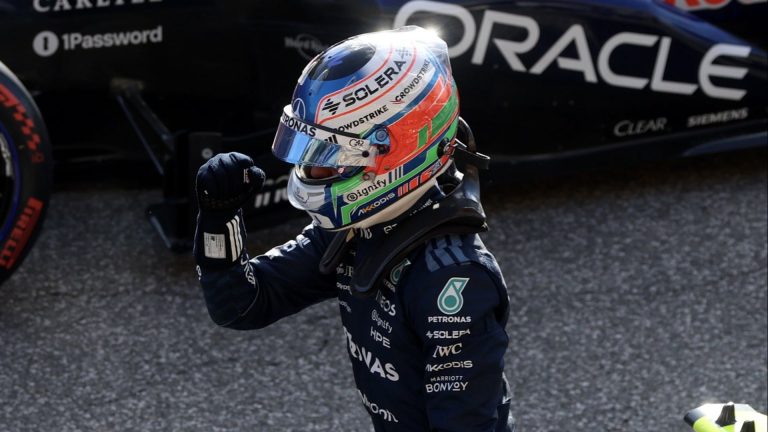
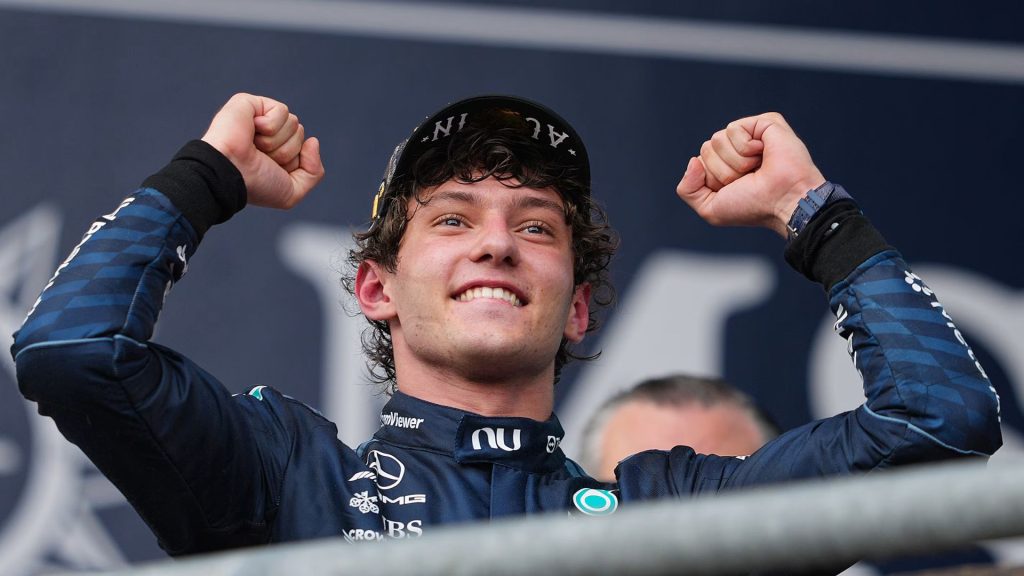
- Andrea Kimi Antonelli dominated the 2026 United States Grand Prix, converting pole position into his ninth victory of the season despite growing competition from Red Bull and Ferrari.
- Mercedes no longer enjoys the clear advantage it held earlier in the championship, but Antonelli has remained the team’s most consistent performer, combining speed, strategic intelligence and composure under pressure.
- George Russell’s eighth-place finish delayed the championship celebration, but Antonelli leaves Austin 123 points clear and needing only ninth place in Mexico to secure his first Formula 1 World Championship.
Andrea Kimi Antonelli may have to wait another week to become Formula 1 World Champion, but his performance at the United States Grand Prix suggested that he already possesses everything required to wear the crown. Mercedes is no longer the undisputed reference on the grid, with Red Bull, Ferrari and, at different stages, McLaren capable of challenging the German manufacturer. Yet throughout those fluctuations, Antonelli has remained the constant that keeps Mercedes at the front.
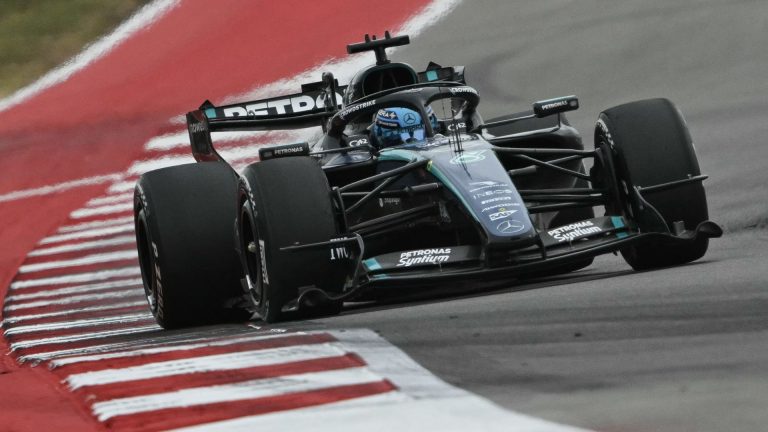
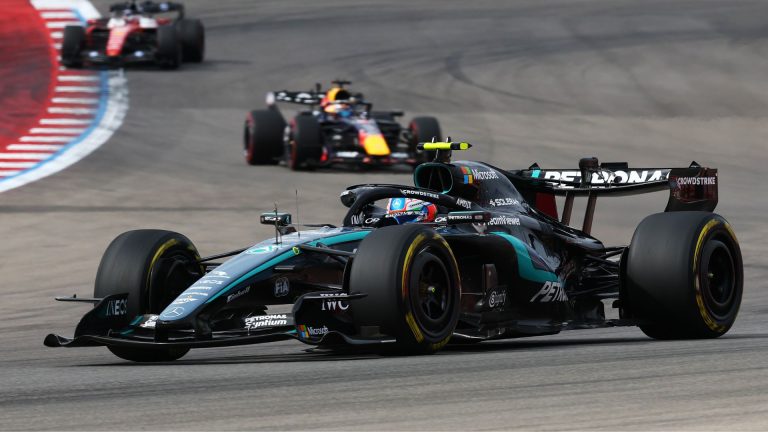
His victory at Circuit of The Americas on Sunday (October 25) was another demonstration of that distinction. The Italian surprised his rivals by taking pole position, resisted Max Verstappen at the start despite using a less aggressive tyre compound, and then delivered a controlled performance on a strategy that depended as much on his judgment as on the decisions of the Mercedes pit wall. Russell’s eighth place prevented the championship from being mathematically decided, but it did little to change the impression left by the driver who won.
Mercedes has lost its monopoly on performance, but not Antonelli’s consistency
There was a period during the 2026 season when Mercedes appeared capable of deciding the outcome of a Grand Prix largely through its own performance. The W17 established itself as the benchmark, and its advantage allowed the team to dictate races even when its drivers did not enjoy flawless weekends.
That situation has changed.
McLaren has occasionally found the right combination of conditions to challenge the German manufacturer, while Red Bull’s development work has transformed Verstappen into a regular contender for victories once again. Ferrari, meanwhile, has demonstrated flashes of genuine competitiveness, even if converting that potential into results remains a recurring problem.
The balance has become considerably more unpredictable. Mercedes can still produce the fastest car, but it can no longer assume that it will have one at every circuit or in every phase of a Grand Prix weekend.
Austin offered a particularly revealing example.
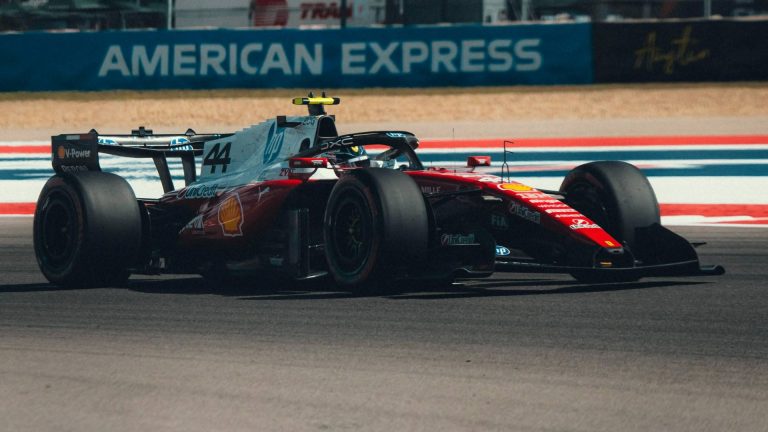
Charles Leclerc led both Friday practice sessions, while Lewis Hamilton topped FP3. Ferrari looked capable of securing its first Grand Prix pole position of the season, and Red Bull arrived with momentum after Verstappen’s victories in Malaysia and Singapore.
Mercedes, by contrast, spent much of the weekend fighting tyre overheating and balance problems. The latest specification of its car had become more demanding to set up, particularly through Austin’s slower corners.
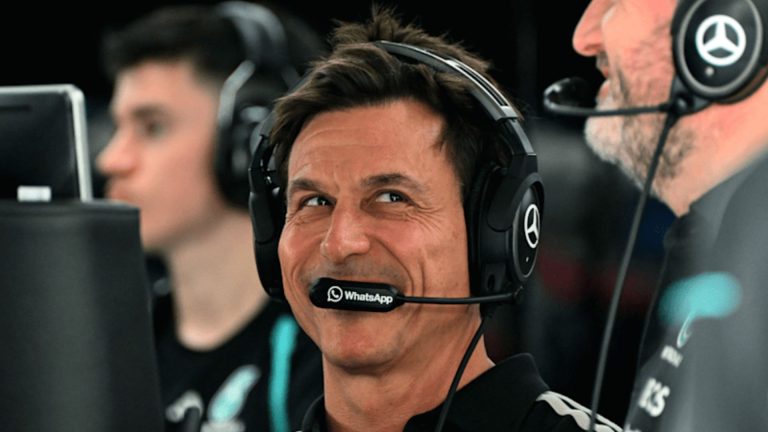
Even Toto Wolff admitted that pole position was beyond what he had expected.
Yet Antonelli delivered the decisive lap when qualifying reached Q3, beating Verstappen by 0.179 seconds and Isack Hadjar by 0.215.
It was another illustration of the difference between having the outright fastest package and knowing how to extract its maximum performance at the precise moment it matters.
Antonelli has increasingly mastered the latter.

Austin showed Antonelli can win without relying on outright superiority
The most impressive part of Antonelli’s weekend was not simply that he defeated his rivals in qualifying. It was the manner in which he approached a race that, on paper, offered several opportunities for Mercedes to lose control.
Verstappen started alongside him on the front row, with Red Bull demonstrating competitive long-run pace. The Ferraris were immediately behind, and the Italian manufacturer’s performance during practice suggested that Leclerc and Hamilton could remain dangerous over a full race distance.
There was also the question of tyres.
Antonelli began on mediums, while Verstappen and Ferrari opted for softs. On a circuit where traction at the start can determine the entire opening stint, Mercedes’ choice created an obvious risk.
But the Italian made a better getaway than Verstappen, maintained the lead into Turn 1 and immediately began building an advantage.
He did not need the theoretically fastest tyre for the opening metres because he executed the start better than the driver beside him.
That is precisely the sort of detail that separates a fast driver from one capable of consistently turning opportunities into victories.
The same principle applied to the rest of the race.
While Red Bull and Ferrari committed to earlier pit stops, Mercedes resisted the temptation to react. Antonelli continued circulating at competitive speed, managing the medium tyres and preserving the possibility of completing the race with only one stop.
He eventually switched to hards on lap 25 and remained on the compound until the finish, while his main rivals needed additional tyre changes.
The result was a race in which Mercedes did not have to outpace everyone on every lap. Its advantage came from making the correct decisions and executing them consistently.
And, crucially, Antonelli revealed afterwards that he had personally supported the winning one-stop strategy.
That admission adds another dimension to the performance. Antonelli was not merely the driver carrying out instructions from the pit wall. He was an active participant in the decision that ultimately defeated his rivals.
Calm before the start, ruthless once the race began
Another detail from the Austin weekend helps explain why Antonelli has become such a formidable championship contender.
After the race, Wolff revealed a private conversation with the Italian shortly before the start.
Antonelli had entered his office and explained that he simply wanted to enjoy the occasion, despite being on the verge of securing the World Championship.
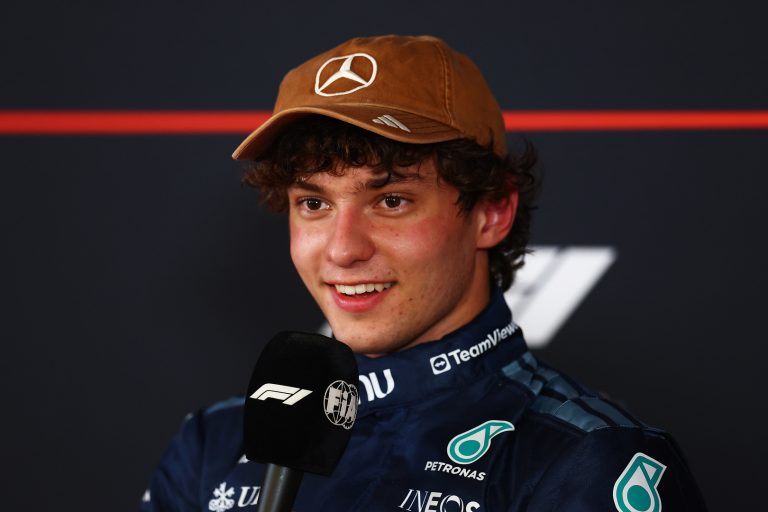
“I’m just going to enjoy this right now,” the driver told his team principal.
Wolff was struck by the apparent absence of anxiety in a 20-year-old about to start alongside a four-time World Champion, with the mathematical possibility of becoming the youngest champion in Formula 1 history.
The Austrian described Antonelli’s performance as exceptional from beginning to end.
There is something revealing about that contrast.
Outside the car, Antonelli appeared capable of approaching the occasion without being consumed by its consequences. Inside it, he demonstrated the concentration required to protect his position against Verstappen, interpret tyre behaviour and execute a demanding strategy.
The championship was at stake, but Antonelli did not drive like a man afraid of losing it.
He drove like someone focused on winning the race in front of him.
This is not to suggest that pressure no longer affects him or that he has reached the end of his development. He remains young, and Mercedes has already experienced weekends in which its driver struggled to reproduce his strongest performances.
But the ability to separate the magnitude of an occasion from the immediate demands of competition is an increasingly important characteristic of his driving.
Austin showed it more clearly than perhaps any previous weekend.
Russell’s eighth place exposes a growing difference within Mercedes
The comparison with Russell makes Antonelli’s performance even more significant.
The British driver has enough experience and speed to win Grands Prix, as demonstrated by his three victories in 2026. He has also been an important part of Mercedes’ recovery and development.
But Austin highlighted a considerable difference in how the two drivers extracted performance from the same team’s machinery.
Antonelli took pole and won. Russell qualified sixth, received a five-second penalty during the race and eventually finished eighth.
The penalty undoubtedly made his afternoon more difficult, but Russell refused to use it as an excuse.
“The pace was not good enough when it needed to be,” Russell acknowledged.
The comments were particularly striking because Mercedes had just demonstrated the performance required to win.
Of course, one race cannot establish the full extent of the difference between two drivers. Different setups, tyre behaviour, traffic and incidents can produce dramatically different results within the same team.
But Antonelli’s advantage in Austin cannot be dismissed as the product of Russell’s penalty alone.
The Italian was faster in qualifying, made the most effective start among the leaders and managed a race-winning strategy. Russell, meanwhile, spent much of the afternoon trying to understand why he could not reproduce the performance he expected.
The difference was not simply between first and eighth. It was between one driver who appeared to understand exactly what his car needed and another who admitted he was still searching for answers.
That contrast has become increasingly important as Mercedes’ advantage over its rivals has narrowed.
When a car is clearly superior, strong drivers can often compensate for imperfect weekends. When the margins become tighter, the ability to maximise every opportunity becomes essential.
Antonelli has been doing that more consistently than his teammate.
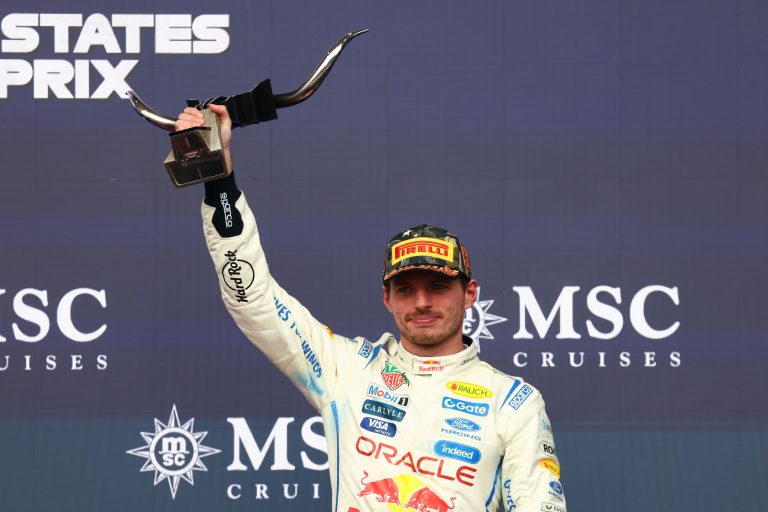
Verstappen’s admission confirms the quality of Antonelli’s victory
There is another reason why Austin deserves to be considered an important performance in Antonelli’s championship campaign: the assessment offered by Verstappen himself.
The Dutchman had arrived in Texas as one of the principal threats to Mercedes, having restored Red Bull’s competitiveness during the second half of the season.
He qualified second, started alongside Antonelli and had every reason to believe he could fight for victory.
The four-time World Champion explained that problems with engine braking and gearshifts had made it difficult to drive consistently, while the team’s use of the softer compounds had effectively committed him to an unsuccessful two-stop strategy.
Even so, he did not claim that correcting those problems would have been enough to defeat Antonelli.
“I don’t think we had the pace of Kimi, but maybe we could have been second,” Verstappen admitted.
The distinction matters.
Red Bull did not merely lose because it made mistakes. Its own leading driver believed Mercedes had enough performance to win regardless, although a better strategy might have allowed him to finish ahead of Leclerc.
That assessment reinforces Antonelli’s achievement.
He was not simply the beneficiary of a rival’s tactical error. He secured pole, established control at the start and then maintained the speed required to turn the advantage into victory.
Verstappen could explain why Red Bull failed to finish second. He could not identify a realistic route to beating Antonelli.
For a championship leader attempting to establish himself against one of Formula 1’s most accomplished competitors, that is a significant endorsement of the quality of his weekend.
Ferrari’s recovery shows why the final races will still matter
Ferrari also deserves recognition for the performance it delivered in Austin.
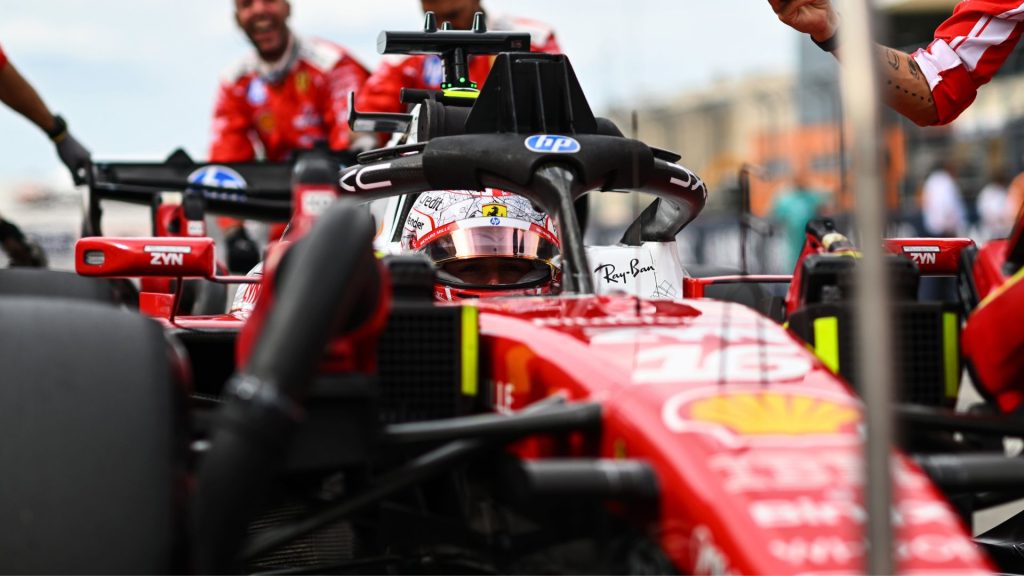
The Scuderia had been expected to challenge for pole after dominating practice, but Saturday ended with Leclerc fourth and Hamilton fifth.
Sunday offered a considerably stronger result.
Leclerc used an effective final stint to overtake Verstappen and finish second, while Hamilton recovered from serious setup difficulties to pass Lando Norris for fourth.
The seven-time World Champion later admitted that severe understeer had compromised the opening two stints, preventing him from fully exploiting the car’s potential.
Ferrari therefore emerged from Austin with a sense of what might have been. The team had enough pace to place both drivers in the top four, yet its qualifying limitations and Hamilton’s early balance problems prevented an even stronger result.
For Mercedes, the implications are clear.
Antonelli may be on the verge of securing the championship, but Ferrari and Red Bull are not prepared to concede the remaining victories.
That creates an important test of the Italian’s ambitions beyond the title itself.
Winning the championship will be a historic achievement. Continuing to deliver the performances that made it possible, even after the mathematical contest is settled, would send an equally important message ahead of 2027.
Antonelli appears conscious of that distinction.
After winning in Austin, he said he wanted to finish the season strongly rather than change his approach simply because the title is within reach.
The determination to maintain his standards even when the championship advantage becomes overwhelming may be one of the most encouraging signs for Mercedes.
The championship is not official, but Antonelli has already made his case
The mathematics remain straightforward.
Antonelli leaves Austin with 365 points, 123 ahead of Russell and 124 clear of Hamilton, with five Grands Prix and a maximum of 125 points still available.
Russell’s eighth place and Hamilton’s fourth prevented the title from being secured at Circuit of The Americas.
As the complete championship standings after the United States Grand Prix show, only the two British drivers remain mathematically capable of catching Antonelli.
Yet the Italian’s advantage has become so large that ninth place in Mexico will be sufficient to guarantee the title, regardless of his rivals’ results.
That is the statistical reality.
The sporting reality is even more compelling.
Antonelli has won nine races in his second season. He has delivered under pressure, helped shape successful strategies and increasingly demonstrated the judgment required to navigate weekends in which Mercedes does not begin as the obvious favourite.
It would be excessive to suggest that he has become a complete driver at just 20 years old. There are still areas to improve, challenges to overcome and situations he has yet to encounter.
But Formula 1 champions are not defined by the absence of weaknesses. They are defined by how consistently they turn their strengths into results, particularly when the competition is close.
Austin provided another example of that process.
Mexico will confirm what Austin has already revealed
The Mexican Grand Prix on November 1 now offers Antonelli the opportunity to complete the final step.
For the first time in his career, the Italian will arrive at a race knowing that a modest points finish is enough to secure the World Championship regardless of what his rivals achieve.
It is a remarkable position for a driver promoted into Formula 1 only a season earlier.
Yet the most impressive aspect of his campaign is not the scale of the points advantage. It is the way he has maintained control as the competitive landscape around Mercedes has changed.
McLaren has had opportunities. Red Bull has recovered. Ferrari has become increasingly dangerous. Russell has demonstrated that the W17 is not always straightforward to master.
Through those fluctuations, Antonelli has continued to deliver.
The championship trophy is still waiting for him, but the performances that justify it are already there.
Austin did not provide the mathematical confirmation. It provided something different: another example of a young driver who understands how to win when the margins are small, the pressure is enormous and the fastest car is not always guaranteed.
Mercedes may no longer dominate Formula 1 on every weekend. Its championship leader, however, has shown that he does not need that dominance to succeed.
GRANDE PRÊMIO is following the aftermath of the United States Grand Prix and the build-up to the Mexican Grand Prix, with breaking news, technical analysis, driver reactions and full coverage in its Formula 1 section.