Key Takeaways:
- Honda Engine Upgrades: Honda is introducing an updated power unit at Zandvoort featuring a modified pre-chamber, revised piston shaping, and reduced lubrication friction to address early-season power and vibration issues.
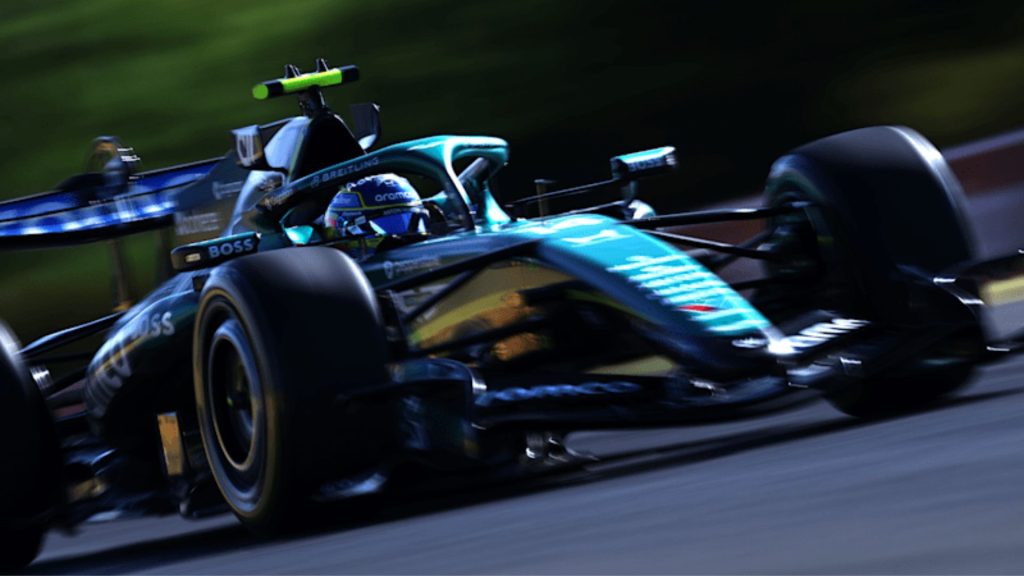
- Hungary Aero Package: Aston Martin brought 16 new components to Budapest—including an updated floor, bodywork, diffuser, and wings—helping Fernando Alonso reach Q2 for the first time in 2026.
- Rebuilding for the Midpack: After a difficult opening half of 2026 marred by low pre-season mileage and reliability limitations, Aston Martin aims to bridge the gap to midpack competitors Racing Bulls, Audi, and Alpine.
Much like Icarus, Aston Martin aimed so high for the 2026 Formula 1 season that it flew too close to the sun and suffered a dramatic fall. However, unlike the mythological Greek figure, the Silverstone squad managed to survive and is now staging a turnaround aimed at climbing back toward the front of the grid.
The foundation for this era was laid in 2023, when Honda agreed to become Aston Martin’s exclusive power unit supplier under the new technical regulations. To support the program, Honda created a UK subsidiary—Honda Racing Company UK Limited—while keeping primary design and manufacturing at its Sakura headquarters in Japan. Simultaneously, team owner Lawrence Stroll invested roughly £200 million into the Aston Martin Racing Technical Campus, bringing a wind tunnel, simulator, and production facilities under one roof.
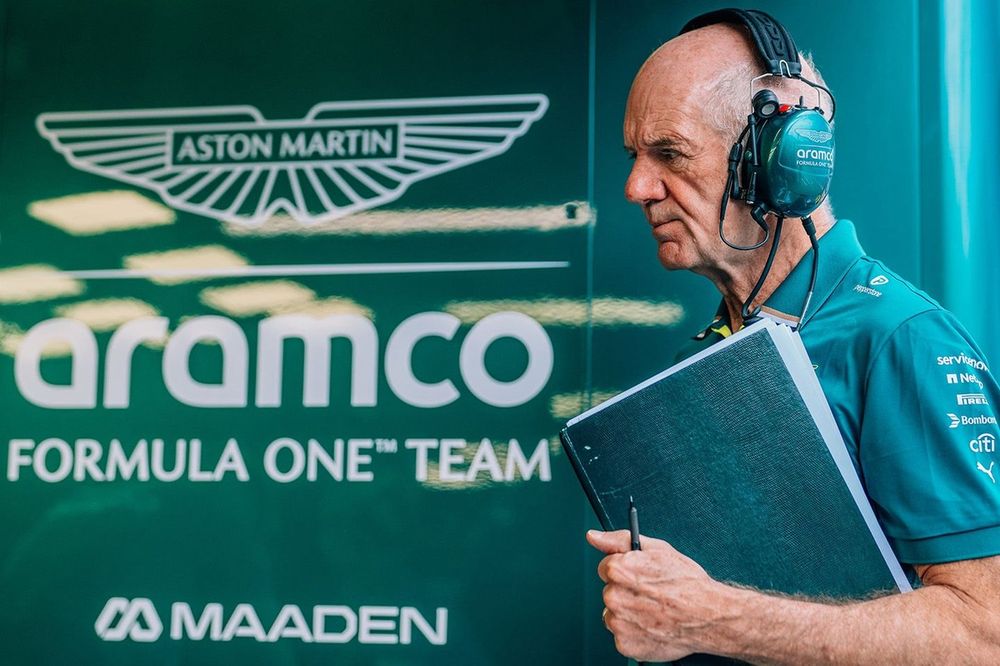
Commercial support from Aramco, Cognizant, and Valvoline provided financial stability, while high-profile technical hires—including Tom McCullough, Eric Blandin, Luca Furbatto, Andy Cowell, and team principal Adrian Newey—built out a formidable engineering lineup.
Aston Martin and Honda faced communication and operational hurdles early on (Photo: AFP)
Despite those resources, the opening half of the 2026 season revealed deep-seated issues. Early warnings emerged in 2025, when Honda Racing Corporation president Koji Watanabe admitted to production delays, and project leader Tetsushi Kakuda noted that engine development had started later than planned.
Those setbacks manifested during private testing in Barcelona, where Aston Martin missed early running and only fielded the AMR26 over the final two days. The Bahrain pre-season test proved equally difficult, with the team logging just 334 laps (1,807 km)—far behind McLaren’s benchmark 4,421 km—due to component reliability issues and a shortage of spare parts.
Before the season opener in Australia, Newey revealed that Aston Martin only learned of a major restructuring within Honda’s power unit division in November 2025. Following Honda’s temporary exit from F1 in 2021, staff had been redistributed to other projects, requiring the manufacturer to rebuild its F1 engineering team with limited development time compared to rival suppliers.
Ahead of practice in Melbourne, Newey noted that “abnormal vibrations” from the power unit posed risks of driver injury and disrupted battery function and overall component reliability, forcing the team to run the engine at reduced power levels.

These technical constraints severely limited drivers Fernando Alonso and Lance Stroll. The pair managed to finish together in just three of the opening 11 races—Miami, Great Britain, and Hungary. In multiple qualifying sessions, the AMR26 struggled to stay within the 107% threshold, requiring stewards’ permission to race. Alonso secured the team’s first point of the season during a chaotic, incident-rich Monaco Grand Prix, placing Aston Martin ahead of Cadillac in the Constructors’ Championship.
Rather than introducing incremental updates each race, Aston Martin focused its resources on a comprehensive upgrade package for the Hungarian GP.
The Budapest package included 16 updated components designed to improve aerodynamic efficiency and reduce overall weight. Key changes encompassed a revised floor, bodywork, sidepod intakes, engine cover, diffuser, a narrower nose, updated front and rear wings, revised rear suspension, and modified cooling ducts.
While Stroll suffered a rear suspension failure in FP1, the overall performance showed clear progress. Alonso advanced to Q2 for the first time in 2026, securing 16th on the grid. In the race, Stroll and Alonso finished 13th and 14th, running ahead of Williams, Haas, and Alpine’s Franco Colapinto on a chassis-dependent circuit.
On the engine side, Honda has prepared an updated power unit specification for the upcoming Dutch Grand Prix at Zandvoort. Shintaro Orihara, General Manager of Trackside Engineering, confirmed that internal performance targets were met.
“We modified the pre-chamber to accelerate combustion and altered the piston shape to optimize it,” Orihara explained. “Additionally, we modified certain lubrication systems to reduce friction.”
FIA ADUO (Additional Development and Upgrade Opportunities) assessments previously placed Aston Martin’s power unit behind reference benchmarks set by Red Bull and Mercedes. While the updated engine is not expected to close the gap overnight, it represents a step toward competing more closely with mid-pack rivals such as Racing Bulls, Audi, and Alpine heading into 2027.
Formula 1 is currently in its summer break, with the 2026 season resuming August 21–23 at the Dutch Grand Prix in Zandvoort. Complete coverage continues on GRANDE PRÊMIO.
Frequently Asked Questions (FAQ)
What changes did Honda make to its F1 power unit for the Dutch Grand Prix?
Honda modified the combustion pre-chamber to speed up burn rates, redesigned the piston head shape, and updated the internal lubrication system to reduce engine friction.
How did Aston Martin perform at the Hungarian Grand Prix with its new upgrades?
Aston Martin introduced 16 new aerodynamic and structural components in Hungary, allowing Fernando Alonso to qualify in Q2 for the first time in 2026 (16th), with Stroll and Alonso finishing 13th and 14th in the race.
When does the 2026 Formula 1 season resume after the summer break?
The 2026 Formula 1 season resumes August 21–23 with the Dutch Grand Prix at the Zandvoort circuit.