News Summary
- Mercedes expected its Sepang upgrade to deliver around 0.3s, but struggled to reproduce its encouraging final-practice performance in qualifying.
- Toto Wolff identified straight-line losses and low-speed understeer, while the team remained without a definitive explanation.
- Kimi Antonelli finished second, but George Russell’s power unit failure added a reliability concern to Mercedes’ performance investigation.
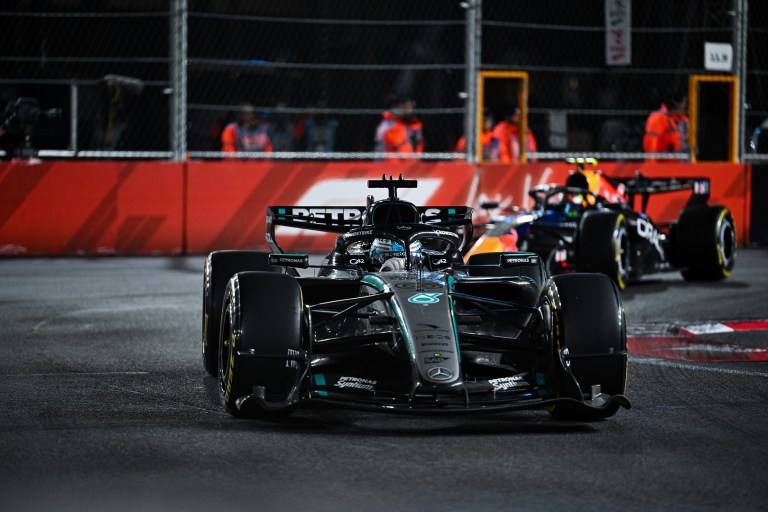
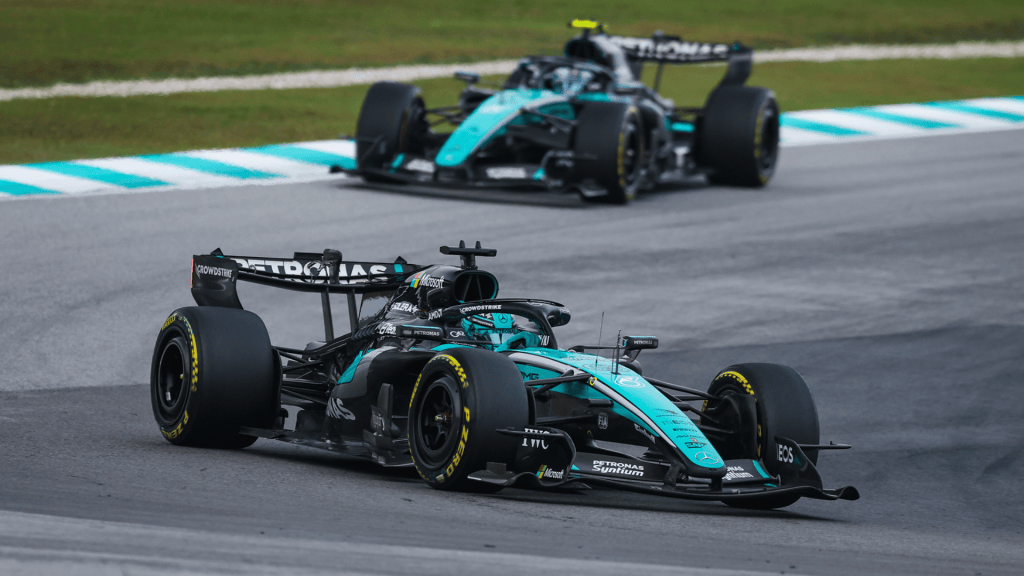
Mercedes left Sepang with a bigger championship advantage for Kimi Antonelli and a much less comfortable assessment of its car. A major upgrade had promised more speed. Instead, the team spent the Bahrain Grand Prix in Malaysia trying to understand why that performance was missing, before George Russell’s retirement added another problem to the investigation.
Antonelli’s second place should not be confused with proof that the upgrade delivered its intended gain. Equally, a disappointing weekend does not establish that the new components made the car slower. Mercedes has identified symptoms, but its public explanations have stopped short of a confirmed technical diagnosis.
That distinction is central to understanding the weekend. The team’s loss of competitiveness, Antonelli’s qualifying complications and Russell’s engine failure were different developments. Treating them as one failed upgrade would produce a simpler explanation than the available evidence supports.
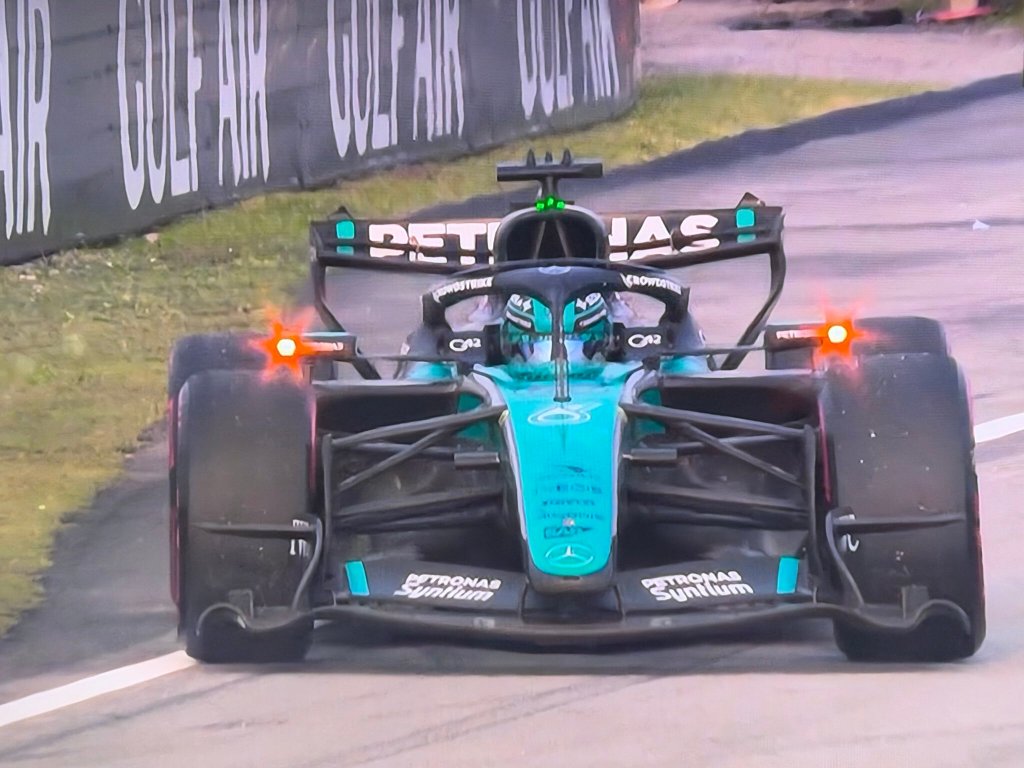
The expected gain did not appear when Mercedes needed it
Mercedes arrived with a package expected to improve performance by around three-tenths of a second. After qualifying, Wolff described a result that ran sharply against that expectation.
“We expected to be three-tenths forward and we are four or five backwards,” he said at Sepang.
As detailed in the assessment of Mercedes’ unexpected setback despite its upgrade, the team principal pointed to time lost on the straights and understeer in slower corners.
Those observations describe where the car was struggling. They do not, by themselves, establish why. Straight-line losses require examination of the car’s aerodynamic configuration and power delivery, while understeer can involve several aspects of its balance. Mercedes had not publicly isolated the responsible factor.
The strongest evidence of the uncertainty was the contrast between final practice and qualifying. Antonelli topped FP3, yet qualified fourth, 0.501s behind Max Verstappen. Russell was eighth, 0.741s off pole. The pace Mercedes appeared to have found in the morning did not carry into the session that determined the grid.
FP3 offered encouragement, not an answer
Antonelli’s qualifying also contained a complication specific to his session. A deleted Q2 lap forced him to use another set of soft tyres, leaving him with only one fresh set for Q3.
That reduced his opportunities to improve. It cannot explain the entire team’s weekend, however, particularly when Wolff also acknowledged that Friday’s race pace had been disappointing.
“That was our toughest Saturday of the season, and we need to dig deep to understand exactly why that was. We have plenty to analyse from the two days of running here in Sepang to get to the heart of why we have struggled so much. There are many factors we will need to take into consideration, and we can’t rule anything out at this stage,” Wolff said in Mercedes’ Saturday assessment.
“Tomorrow is another day. With the levels of degradation we saw in practice, we are heading a little bit into the unknown in terms of both race pace and strategy. It will likely be a Grand Prix where we see multiple stops for each car and that could provide opportunities. Equally, we know that our race pace on Friday wasn’t the strongest, so we hope the changes we have made to the car since then have helped with that, even if they didn’t benefit us on our single laps today,” he continued.
Andrew Shovlin, Mercedes’ trackside engineering director, similarly made clear that the team needed to investigate the difference between practice and qualifying.
“Today was clearly a disappointing result relative to our expectations coming into the weekend. We showed encouraging pace in FP3, but couldn’t extract the same performance when we needed come qualifying. We will spend time this evening, and in the coming days, analysing the data to understand why we fell away compared to our competitors and what lessons we can take forward,” Shovlin said.
Mercedes’ own assessment therefore leaves the headline question open. The team could not consistently extract the expected performance, but had not demonstrated that the upgrade itself was the cause.
Antonelli’s recovery did not erase the performance question
Sunday gave Mercedes a stronger finishing position than its qualifying results suggested. Antonelli finished second behind Verstappen, while Russell had been running third before retiring.
The race also unfolded in conditions that complicated a direct assessment of underlying performance. Rain, the disrupted starting procedure and Safety Car interventions influenced tyre choices and the gaps between competitors.
Shovlin had anticipated that race management could offer opportunities, even with Mercedes starting behind its preferred positions.
“The focus now turns to tomorrow. This circuit is placing huge demands on the tyres and degradation is expected to be very high, which means strategy, tyre management and operational execution will all be critical. Whilst we would have preferred to be starting further forward, both drivers are in positions where they can fight for solid results,” he said before the race.
“With a race that looks likely to feature multiple pit stops and plenty of strategic variation, there will be opportunities to make progress if we have decent pace.”
Antonelli converted the weekend into 18 points. That was valuable damage limitation, but Wolff’s post-race assessment remained focused on the speed Mercedes had lacked.
“I am so massively annoyed and not in a happy place. First of all, we didn’t have the speed… So, there is a lot of homework to be done to recover, which we will,” he said.
Russell’s failure requires a separate investigation
The second problem was reliability. Russell’s retirement removed a potential podium and transformed what could have been a 3-point loss to Antonelli into an 18-point loss.
Wolff confirmed a power unit failure and explicitly rejected the Safety Car as its cause.
“It is a PU failure, wasn’t caused by the Safety Car, we haven’t assessed it yet,” he said.
“To make things worse, the PU failure for George, which is terrible for his Championship… One of my worst experiences to be honest.”
The initial explanation of Russell’s retirement does not establish a connection with the performance upgrade. Mercedes needs to understand both developments, but the evidence available does not justify presenting the engine failure as another consequence of the aerodynamic package.
Antonelli now leads Russell by 84 points, with 320 against 236. Mercedes’ internal championship picture became more decisive even as its technical position became less clear.
Singapore gives Mercedes another test
The next task is to determine whether Sepang exposed a circuit-specific difficulty, a problem extracting performance from the updated car, or a broader development issue.
Singapore will provide another set of conditions, but its Sprint format also limits preparation to one practice session before competitive running. Mercedes must therefore arrive with a clearer understanding of its Sepang data rather than relying on another encouraging practice result.
For now, the supported conclusion is narrower than “the upgrade failed”: Mercedes expected a gain, struggled with straight-line performance and low-speed balance, and could not explain why its FP3 competitiveness disappeared in qualifying. Russell’s power unit failure added a separate reliability investigation.
Formula 1 returns from 9–11 October for the Singapore Grand Prix at Marina Bay. GRANDE PRÊMIO will cover all the action throughout the weekend.
F1 today: FAQ
What time is Singapore GP sprint qualifying today?
Sprint qualifying starts at 20:30 Singapore time on Friday, October 9, equivalent to 13:30 BST in the UK, 08:30 ET in the United States and Canada, and 18:00 IST in India. The session determines the starting grid for Saturday’s sprint.
Who was fastest in Singapore GP FP1?
George Russell topped FP1 with a 1:32.274, driving Mercedes’ older W17 aerodynamic specification. Charles Leclerc finished second, 0.198s behind, followed by Lando Norris in third. Kimi Antonelli was seventh with the upgraded Mercedes, while Gabriel Bortoleto finished 16th.
Why is George Russell using the old Mercedes at the Singapore GP?
Mercedes is comparing its previous W17 specification with the aerodynamic upgrade introduced at Sepang. Russell is using the older package, while championship leader Kimi Antonelli retains the new version. Russell led FP1, but differences in tyre compounds and run programmes mean the result alone does not establish which specification is faster.