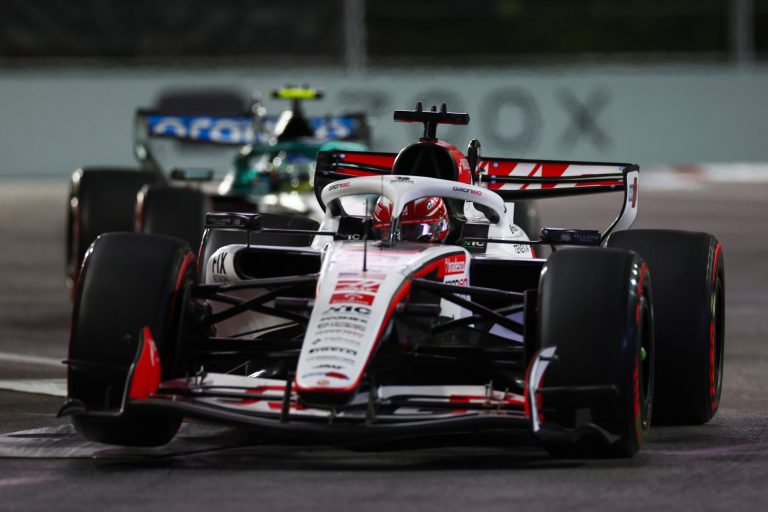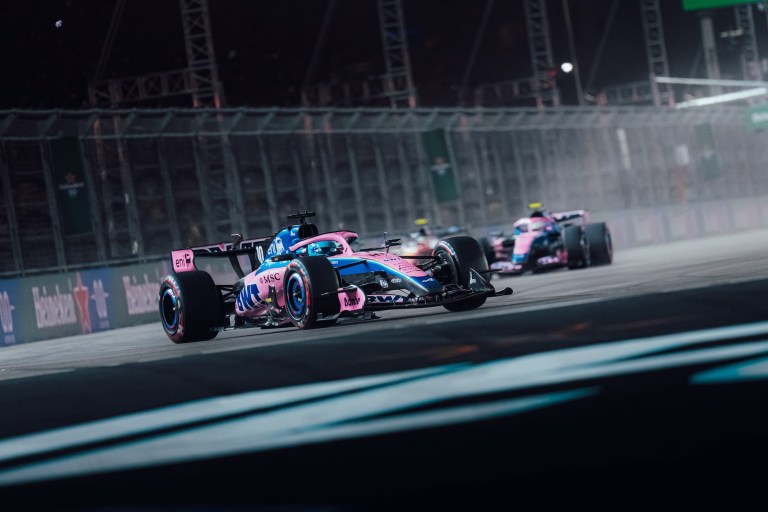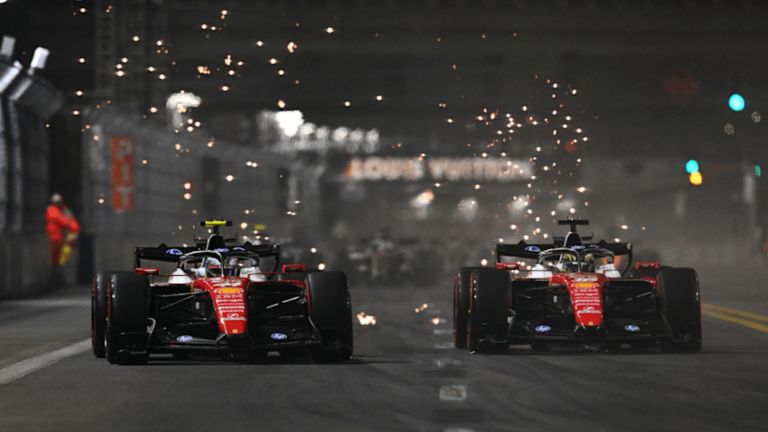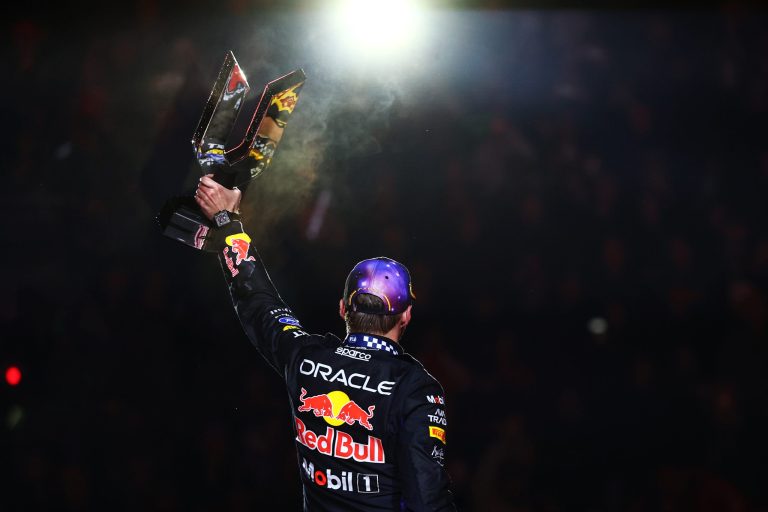

A hora da verdade chegou para a Aston Martin. Com o pior carro do grid desde a estreia das novas regras, no começo da temporada, a equipe põe na pista o que é, na prática, um novo carro para a sequência do campeonato 2026 da Fórmula 1. É o bote salva-vidas para tentar pôr fim ao que já se tornou uma das maiores vergonhas da categoria desde a virada do século.
No one has spent more time and money on infrastructure in recent years than Aston Martin. They overhauled and expanded their workforce in key technical positions, poaching high-profile names from rivals; tore down their old factory and rebuilt it with state-of-the-art facilities; and constructed the most expensive and advanced wind tunnel of any team on the grid. To bring it all to fruition, they brought in Adrian Newey, the legendary designer, to spearhead the overall concept of the new car.
Beyond that, they recognized that the next step to success was stepping away from customer status. No more third-party engines or gearboxes: they struck a works deal with Honda. The very same Honda that powered Max Verstappen to four World Championships with Red Bull this decade. The Japanese manufacturer departed the energy drink brand and joined Aston Martin dripping in glory and carrying the sweet scent of success.
What has unfolded since—in the year when everything was supposed to come together—borders on the surreal. It feels like something straight out of a Luis Buñuel surrealist film, a scene from ‘The Discreet Charm of the Bourgeoisie’, or a reinterpretation of David Lynch’s dystopian nightmare in ‘Eraserhead’. Given the sheer scale of the failure, it goes far beyond bizarre.
A failure it is, even with years remaining under the current regulations and only a dozen races run so far. In Belgium, Fernando Alonso couldn’t even finish on the same lap as Valtteri Bottas driving for newcomer Cadillac. Lance Stroll was already a full minute adrift before retiring—because, on top of everything, there is an appalling lack of reliability, severe porpoising, general discomfort, and a complete absence of pace.

In an F1 era that successfully weeded out backmarker teams, but still occasionally sees a financially troubled outfit sink way off the pace, Aston Martin stands out. They are no backmarker—they were scoring podiums not long ago—nor are they strapped for cash, having flexed immense financial muscle over recent years.
The team has also cycled through CEOs, rotated team principals almost annually, and features paddock figures openly discussing the intense pressure exerted by owner Lawrence Stroll—who is generally handled with kid gloves by the international press, as if his sole duty were to pour money in and nothing more. That is not how top-tier competition operates, yet Stroll Sr. has repeatedly shown he is at a loss for answers. His persona as the sharp-suited sheriff is as tiring as it is responsible for the trail of underperformance that has followed him in F1 since his days as a Williams patron.
For a works entry, backed by a championship-winning engine supplier and endowed with vast financial and technological resources, it is no exaggeration to call this the worst car Formula 1 has seen in the last 25 years in terms of cost-to-performance ratio and expectations versus reality. The absolute worst.
Aston Martin’s embarrassment is so acute that they take great care not to call it a new spec, let alone a new car. But that is exactly what it is. It had to undergo all the mandatory crash tests and homologation procedures that new cars face ahead of a season. It is a new car with which Aston Martin—having introduced virtually no major updates until now—hopes to climb back into the midfield. The baseline performance deficit is so grotesque that no one is dreaming of podiums or grand achievements anymore. The team would be content with something as fundamental as simply being part of the pack. It is their last chance to stop the cataclysm from deepening.
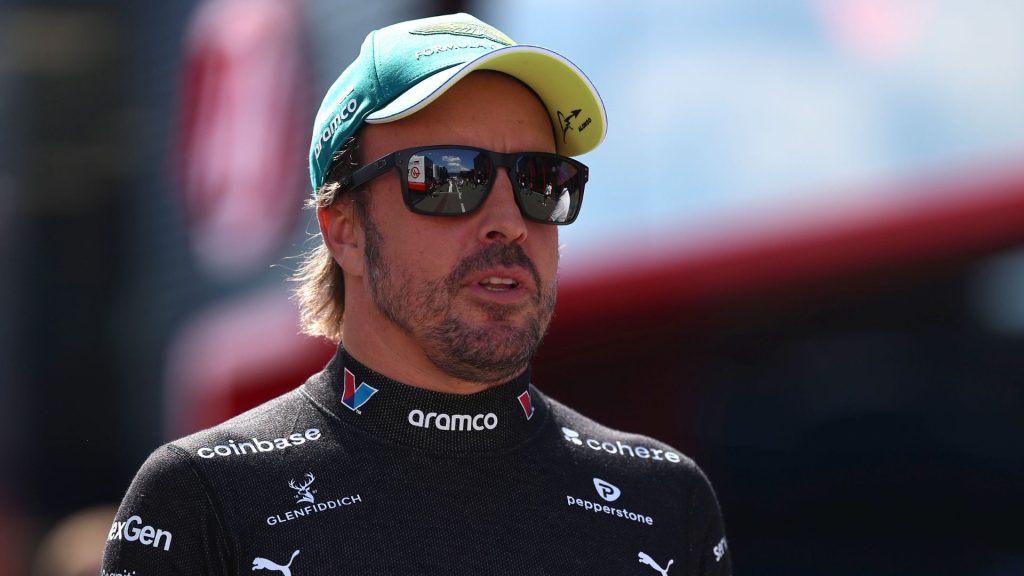
Finally, there is the Alonso question. Personally, I believe that if this major upgrade doesn’t immediately mitigate the disaster, the race at the Hungaroring could be the two-time champion’s last in F1. Why bother returning after the summer break? But he claims that won’t be the case, and fair enough—time will tell. However, it is highly likely he will announce in the coming weeks that he is stepping away from the grid at the end of the season.
Turning 45 next week, Alonso is one of the most pivotal drivers of the last three decades. He is the longest-tenured driver in F1 history, having made his debut in 2001, and one of the most raw talents to ever grace a cockpit. Due to the twists of fate and career choices, his final stats won’t come close to those of Michael Schumacher, Lewis Hamilton, Max Verstappen, or Sebastian Vettel—all contemporaries at one point or another—yet his legacy is every bit as towering. You cannot tell the history of Formula 1 without writing Fernando’s name in bold.
The end of his career is a momentous occasion. For everything he has achieved and for who he is, he deserves a dignified exit—one marked by a reason to smile and celebrate, no matter how small. Allowing his F1 journey to end behind the wheel of an atrocious car, running a minute behind the pack, would be a historic shame that will forever stain the team long after he leaves the grid.
The Hungarian GP could mark a fresh start—or complete ruin in a failure that will never be forgotten.
F1 Hungarian GP: when to watch in US ET, London, New Delhi (India), Shanghai (China) and Sydney (Australia)
US Eastern Time (ET)
- Free Practice 1: 07:30 AM
- Free Practice 2: 11:00 PM
- Free Practice 3: 06:30 AM
- Qualifying: 10:00 AM
- Race: 09:00 AM
London Time (BST)
- Free Practice 1: 12:30 PM
- Free Practice 2: 04:00 PM
- Free Practice 3: 11:30 AM
- Qualifying: 03:00 PM
- Race: 02:00 PM
New Delhi Time (IST)
- Free Practice 1: 05:00 PM
- Free Practice 2: 08:30 PM
- Free Practice 3: 04:00 PM
- Qualifying: 07:30 PM
- Race: 06:30 PM
Shanghai Time (CST)
- Free Practice 1: 07:30 PM
- Free Practice 2: 11:00 PM
- Free Practice 3: 06:30 PM
- Qualifying: 10:00 PM
- Race: 09:00 PM
Sydney Time (AEST)
- Free Practice 1: 09:30 PM
- Free Practice 2: 01:00 AM (overnight)
- Free Practice 3: 08:30 PM
- Qualifying: 12:00 AM (midnight)
- Race: 11:00 PM