News Summary
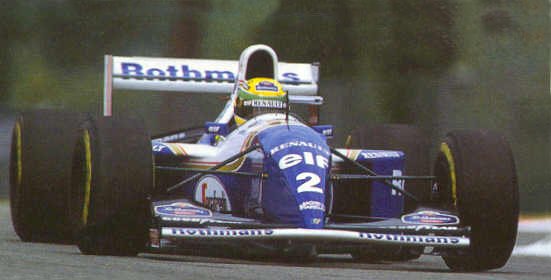
- A Williams FW16 driven by Ayrton Senna in 1994 failed to sell at RM Sotheby’s auction in New York on November 16.
- The car carried an estimated value of $4 million to $6 million, but bidding did not reach the undisclosed reserve price.
- Williams gave the car to the Senna family after winning the 1994 Constructors’ Championship, honouring an agreement made before the Brazilian’s death.
A rare Williams Formula 1 car associated with Ayrton Senna’s final season failed to find a buyer during an auction organised by RM Sotheby’s in New York.
The FW16 chassis was offered on November 16 as part of Sotheby’s contemporary evening auction, with an estimated value of between $4 million and $6 million.
However, bidding fell short of the minimum price established for the sale, leaving the car unsold.
The result was particularly notable because the chassis is one of the few surviving Williams cars driven by Senna during his brief association with the British team in 1994.
The car also carries a personal connection to the three-time world champion’s family.

Williams honoured agreement with Senna after his death
Senna joined Williams for the 1994 season after winning three world championships with McLaren.
His move to the British team was expected to begin another successful period, following Williams’ domination of the previous two Formula 1 seasons.
As part of the agreement surrounding his arrival, Senna was due to receive a Williams chassis if the team won the Constructors’ Championship.
The Brazilian died following his accident at the San Marino Grand Prix on May 1, 1994.
Williams subsequently secured the Constructors’ title, and the team honoured the agreement by presenting the car to Senna’s family.
The chassis remained in family ownership until 2024.
That history distinguishes the vehicle from most Formula 1 cars offered at auction, because its significance extends beyond sporting results or technical specifications.
It represents a commitment made to Senna before his death and fulfilled by the team during one of the most difficult periods in its history.
Senna drove the chassis but never raced it in a Grand Prix
The car’s history requires an important distinction.
Although Senna drove the chassis during his short spell with Williams, it was not the car in which he competed in a Formula 1 Grand Prix.
The vehicle was used during testing and practice activities, including running associated with the opening stages of the 1994 season.
Other Williams drivers, including Damon Hill, David Coulthard and Nigel Mansell, also drove the chassis during its period with the team.
The car was subsequently retained as an important historical item rather than continuing in competition.
Its identity and provenance were central to the auction documentation, which described its connection to Senna and the circumstances in which it entered family ownership.
The auction house presented the car as a rare opportunity to acquire a Williams associated directly with the Brazilian’s final Formula 1 campaign.
Why did the Williams fail to sell?
RM Sotheby’s had estimated the chassis could attract between $4 million and $6 million.
However, the reserve price — the minimum amount the seller was prepared to accept — was not publicly disclosed.
The highest bidding did not meet that threshold.
The unsuccessful sale therefore does not establish that the car is worth less than its estimate. It confirms only that the bidding at the auction did not produce an acceptable transaction.
The car remained available for further enquiries following the event.
The result also illustrates the distinction between the historical significance of a Formula 1 car and the amount a collector is prepared to pay at a particular auction.
Senna’s Williams remains part of F1 history
Senna’s brief period at Williams continues to attract enormous attention among Formula 1 collectors.
The Brazilian made three Grand Prix appearances for the team in 1994, securing pole position at each event.
His death at Imola transformed the championship and led to major changes in Formula 1’s approach to safety.
Williams completed the season with Hill and several replacement drivers, eventually securing the Constructors’ Championship.
The FW16 offered in New York is therefore connected to one of the most significant seasons in the history of the British team.
Its association with Senna, its history within his family and its survival more than three decades after the 1994 championship remain central to its value as a collector’s item.
FAQ
Did Ayrton Senna’s Williams sell at the 2026 auction?
No. The car failed to reach its undisclosed reserve price during the November 16 sale in New York.
How much was the Williams FW16 expected to sell for?
The estimated value was between $4 million and $6 million.
Did Ayrton Senna race this chassis in a Grand Prix?
No. Senna drove the chassis during testing and practice activities, but not in a Grand Prix race.