
News Summary
- Williams exceeded Formula 1’s 2025 cost cap by £627,000, representing 0.48% of the permitted spending limit.
- The team accepted a financial penalty and a 1.5% reduction in aerodynamic testing following an agreement with the FIA.
- Williams attributes the breach to administrative expenses arising from changes to its corporate structure and says the FIA found no sporting or financial advantage.
Williams has confirmed that it breached Formula 1’s 2025 cost-cap regulations, accepting financial and sporting sanctions after the FIA identified a £627,000 overspend.
The British team announced on Wednesday, November 25, that it had reached an Accepted Breach Agreement with the governing body following a review of its financial submission. The FIA classified the case as a minor overspend breach accompanied by a procedural breach, with the excess representing 0.48% of the 2025 spending limit.
“Atlassian Williams F1 Team has reached an Accepted Breach Agreement with the FIA in relation to our 2025 Cost Cap submission,” the team announced.
“The FIA has determined that the team committed a minor overspend breach and an accompanying procedural breach, unintentionally exceeding the cap by £627,000 — 0.48% over the 2025 Cost Cap.”
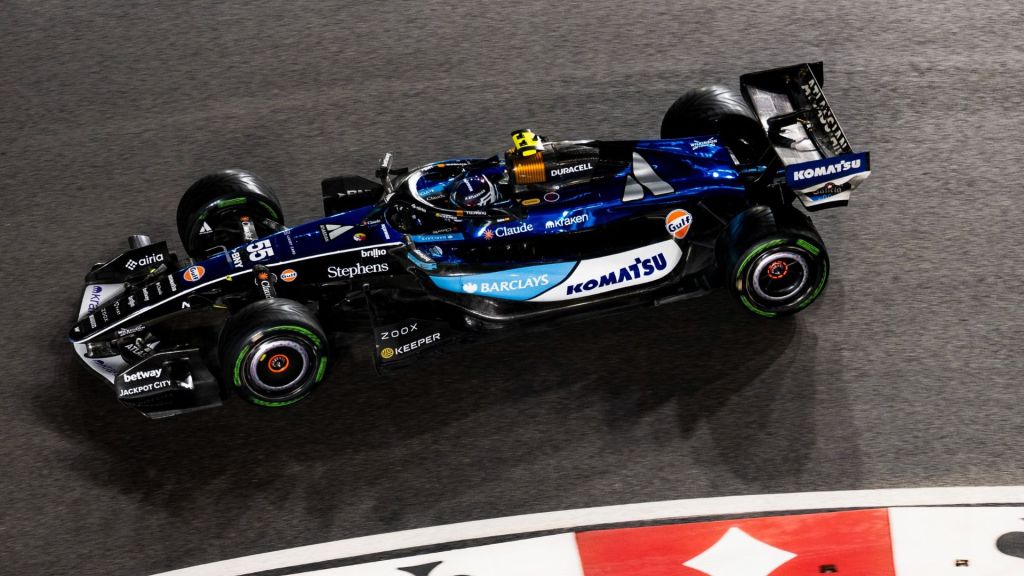
The agreement includes a financial sanction and a reduction in the team’s aerodynamic development allowance, affecting its preparation for the 2027 season.Williams loses 1.5% of wind tunnel and CFD testing
The sporting penalty will reduce the amount of aerodynamic development work Williams can perform during the next 12 months.
“The agreed outcome is a financial penalty and a 1.5% reduction in wind tunnel and CFD testing over the next 12 months,” the team confirmed.
Wind tunnel running and computational fluid dynamics are central to Formula 1 car development. Teams use both methods to evaluate aerodynamic components, optimise airflow and assess potential improvements before bringing new parts to the circuit.
The restrictions come during an important period for Williams, which has struggled to match the development pace of its midfield rivals during 2026.
Carlos Sainz recently questioned how McLaren and Red Bull continued introducing upgrades while Williams had exhausted its development budget.
The additional testing reduction will affect the resources available to Williams as it attempts to improve its competitiveness under Formula 1’s current technical regulations.Williams explains £627,000 overspend
The team attributed the breach to the accounting treatment of expenses associated with changes to its corporate structure.
Williams had initially considered those administrative costs to fall outside Formula 1’s spending limit. However, following discussions with the FIA, the team accepted that the expenses should have been included.
“The breach relates to administrative costs we incurred making changes to our company structure,” Williams explained.
“We believed these costs fell outside of the cap. Following discussions with the FIA, we have agreed to resolve the matter in line with their interpretation that the costs should have been in cap.”
The £627,000 excess represents less than half of one per cent of the permitted spending limit.
However, Formula 1’s financial regulations distinguish between compliant spending and breaches according to the applicable accounting requirements, regardless of whether the expenditure directly improves the performance of the car.FIA finds no sporting or financial advantage
Williams emphasised that the FIA had not identified any competitive benefit arising from the accounting breach.
“The FIA has noted that Williams did not gain any sporting or financial advantage, and nor did we ever seek to,” the team stated.
“It has also noted that we acted cooperatively and in good faith throughout the review process.”
The Accepted Breach Agreement allows the FIA and the team to resolve the case without proceeding to a full hearing before the Cost Cap Adjudication Panel.
The framework permits financial penalties and certain sporting sanctions for minor overspending and procedural infringements.
Williams has accepted the outcome and will serve the reduction in aerodynamic testing over the prescribed period.Williams closes case ahead of 2027 development
The sanction arrives as Williams prepares for another season under Formula 1’s current technical regulations.
The Grove-based team has endured a difficult 2026 campaign, with Sainz and Alexander Albon struggling to compete consistently against the leading midfield teams. Williams has also faced questions about its development strategy and the resources allocated to improving its car.
The team concluded its statement by emphasising its commitment to the financial regulations.
“Integrity is central to what Williams stands for and we can now close this case and remain focused on our future,” Williams said.
“We have always been and will continue to be strong supporters of the Cost Cap, which naturally requires accurate policing to be effective.”FAQ How much did Williams exceed the 2025 F1 cost cap?
Williams exceeded the permitted spending limit by £627,000, equivalent to 0.48%.What penalties has the FIA imposed on Williams?
The team accepted a financial penalty and a 1.5% reduction in its wind tunnel and CFD testing allowance over the next 12 months.Why did Williams breach the cost cap?
The breach involved administrative expenses associated with changes to the team’s corporate structure. Williams initially considered those costs exempt from the cap, but accepted the FIA’s interpretation.

Understanding F1’s cost cap
Formula 1 introduced the cost cap in 2021, initially setting the spending limit at approximately US$145 million. The figure has since evolved, reaching US$215 million under the current framework.
However, not all team expenses are included in the calculation. Driver salaries, the wages of each team’s three highest-paid employees, travel expenses and certain marketing costs are among the exclusions.
Power unit manufacturers are subject to a separate financial limit, currently set at US$190 million.
Despite the introduction of spending restrictions, operating costs remain high, and teams continue to debate whether the current system adequately addresses the competitive gap across the grid.
Williams team principal James Vowles has previously questioned the effectiveness of the existing model, arguing that the performance gap between the top four teams and the rest of the field has increased since the cost cap was introduced.
Formula 1 is now considering a proposal for a tiered spending limit from 2027, an idea raised by Vowles that would give teams further down the grid greater financial flexibility.
GRANDE PRÊMIO is following every session of the 2026 championship, with full coverage, news and analysis of Formula 1.