News Summary
- Red Bull race engineer Tom Hart asked Verstappen to consider whether remaining in front at the final Overtake Mode detection point was the best strategy.
- Verstappen had already warned that Mercedes understood Red Bull’s electrical deployment pattern and could exploit it on the final lap.
- Antonelli’s battery-management problem eliminated the need for the gamble, allowing Verstappen to secure his fourth victory of 2026.
Max Verstappen almost faced an extraordinary decision during the closing stages of the Las Vegas Grand Prix: whether to deliberately allow Kimi Antonelli to take the lead in order to improve his own chances of winning.
Previously unaired radio communications, reported by Motorsport.com, revealed the extent of Red Bull’s concern over electrical energy deployment as Verstappen fought the newly crowned world champion.
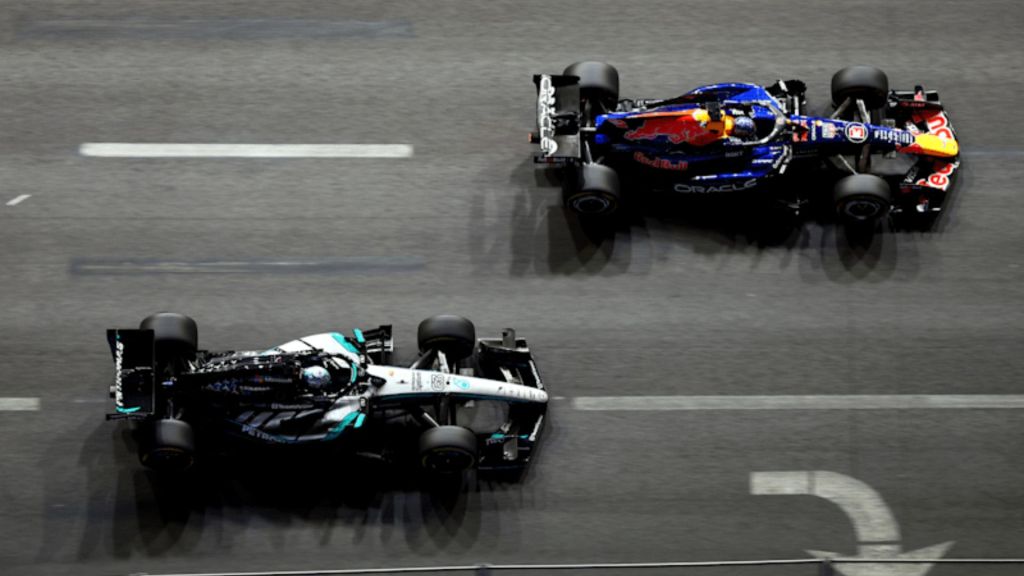
The discussion intensified during the final ten laps, with Antonelli repeatedly closing on the Red Bull and threatening to use the circuit’s powerful slipstream effect to his advantage.
Verstappen had already identified that Mercedes was beginning to understand his electrical deployment pattern, making the timing of the final overtake more important than simply remaining ahead throughout the lap.
“You guys have to look at the plan for the final lap,” Verstappen warned his engineers on lap 39.
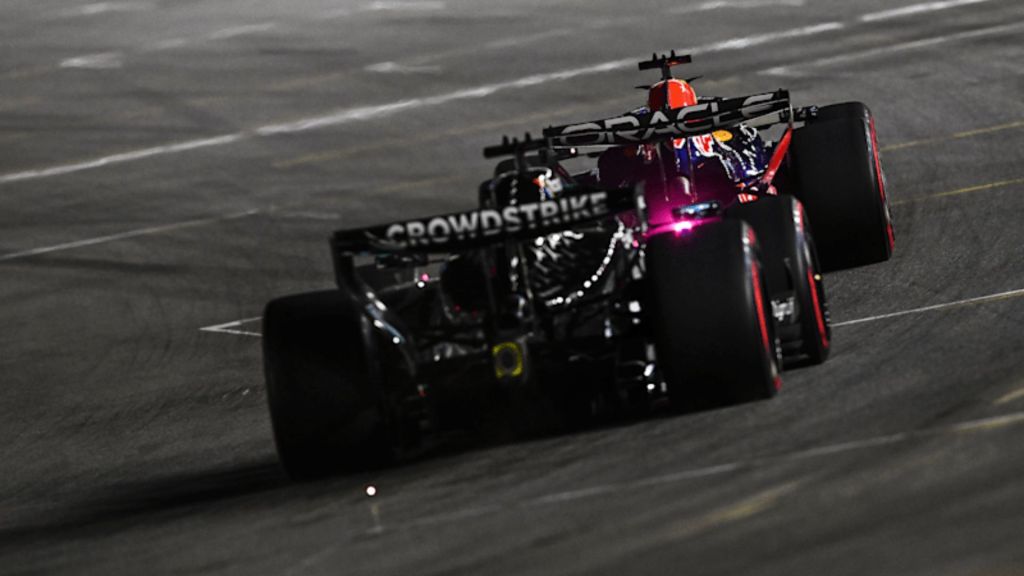
Red Bull searches for an alternative strategy
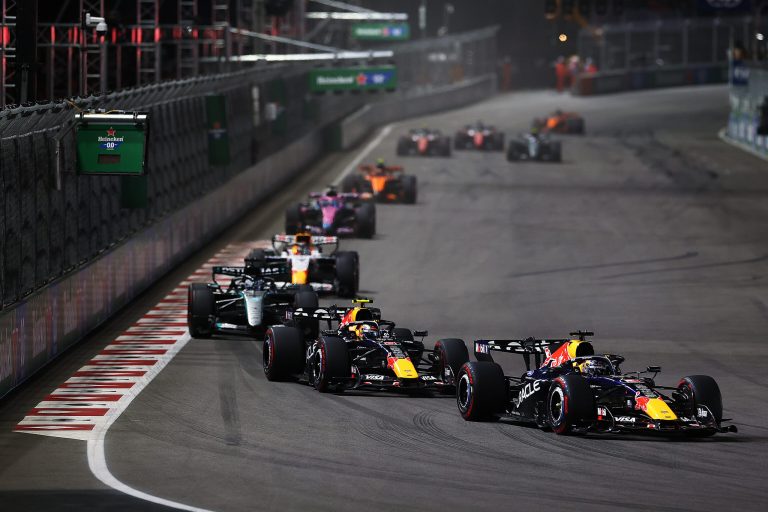
The unusual characteristics of the Las Vegas circuit created a race in which drivers repeatedly exchanged positions.
The long Strip straight, combined with electrical energy management and slipstreaming, made it possible for drivers to recover almost immediately after being overtaken.
That created a problem for Verstappen.
If he remained ahead at the wrong point of the final lap, Antonelli could gain access to extra electrical deployment and attack before the chequered flag.
Red Bull’s strategists spent several laps examining possible alternatives.
On lap 46, Hart informed Verstappen that the team had failed to identify a better energy-management solution.
“Deployment-wise, we don’t have anything better than the strategy you are doing at the moment,” Hart said.
Red Bull therefore continued using its established deployment settings while monitoring the gaps between the leading cars.
Hart asks Verstappen whether he wants to remain in front
The decisive communication came on lap 49, with Antonelli still close enough to threaten the race leader.
Hart provided the gaps to the pursuing drivers before raising the possibility of allowing another car ahead at the detection point.
“Just consider whether you want to be the lead car at the detection, Max,” the engineer said.
The instruction referred to Formula 1’s Overtake Mode rules.
At Las Vegas, a driver following within the required distance at the detection point could receive an additional 0.5 megajoules of electrical energy for the following lap.
That boost could be especially valuable on the long Strip straight.
For Verstappen, being second at the detection point might therefore have been more advantageous than leading, provided he could regain the position before the finish.
The strategy would have involved considerable risk.
Allowing Antonelli ahead could have improved Red Bull’s electrical advantage but would also have given the Mercedes driver track position at a critical stage of the race.
Antonelli’s battery problem changes the battle
Red Bull ultimately did not need to attempt the manoeuvre.
Antonelli was simultaneously trying to manipulate his own position relative to Verstappen to secure an advantage at the detection point.
The Mercedes driver briefly lifted and reapplied the throttle approaching Turn 14 on lap 49, attempting to remain behind Verstappen without losing too much momentum.
However, the manoeuvre unexpectedly disrupted his car’s energy-management system.
Antonelli exited the corner with no available battery energy and lost almost two seconds on the following straight.
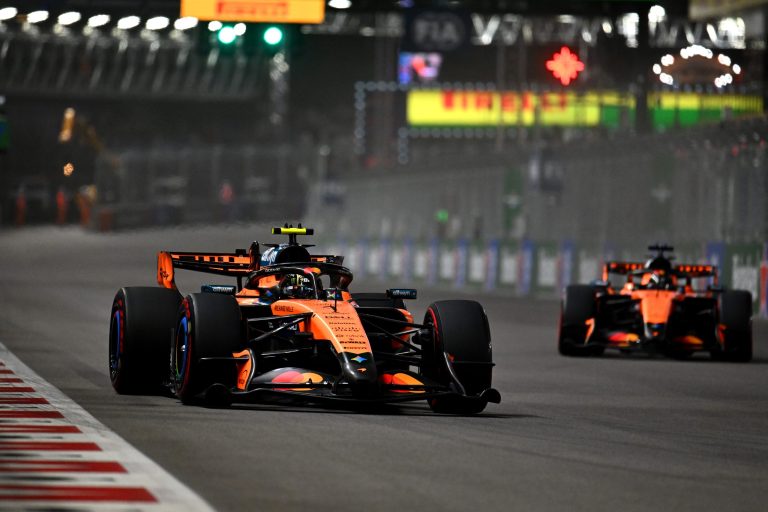
Lando Norris and Oscar Piastri immediately passed him, ending Mercedes’ opportunity to challenge Verstappen for victory.
The mistake transformed the final lap into a much more straightforward contest for the Red Bull driver.
Verstappen ultimately crossed the line 0.639 seconds ahead of Norris, while Antonelli finished fourth.
Radio reveals how Red Bull defeated Mercedes
The communications provide additional evidence of the tactical complexity behind Verstappen’s victory.
Former Formula 1 driver Juan Pablo Montoya had already highlighted how Red Bull deliberately sacrificed speed at certain points around the circuit to ensure stronger electrical deployment at the finish.
His analysis of Red Bull’s tactical advantage over Mercedes focused on the overall approach.
The newly revealed radio communications show the strategy being discussed in real time as the team considered a final change.
Verstappen’s victory also came after George Russell crashed while attempting to overtake Antonelli, removing another Mercedes contender.
The Red Bull driver subsequently criticised the repeated changes of position created by the current regulations, questioning whether such racing represented the type of competition Formula 1 should encourage.
FAQ
Did Red Bull ask Verstappen to give Antonelli the lead?
Race engineer Tom Hart asked Verstappen to consider whether he wanted to remain ahead at the final Overtake Mode detection point. The team did not ultimately surrender the lead.
Why could second place have been better than first?
A trailing driver could gain extra electrical energy through Overtake Mode, creating a potentially decisive advantage on the final lap.
Why did Antonelli fail to challenge Verstappen?
A throttle input disrupted his battery management, leaving him without sufficient electrical deployment. Both McLaren drivers passed him before the finish.