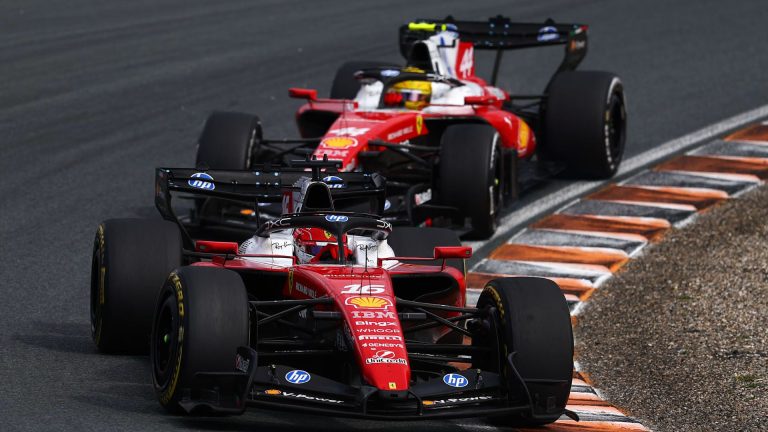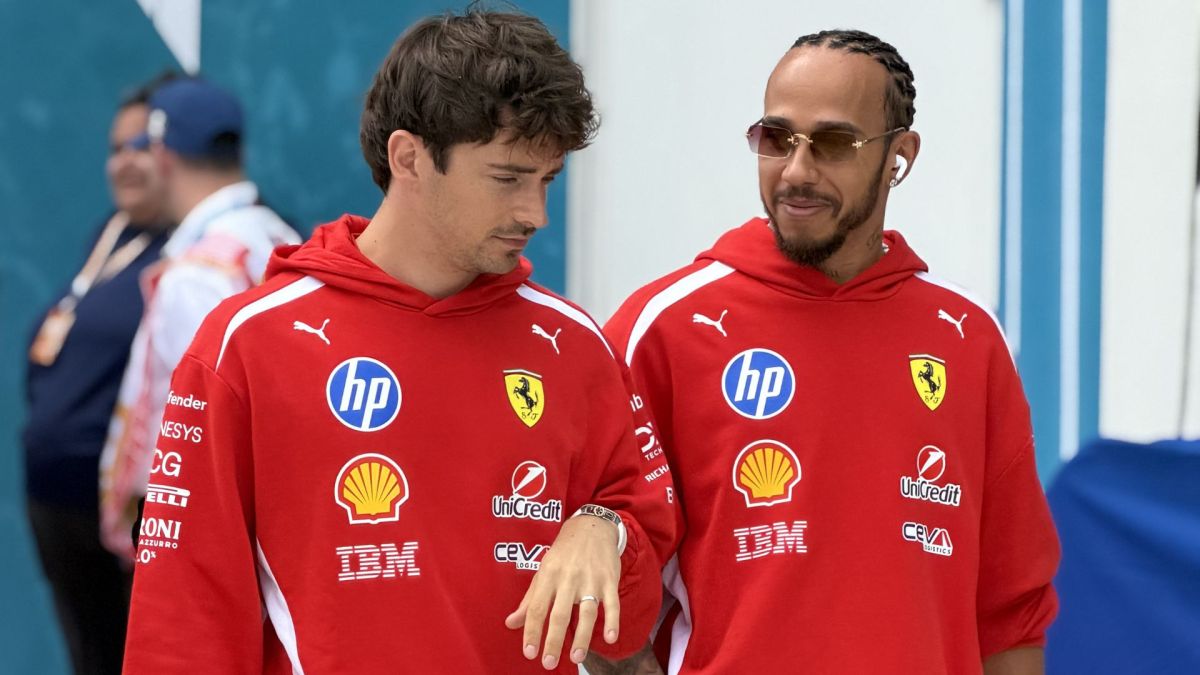
With Lewis Hamilton’s arrival at the start of the 2025 season, it was only natural for Charles Leclerc to lose some spotlight as Ferrari’s undisputed main figure. Not that Maranello sidelined the Monegasque—far from it, as his recent contract extension proved that the driver of car #16 remains the anchor for the team’s future. Yet, sharing a garage with one of the greatest drivers in motorsport history inevitably altered the internal dynamic.
While the seven-time World Champion struggled to reach his potential last year, 2026 began on a vastly different note. With the introduction of the new regulation cycle—free from the ground-effect phenomena that plagued his previous four campaigns—the Briton took charge of SF-26 development and achieved a milestone in China, round two of the season, by securing his first podium in red overalls. Amid early Mercedes dominance, he was also the first driver to break Andrea Kimi Antonelli and George Russell’s stranglehold by taking victory in Catalunya.
Although Hamilton assumed Ferrari’s spotlight at key moments, Leclerc’s campaign up to this point has hardly lagged behind. The Monegasque actually opened the year ahead of his teammate, mounting a brief challenge for the win in the opening laps of the Australian GP before settling for third. In Shanghai, both drivers secured top-three finishes in the Sprint, though it was car #44 that claimed the Sunday podium.
At the Japanese GP, Charles returned to the top three while Lewis crossed the line in sixth. Nearly a month later—after F1 postponed the Bahrain and Saudi Arabian GPs due to Middle East conflicts—both left the Miami GP weekend tied on points. In short, as Frédéric Vasseur’s squad worked to close the gap to Mercedes, it benefited from two drivers operating at closely matched performance levels.
The dynamic shifted noticeably at the Canadian GP, where Leclerc began encountering brake issues aboard the SF-26. In Montreal, damage control limited the fallout as he capitalized on Russell’s DNF to take fourth. However, a major red flag emerged: the gap to Hamilton in second was 34 seconds—the widest margin between the pair across the opening 11 rounds of 2026.
The situation deteriorated two weeks later in Monaco. At his home event, car #16 raised concerns over brake feel from early practice, noting that car balance “changed in every corner,” stripping away the confidence required to push to the limit on the narrow streets of Monte Carlo. Those fears materialized on Sunday: during the Safety Car restart following Lance Stroll’s crash, the Monegasque—then running third—hit the wall at Turn 18. While track surface degradation drew attention, the Ferrari driver laid full blame on the car’s mechanical system.
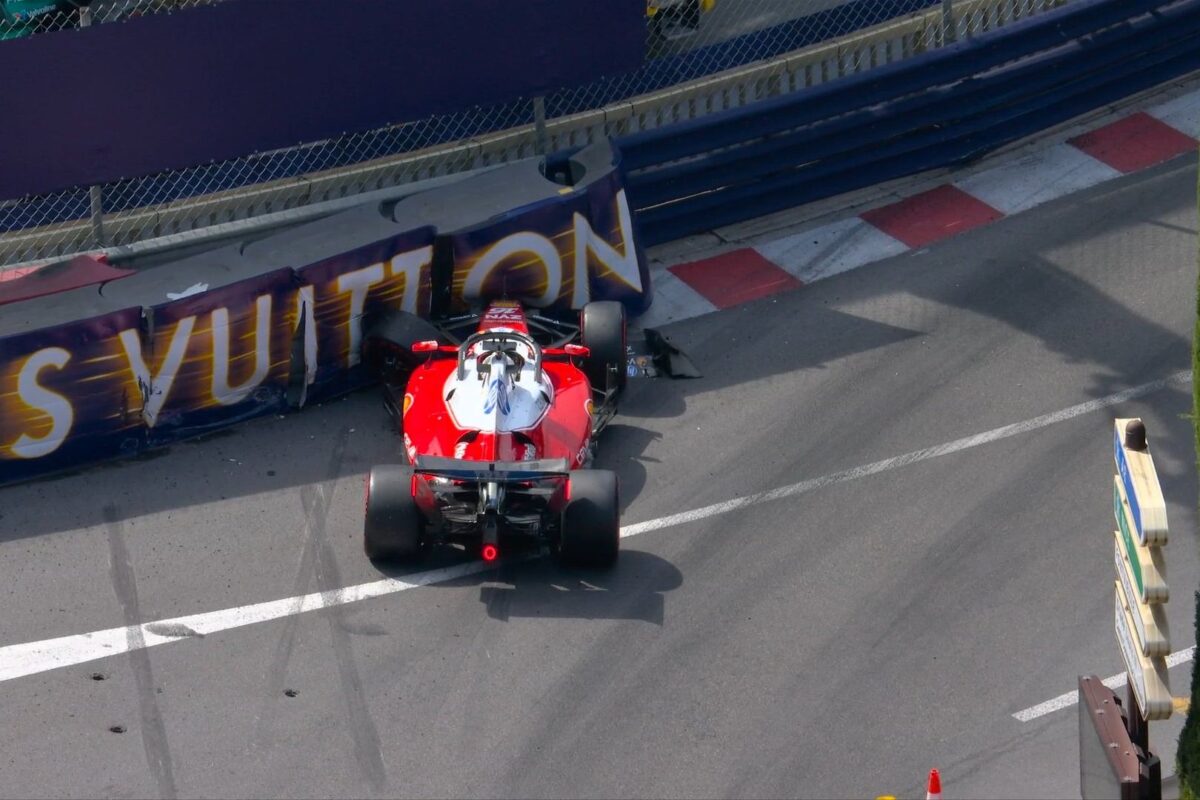
“Out of four brakes, three were not working. In an F1 car, that is never a good thing. The front-left was working fine. The front-right was only partially working, and both rear brakes weren’t working at all. When I say ‘not at all,’ I mean the data showed zero deceleration. It was as if the calipers weren’t even on the car. So that’s a major issue,” he stated at the time. Ferrari’s brake supplier, Brembo, expressed surprise at the public criticism.
In an effort to resolve the issue permanently, Leclerc and the team opted to switch to Carbon Industrie discs and pads from the Spanish GP onward—a direction Hamilton had already taken since Japan after testing the components in practice. At the Spanish venue, progress held until Q3, where a qualifying error consigned Leclerc to a 10th-place start. On Sunday, a hydraulic failure forced a lap-63 retirement.
Despite the setback, the brake issues appeared resolved. At the Austrian GP, Ferrari struggled overall: despite qualifying second and third, both cars lost pace on Spielberg’s hot asphalt, failing to match Mercedes, Red Bull, or McLaren. However, greater apprehension surrounded the long straights of Silverstone, a layout poised to highlight power unit limitations.
Surprising paddock consensus and Ferrari itself, the SF-26 displayed remarkable race pace in Great Britain. While Leclerc benefited from Mercedes’ reliability woes—which thwarted Antonelli’s late attack—he took the checkered flag in first place. Fortune aside, one factor was clear: beyond resolving the brakes, key setup revisions over the weekend restored Leclerc’s confidence in the car’s handling, thrusting him back into direct contention against Hamilton for team leadership.

Spa-Francorchamps provided further validation on a layout inherently unfavorable to the car. From practice through qualifying, the red machine showed genuine underlying speed. Starting fourth, the Monegasque surged to second down the Kemmel Straight and briefly inherited the lead under Virtual Safety Car conditions. While lacking the overall package to hold off the Mercedes, his second-place finish in Belgium revitalized his 2026 campaign.
The Hungarian GP appeared to offer the ideal venue to capitalize on that momentum. Following strong showings on power-sensitive tracks, Budapest’s tight, twisty layout aligned with Ferrari’s strengths to close out the first half of the season. However, after dominating Friday practice, the weekend unraveled in FP3 as Lando Norris and McLaren took control, setting up the reigning champion’s first victory of 2026.
Leclerc subsequently questioned the team’s operational consistency. Among the top four teams, Ferrari has suffered the fewest reliability failures, yet has struggled to maximize points when opportunities present themselves. Driver execution also played a role, notably in Hungary, where neither driver was able to clear Max Verstappen during the opening stints despite Red Bull’s handling issues.
The central question moving forward is how the battle between Leclerc and Hamilton will unfold across the remaining races. Internal leadership battles remain a defining element at Ferrari, particularly as the team tracks toward recovery. While the squad has suffered operational missteps, upcoming update packages could allow them to challenge Mercedes more consistently. In that context, Charles delivered a firm response in the intra-team battle.
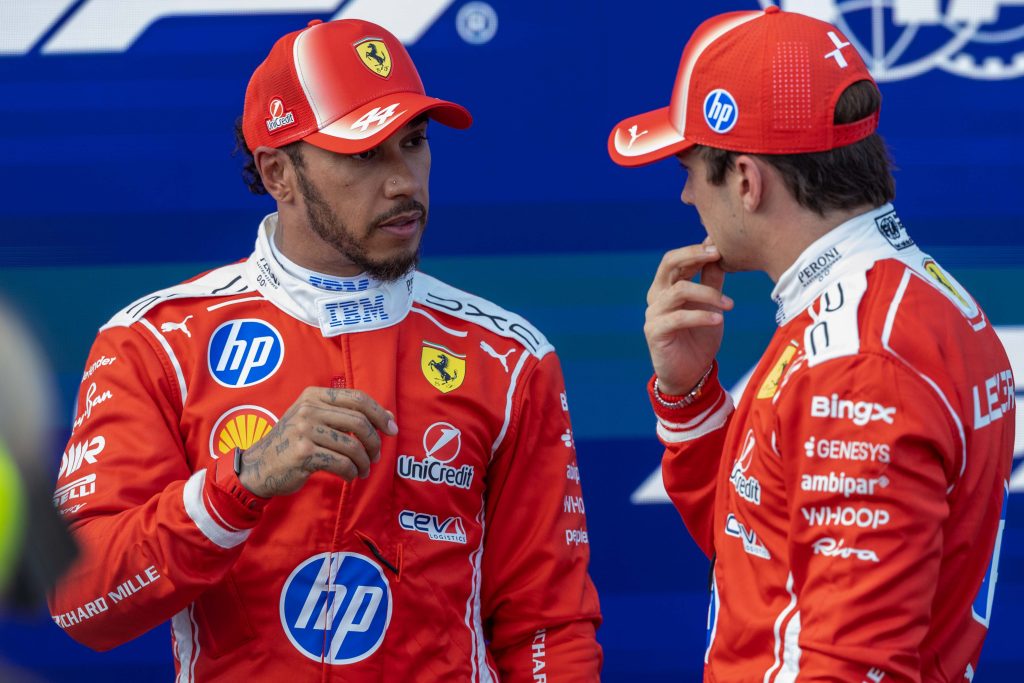
If team management had considered prioritizing Hamilton in the pursuit of Antonelli, that decision has been put on hold. While the seven-time champion retains a 31-point advantage in the standings (169 vs. 138), Leclerc has outscored his teammate 59 to 44 over the last three rounds as his comfort with the SF-26 improved—a performance profile aligned with his output during their first year together in 2025.
The head-to-head comparison remains close. Excluding Sprints, Leclerc leads the qualifying head-to-head 6–5, while Hamilton holds five podiums to Leclerc’s four. Both drivers have scored points in every race they have finished, claiming one victory apiece. The dynamic will be tested further from the Dutch GP onward, particularly at Monza before the tifosi, where internal standing carries significant weight.
While Lewis has demonstrated a return to peak form under the 2026 technical regulations, Charles remains a central force within the team. Since assuming the role of Ferrari’s primary driver in 2019, he has consistently extracted maximum performance despite lacking a complete championship-caliber package over a full season. Having refined his approach to minimize costly errors, he remains a benchmark capable of pushing Hamilton. Ultimately, that internal pressure serves Ferrari’s broader ambitions.
Formula 1 is currently on summer break. The series resumes 2026 season action from August 21 to 23 with the Dutch Grand Prix at Zandvoort.