News Summary
- Formula 1 will contest six Grands Prix in seven weeks between Azerbaijan and São Paulo
- The sequence offers 158 points, including eight from the final Sprint of 2026 in Singapore
- George Russell and Charles Leclerc are among the drivers facing possible power-unit penalties
Formula 1 is about to discover which teams are genuinely prepared for the decisive phase of 2026.
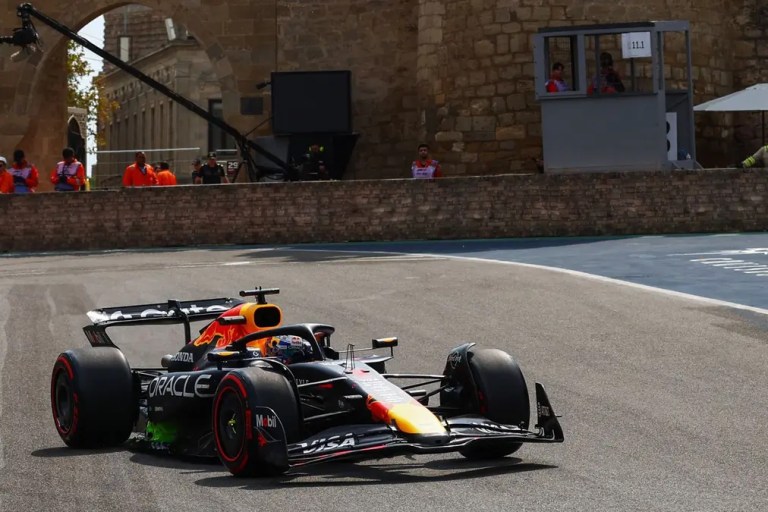
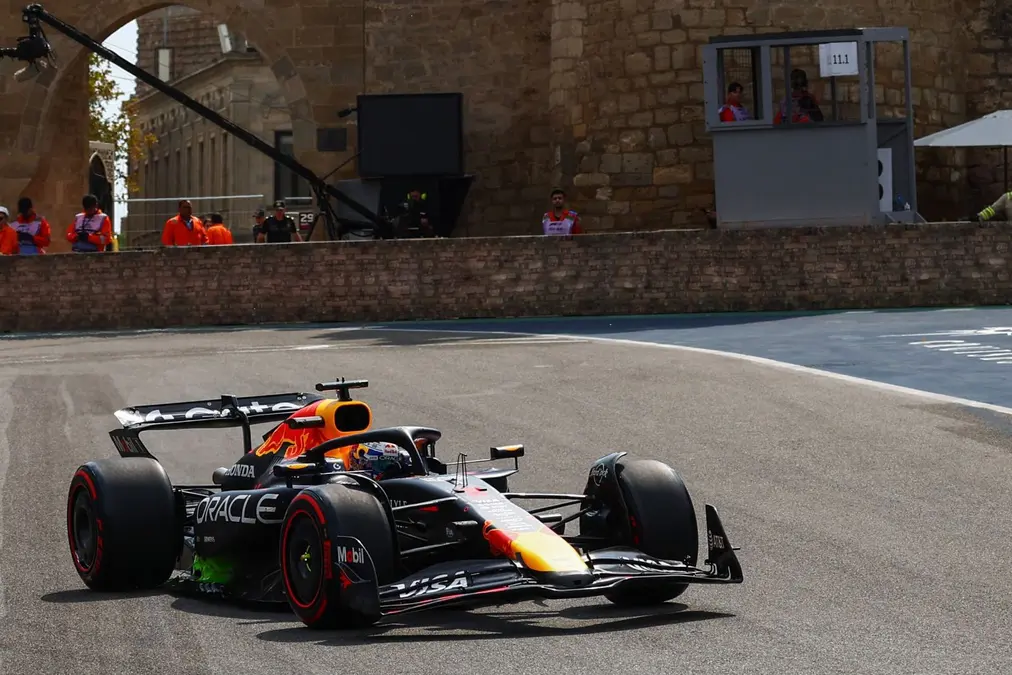
Beginning in Azerbaijan, the championship will contest six Grands Prix in seven weeks. Baku, Malaysia and Singapore form the first triple-header, followed by one weekend without racing before another three-round sequence in Austin, Mexico City and São Paulo.
There are 158 points available: 150 from the six Grands Prix and another eight from the Singapore Sprint. That is enough to settle the Drivers’ Championship—or punish any team whose reliability, development programme or personnel begins to crack under the schedule.
| Round | Date | Main challenge |
|---|---|---|
| Azerbaijan GP | September 24–26 | Energy recovery and 2.2km main straight |
| Bahrain GP in Malaysia | October 2–4 | Heat, rain and consecutive long straights |
| Singapore GP | October 9–11 | Sprint format and limited overtaking |
| United States GP | October 23–25 | High-speed balance and tyre management |
| Mexico City GP | October 30–November 1 | Cooling and power-unit performance at altitude |
| São Paulo GP | November 6–8 | Elevation changes and unpredictable weather |
Antonelli has the title—but not yet the trophy
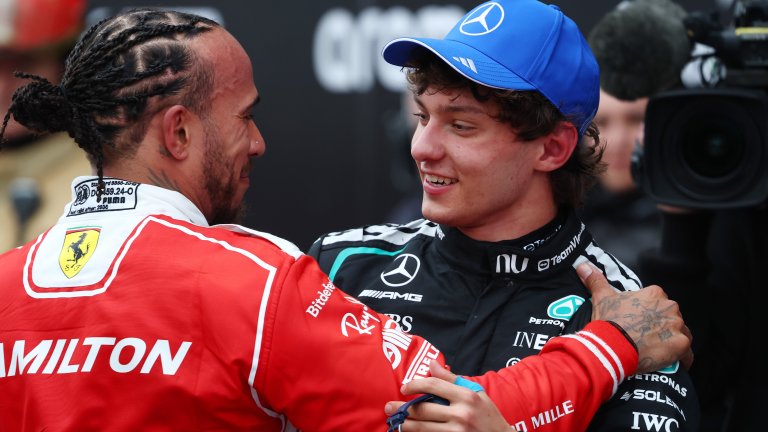
Kimi Antonelli begins the sequence with 292 points, 81 ahead of Mercedes team-mate George Russell. The Italian has won eight of the opening 14 Grands Prix and could mathematically secure the championship as early as Singapore.
To do so, Antonelli would need to leave Marina Bay at least 151 points clear of every rival. That would require an extraordinary collapse from Russell across Baku, Sepang and Singapore, but the calculation illustrates how firmly Antonelli controls the title.
The more realistic question is whether the championship reaches the American rounds. As GRANDE PRÊMIO’s title calculations show, Antonelli does not need to keep winning. Regular podiums and finishes ahead of Russell may be enough.
Mercedes also leads the Constructors’ Championship with 503 points, but it is not protecting that advantage conservatively. A major W17 upgrade is planned for Sepang, while an authorised power-unit development could appear during the opening triple-header.
Engine penalties could reshape the order
The title battle is not solely about performance. Power-unit allocations are becoming increasingly important after a season of reliability problems and tactical component changes.
Russell has reached the permitted limit for his internal combustion engine, turbocharger, exhaust system, energy store and control electronics. Mercedes chose Monza to introduce new components for Antonelli, who recovered from 19th to win, but has yet to select the best event for Russell to absorb a likely penalty.
Ideally, Mercedes would wait until its revised power unit is available before introducing new components. That would allow Russell to serve one grid penalty while gaining the latest specification.
Charles Leclerc faces a similar decision. Ferrari initially considered Austin as the most suitable venue, but could bring the change forward to Baku.
The concern followed Leclerc’s Monza accident, although Ferrari recovered the upgraded engine fitted to his car. The team plans to use that unit during practice to confirm it has not suffered hidden damage.
Ferrari is nevertheless considering fitting another power unit in Azerbaijan, potentially costing Leclerc at least ten grid positions. As Frédéric Vasseur previously explained, Baku’s enormous straight makes recovery more realistic than at circuits where overtaking is harder.
Under the regulations, exceeding the allocation for the first time produces a ten-place penalty for each relevant component. Further excess components carry five-place penalties, while a combined sanction exceeding 15 places sends the driver to the back of the grid.
Six circuits—and no universal favourite
The variety between the six venues prevents one car from carrying a clear advantage throughout the sequence.
Baku and Sepang place significant emphasis on energy management. Singapore reduces conventional preparation to one practice session before Sprint qualifying and should reward strong low- and medium-speed performance.
Austin is expected to become the final major development deadline for several teams. Mexico City then creates a unique engineering problem at 2,285m above sea level, where thin air affects aerodynamic load, engine cooling and turbo performance.
Interlagos ends the run with its combination of elevation changes, heavy braking and unstable weather. Unlike recent seasons, São Paulo will not host a Sprint in 2026.
McLaren views Sepang, Austin and São Paulo as better opportunities than Baku for the MCL40. Ferrari intends to introduce smaller mechanical and aerodynamic changes throughout the closing races, while Red Bull may be the first leading team to redirect its attention fully towards 2027.
That leaves Mercedes in the strongest position, but not an invulnerable one. Over the next seven weeks, outright pace will matter less if reliability problems, grid penalties and exhausted personnel prevent teams from using it.
Formula 1 returns with the Azerbaijan GP from September 24–26. The race will take place on Saturday, with the start scheduled for 12:00 UK.
GRANDE PRÊMIO provides complete coverage of Formula 1.
F1 today: FAQ
When is the next Formula 1 race?
The next race is the 2026 Azerbaijan Grand Prix at the Baku City Circuit on Saturday, 26 September.
Why is the 2026 Azerbaijan Grand Prix being held on Saturday?
The race was moved forward to avoid Azerbaijan’s national Remembrance Day on Sunday, 27 September. Practice begins on Thursday, with qualifying on Friday and the Grand Prix on Saturday.
Who leads the 2026 Formula 1 championship?
Kimi Antonelli leads the Drivers’ Championship with 292 points. Mercedes teammate George Russell is second on 211, leaving Antonelli 81 points ahead with nine rounds remaining.
How many points are available during F1’s six-race run?
A maximum of 158 points is available: 150 from six Grand Prix victories and eight from winning the Singapore Sprint.