News Summary
- Mercedes held the fastest estimated race pace, with McLaren only 0.05s per lap behind.
- Red Bull and Ferrari followed at 0.30s and 0.34s respectively.
- Russell starts from pole, but tyre degradation, slipstream and Safety Cars could reduce Mercedes’ advantage.
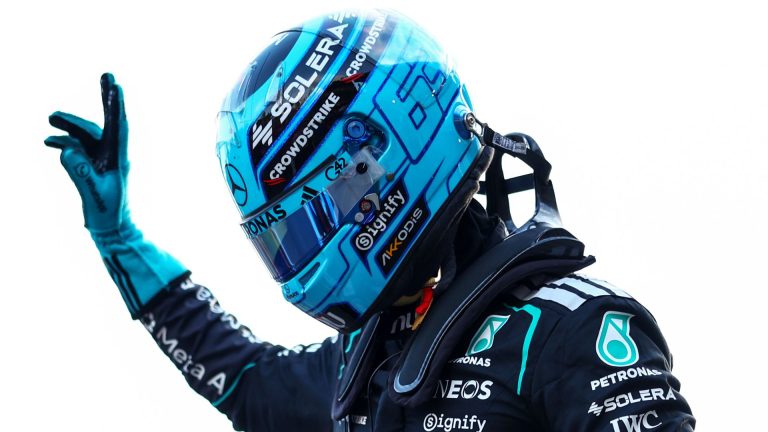
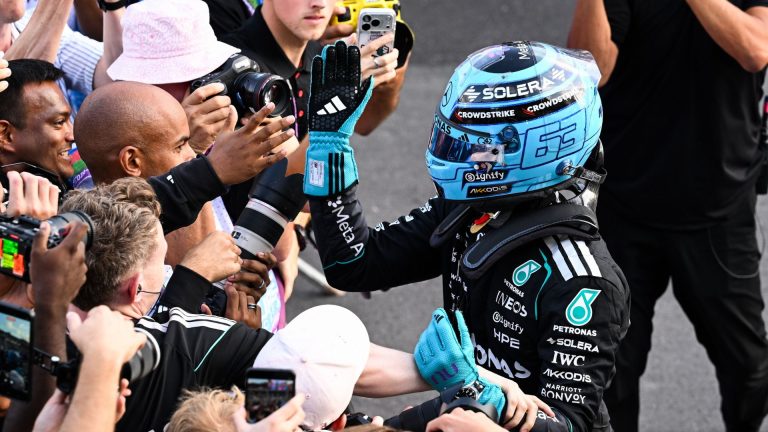
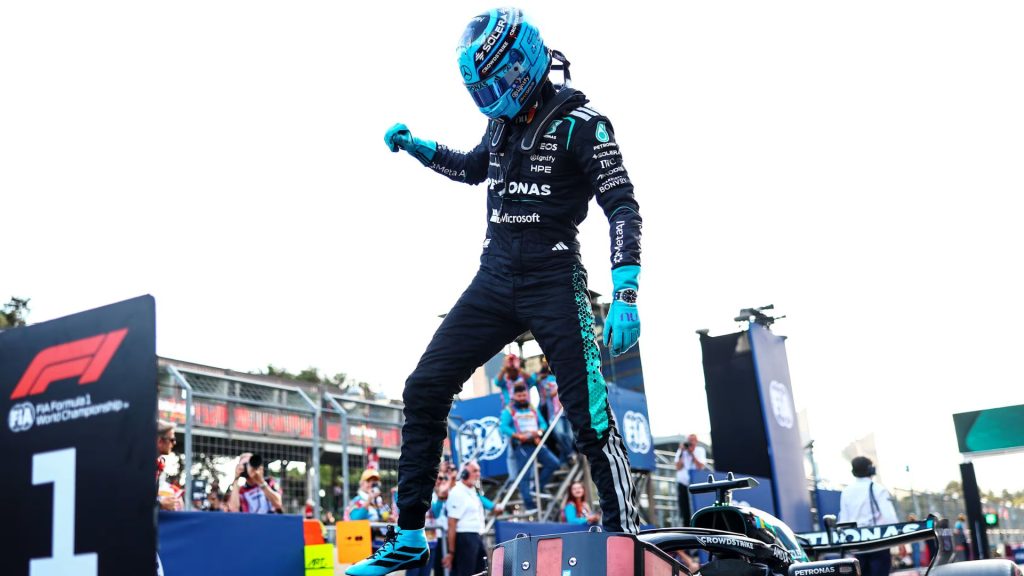
George Russell crushed his rivals by more than eight-tenths in Azerbaijan GP qualifying, but the available race simulations point to a far more competitive Grand Prix.
According to the long-run data compiled by F1, Mercedes held the fastest estimated race pace, but McLaren trailed by only 0.05s per lap. Red Bull was 0.30s behind, with Ferrari only another 0.04s further back.
The numbers suggest that Russell’s extraordinary 0.837s qualifying advantage should not be treated as Mercedes’ expected race margin.
Estimated Azerbaijan GP race pace
| Pos. | Team | Estimated gap |
|---|---|---|
| 1 | Mercedes | — |
| 2 | McLaren | +0.05s per lap |
| 3 | Red Bull | +0.30s per lap |
| 4 | Ferrari | +0.34s per lap |
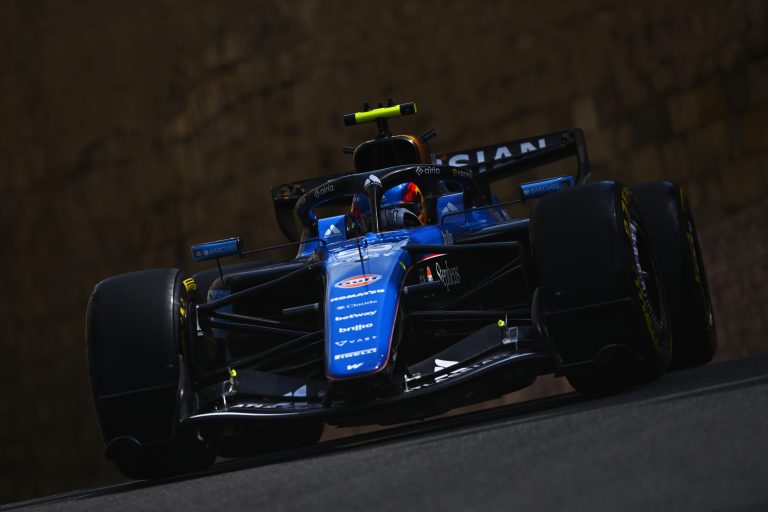
| 5 | Alpine | +0.99s per lap |
These figures are based on practice long runs rather than equal fuel loads or identical tyre programmes. They provide an indication of the competitive order, not a guaranteed race result.
McLaren much closer over a race distance
McLaren’s qualifying deficit looked severe. Oscar Piastri finished 0.838s behind Russell, while Lando Norris was fifth and 1.146s off pole.
The long-run numbers tell a different story. At an estimated deficit of only 0.05s per lap, McLaren would lose approximately 2.55s over the full 51-lap distance if the gap remained constant.
Piastri starts third, immediately behind Charles Leclerc, and therefore remains close enough to pressure Russell strategically. Norris faces a harder task from fifth, especially after warning that his car’s straight-line speed deficit could make a podium “impossible”.
Ferrari has track position but weaker long-run pace
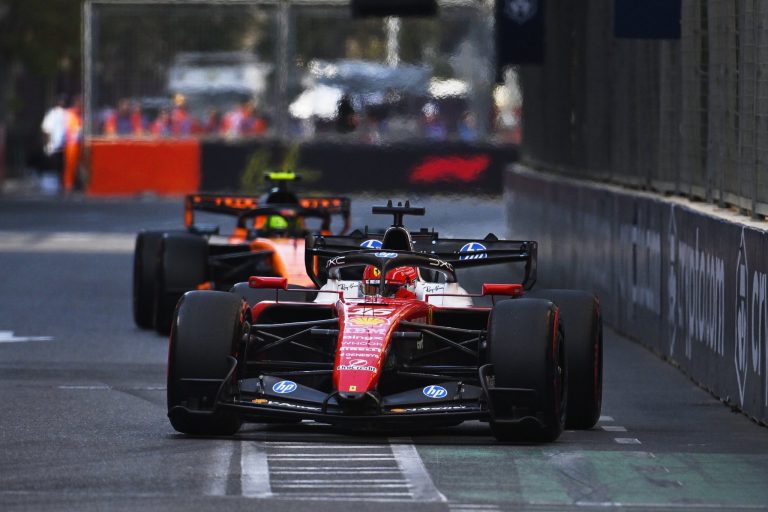
Leclerc starts alongside Russell after beating Piastri by only 0.001s. Ferrari’s estimated race deficit of 0.34s per lap, however, places it behind both McLaren and Red Bull.
Over 51 laps, that theoretical difference would amount to more than 17 seconds. The calculation is deliberately simplistic because fuel use, tyre wear, traffic and Safety Cars will alter the race, but it illustrates why Leclerc may need to prioritise track position and defensive energy deployment.
Hamilton starts sixth and faces a similar challenge. He will need to pass Norris while preventing Verstappen from using Red Bull’s stronger projected race pace behind him.
Verstappen starts eighth with recovery potential
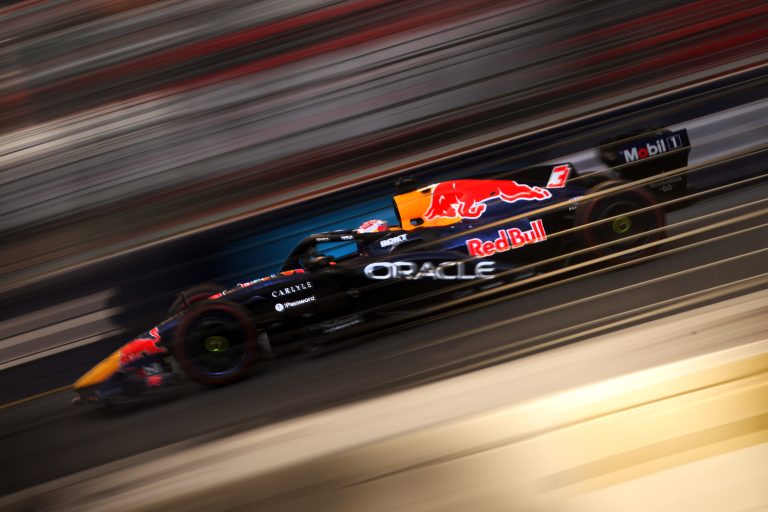
Red Bull ranked third in the simulations, approximately 0.30s per lap behind Mercedes and 0.25s slower than McLaren.
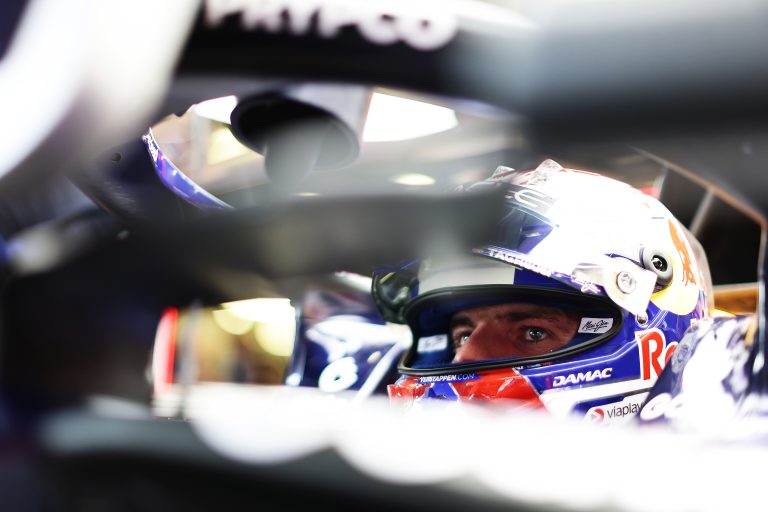
Max Verstappen qualified only eighth after producing a slower Q3 lap than his Q2 benchmark. His race pace should allow him to attack the cars immediately ahead, but Baku’s long DRS trains can neutralise a theoretical performance advantage.
Isack Hadjar is better positioned in fourth. Starting between Piastri and Norris gives the returning Red Bull driver an opportunity to challenge for the podium if he can remain within the leading group.
Antonelli has the fastest car—but starts 16th
Kimi Antonelli’s crash creates the largest strategic variable. The championship leader starts 16th in a Mercedes that appears to possess both the best qualifying performance and the strongest long-run pace.
Antonelli therefore has the machinery to recover, but must clear midfield traffic without damaging his tyres or consuming too much electrical energy. A well-timed Safety Car could bring him back into contention, while an uninterrupted race would make progress more difficult.
The Italian accepted responsibility for the Turn 1 accident and said he was “very, very mad” about the unnecessary mistake.
Why Russell remains the clear favourite
Russell combines pole position, the fastest car over one lap and the strongest estimated long-run pace. His primary objective will be to escape DRS range before the system becomes available and deny Leclerc or Piastri a tow along Baku’s main straight.
McLaren represents the greatest underlying race threat, but neither car starts on the front row. Ferrari has better immediate track position but appears less competitive over a full stint, while Verstappen must recover from eighth.
Russell therefore begins as the clear favourite, although Baku’s frequent Safety Cars and powerful slipstream can erase even a well-established advantage.
GRANDE PRÊMIO follows every session of the Azerbaijan GP LIVE and in REAL TIME.
F1 today: FAQ
What time does the 2026 Azerbaijan GP start?
The race starts on Saturday, September 26, at 12:00 UK time. It begins at 07:00 ET and 04:00 PT in the US, 16:30 in India and 21:00 AEST in eastern Australia.
Who starts on pole for the Azerbaijan GP?
George Russell starts from pole for Mercedes, ahead of Charles Leclerc and Oscar Piastri. Isack Hadjar qualified fourth, followed by Lando Norris and Lewis Hamilton.
Why is the Azerbaijan GP being held on Saturday?
The race was moved to Saturday because Sunday, September 27, is Azerbaijan’s Remembrance Day, a national day of mourning. The entire F1 weekend was brought forward by one day.
Which team has the best race pace in Baku?
Mercedes held the fastest estimated race pace, followed by McLaren at 0.05s per lap.