News Summary
- Ferrari finished third and fourth at Sepang despite compromising both cars with its opening tyre decision
- Lewis Hamilton recovered from more than a minute behind, while Charles Leclerc believes Red Bull has become the new benchmark
- Ferrari has seven rounds left to prove its improved SF-26 can finally turn competitive pace into a 2026 victory
Ferrari left Sepang without a victory, yet perhaps with something almost as important for the final phase of the 2026 Formula 1 season: evidence that the SF-26 may finally be capable of fighting for one.
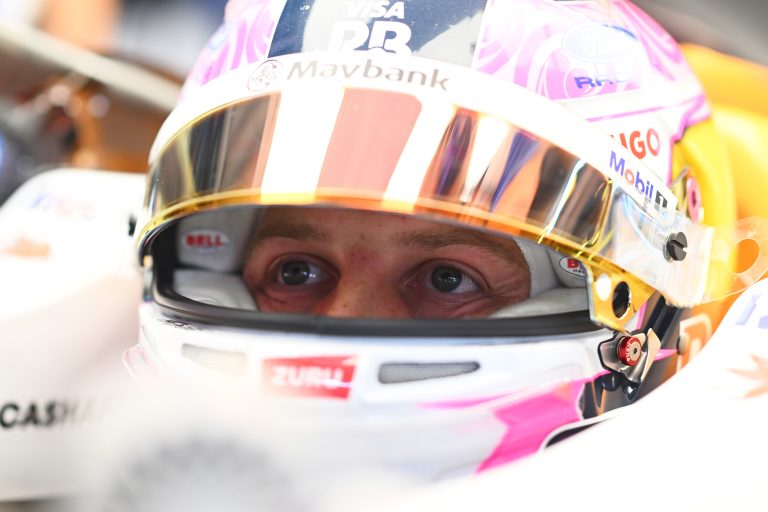
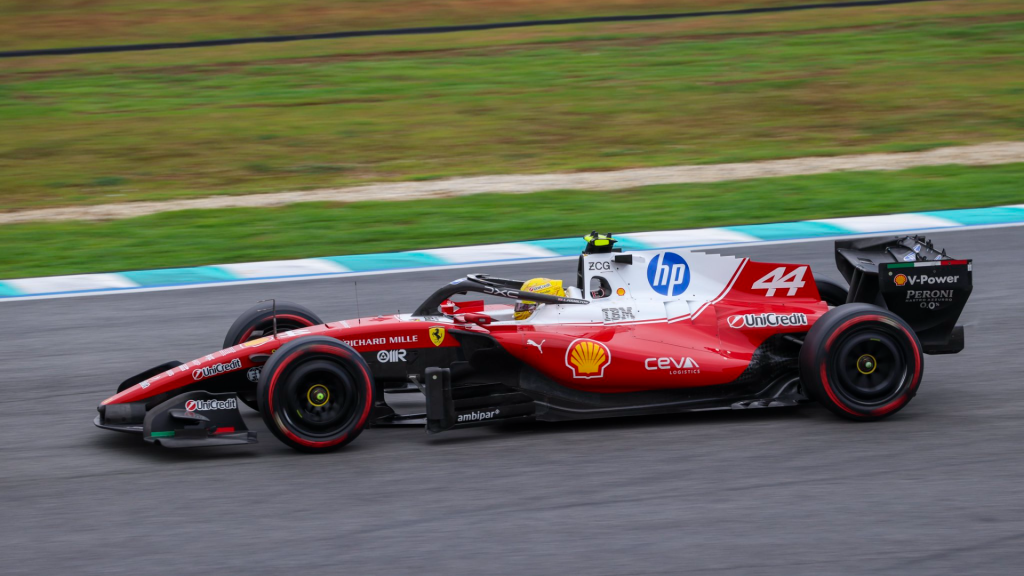
Lewis Hamilton started second and eventually finished third despite falling more than a minute behind during a chaotic opening phase. Charles Leclerc completed Ferrari’s recovery in fourth, giving the team two cars immediately behind Max Verstappen and Kimi Antonelli.
The result alone does not make Ferrari a race-winning force. Sepang featured changing weather, contrasting tyre strategies and a late Safety Car, while Verstappen controlled the decisive phase well enough to deliver Red Bull Ford Powertrains its first victory.
But the underlying Ferrari performance was considerably more encouraging than third and fourth suggest. Hamilton qualified on the front row. Both cars recovered strongly after starting on slick tyres when intermediates remained the better choice. And Ferrari showed enough pace throughout the weekend to leave Malaysia wondering what might have happened in a conventional race.
With seven rounds remaining, that question now follows the Scuderia to Singapore.
Hamilton’s recovery revealed Ferrari’s real pace
Hamilton’s Sunday initially appeared to be over almost as soon as it began.
Ferrari committed both cars to slick tyres on a circuit that remained too wet, sending Hamilton tumbling down the order. At one stage, the seven-time world champion was more than one minute behind the leaders. He still finished third.
The late Safety Car played an important role in compressing the field, but Hamilton had already produced a substantial recovery before that intervention. His pace raised the obvious question of whether Ferrari had sacrificed a genuine opportunity by choosing the wrong tyre at the start.
As GRANDE PRÊMIO examined after the race, Hamilton himself believed an intermediate-tyre start would have put him in contention at the front, although he stopped short of claiming Ferrari would have beaten Verstappen. That distinction remains important.
There is no evidence that Hamilton definitely would have won at Sepang. But a car capable of recovering from that deficit to the podium is considerably more competitive than Ferrari had often been earlier in 2026. The question is whether Malaysia represented the beginning of a trend.
Leclerc sees Red Bull as the benchmark
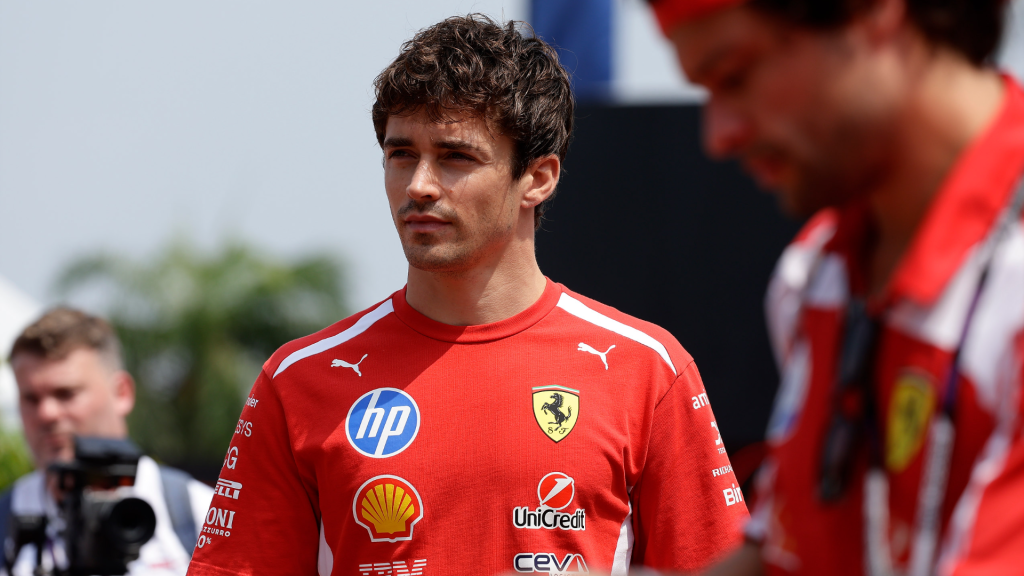
Leclerc’s assessment after Sepang provided another indication of how Ferrari views the competitive order.
Rather than focusing exclusively on Mercedes, the Monegasque pointed towards Red Bull and Verstappen after their Malaysian breakthrough.
Red Bull’s recent development has changed the reference point at the front. The RB22 had already shown progress before Sepang, but pole position and victory provided the first definitive evidence that the team had transformed that improvement into a complete race weekend.
Ferrari now needs to determine whether it has made a comparable step. Leclerc acknowledged Red Bull’s progress while Ferrari faced fresh questions over its own race decisions, adding another layer to a season in which the SF-26’s underlying speed has not always translated into results. That has arguably been Ferrari’s defining frustration in 2026.
There have been weekends when strategy has intervened, others when qualifying compromised the race and occasions when the car simply lacked enough performance. Sepang was different because Ferrari had the starting position and apparent race pace to fight at the front, yet still left without testing its true potential against Verstappen.
Why Ferrari’s improvement matters now
The timing is intriguing even if it has come too late for Ferrari to control the championship.
Hamilton sits third in the Drivers’ standings with 214 points, behind Antonelli on 320 and Russell on 236. The 106-point deficit to Antonelli means Ferrari’s immediate priority is no longer simply championship arithmetic but converting its strongest performances into victories. There are seven rounds remaining.
That gives Ferrari enough time to establish whether Sepang was a circuit-specific peak or whether the SF-26 has genuinely entered the same competitive window as Mercedes and Red Bull.
McLaren’s recent decline makes that question even more significant.
Oscar Piastri admitted after Malaysia that McLaren is currently no longer operating at a level capable of fighting for victories. If Ferrari has moved in the opposite direction, the hierarchy that defined the first part of the season may no longer apply. Singapore provides the next comparison.
Singapore could tell Ferrari much more than Sepang
Marina Bay bears little resemblance to Sepang.
The Malaysian circuit combines long straights with medium and high-speed corners on an abrasive surface, while Singapore places greater emphasis on low-speed performance, traction, mechanical grip and confidence over bumps and kerbs. That makes the next round particularly useful for Ferrari.
If the SF-26 remains competitive on a fundamentally different circuit, the argument that Ferrari has made a genuine step becomes considerably stronger. If Hamilton and Leclerc fall back behind Mercedes and Red Bull, Sepang will look more like a particularly favourable combination of conditions. Ferrari will not be the only team using Singapore as a reference.
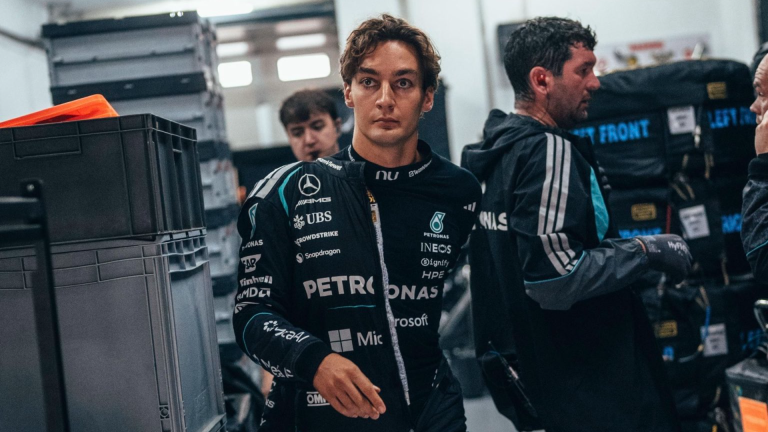
Red Bull also needs Marina Bay to establish whether Verstappen’s Sepang victory represented a genuine breakthrough or a one-off, while Mercedes arrives with questions over the upgrade package it introduced in Malaysia.
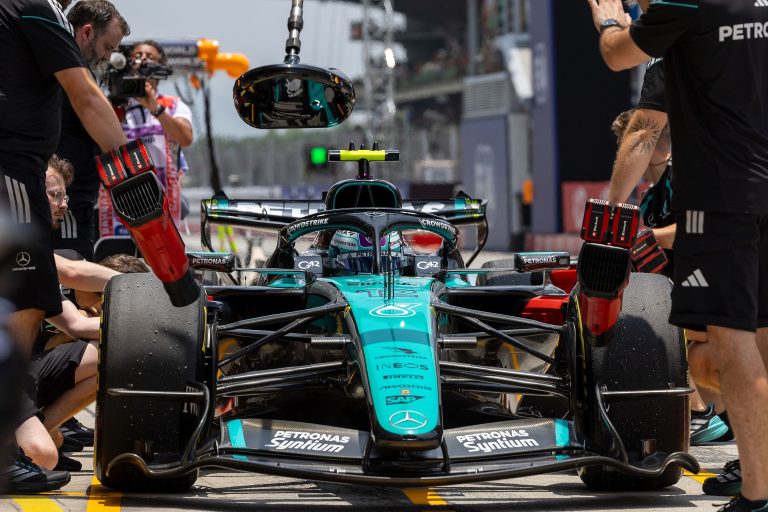
The championship leader is considering comparing different W17 specifications in Singapore after failing to establish whether its new package produced the expected improvement.
Singapore could therefore provide one of the clearest readings yet of Formula 1’s late-season competitive order.
Ferrari needs victories, not evidence
There is one important limitation to every positive conclusion Ferrari can draw from Sepang. It did not win.
A front-row start, strong recovery pace and two cars inside the top four demonstrate potential, but Ferrari’s objective cannot simply be proving that the SF-26 is theoretically capable of challenging Red Bull and Mercedes. With only seven rounds remaining, potential has to become victories.
Hamilton has already shown that he can fight at the front when Ferrari gives him the necessary platform. Leclerc has repeatedly demonstrated similar speed. The question is whether the team can put together qualifying, strategy, reliability and race pace on the same weekend.
Sepang came close but did not provide that answer. Singapore is the next opportunity.
And if Ferrari remains in the fight there, what looked like a missed chance in Malaysia may instead prove to have been the first sign of something more important.
GRANDE PRÊMIO follows all the latest Formula 1 news ahead of the Singapore GP.
FAQ
Can Ferrari win a Formula 1 race in 2026?
Ferrari’s Sepang performance provided strong evidence that the SF-26 is capable of challenging near the front. Hamilton qualified second and recovered from more than a minute behind to finish third, while Leclerc finished fourth. Ferrari still needs to convert that pace into a victory.