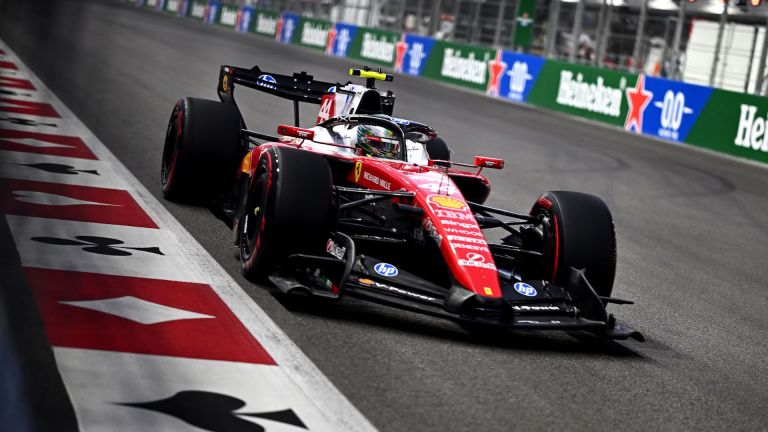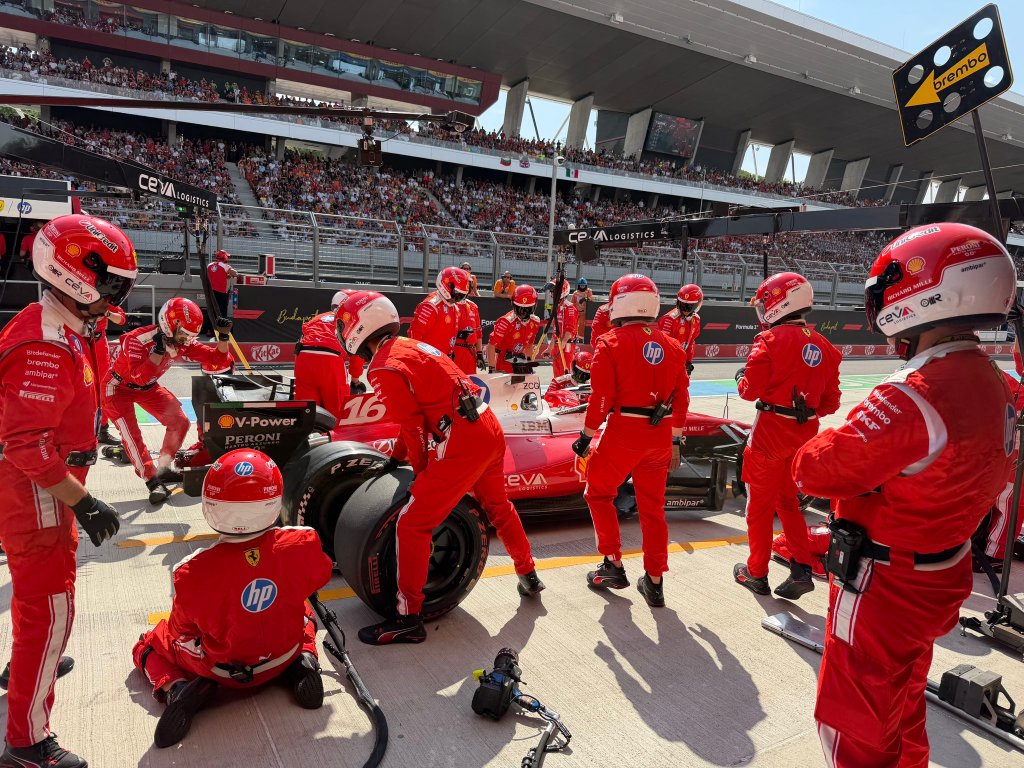
It is difficult to imagine a more thankless task than the one facing Ferrari in the 2026 Formula 1 season. It isn’t that their car is poor—quite the opposite, given that rivals have been attempting to copy the innovations of the SF-26 since pre-season testing. Rather, circumstances insist on framing a rivalry against Mercedes that, in reality, does not exist. That is, unless all the bad luck haunting George Russell moves over to Andrea Kimi Antonelli’s side of the garage in the second half of the year.
Consider the Maranello squad’s trajectory across the opening 11 races leading into the summer break. They hold 307 points to Mercedes’ 379, with Lewis Hamilton contributing 169. Notably, Hamilton is the only driver on the grid to have scored in every single round thus far, including all four Sprint events. Such a run by the seven-time World Champion reflects a far warmer relationship with Ferrari than during his dismal 2025 campaign, when he questioned whether he was the primary source of his own lack of pace.
Today, we see a Lewis much more attuned to the Italian outfit’s philosophy and clearly at home in a car finally liberated from ground-effect dynamics. His victory in Catalunya serves as a prime example of those elements locking into place, briefly resurrecting the ‘old Lewis’—even if the 2026 version of Hamilton remains a step removed from his absolute prime during his peak Mercedes years.
The Barcelona layout is uniquely versatile, incorporating high- and low-speed corners, heavy braking zones, a long front straight, and varied sector demands. For the Spanish round, Ferrari introduced targeted front-end aerodynamic tweaks, alongside a revised floor designed to optimize airflow quality underneath the chassis.
However, the key differentiator lay in Hamilton’s tire management, which made a three-stop strategy optimal for the Spanish Grand Prix—aided, naturally, by a timely Virtual Safety Car during his final pit visit. Yet the breakthrough stemmed from an innovative wheel rim design, allowing Ferrari to thermally isolate heat generated by the braking system and prevent high temperatures from transferring into the tires via rim radiation. The solution sparked paddock intrigue, but the FIA ultimately confirmed its legality.
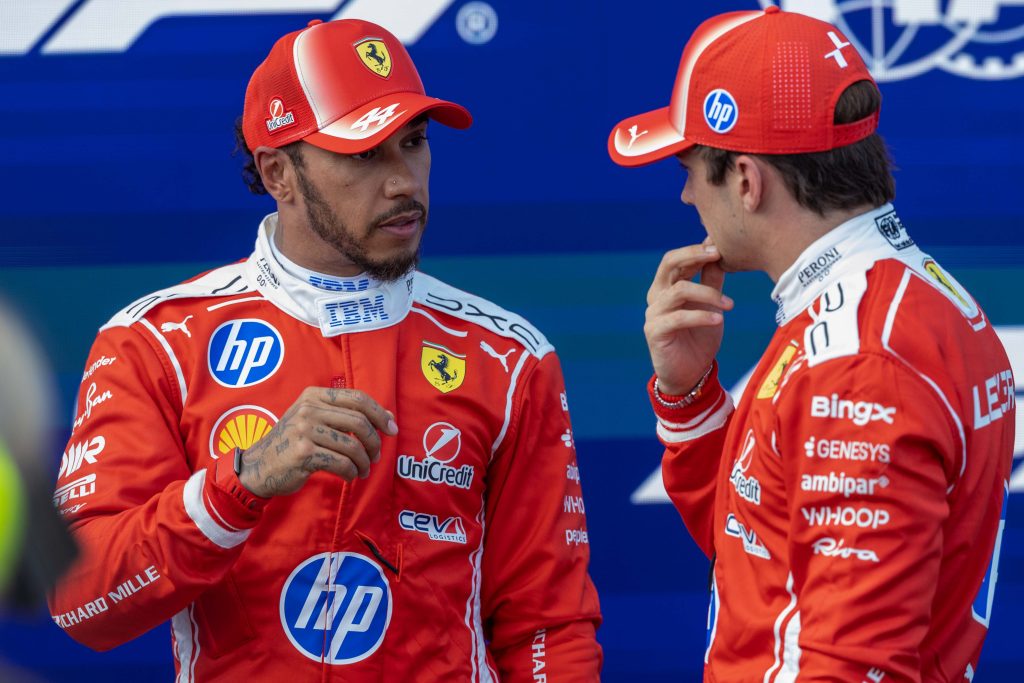
That victory, however, partially masked a fundamental vulnerability for Ferrari under the current regulations: power unit deployment, specifically battery energy management. High-speed venues routinely expose the inherent advantage Mercedes holds over the field, as demonstrated at Spa-Francorchamps and Silverstone—where Antonelli was charging hard toward Charles Leclerc for the lead before suffering a mechanical failure. That is to say nothing of the sheer power deficit from the internal combustion engine, a disparity confirmed by the FIA itself.
This explains why defeat in Hungary—a low-speed, high-downforce venue—proved so agonizing. Ferrari recognizes it will unlikely enter a weekend as clear favorites anywhere else on the calendar for the remainder of the year, with the possible exception of Singapore due to its unique layout.
“When you lock out the front row on Friday, you expect a different outcome, but everything went wrong. We were the only ones overtaken on track by [Max] Verstappen and we picked up penalties on top of that,” remarked a crestfallen Frédéric Vasseur after watching Leclerc and Hamilton finish a distant fourth and fifth in Budapest.
Even so, the Scuderia has no intention of surrendering. Despite their pace disadvantage, they hold a powerful trump card. While Mercedes retains command of the championship, the German manufacturer is walking a reliability tightrope, having already suffered two mechanical retirements with Russell and two with Antonelli. Across 11 rounds, four DNFs represent a massive vulnerability, made worse by lingering doubts over whether proposed reliability fixes will prove effective. While high-speed tracks highlight the Mercedes engine’s raw power, they simultaneously expose its fragility.
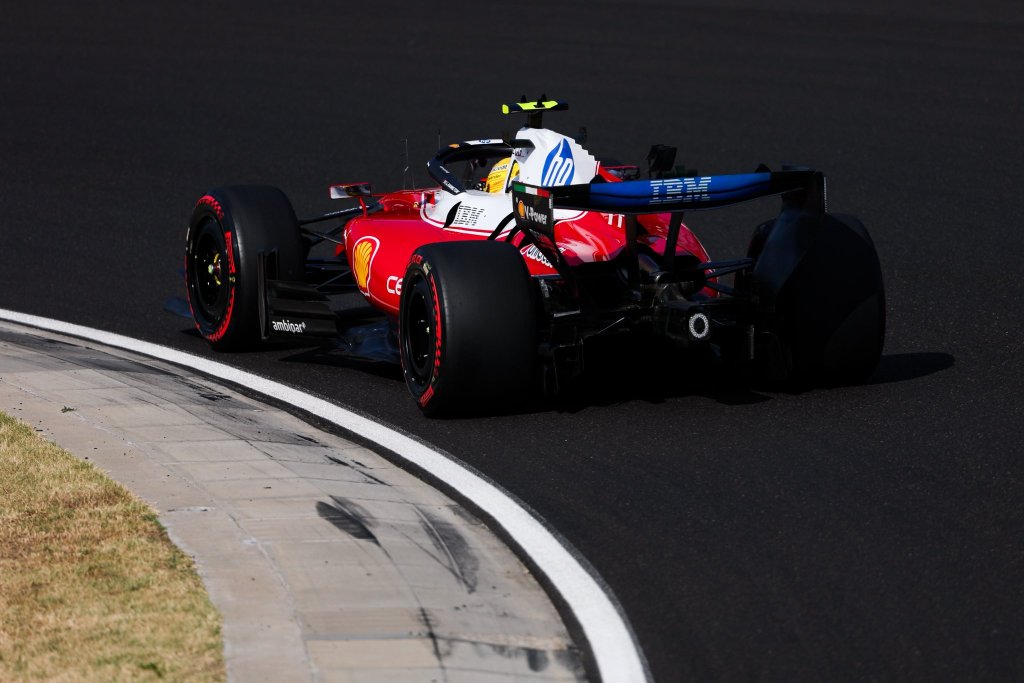
“We have definitely suffered on reliability. We’ve had three or four DNFs, dropping 70 to 80 points to our direct competitor, Ferrari—who capitalized—because we failed to finish. Today we hold a lead of just over 70 points. Add another 70 to that, and we would have a truly commanding cushion. But we lost those points, and everyone is closing in. That’s why certain GPs have been tricky. Truth be told, Ferrari’s last two wins happened because we let them slip: bad luck with the Safety Car [in Barcelona] and Kimi [finishing outside the points due to reliability issues] at Silverstone,” noted Toto Wolff in a recent interview.
In the end, reliability remains Ferrari’s primary weapon in a fundamentally unequal fight, and one would be mistaken to downplay its significance. In truth, Antonelli’s points advantage over Hamilton would be far larger had the W17 not suffered failures that cost the 19-year-old points in Catalunya (engine) and Great Britain (front wheel-cover damage). The 50-point gap separating Kimi and Hamilton provides an accurate reflection of Ferrari’s true standing in the Constructors’ Championship—a position they are likely bound to hold through to next season.
Formula 1 is currently on summer break. The series resumes 2026 season action from August 21 to 23 with the Dutch Grand Prix at Zandvoort.