
News Summary
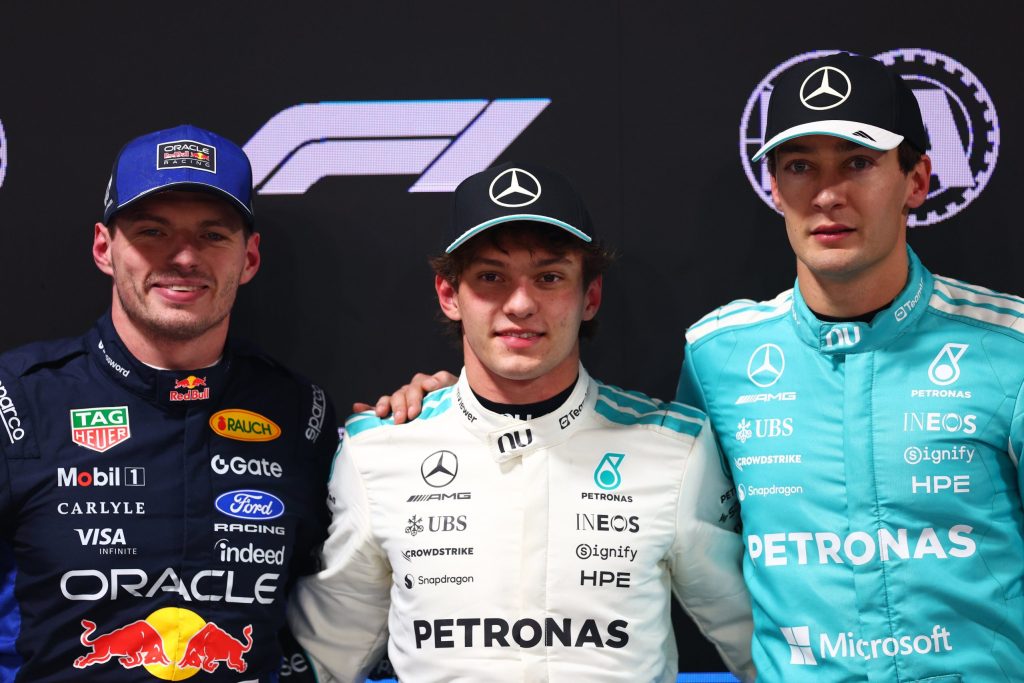
- Toto Wolff described a possible first-corner confrontation between Max Verstappen and George Russell as “big cinema” after the pair secured the front row in Las Vegas.
- The Mercedes boss admitted the team had “absolutely no clue” how Kimi Antonelli managed the fastest qualifying lap while following Arvid Lindblad so closely.
- Wolff believed Russell had the ideal track position for pole and wants to understand why he failed to improve sufficiently during his final Q3 attempt.
Toto Wolff expects “big cinema” when Max Verstappen and George Russell reach the opening corners of the 2026 Las Vegas Grand Prix, with the Mercedes team principal anticipating another dramatic encounter between two drivers who collided during final practice.
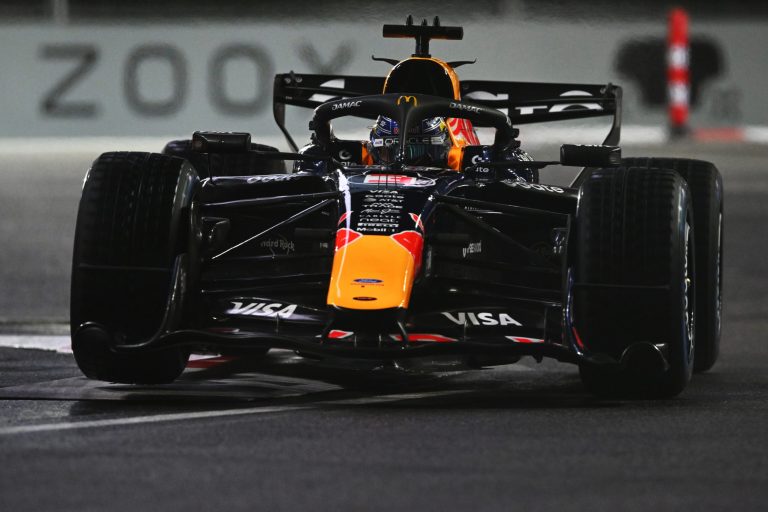
Verstappen will start from pole position alongside Russell after Kimi Antonelli, who set the fastest time in qualifying, received a five-place engine penalty. The front-row pairing comes less than a day after the Red Bull and Mercedes drivers made contact at Turn 14 during FP3, resulting in an official warning for Verstappen.
Asked by Sky Sports F1 what he expected when the two rivals reached the first corners together, Wolff delivered a short but pointed response.
“Well, big cinema, if they try to go through the first corners together, we shall be watching.”
The remark adds another dimension to an already tense front-row battle, with Verstappen and Russell having exchanged criticism following their latest on-track confrontation.
Wolff admits Mercedes cannot explain Antonelli’s remarkable lap
Before turning his attention to the race, Wolff expressed astonishment at the circumstances surrounding Antonelli’s fastest qualifying time.
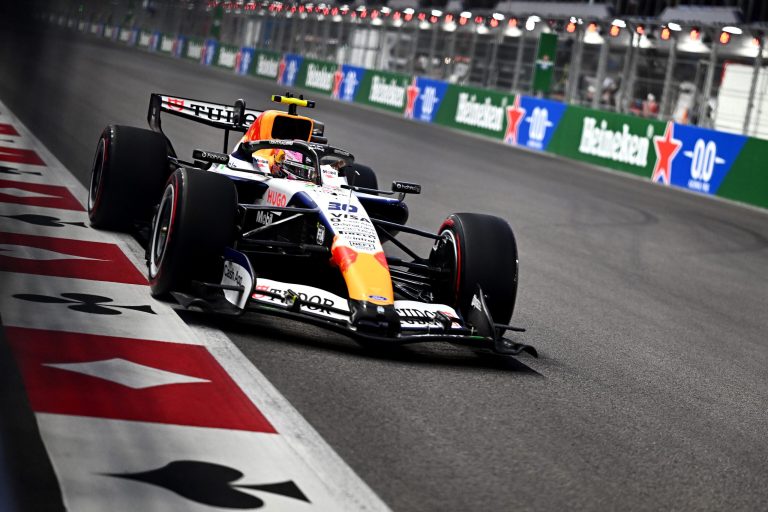
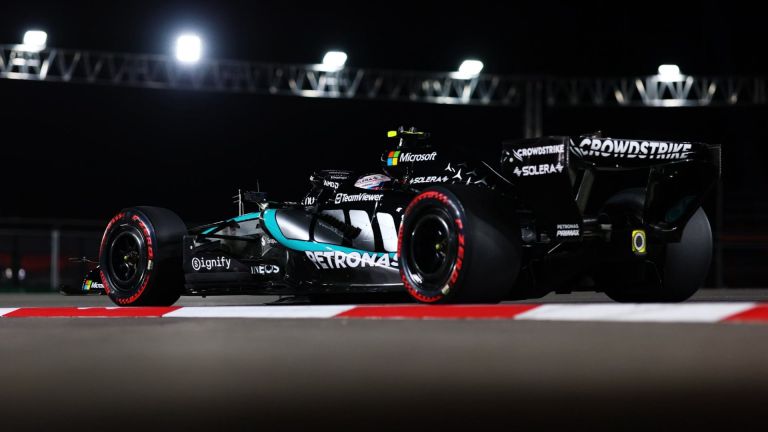
The Italian recorded 1:33.893, beating Verstappen by 0.258 seconds and Russell by 0.331 seconds, despite beginning his final flying lap extremely close to Arvid Lindblad’s Racing Bulls.
Antonelli had barely crossed the timing line before the chequered flag, having become caught in traffic as drivers fought for a slipstream on the Las Vegas Strip Circuit.
Wolff admitted Mercedes initially believed the situation would compromise his attempt.
“We have absolutely no clue,” the Austrian said when asked how Antonelli had managed to set the fastest time.
“And you, as a strategist, you know we thought Kimi was either going to miss the lap or he’s going to be way too close to Lindblad.”
“He crossed the line 1.4 seconds behind, and that was basically it. So, I don’t understand how being that close you can even do this time.”
The unusually close positioning ultimately proved beneficial rather than damaging.
Former Formula 1 strategist Bernie Collins, analysing the session for Sky Sports F1, pointed out that the aerodynamic tow had provided Antonelli with a significant advantage compared with Russell.
Wolff agreed that the effect had been surprising.
“If you’re 1.4 seconds behind the car in front, you would think this is too close, especially with a car that went eight tenths slower, but for whatever reason, that works.”
Antonelli’s lap demonstrated just how influential slipstreaming had become in Las Vegas qualifying, where the long straights encouraged drivers to position themselves behind other cars despite the risk of encountering traffic through the corners.
The Italian had already acknowledged that he feared his final attempt was compromised before the tow helped him reach the fastest time.
As GRANDE PRÊMIO reported in Antonelli’s post-qualifying reaction, the Mercedes driver admitted he thought he was “screwed” when he began the lap so close to the car ahead.
Russell had ideal position but missed fastest qualifying lap
The contrast between Antonelli’s remarkable final attempt and Russell’s unsuccessful challenge was particularly frustrating for Mercedes.
Russell had dominated FP3 and remained among the favourites throughout qualifying, eventually recording 1:34.224 to finish third in the session.
The British driver had questioned his positioning on track, particularly the possibility of gaining a stronger slipstream during the decisive Q3 runs.
However, Wolff rejected the suggestion that Russell had been disadvantaged by an obviously poor starting position.
“Actually, George, for me, had the perfect position. He was four seconds behind the car in front,” he explained.
Mercedes now intends to examine what happened during Russell’s final attempt, particularly around the middle section of the lap.
“We need to find out because I think there was some kind of… turn seven-eight-nine, whether that was a mistake or something else happened, we need to… I don’t know, to be honest, but it looked like the ideal position for a pole lap, because he was quickest all the time.”
Wolff did not establish whether Russell had made a driving mistake or encountered another problem. His comments indicate that Mercedes still needs to review the lap before determining why its fastest FP3 driver failed to match Antonelli.
Russell nevertheless expressed satisfaction with the team’s overall performance, acknowledging that timing the out-lap and obtaining a useful tow had been crucial.
In GRANDE PRÊMIO’s report on Russell’s qualifying reaction, the British driver praised Antonelli while highlighting the opportunity created by his inherited front-row start.
Verstappen and Russell renew rivalry from the front row
The opening lap now presents an intriguing confrontation between Verstappen and Russell, who were involved in a controversial incident during final practice.
The pair made contact at Turn 14 after Verstappen moved ahead and Russell attempted to regain the position.
The FIA stewards subsequently ruled that Verstappen had braked earlier than expected and changed direction under braking, contributing to the collision. The Red Bull driver received an official warning but no grid penalty.
Russell later criticised his rival, accusing him of repeatedly disrupting other drivers and insisting that he would not simply accept the behaviour.
The exchange added to a history of confrontations between the two drivers, including incidents in Azerbaijan in 2023, Qatar in 2024 and Spain in 2025.
As GRANDE PRÊMIO reported following their latest clash, Russell declared that somebody needed to challenge Verstappen’s approach.
Wolff’s prediction of “big cinema” therefore refers to a genuine rivalry that has already produced contact during the Las Vegas weekend, rather than simply the prospect of two fast cars starting alongside each other.
Antonelli’s penalty creates a different challenge for Mercedes
Mercedes’ qualifying performance was nevertheless encouraging, with Antonelli setting the fastest lap and Russell finishing third.
Antonelli will start sixth because of a five-place penalty for taking his sixth internal combustion engine of the season, promoting Verstappen to pole and Russell onto the front row.
Lando Norris starts third for McLaren, followed by Isack Hadjar and Arvid Lindblad.
Mercedes therefore enters the race with two distinct opportunities: Russell can challenge Verstappen directly from second place, while Antonelli must recover positions despite demonstrating the fastest outright pace in qualifying.
The complete starting grid after five power-unit penalties confirms the order for the 22-driver field.
The Las Vegas Grand Prix begins at 8:00 PM local time on Saturday, November 21, equivalent to 11:00 PM Eastern Time and 4:00 AM GMT on Sunday, November 22.
GRANDE PRÊMIO is following every session of the Las Vegas Grand Prix and the latest developments in Formula 1.
FAQ
What did Toto Wolff say about Verstappen and Russell starting together?
Wolff predicted “big cinema” if the two drivers reached the opening corners together, referring to a potential confrontation after their collision during final practice.
Why was Wolff surprised by Kimi Antonelli’s qualifying lap?
Antonelli started his final attempt approximately 1.4 seconds behind Arvid Lindblad. Wolff believed that gap was too small to produce a competitive lap, but the powerful slipstream helped Antonelli set the fastest time.
Why does George Russell start second despite qualifying third?
Kimi Antonelli received a five-place penalty for exceeding his engine allocation. That promotes Max Verstappen from second to pole position and Russell from third to second.