At the end of Friday’s free practice sessions, following a resounding statement that Ferrari was the force to be reckoned with, Frédéric Vasseur attempted to downplay the timesheets, wisely noting that he “wasn’t chasing the best Friday of the year, but rather the best Sunday.” Because Sunday is what counts in F1, and Sunday is when everything needs to be executed flawlessly. The red team was in the right place at the right time, yet somehow managed to throw it all away. The truth is that the Italian squad will carry a heavy burden into the summer break: a disastrous 70 laps at the Hungarian Grand Prix that represent not only a painful defeat, but one that puts everything into perspective—chiefly their championship hopes.
It was no secret that Ferrari viewed Hungary as a pivotal venue in the final stretch leading to the summer shutdown. The layout of the Hungaroring was tailor-made to showcase the strengths of the SF-26. More importantly, it offered a prime opportunity to beat Mercedes on a level playing field. Unsurprisingly, Maranello engineers brought circuit-specific updates to Budapest, revised the “Maracena” high-downforce rear wing, and delivered a well-balanced car—nimble in low-speed corners and less prone to tire overheating. Nobody was faster than Ferrari.
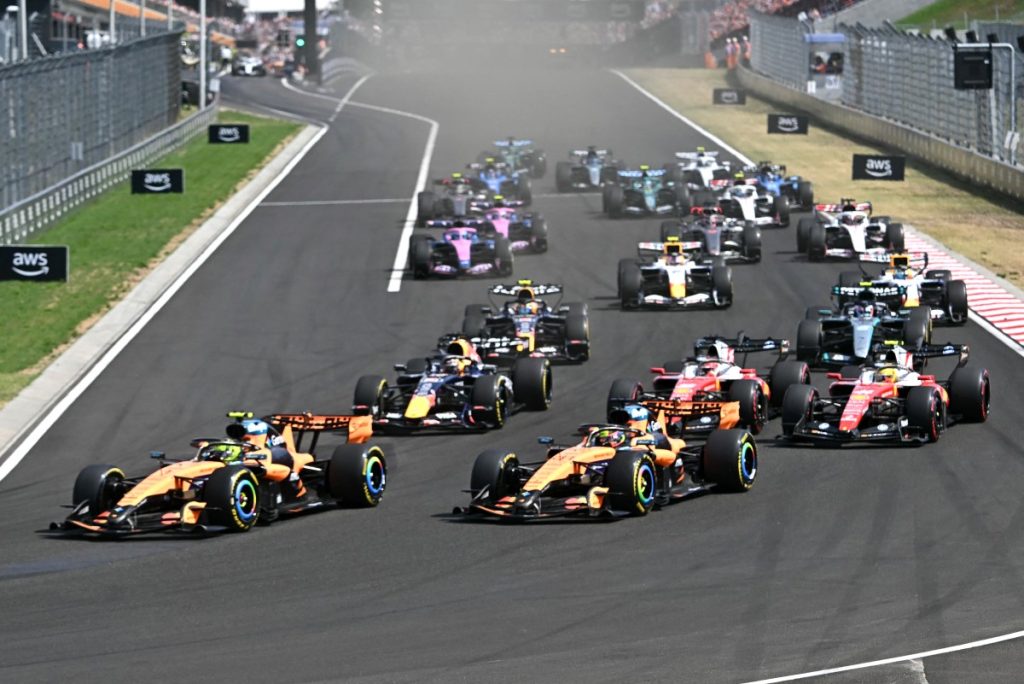
Yet, from the expectation of a front-row lockout on Saturday, the Scuderia suffered a grid penalty that knocked Lewis Hamilton off the front row—a penalty that could have been avoided altogether—after the seven-time champion had already missed out on pole position to Lando Norris by a whisker. Furthermore, a strategic risk became evident during qualifying: the decision to run medium tires in Q1 to save a set of softs for the race had a clear intent, but it relied on securing the front row and making a clean getaway. Neither materialised. Ferrari stuck to its strategy, making Hamilton start fifth on softs. Charles Leclerc, promoted to second following his teammate’s penalty, lined up on used softs—another miscalculated risk. What happened after the lights went out was even worse. Hamilton was jumped by Max Verstappen, while the Monegasque made a poor start and lost touch with the lead pack.
Despite showing strong pace on the softs in the opening laps, Hamilton found himself trapped behind Red Bull’s four-time champion for too long amid the Hungaroring’s notorious overtaking difficulties. That effectively ruined his strategy and any shot at victory as the McLarens pulled away. Consequently, Ferrari was forced to trigger early pit stops in an attempt to salvage a podium finish. They successfully landed the undercut, but Verstappen came out flying after responding to Ferrari’s strategy call and pulled off what was arguably the pass of the race in this new era of F1 cars.
Contained once again by the Red Bull, Hamilton struggled to maintain tire life, and Leclerc faced similar woes. The Monegasque attempted to talk through the balance issues with the pit wall, but what ensued was another chaotic team radio exchange. While Leclerc suggested tire overheating might be causing the drop in performance, his engineer asked him to pick up the pace. The driver’s response summed up Ferrari’s afternoon: “What rythym?”
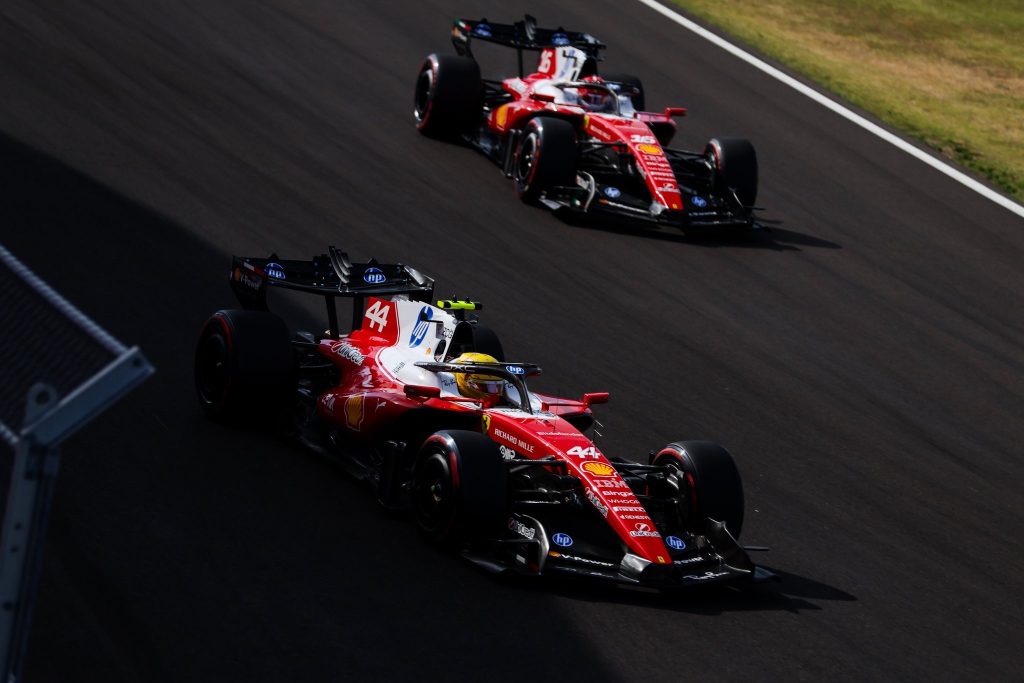
What rythtm? The drop-off in speed and the team’s race management were alarming. The poor pace forced the pit wall to bring Lewis in early for his second pit stop, fitting a new set of hard tires. But the deployment of the Virtual Safety Car following Piastri’s retirement triggered their biggest tactical blunder. Ferrari called the Briton back in to swap onto soft tires. Hamilton himself deemed the call a mistake, believing the hard compound could have made it to the checkered flag, even if fending off Verstappen proved difficult. The Dutchman was running ahead of the Ferraris in second place.
To add insult to injury, the #44 driver was handed a five-second penalty for speeding in the pit lane. He ultimately crossed the line fifth, behind his teammate, dropped by the 5s penalty—the gap between the pair was 4.5s. Despite Leclerc being higher in the championship standings, the pit wall didn’t even entertain asking the Monegasque to back off slightly to protect his teammate’s position. It was yet another display of poor situational awareness regarding the race and the broader championship picture.
“I wasn’t entirely sure why we pitted at the end. I was called in right at the pit entry, so there was no time to debate it. I would never have come in if I thought I’d lose track position,” Hamilton explained after the race. “I think we probably would have lost the position to Max anyway—he was on fresher rubber. Maybe I could have held on to second on that final stint as he closed in, but third was the most likely outcome, and that would have been far better. Instead, we threw away a lot of points.”
All told, Ferrari leaves Hungary empty-handed in a race it was primed to win. Fourth and fifth places fall well short of expectations. The blow is even harder to swallow considering the team had managed to minimize damage at tracks that didn’t play to its strengths, such as Spa-Francorchamps. The Hungarian GP laid bare the lingering vulnerabilities that still haunt Maranello. Taking strategic risks can pay off, but under certain conditions, a conservative approach—or splitting strategies across both cars—is essential for damage limitation. Furthermore, the drivers share accountability for what unfolded in Budapest. Being aggressive and decisive when the moment demands it is how championships are won.
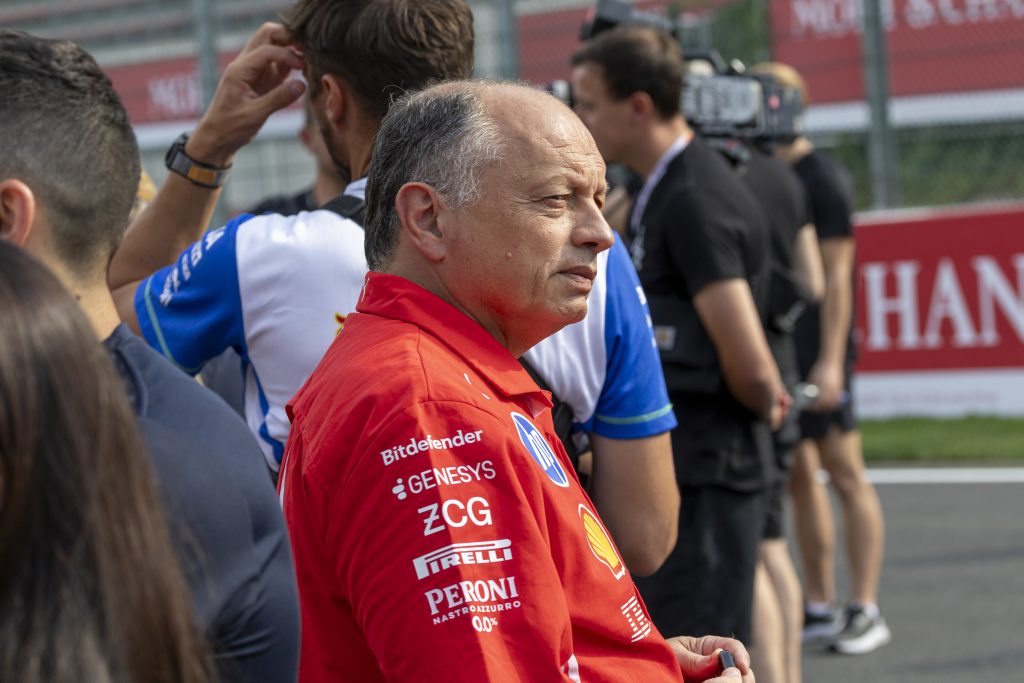
“We came in expecting a 1-2, and we got one on Friday, but not on the day that counts. We made too many mistakes and made too many wrong calls. We were the only ones losing track position. Everything went wrong: on a circuit with essentially one passing zone, everyone dumps their battery there, and if you’re slightly slower down the straight, you simply cannot pass,” acknowledged Team Principal Frédéric Vasseur before summarizing the race and its championship ramifications.
“When you make a mistake, you inevitably put yourself on the back foot, and everything unravels from the start. We missed out on pole by a hundredth of a second. A tiny error cost us dearly, losing position after position. In today’s F1, you have to be flawless to stay ahead,” he concluded.
That is the reality. From here on out, if Ferrari wants to stay in the title hunt and challenge Mercedes, nothing less than perfection will do.
Formula 1 is now on its summer break. The series resumes its 2026 season activities from August 21 to 23 with the Dutch Grand Prix at Zandvoort.