News Summary
- McLaren postponed its planned evaluation of a revised floor in Las Vegas because wet conditions made meaningful aerodynamic comparisons difficult.
- Racing director Randy Singh explained that the team restricted some sensor use and considered the risks of running the new component too high.
- Oscar Piastri and Lando Norris still showed competitive pace, but McLaren must combine upgrade testing, tyre evaluation and race preparation in FP3.
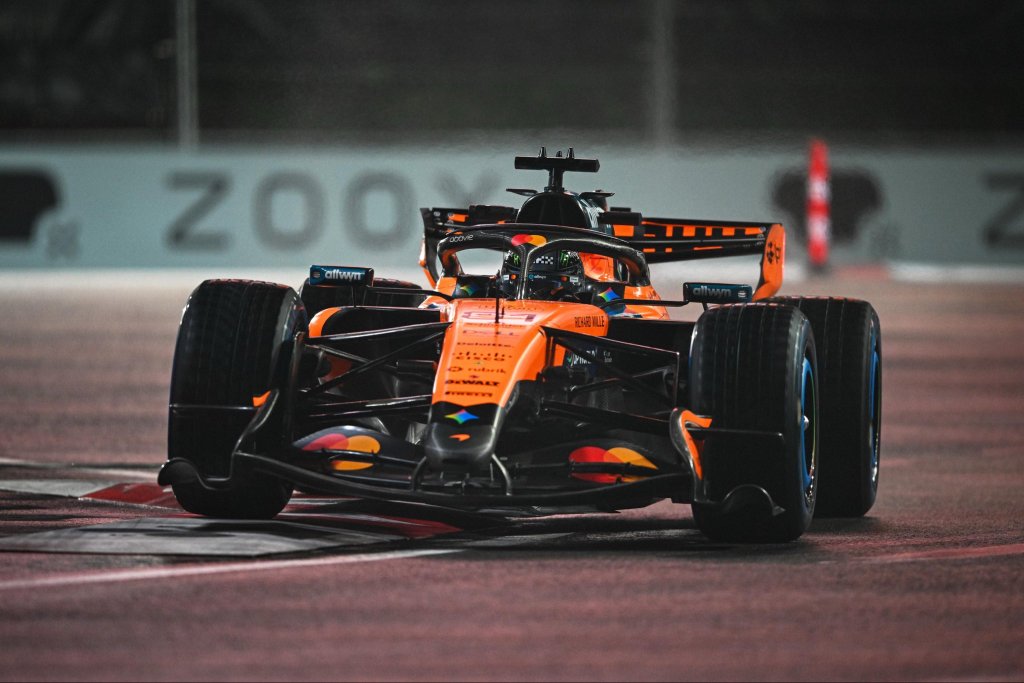
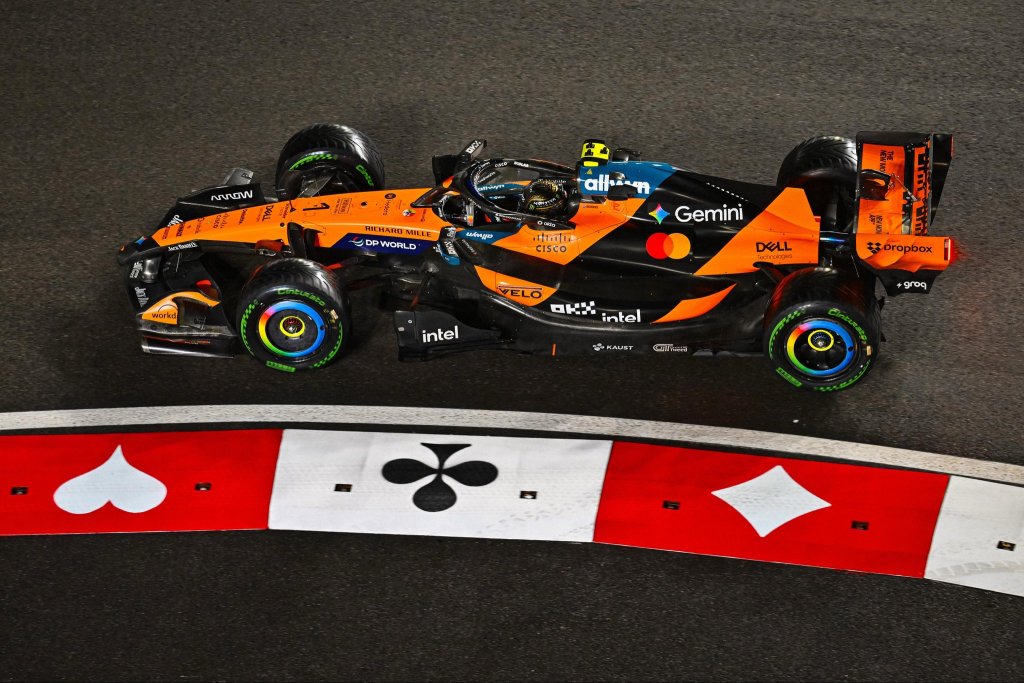
McLaren has confirmed that its revised floor was not fitted during the opening practice sessions for the 2026 Las Vegas Grand Prix, with the team deciding that the wet conditions would provide too little useful information to justify the risk of testing its latest aerodynamic development.
Racing director Randy Singh acknowledged that the team had been forced to abandon its original evaluation programme after heavy rain prevented all timed running in FP1 and left FP2 restricted to full wet and intermediate tyres.
The decision means McLaren has only one practice session remaining to evaluate the update before qualifying, while also needing to complete the dry-weather preparation that could not take place during Thursday’s running.
The team arrived in Las Vegas with changes to its underfloor package, intended to improve aerodynamic performance as the championship approaches its final rounds.
McLaren explains why new floor was not installed
McLaren’s revised floor is part of an aerodynamic development programme designed to improve airflow management around the lower surfaces of the MCL40.
However, Singh explained that the conditions prevented the team from collecting the information required to assess the new specification properly.
“The conditions made it difficult to evaluate the car properly,” he said.
“In the wet, we had to tape up some of the sensors, which meant we could not always get the evidence we wanted, so we decided not to fit the new floor because of the risk and because we did not think we would learn much from it in these conditions.”
The combination of standing water, limited visibility and nearby barriers also made the team reluctant to introduce an unfamiliar aerodynamic configuration.
Although McLaren completed useful laps on intermediate tyres as the circuit improved, those conditions were not representative of the dry-weather running expected for the rest of the weekend.
“We hope to run it tomorrow and assess it more effectively,” Singh continued.
The team therefore enters FP3 without the representative comparison it had intended to gather during the opening sessions.
Piastri and Norris show pace despite interrupted programme
McLaren nevertheless demonstrated competitive speed during FP2, particularly as the surface began to dry.
Oscar Piastri finished fifth with a 1:48.453, while Lando Norris was seventh, recording 1:48.837. Norris had led the session earlier in the hour, before George Russell and several rivals improved as conditions became more favourable.
Russell subsequently admitted that McLaren had appeared exceptionally quick at different stages and that his own fastest lap benefited from the driest track conditions.
The Mercedes driver’s assessment suggested that McLaren’s final positions did not necessarily reflect its competitive potential.
Piastri, meanwhile, used the session to evaluate his new internal combustion engine and the revised Mercedes turbocharger specification introduced under the FIA’s Additional Development and Upgrade Opportunities system.
“I think, obviously, on my side, we wanted to prove out the new engine we’ve got in and the new turbo as well, so [it was] good to get some running on that,” Piastri said.
“There’s always things you can learn in conditions like that, so I still thought it was useful, even if it’s maybe not going to be useful for the next couple of days.”
The Australian was cautiously encouraged by the revised power-unit components.
“I think it’s an improvement. Obviously, in these kinds of conditions, it’s very tough to know exactly what it’s like. But things seemed good, so hopefully it’s the same in the dry.”
Piastri’s new internal combustion engine carries a ten-place grid penalty, while both McLaren drivers are running the upgraded turbocharger. The revised floor is a separate aerodynamic development and was not installed during Thursday’s sessions.
McLaren faces difficult choice over FP3 programme
The biggest consequence of the interrupted opening day is the amount of work McLaren must now complete before qualifying.
The team needs to assess the revised floor, gather data on the dry tyres, evaluate longer runs and establish a suitable qualifying setup, all within the remaining hour of practice.
Singh warned that the programme would be unusually compressed, particularly because neither driver had completed representative high-fuel running.
“Tomorrow’s programme will be pretty condensed because we’ll have three sets of tyres as well for FP3, because both sessions today were wet, so there’ll be a lot to get through,” he explained.
“No one’s done any high-fuel running, and then we need to get ready for Qualifying as well so it will be compressed tomorrow.”
The decision to proceed with the new floor will depend on what McLaren can learn during its remaining preparation and whether the component offers sufficient confidence for qualifying.
Singh also declined to establish a clear competitive order between the leading teams.
“Just really hard to say. I think the top four teams will be the same as before. It will remain tight at the front.”
The uncertainty affects McLaren’s preparations at a circuit where tyre temperatures, energy deployment and aerodynamic efficiency can all have a substantial influence on performance.
As explained in GRANDE PRÊMIO’s analysis of the Las Vegas competitive order, the wet opening day prevented a reliable comparison between Mercedes, McLaren, Ferrari and Red Bull.
McLaren’s decision also comes ahead of a race in which Piastri will serve a ten-place grid penalty, making his qualifying performance especially important.
GRANDE PRÊMIO is following every session of the Las Vegas Grand Prix, with complete coverage of the weekend’s Formula 1 action.
FAQ
Why did McLaren abandon its new floor test in Las Vegas?
McLaren decided that the wet conditions would prevent meaningful aerodynamic comparisons. Racing director Randy Singh also cited the risks of running the new floor and the restrictions placed on aerodynamic sensors.
Will McLaren use its upgraded floor in FP3?
The team intends to evaluate the new floor during FP3 if conditions permit. Its use in qualifying has not yet been confirmed.
How did Piastri and Norris perform during Las Vegas FP2?
Oscar Piastri finished fifth with a 1:48.453, while Lando Norris was seventh with a 1:48.837. Both demonstrated competitive speed during the changing conditions.