News Summary
- Laurent Mekies believes performance convergence among Formula 1’s leading teams has happened earlier than expected under the 2026 regulations.
- The Red Bull team principal suggested that the narrow performance gaps could indicate a restrictive technical framework, although he welcomed the increasingly unpredictable competition.
- Mercedes, Ferrari, McLaren and Red Bull have all won races in 2026, with qualifying margins sometimes separating the leading five drivers by just two tenths of a second.
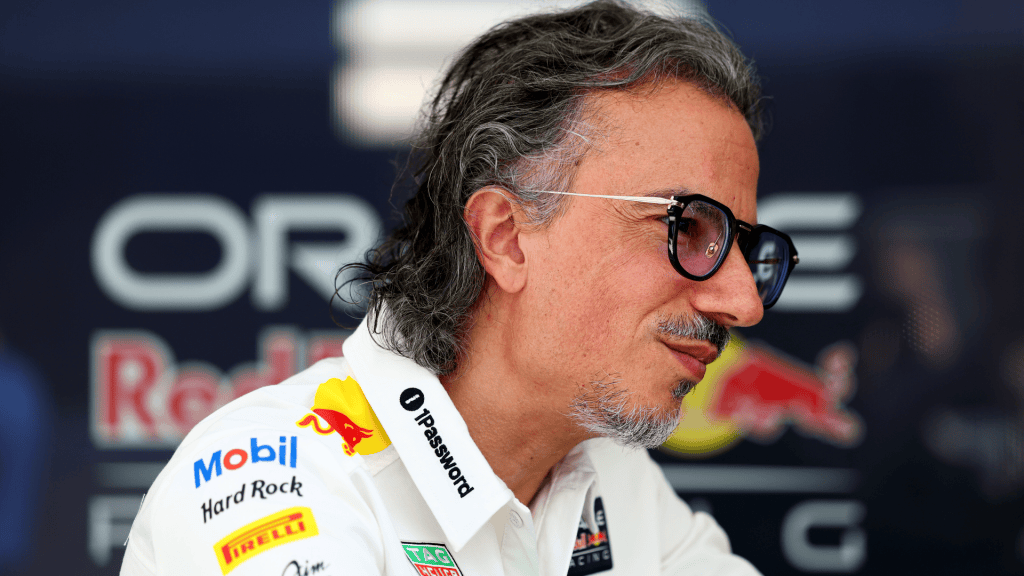
Red Bull team principal Laurent Mekies has questioned whether Formula 1’s 2026 technical regulations are too restrictive after the championship’s four leading teams reached similar performance levels earlier than expected, creating a situation in which Mercedes, Ferrari, McLaren and Red Bull can all challenge for victory.
Speaking after the São Paulo Grand Prix, Mekies suggested that the speed of convergence could be linked to the limitations imposed by the new rules. However, the Frenchman also welcomed the competitive balance, arguing that the uncertainty surrounding race winners has become one of the championship’s greatest strengths.
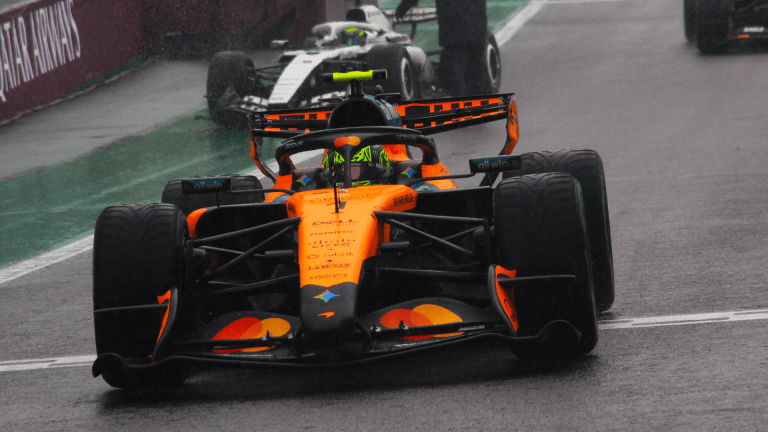
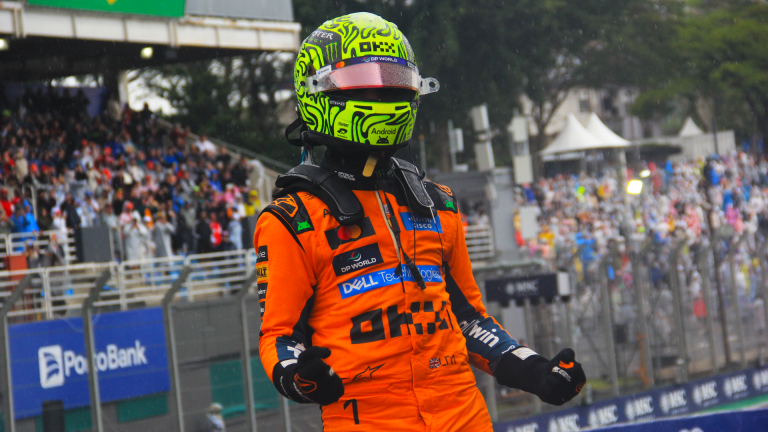
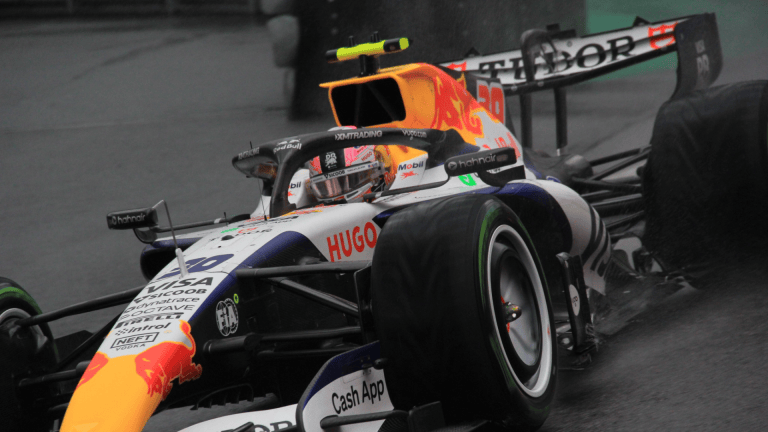
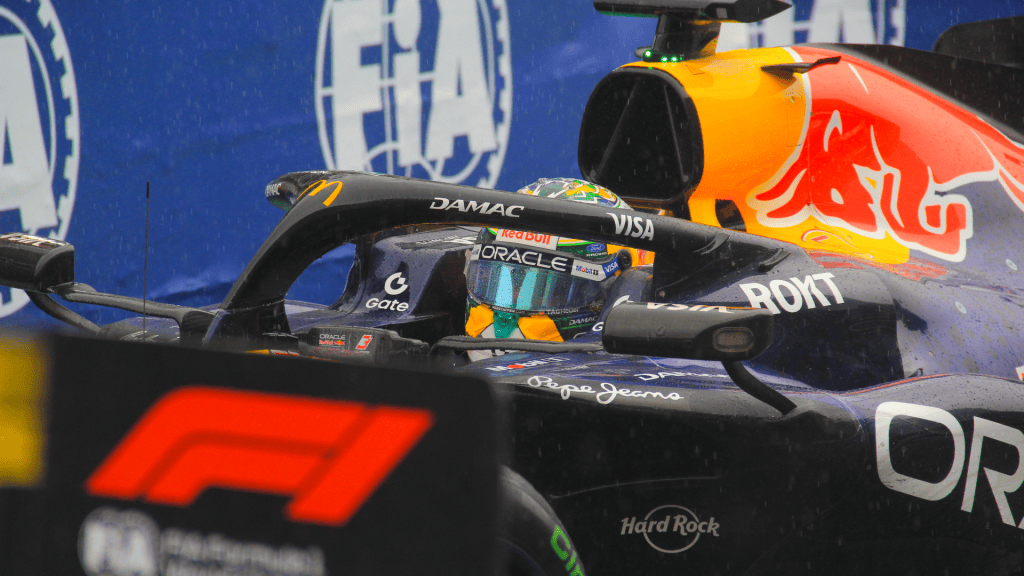
His assessment followed a weekend in which Lando Norris secured McLaren’s third victory of the season, while Max Verstappen recovered from 21st to second and Isack Hadjar completed the podium for Red Bull.
Mekies questions whether F1 regulations are too restrictive
The 2026 season introduced a new generation of Formula 1 cars and power units, requiring teams to adapt their aerodynamic concepts, energy management and development programmes.
Although the championship initially featured substantial differences in performance, the leading teams have gradually reduced those gaps through upgrades and improved understanding of the regulations.
Mekies believes that process has progressed faster than anticipated.
“The convergence is probably happening earlier than what we all thought,” Mekies said.
“I’m guessing somehow it’s perhaps an indication of fairly restrictive regulations.”
The Red Bull team principal did not present that assessment as a definitive criticism of the rules. Instead, he suggested that the technical restrictions could be contributing to the increasingly similar performance of cars developed around different concepts.
“That being said, you see cars with visibly different concepts, and you see four top teams fighting, which is probably a great point for the sport. So let’s see how it will pan out in the second year.”
The distinction is significant because convergence does not necessarily mean teams have adopted identical technical solutions. Different aerodynamic philosophies and development choices can produce comparable lap times even when the cars remain visibly different.
Four teams now capable of winning races
Mercedes established itself as the benchmark during the opening stages of 2026, building a championship advantage that ultimately allowed the team to secure both world titles.
Andrea Kimi Antonelli clinched the drivers’ championship in Mexico City, while Mercedes secured the constructors’ crown at Interlagos after George Russell finished fourth and Antonelli fifth.
However, the battle for individual race victories has become considerably less predictable.
Ferrari demonstrated its qualifying potential in Mexico, where Lewis Hamilton secured pole position, while McLaren returned to winning form in São Paulo after introducing another aerodynamic package.
Red Bull has also remained competitive, with Verstappen producing a series of strong performances despite the team’s occasional difficulties with setup and car balance.
Mekies believes the uncertainty has improved the spectacle.
“But it’s fair to say that to be already in the second part of ’26, in a situation where you turn up at the race weekend, and you don’t know which one of the four top teams is going to win the race, I think it’s great for the sport.”
The competitive balance was particularly visible at Interlagos, where McLaren’s latest aerodynamic upgrades helped Norris return to the top step of the podium.
Even so, team principal Andrea Stella acknowledged that McLaren still lacked the consistent performance required to challenge for the championship across an entire season.
Qualifying gaps highlight importance of perfect execution
Mekies also pointed to the exceptionally small differences between the leading drivers in qualifying.
With several cars now operating within a narrow performance window, the Frenchman believes winning races increasingly depends on combining effective development with flawless execution throughout the weekend.
“And yes, we get the top five qualifying, separated by two tenths, and it’s a strong combination of development race and an absolutely perfect execution if you want to win on Sunday.”
The São Paulo Grand Prix illustrated the importance of operational decisions. McLaren successfully managed the transition between intermediate and slick tyres, while Mercedes lost opportunities when both drivers encountered difficulties after switching compounds.
Red Bull also had to overcome a power-unit penalty that forced Verstappen to start near the back of the grid. Although the Dutchman recovered to second, the team was left investigating an unexpected deterioration in his car’s balance.
The increasingly narrow margins mean that a small difference in tyre preparation, strategy or setup can have a substantial effect on the finishing order.
Red Bull awaits second year of F1’s new regulations
Mekies’ comments also raise questions about how the competitive order will develop in 2027, the second season under the current technical framework.
Teams are expected to continue refining their concepts rather than beginning another complete regulatory reset. That could allow further convergence, although differences in development efficiency and available resources may still produce changes in the competitive hierarchy.
McLaren has already confirmed that further upgrades are planned for Las Vegas and will contribute to its 2027 development programme.
Red Bull, meanwhile, continues working to understand the performance characteristics of its car and power unit as the first season of the new regulations approaches its conclusion.
The championship returns at the Las Vegas Grand Prix on November 19–21, followed by Qatar and Abu Dhabi.
GRANDE PRÊMIO is following the final rounds of the 2026 Formula 1 season, with breaking news, technical analysis and real-time updates in its Formula 1 section.